鲍默《东方教会:亚述基督教图史》第二章:东叙利亚基督教的起源(中英文对照版)
阿甲按:本连载以克里斯托夫·鲍默(Christoph Baumer)2016年英文新版为底本,采用人工智能辅助中译,以中英文对照形式供研读参考。译文及原文提取仍有待校订,人名、地名、专业术语和个别断句未必准确,欢迎读者与专家指正。
本章导读
本章从美索不达米亚与伊朗的政治宗教背景出发,追溯东叙利亚基督教的早期发展,介绍埃德萨、早期修道传统,以及东方教会与印度基督徒之间的联系。
凡例
- 翻译自:Christoph Baumer, The Church of the East: An Illustrated History of Assyrian Christianity, new edition, translated by Miranda G. Henry (London and New York: I.B.Tauris, 2016),第二章,原书第 9–30 页。
- 本连载保留英文原文、图版与原书页码,采用双语对照形式,便于参阅和引用。原作页码与 PDF 文件的物理页序不同,本文标示原书页码。
- 中文初稿由 DeepSeek 辅助生成,部分缺译和遗漏段落使用 GPT-6-luna 补译;本次整理不等同于完成学术校订。原文中的个别断句、图注拼接和脚注提取仍需对照原书核查。
- 人名、地名、书名与叙利亚语专业术语的译法仅供参考,相关条目可参阅《高尔吉亚叙利亚遗产百科辞典》。
- 引用建议:克里斯托夫·鲍默,《东方教会:亚述基督教图史》第二章“东叙利亚基督教的起源”,袁永甲整理(人工智能辅助中译,待校订),教父原文中译计划,2026年10月12日,本文网址,并注明原书页码及访问日期。
第二章:东叙利亚基督教的起源
The Beginnings of
……的开端
East Syrian Christianity II
东叙利亚基督教 二
The political and religious situation on both sides of the Euphrates
幼发拉底河 (Euphrates) 两岸的政治与宗教局势
Ctesiphon, the future see of the Church of the East.3 Since the Parthian expansion to the west occurred simultaneously with the Roman advance towards the east, a clash between the two ambitious powers was unavoidable. In 92BCE they agreed to the Euphrates as a shared border. The Parthian initiation of diplomatic relations with Rome, as well as with China, helped foster trade along the Silk Road, which included a 1600-kilometre stretch through Parthia.
泰西封 (Ctesiphon),东方教会 (Ch. of E.) 未来的主教座。3 由于帕提亚 (Parthian) 向西扩张与罗马 (Roman) 向东推进同时发生,这两个雄心勃勃的强权之间的冲突不可避免。公元前92年,他们同意以幼发拉底河 (Euphrates) 为共同边界。帕提亚 (Parthian) 主动与罗马 (Rome) 以及中国 (China) 建立外交关系,有助于促进丝绸之路 (Silk Road) 沿线的贸易,其中包括穿越帕提亚 (Parthia) 的1600公里路段。
The homeland of the Church of the East lies in Mesopotamia, the region bounded by the Tigris and Euphrates rivers.1 Since the Church has its roots in Mesopotamia and the bordering country of Iran, while Christianity began in the Roman vassal kingdom of Judea and spread rapidly throughout the Roman Empire, we will offer a brief analytical overview of the states on both sides of the Euphrates.2
东方教会 (Ch. of E.) 的故乡位于美索不达米亚 (Mesopotamia),即以底格里斯河 (Tigris) 与幼发拉底河 (Euphrates) 为界的地区。1 由于该教会的根源在美索不达米亚以及与之接壤的伊朗 (Iran),而基督教则起源于罗马附庸王国犹地亚 (Judea),并迅速传遍罗马帝国 (Roman Empire),我们将对幼发拉底河两岸的诸国作一简要的分析性概述。2
The first Roman advance across the Euphrates ended in catastrophe in 53BCE. The Roman triumvir Crassus sought for himself the same glory that his co-rulers Julius Caesar and Pompey had achieved. Instead, at Carrhae, south of Edessa, Rome suffered one of its most humil- iating defeats, and Crassus lost his life. Three decades later Emperor Augustus and King Phraates IV ended a war neither could win and, in 20BCE, recognized the Euphrates as the border, thus beginning the Pax Romana. The river became the place where East and West met – whether in friendship or in rivalry. For the spread of Christianity and for the history of the Church of the East, this border took on a fateful significance. Although Roman armies crossed the river repeatedly in the second and third centuries and conquered Seleucia-Ctesiphon, they had to retreat every time.4 Politically and culturally, Mesopotamia remained part of Asia.
罗马人首次跨越幼发拉底河 (Euphrates) 的进军于公元前53年以灾难告终。罗马三头同盟成员克拉苏 (Crassus) 为自己谋求与其同僚尤利乌斯·凯撒 (Julius Caesar) 和庞培 (Pompey) 所获得的同样荣耀。然而,在埃德萨 (Edessa) 以南的卡莱 (Carrhae),罗马遭遇了其最屈辱的败仗之一,克拉苏 (Crassus) 也丧命。三十年后,奥古斯都皇帝 (Emperor Augustus) 与弗拉特斯四世国王 (King Phraates IV) 结束了一场双方都无法取胜的战争,并于公元前20年承认幼发拉底河 (Euphrates) 为边界,由此开启了罗马和平 (Pax Romana)。这条河成为东方与西方相遇之地——无论是友好还是对抗。对于基督教的传播以及东方教会 (Ch. of E.) 的历史而言,这条边界具有决定命运的意义。尽管罗马军队在二世纪和三世纪多次渡过该河,并征服了塞琉西亚-泰西封 (Seleucia-Ctesiphon),但每次都被迫撤退。4 在政治和文化上,美索不达米亚 (Mesopotamia) 仍是亚洲的一部分。
Parthia – empire to the east of the Euphrates
帕提亚 (Parthia) ——幼发拉底河 (Euphrates) 以东的帝国
About one hundred years after Alexander the Great led the Greeks to the edge of the world known to the West, a powerful opposing force of Iranian peoples advanced from Asia. One of these was the Parthians, relatives of the Indo-European Scythians, whose homeland extended from the Aral Sea to the Caspian Sea. Around 247BCE they conquered north-eastern Iran and advanced gradually to the west, until they captured the city of Seleucia on the Tigris in 141BCE. Around 55BCE King Orodes II reinforced the military camp of Ctesiphon, on the opposite bank of the river from Seleucia, thus forming the double city of Seleucia-
在亚历山大大帝 (Alexander the Great) 率领希腊人 (Greeks) 抵达西方 (West) 已知世界的边缘约一百年后,一支由伊朗诸民族 (Iranian peoples) 组成的强大敌对力量从亚洲 (Asia) 推进。其中之一便是帕提亚人 (Parthians),他们是印欧语系的斯基泰人 (Indo-European Scythians) 的亲族,其故土从咸海 (Aral Sea) 延伸至里海 (Caspian Sea)。约公元前247年,他们征服了伊朗 (Iran) 东北部,并逐步向西推进,直到公元前141年攻占底格里斯河畔的塞琉西亚 (Seleucia on the Tigris)。约公元前55年,国王奥罗德斯二世 (Orodes II) 加固了泰西封 (Ctesiphon) 的军营,该军营位于与塞琉西亚隔河相对的河岸上,从而形成了塞琉西亚- (Seleucia-) 双城。
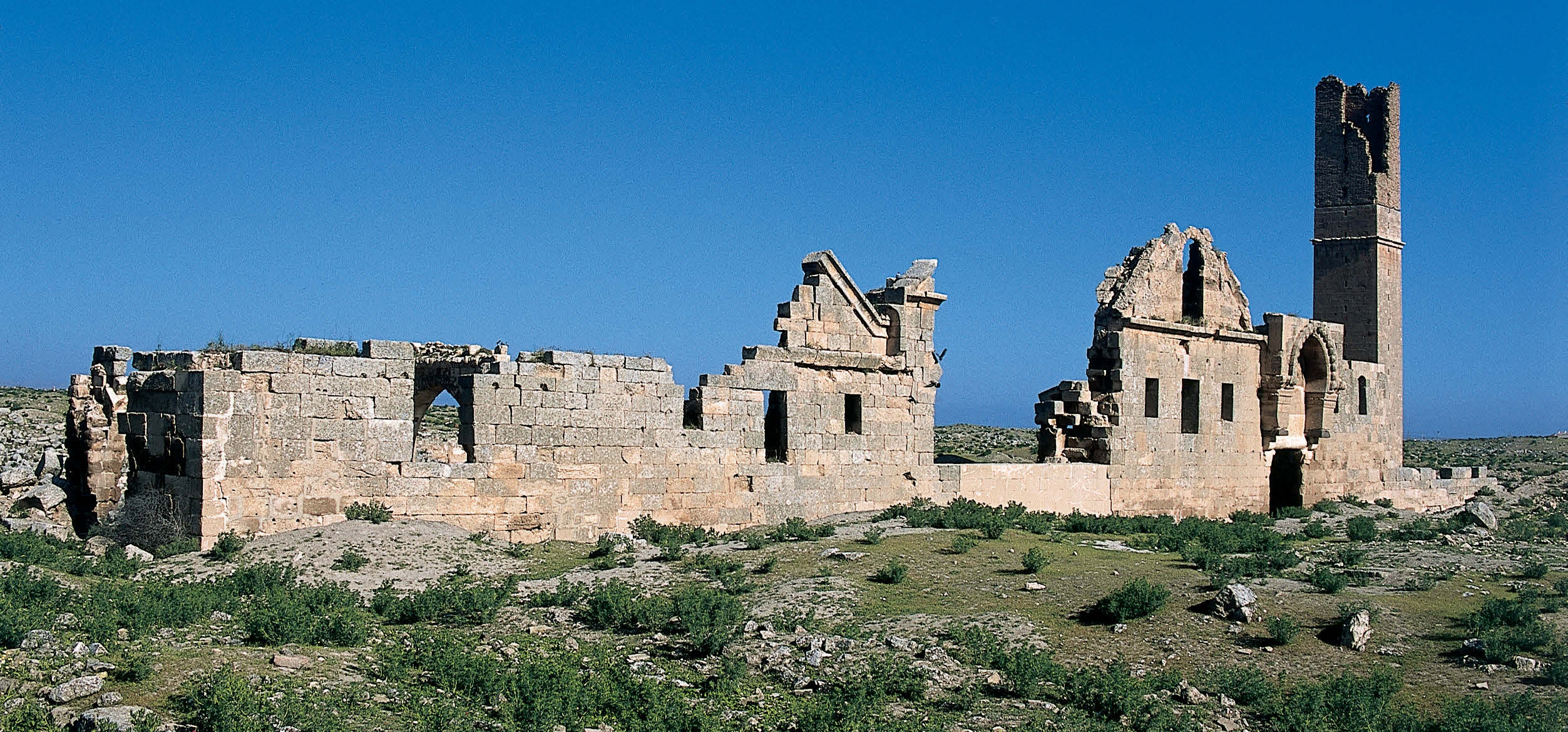
The mosque built by Caliph Marwan II (ruled 744–750) on the ruins of a Christian church in Carrhae (Harran).2 Carrhae was not only a Nestorian diocese but also the seat of a famous university, where mathematics and Chaldean astrology were taught.3 At Carrhae Rome suffered two serious defeats at the hands of its Iranian archenemies: in 53BCE the Parthians defeated the triumvir Crassus, and in 260CE Shapur I took Emperor Valerian prisoner. Carrhae, like Nisibis, Amida (Dyarbakir) and Aleppo, was plundered and destroyed by the Mongols in 1260.4
哈里发马尔万二世 (Marwan II)(在位744–750年)在卡莱(哈兰)(Carrhae/Harran)一座基督教教堂的废墟上修建的清真寺。2 卡莱 (Carrhae) 不仅是一个聂斯托利派教区 (Nestorian diocese),还是一所著名大学的所在地,那里教授数学和迦勒底占星术 (Chaldean astrology)。3 在卡莱 (Carrhae),罗马在其伊朗宿敌手中遭受了两次惨败:公元前53年,帕提亚人 (Parthians) 击败了三头同盟之一的克拉苏 (Crassus);公元260年,沙普尔一世 (Shapur I) 俘获了皇帝瓦勒良 (Valerian)。卡莱 (Carrhae) 与尼西比斯 (Nisibis)、阿米达(迪亚巴克尔)(Amida (Dyarbakir)) 和阿勒颇 (Aleppo) 一样,于1260年被蒙古人 (Mongols) 劫掠并摧毁。4
The cultural policy of the Parthians was, until the start of the Common Era, hellenophile. In addition to the Parthian language of Arcasid Pahlavi, Greek and Aramaic remained in use. In the realm of religion, Greco-Roman deities were popular with the ruling family, until a nationalistic resistance movement from the Persian heartland led to a revival of the old Iranian beliefs of Zoroastrianism and Mithraism. The Parthians then fostered the building of fire temples and began to collect the Zoroastrian traditions that were later codified in the Avesta.5 many followers in the Roman Empire that in the second and third centuries it was one of the chief rivals of early Christianity. Mithra was the chief deity of the pre-Zoroastrian Iranian pantheon. He was worshipped as the god of the sun, light and war, as well as the god of justice and the patron of treaties. In Zoroastrianism, he supported Ahura Mazda in his battle against evil. In the Hellenistic context he was identified with the sun god Helios, and in Roman belief with Sol Invictus, which made him the favourite god of the army. The goal of the Mithra mysteries, widely popular in the Roman Empire, was to free the soul, which had been born in heaven, from the constraints of the body and to return it, via the seven cosmic spheres, to its origin.6 On the whole, a spirit of religious tolerance
帕提亚人 (Parthians) 的文化政策在公元纪元开始之前一直是亲希腊的。除阿尔卡西德巴列维语 (Arcasid Pahlavi) 这种帕提亚语外,希腊语和亚兰语 (Greek and Aramaic) 仍在使用。在宗教领域,希腊-罗马诸神 (Greco-Roman deities) 在统治家族中颇受欢迎,直到一场来自波斯腹地的民族主义抵抗运动导致琐罗亚斯德教和密特拉教 (Zoroastrianism and Mithraism) 这些古老伊朗信仰复兴。帕提亚人随后推动修建火神庙,并开始收集后来被编订进《阿维斯陀》(Avesta) 的琐罗亚斯德教传统。5 它在罗马帝国拥有众多追随者,以至于在二世纪和三世纪,它成为早期基督教的主要竞争对手之一。密特拉 (Mithra) 是前琐罗亚斯德教伊朗万神殿的主神。他被奉为太阳、光明与战争之神,也是正义之神和条约的守护神。在琐罗亚斯德教中,他支持阿胡拉·马兹达 (Ahura Mazda) 与邪恶作战。在希腊化语境中,他被等同于太阳神赫利俄斯 (Helios),在罗马信仰中则被等同于无敌太阳神 (Sol Invictus),这使他成为军队最喜爱的神。密特拉秘仪 (Mithra mysteries) 在罗马帝国广受欢迎,其目标是使灵魂——它诞生于天上——摆脱肉体的束缚,并经由七个宇宙球层返回其本源。6 总体而言,一种宗教宽容的精神
While the spread of Zoroastrianism was confined to the Parthian-Iranian cultural sphere, the cult of the ancient Indo-Iranian god Mithra, widespread in Iran, crossed the cultural boundary of the Euphrates and won over so
尽管琐罗亚斯德教 (Zoroastrianism) 的传播局限于帕提亚-伊朗 (Parthian-Iranian) 文化圈,但古代印度-伊朗 (Indo-Iranian) 神祇密特拉 (Mithra) 的崇拜在伊朗广泛流行,它跨越了幼发拉底河 (Euphrates) 的文化边界,并赢得了如此……
predominated among the Parthians, which helped enable the rapid spread of Christianity. of asceticism, Gnosticism and apocalypticism, especially popular among Jews, offered a counterweight to the increasing loss of spiritual direction. Roman religion had long since ossified, since it provided no moral principles, no way of salvation, no possibility for a personal relationship with the divinity, and no emotional home in a faith community. It functioned, at best, as the personified ideal of civil life and the state. At worst, it deteriorated into a cult of the ruler, the idolization of a living person, which began with Emperor Nero and under Domitian was required of all citizens. In 85CE Domitian began presumptuously signing documents as ‘Lord and God’.7
在帕提亚人 (Parthians) 中占主导地位,这有助于促成基督教的迅速传播。禁欲主义 (asceticism)、诺斯替主义 (Gnosticism) 和启示论 (apocalypticism) 尤其在犹太人 (Jews) 中盛行,对日益严重的精神方向迷失起到了制衡作用。罗马宗教早已僵化,因为它没有提供道德原则、救赎之道、与神建立个人关系的可能性,也没有信仰共同体中的情感归宿。它充其量只是公民生活与国家的人格化理想。最坏的情况下,它蜕变为统治者崇拜,即对在世之人的偶像化;这种崇拜始于尼禄皇帝 (Nero),并在图密善 (Domitian) 统治下成为所有公民必须履行的义务。公元85年,图密善 (Domitian) 开始僭妄地在文件上以“主和神” (Lord and God) 署名。7
Rome – empire to the west of the Euphrates
罗马 (Rome)——幼发拉底河 (Euphrates) 以西的帝国
The republican structure of Rome did not survive the autocratic rule of Julius Caesar and the subsequent struggles for power. Under Octavian (ruled 29BCE–14CE) – who adopted the honourific Augustus, ‘the exalted’ – Rome became an empire. Rome remained the sole capital of the empire until 324CE, when Emperor Constantine I (ruled 312–337), for strategic reasons, made the city of Byzantium on the Bosporus into a second, new capital, thus shifting the imperial centre of gravity to the east. Constantine I took this step for two reasons. First, increasing military pressure from the Goths and Sarmatians on the Danube and the Sassanians on the Euphrates called for the presence of the emperor and the organs of government close to the threatened eastern border. Second, the new capital controlled the maritime trade with Egypt and the Middle East, as well as the continental trade routes that linked Europe with Asia. Imperial unity collapsed towards the end of the fourth century, when Emperor Theodosius I (ruled 379–395) divided the empire between his two sons, giving Arkadios the east and Honorius the west. Although the Western Roman Empire fell in 476, the Eastern Roman Empire, also called the Byzantine Empire, persisted until 1453.
罗马 (Rome) 的共和政体未能挺过尤利乌斯·凯撒 (Julius Caesar) 的独裁统治以及随后的权力争夺。在屋大维 (Octavian)(公元前29年—公元14年在位)统治下——他采用了尊号“奥古斯都” (Augustus),意为“尊贵者”——罗马 (Rome) 成为一个帝国。罗马 (Rome) 一直是帝国的唯一首都,直到公元324年,皇帝君士坦丁一世 (Constantine I)(312—337年在位)出于战略原因,将博斯普鲁斯海峡 (Bosporus) 上的拜占庭城 (Byzantium) 设为第二座新都,从而将帝国重心东移。君士坦丁一世 (Constantine I) 采取这一举措有两个原因。第一,哥特人 (Goths) 和萨尔马提亚人 (Sarmatians) 在多瑙河 (Danube) 沿岸、萨珊人 (Sassanians) 在幼发拉底河 (Euphrates) 沿岸日益增加的军事压力,要求皇帝和政府机构靠近受到威胁的东部边境。第二,新都控制了与埃及 (Egypt) 和中东 (Middle East) 的海上贸易,以及连接欧洲 (Europe) 与亚洲 (Asia) 的陆上贸易路线。4世纪末,帝国统一瓦解:皇帝狄奥多西一世 (Theodosius I)(379—395年在位)将帝国分给两个儿子,把东部交给阿卡狄乌斯 (Arkadios),西部交给霍诺里乌斯 (Honorius)。尽管西罗马帝国 (Western Roman Empire) 于476年灭亡,东罗马帝国 (Eastern Roman Empire),亦称拜占庭帝国 (Byzantine Empire),一直延续到1453年。
Since no god, except for the Jewish, made a claim of absoluteness, the gods became inter- changeable. ‘The various cults were regarded by the people as equally true, by the philosophers as equally false, and by the authorities as equally useful.’ 8 The twilight of the Greco-Roman gods must surely have provided fertile ground for extensive doctrines of salvation. One was the cult of Mithra, which, as Sol Invictus and his values of justice, duty and discipline, enjoyed particular approval among soldiers. The sole worship of the unconquerable sun god, who rose anew each dawn from the darkness of the night, had an affinity with the need for overcoming religious randomness and for a universal god. The Mithra cult was a preliminary, non-metaphysical step towards a monotheistic religion – a monolatry. The popularity of Mithra can be seen in Emperor Constantine’s 333 declaration of 25 December, the traditional birthday of Sol Invictus, as the day of Jesus Christ’s birth.9 Already in 321, Constantine had declared the Day of the Sun an official Christian holiday.10
由于除了犹太人的神之外,没有任何神祇宣称绝对性,诸神便变得可以互换。“民众认为各种崇拜同样真实,哲学家认为它们同样虚假,当权者则认为它们同样有用。”8 希腊—罗马 (Greco-Roman) 诸神的黄昏,必定为广泛的救赎教义提供了肥沃的土壤。其中之一便是密特拉 (Mithra) 崇拜;它作为不可征服的太阳神 (Sol Invictus),连同其正义、责任与纪律的价值观,尤其受到士兵的青睐。对这位不可征服的太阳神的唯一崇拜——他每天黎明都从黑夜中重新升起——与克服宗教随意性、追求一位普世神祇的需要相契合。密特拉 (Mithra) 崇拜是迈向一神教的一个初步的、非形而上学的步骤——一种单一主神崇拜 (monolatry)。密特拉 (Mithra) 的流行可见于君士坦丁大帝 (Emperor Constantine) 于333年宣布12月25日——不可征服的太阳神 (Sol Invictus) 的传统生日——为耶稣基督 (Jesus Christ) 的诞辰日。9 早在321年,君士坦丁 (Constantine) 就已宣布太阳日 (Day of the Sun) 为官方的基督教节日。10
The expansion of Roman rule from the Roman-Hellenistic heartland to Asia and Africa led to unprecedented cosmopolitanism and religious syncretism. Militarily and economically, Rome was the victor, but in the realm of religion, it bowed to the vanquished. Such foreign deities as Isis and Osiris, Cybele and Attis, and, above all, Mithra, captured the hearts of the people with their mystery cults. But also the movements
罗马统治从罗马-希腊化核心地带向亚洲 (Asia) 和非洲 (Africa) 的扩张,带来了前所未有的世界主义与宗教融合主义。在军事和经济上,罗马 (Rome) 是胜利者,但在宗教领域,它却向被征服者低头。诸如伊西斯 (Isis) 与奥西里斯 (Osiris)、库柏勒 (Cybele) 与阿提斯 (Attis),以及尤其是密特拉 (Mithra) 这样的外来神祇,以其秘仪 (mystery cults) 俘获了民众的心。但同样还有那些运动
In the region surrounding the principality of Orhay (Edessa), which claimed for itself the title of the first Christian state in the world, there was also a latent monotheism. There the god Marilaha was worshipped as the universal Lord-
在奥尔海 (Orhay,即埃德萨 Edessa) 公国周边地区——该公国自称享有世界上第一个基督教国家的名号——那里还存在着一种潜在的独一神论。在那里,马里拉哈神 (Marilaha) 被尊奉为宇宙之主——
God. This proto-monotheism first paved the way for the success of Judaism in Edessa. Since there were in Edessa, as in all of Syria and western Mesopotamia, numerous examples of divine triads,11 the environment was again peculiarly receptive to Christianity, as it enriched these two concepts with the figure of a divine–human mediator and made them more accessible. of Jerusalem. Thus the Jews had to find a means to bridge the chasm between the claim to be the one chosen people of the one God, and the political reality. Responses ranged from that of the Zealots, who called for a holy war against Rome (they awaited the messiah as military commander), to those of the Pharisees, who promoted literal obedience of Mosaic Law; of the Hellenized and pro-Roman Sadducees; and of the numerous penitential preachers and communities anticipating the apocalypse.
神 (God)。这种原始一神论 (proto-monotheism) 首先为犹太教 (Judaism) 在埃德萨 (Edessa) 的成功铺平了道路。由于在埃德萨 (Edessa),如同在整个叙利亚 (Syria) 和西美索不达米亚 (western Mesopotamia) 一样,存在大量神圣三联神 (divine triads)11 的例子,这种环境再次特别容易接受基督教 (Christianity),因为基督教以一位神人中保 (divine–human mediator) 的形象丰富了这两个概念,并使它们更易为人们所接受。耶路撒冷的 (of Jerusalem)。因此,犹太人 (Jews) 不得不设法弥合以下两者之间的鸿沟:自称为独一神的唯一选民这一主张,与政治现实。各种回应不一而足:从奋锐党 (Zealots) 的回应——他们号召对罗马 (Rome) 发动圣战(他们期待弥赛亚 (messiah) 作为军事统帅降临)——到法利赛人 (Pharisees) 的回应——他们提倡对摩西律法 (Mosaic Law) 的字面服从;还有希腊化的 (Hellenized) 且亲罗马的 (pro-Roman) 撒都该人 (Sadducees) 的回应;以及众多期待末世 (apocalypse) 的悔罪布道者和团体的回应。
The Church of the East owed its rapid expansion in Mesopotamia to the Jewish Diaspora as well, for the earlier missionary efforts to the east of the Euphrates, which presumably began towards the end of the first century, met with particular approval in Jewish circles. The numerically significant Jewish Diaspora in Mesopotamia, which included nearly a million people, had resulted from the earlier Assyrian and Babylonian invasions.12 First, in 722BCE, the Assyrians conquered Samaria and deported the ten tribes of Israel to the region of the two great rivers. Then, in 587BCE, the Babylonians attacked Jerusalem and resettled the Jewish upper classes in Babylonia. Simultaneously, many Jews left the ravaged land for Syria and Asia Minor. Although some of the Jews who lived in Babylon slowly returned to Judea following Cyrus II’s victory over Babylonia in 538BCE, the ten tribes remained ‘lost’. This led a few Protestant missionaries, who ‘rediscovered’ the Nestorians of Kurdistan in 1831, to consider them the descendants of the ten tribes of Israel.13 The defeat of the second Jewish uprising of 132– 135CE resulted in an additional wave of Jewish immigration to Parthian Mesopotamia, but also to Arabia and India.
东方教会 (Ch. of E.) 在美索不达米亚 (Mesopotamia) 的迅速扩展,同样要归功于犹太流散群体 (Jewish Diaspora),因为早先向幼发拉底河 (Euphrates) 以东进行的传教努力——据推测始于公元一世纪末——在犹太圈子中尤其受到认可。美索不达米亚 (Mesopotamia) 人数可观的犹太流散群体 (Jewish Diaspora) 包括近一百万人,是早先亚述 (Assyrian) 和巴比伦 (Babylonian) 入侵的结果。12 首先,在公元前722年,亚述人 (Assyrians) 征服了撒马利亚 (Samaria),并将以色列十支派 (ten tribes of Israel) 驱逐到两河流域。随后,在公元前587年,巴比伦人 (Babylonians) 进攻耶路撒冷 (Jerusalem),并将犹太上层阶级重新安置到巴比伦尼亚 (Babylonia)。与此同时,许多犹太人离开被蹂躏的土地,前往叙利亚 (Syria) 和小亚细亚 (Asia Minor)。尽管一些居住在巴比伦 (Babylon) 的犹太人在公元前538年居鲁士二世 (Cyrus II) 战胜巴比伦尼亚 (Babylonia) 后慢慢返回犹地亚 (Judea),但十支派仍然‘失落’。这使少数新教传教士 (Protestant missionaries)——他们于1831年‘重新发现’了库尔德斯坦 (Kurdistan) 的聂斯托利派 (Nestorians)——认为他们是以色列十支派 (ten tribes of Israel) 的后裔。13 公元132—135年第二次犹太起义 (second Jewish uprising) 的失败,导致又一波犹太人移民到帕提亚治下的美索不达米亚 (Parthian Mesopotamia),但也移民到阿拉伯 (Arabia) 和印度 (India)。
Even though Judaism taught a clear, unambiguous message, for the majority of non-Jewish people, seeking a meaningful and living religiosity, it was unable to offer a viable alternative. Yahweh was, after all, a unique god for his chosen people; birth determined whether an individual belonged among the chosen or the lost. For this reason the prophet Ezra, after the return from the Babylonian exile, forbade mixed marriages with members of non-Jewish peoples and ordered the expulsion of foreign women.15 The circumcision of adult men – a life- threatening procedure in those days – presented a further obstacle to eventual conversion. The later relaxation of these rules enabled successful Jewish missionary activity, as in, e.g., southern Arabia and Yemen. The rejection of circumcision for Gentile Christians, as enforced by Paul, and the emphasis on God as Lord of all people, transcending racial and national affiliations, prepared the way for the teachings of Jesus to achieve success as a world religion. National chosenness metamorphosed into universal chosenness, open to all orthodox believers.
尽管犹太教教导了清晰而明确的信息,但对于大多数寻求一种有意义且鲜活的宗教生活的非犹太人而言,它无法提供一种可行的替代选择。毕竟,雅威 (Yahweh) 是其选民独一的神;一个人是否属于选民或被弃者,由出生决定。因此,先知以斯拉 (Ezra) 在从巴比伦流亡归来后,禁止与非犹太人通婚,并下令驱逐外族妇女。15 成年男子的割礼——在当时是一种危及生命的手术——进一步阻碍了最终皈依。后来这些规则的放宽,使犹太教传教活动得以成功,例如在南阿拉伯和也门。保罗 (Paul) 对外邦基督徒废除割礼,并强调神是所有人的主,超越种族和民族归属,这为耶稣 (Jesus) 的教导作为世界性宗教取得成功铺平了道路。民族性的拣选转变为普世性的拣选,向所有正统信徒开放。
As far as Judea was concerned, it looked for almost a century as if the eschatological vision was being fulfilled, according to which the God of Israel, who was originally also worshipped as Yahweh Zebaoth, the Lord of armies,14 would create in favour of Israel a new world order under the Maccabees. But in 63BCE Pompey brought this dream to an end with the conquest
就犹地亚 (Judea) 而言,近一个世纪以来,情况看上去仿佛那末世论异象正在应验:按照这一异象,最初也被尊奉为万军之主雅威·撒巴俄 (Yahweh Zebaoth, the Lord of armies)14 的以色列之神,将在马加比家族 (Maccabees) 的统治下为以色列创造一种新的世界秩序。但公元前63年,庞培 (Pompey) 以征服终结了这一梦想
Paul in Antioch and the broadening of paleo-Christianity community of faith open to all; the old Mosaic criteria had become irrelevant. Paul, Barnabas and Titus travelled to Jerusalem to discuss this question with the apostles James, Peter and John of Zebedee. This Apostolic Council of the year 4821 largely confirmed Paul’s position, adding only four minor qualifications.22 Thanks to Paul’s wisdom, Jesus’ teaching was transformed from one of the countless Jewish messianic sects into a universal religion transcending ethnic particularities. Expressed in simple terms, the faithful are born into Judaism, but received into Christianity.
保罗(Paul)在安提阿(Antioch)与早期基督教的拓展。信仰团体向所有人开放;古老的摩西律法标准已不再适用。保罗(Paul)、巴拿巴(Barnabas)和提多(Titus)前往耶路撒冷(Jerusalem),与使徒雅各(James)、彼得(Peter)和西庇太的儿子约翰(John of Zebedee)讨论这一问题。公元4821年的这次使徒会议大体上确认了保罗的立场,只增添了4项次要限定。22 多亏保罗的智慧,耶稣(Jesus)的教导才从无数犹太弥赛亚派别之一转变为一种超越族裔差异的普世宗教。简言之,信徒因出生而属于犹太教,却因接纳而进入基督教。
As a starting and ending point of the Silk Road, Antioch – the third-largest city in the Roman Empire – enjoyed extraordinary prosperity. The first Christians came to Antioch in the course of the flight resulting from the stoning of Stephen in 35CE.16 There, around the year 40, the Greek term christianoi, Christian person, was used to distinguish the Greek-speaking Christians of Gentile origin from the Jewish Christians, called Nazarenes.17 This distinction recalls the profound disagreement that shook the Christian community of Antioch, led by Peter and Barnabas, around 43/45. The dispute centred on the rejection of non-Jewish Christians by the Jewish Christians. The latter, supported by envoys of James, the Lord’s brother, and by Peter, believed that the Mosaic purity laws, dietary guidelines and the obligation of circumcision applied to Gentile Christians as well.18 The Jewish Christians saw in the rejection of circumcision a betrayal of God’s covenant with Israel and thus refused to share the communal liturgical table with uncircumcised Gentile Christians.
作为丝绸之路的起点和终点,安条克 (Antioch)——罗马帝国第三大城市——享有非凡的繁荣。最早的基督徒是在公元35年司提反 (Stephen) 被石头打死所引发的逃亡过程中来到安条克的。16 在那里,约公元40年,希腊语术语“基督徒”(christianoi)被用来区分外邦出身、讲希腊语的基督徒与被称为拿撒勒派 (Nazarenes) 的犹太基督徒。17 这一区分令人想起约公元43/45年震撼由彼得 (Peter) 和巴拿巴 (Barnabas) 领导的安条克基督徒群体的深刻分歧。争论的焦点在于犹太基督徒对非犹太基督徒的排斥。后者得到主的兄弟雅各 (James) 的使者和彼得 (Peter) 的支持,认为摩西律法的洁净条例、饮食规条和割礼义务同样适用于外邦基督徒。18 犹太基督徒认为,拒绝割礼是对上帝与以色列所立之约的背叛,因此拒绝与未受割礼的外邦基督徒共享团体礼仪餐桌。
Although the Apostolic Council resolved the question of circumcision within the Roman Empire, the issue re-emerged among the Nestorians of Mesopotamia after the seventh century as a result of the Arab conquest. Islamic scholars reproached Christians for failing to have themselves circumcised, as their prophet Jesus had been. They replied that baptism had replaced circumcision, as Christ had abolished the latter by his own baptism. Neither an external sign nor ritual cleansings were crucial for the covenant with God, but rather the symbolic death and resurrection in baptism and the inner purity of the heart. ‘What good does it do a darkened house to have lamps on its outer walls while the rooms within remain unlit?’23 Regarding the replacement of circumcision with baptism, the East Syrian metropolitan Odisho of Nisibis (1250–1318) wrote, ‘The Jews had to distinguish themselves bodily from the other heathens, since God had determined that the messiah would appear among their descendants. In the same way [like circumcision] a man marks his camels, sheep and horses, to distinguish his possessions from those of strangers. The baptism of true believers [however] encompasses the mystery of death and resurrection. For immersion in an abyss of water is similar to death, as one no longer has senses, as when one is buried in the earth. The emergence from the water is the symbol of resurrection,
尽管使徒会议 (Apostolic Council) 解决了罗马帝国 (Roman Empire) 境内的割礼问题,但在七世纪之后,由于阿拉伯征服 (Arab conquest),这一问题又在美索不达米亚 (Mesopotamia) 的聂斯托利派 (Nestorians) 中重新出现。伊斯兰学者指责基督徒没有像他们的先知耶稣 (Jesus) 那样给自己行割礼。他们回答说,洗礼已经取代了割礼,因为基督 (Christ) 借着自己的洗礼废除了后者。对于与神的盟约而言,关键既不是外在的记号,也不是礼仪性的洁净,而是洗礼中象征性的死亡与复活,以及内心的纯洁。“一座昏暗的房屋,外墙上挂着灯,而里面的房间却仍无光亮,这有什么益处呢?”23 关于以洗礼取代割礼,东叙利亚 (East Syrian) 都主教尼西比斯的奥迪绍 (Odisho of Nisibis)(1250–1318)写道:“犹太人 (Jews) 必须从身体上与其他异教徒区分开来,因为神已经定意弥赛亚 (messiah) 将从他们的后裔中出现。同样,[如同割礼] 人会标记自己的骆驼、羊和马,以把自己的财物与他人的财物区分开来。然而,真信徒的洗礼却包含着死亡与复活的奥秘。因为浸入水的深渊类似于死亡,人不再有知觉,就像被埋葬在土中一样。从水中出来则是复活的象征,”
Paul recognized the danger of a split within the nascent Christian community and vehemently opposed the rejection of the communal meal. Following the path of Jesus’s preaching, he declared that the inner spirit of the mind and interpersonal relationships were more important than cultic purity. By turning his attention to Jews and Arabs, to scholars, fishermen, tax collectors and prostitutes, Jesus abolished the distinction, fundamental in Judaism, between pure and impure persons. Salvation depended not on circumcision but rather on baptism and belief in Jesus and his redeeming power.19 ‘There is no longer Jew and Greek, circumcised and uncircumcised, barbarian, Scythian, slave and free; but Christ is all and in all.’ 20 The new chosen people is a
保罗 (Paul) 认识到初生的基督教群体内部存在分裂的危险,并激烈反对拒绝团体共餐的做法。他遵循耶稣 (Jesus) 传道的道路,宣称心灵的内在精神与人际关系比礼仪上的洁净更为重要。通过将注意力转向犹太人 (Jews) 和阿拉伯人 (Arabs),转向学者、渔夫、税吏和妓女,耶稣 (Jesus) 废除了犹太教 (Judaism) 中洁净与不洁净之人之间的根本区分。得救并不取决于割礼,而是取决于洗礼以及对耶稣 (Jesus) 及其救赎力量的信仰。19 “不再有犹太人 (Jew) 和希腊人 (Greek),受割礼的和未受割礼的,化外人、西徐亚人 (Scythian)、奴隶和自由人;惟有基督 (Christ) 是万有,也在万有之中。”20 新的选民是一个
shown by the interpretation of the destruction of the Temple in 70. Christians, as well as Jews, considered it a judgement of God, but for different reasons: for the former, it was the just punishment for having carried out the crucifixion of Christ; for the latter, it expressed God’s anger over faulty observance of Mosaic Law.27 Not least, the successful proselytization in the Jewish communities provoked the official condemnation of Christians by the Jewish academy at Jamnia around the year 80.28 The conflict growing out of the desire to lay claim to the heritage of the Jewish tradition while simultaneously disassoc- iating oneself from contemporary Judaism led to a position critical of the Jews, which was also found in the Church of the East. In the second century this conflict resulted in the founding of a rival Church by Marcion.29
这一点从对公元70年圣殿被毁的解读中可以看出。基督徒和犹太人都将其视为上帝的审判,但原因不同:对前者而言,这是对将基督 (Christ) 钉十字架所施行的公正惩罚;对后者而言,它表达了上帝对未能正确遵守摩西律法 (Mosaic Law) 的愤怒。27 尤其是,在犹太社群中成功的劝人改宗活动,引发了雅麦尼亚 (Jamnia) 的犹太学院约在公元80年对基督徒的正式谴责。28 这种冲突源于一种愿望:既要继承犹太传统的遗产,又要与当时的犹太教划清界限;它导致了一种批判犹太人的立场,这种立场也见于东方教会 (Ch. of E.)。在二世纪,这一冲突导致马吉安 (Marcion) 创立了一个对立的教会。29
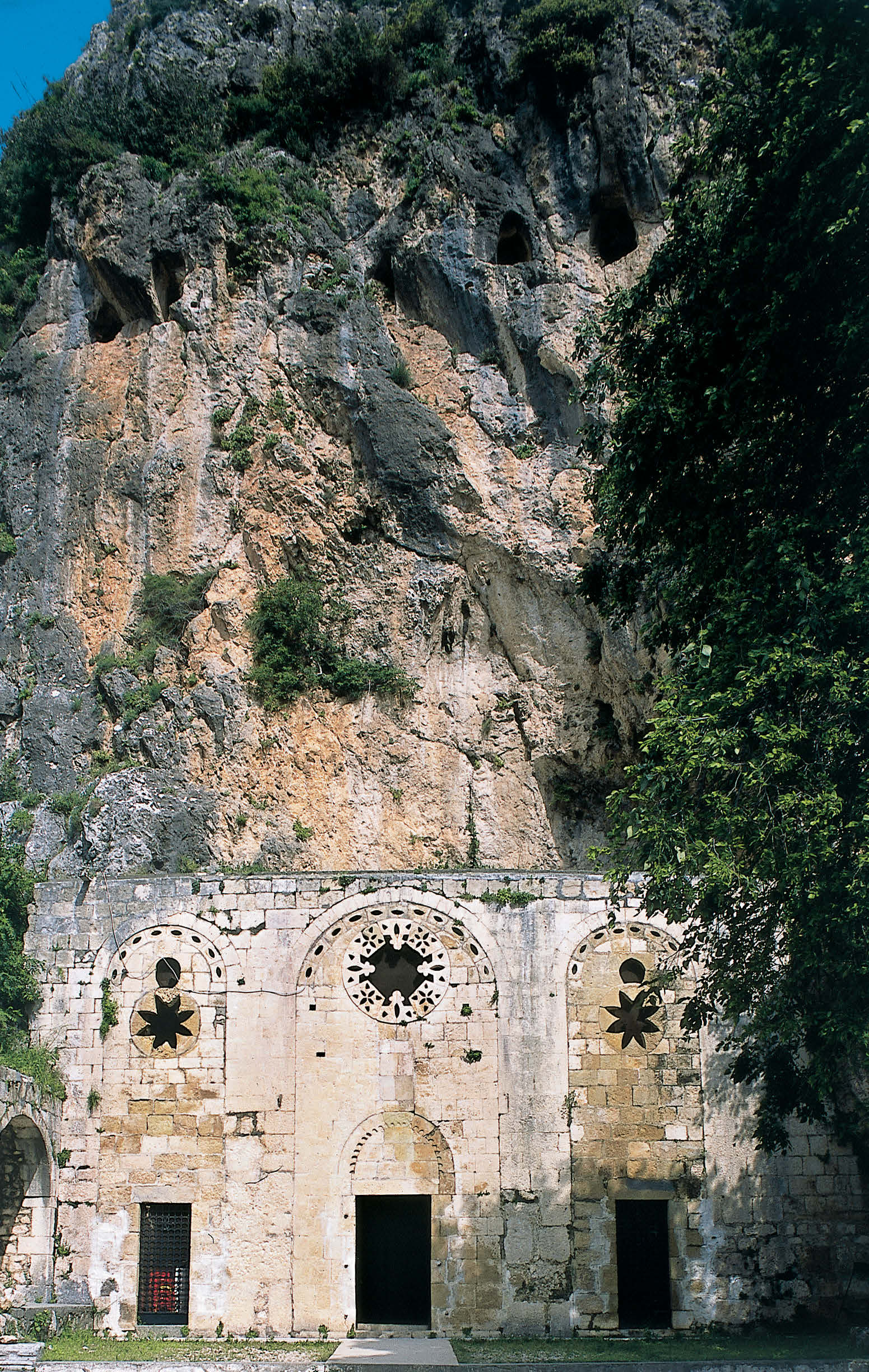
St Peter’s cave church in Antakya, Turkey, formerly Antioch. As a starting and ending point of the ancient Silk Road, Antioch was one of the largest and wealthiest cities of the Roman Empire. From here traders travelled to China via the cities of Edessa, Nisibis, Seleucia- Ctesiphon, Ray (Teheran) and Merv – all early and important dioceses of the Church of the East. The grotto of Peter is a natural cave, which, according to tradition, the evangelist Luke gave to the young Christian community. Paul, Barnabas and Peter are said to have preached here. The facade, built by the Crusaders after 1098, was restored in 1863. Today the grotto of Peter belongs to the Catholic Church and is looked after by Capuchins.5
圣彼得洞窟教堂 (St Peter’s Cave Church) 位于土耳其 (Turkey) 的安塔基亚 (Antakya),旧称安条克 (Antioch)。作为古代丝绸之路 (Silk Road) 的起点和终点,安条克 (Antioch) 曾是罗马帝国 (Roman Empire) 最大、最富有的城市之一。商人从这里出发,经由埃德萨 (Edessa)、尼西比斯 (Nisibis)、塞琉西亚-泰西封 (Seleucia-Ctesiphon)、雷伊 (Ray)(德黑兰 (Teheran))和梅尔夫 (Merv) 等城市前往中国 (China)——这些城市都是东方教会 (Ch. of E.) 早期且重要的教区。彼得洞窟 (Grotto of Peter) 是一个天然洞穴;据传统,传福音者路加 (Luke) 将其赠予了年轻的基督徒团体。据说保罗 (Paul)、巴拿巴 (Barnabas) 和彼得 (Peter) 曾在此讲道。其立面由十字军 (Crusaders) 于1098年后建造,并于1863年修复。如今,彼得洞窟 (Grotto of Peter) 属于天主教会 (Catholic Church),由嘉布遣会士 (Capuchins) 照管。5
Christianity crosses the Euphrates
基督教跨越幼发拉底河 (Euphrates)
The traditions of Mar Thoma, Mar Addai and Mar Aggai, and the correspondence of King Abgar of Edessa with Jesus Christ
圣多马 (Mar Thoma)、圣阿代 (Mar Addai) 和圣阿基 (Mar Aggai) 的传统,以及埃德萨 (Edessa) 国王阿布加尔 (Abgar) 与耶稣基督 (Jesus Christ) 的书信往来
The question of when the Church of the East began, defined as the start of missionary activity east of the Euphrates, leads directly to the conflict between Nestorian tradition and the testimony of textual criticism. No fewer than ten names appear among those who claim to have been the first to carry the Good News to the east. Tradition and scholarship do concur, at least, regarding where Christianity first took hold, namely in Edessa (Urfa) and Adiabene (northern Iraq). Reports that the Three Kings 30 or the pilgrims who had been in Jerusalem at Pentecost 31 were the first missionaries to the Parthian Empire clearly belong in the realm of myth. Likewise, we must not concern ourselves with the traditions about Peter, Benjamin and Bartholomew, who are associated with India, as well as Lycaonia, resembling rising from the grave. For this reason, the apostles required that, before baptism, the candidates wear black penitential garments and afterwards white robes, to represent the transition from the world of darkness to the world of light.’ 24
东方教会 (Ch. of E.) 始于何时——其定义是在幼发拉底河 (Euphrates) 以东开始传教活动——这一问题直接引出了聂斯托利派传统 (Nestorian tradition) 与文本批评的见证之间的冲突。在那些声称最早将福音带到东方的人中,出现的名字不少于十个。至少,传统与学术研究在基督教最初扎根何处这一点上是一致的,即埃德萨 (Edessa,即乌尔法 Urfa) 和阿迪亚贝尼 (Adiabene,伊拉克北部)。关于三王 (Three Kings) 30 或那些在五旬节 (Pentecost) 31 时曾在耶路撒冷的朝圣者是最早前往帕提亚帝国 (Parthian Empire) 的传教士的说法,显然属于神话领域。同样,我们也不应理会关于彼得 (Peter)、本杰明 (Benjamin) 和巴多罗买 (Bartholomew) 的传统,他们与印度 (India) 以及吕高尼 (Lycaonia) 有关,仿佛从坟墓中复活一般。因此,使徒们要求,在洗礼前,候洗者要穿黑色悔罪衣,之后穿白色长袍,以代表从黑暗世界到光明世界的过渡。’ 24
On the one hand, the Apostolic Council ensured Christian unity, but, on the other, it deepened the rift with Judaism, since it raised the general question of the abandonment of Jewish law. The imprisonment of Paul by the Jewish temple police that led to his death around 5825 and the stoning of the leader of Jerusalem’s community James, ordered by the high priest Hannas II four years later,26 as well as the refusal of the Christians to participate in the first Jewish revolt, made the gap unbridgeable, as was
一方面,使徒会议 (Apostolic Council) 确保了基督徒的合一,但另一方面,它加深了与犹太教的裂痕,因为它提出了放弃犹太律法这一普遍问题。保罗 (Paul) 被犹太圣殿警察囚禁,导致他于约58年25去世;四年后,大祭司哈南二世 (Hannas II) 下令用石头打死耶路撒冷社群的领袖雅各 (James),26;再加上基督徒拒绝参加第一次犹太起义 (First Jewish Revolt),使这一裂痕无法弥合,正如
Ethiopia, Arabia and Armenia.32 Abha was, for his part, simply a companion of Mar Mari.33 The names of St Thomas, Mar Addai, Mar Aggai and Mar Mari, however, ought to be taken seriously, especially since they occupy the first four places in the official chronology of the patriarchs of the Church of the East.34 conclusively determined regarding the historical veracity of the Thomas mission, the possibility of his journey to India cannot be excluded, especially since regular maritime traffic took place between Rome and India.41
埃塞俄比亚 (Ethiopia)、阿拉伯 (Arabia) 和亚美尼亚 (Armenia)。32 阿卜哈 (Abha) 则不过是马利 (Mar Mari) 的同伴。33 然而,圣多马 (St Thomas)、阿代 (Mar Addai)、阿盖 (Mar Aggai) 和马利 (Mar Mari) 的名字应当认真对待,尤其是因为他们在东方教会 (Ch. of E.) 宗主教官方年表中占据前四位。34 关于多马传教的历史真实性,虽然无法最终确定,但他前往印度的可能性不能排除,尤其是因为罗马 (Rome) 与印度 (India) 之间存在着定期的海上交通。41
Mar Addai is the central figure of The Doctrine of Addai, a Syriac work written around 400, which adopts and expands on Eusebius’s narrative from a century earlier.42 It tells of the missionizing of Edessa and of the correspondence of King Abgar V Ukama (ruled 9–46) with Jesus Christ. Edessa, the Syrian Orhay, was the capital of the small kingdom of Osroene, which lay in a double lock between Parthia and Rome. It owed its wealth to the control of a section of the Silk Road, which ran west towards Antioch and east towards Nisibis, but it was also at the mercy of the two great opposing powers. In 214CE Emperor Caracalla made it a Roman prefecture.
玛尔·阿代 (Mar Addai) 是《阿代教义》(The Doctrine of Addai) 的核心人物。这是一部约写于公元400年的叙利亚文著作,它采纳并扩展了大约一个世纪前优西比乌 (Eusebius) 的叙述。42 该书讲述了埃德萨 (Edessa) 的传教活动,以及国王阿布加尔五世·乌卡马 (King Abgar V Ukama,在位9–46年) 与耶稣基督 (Jesus Christ) 之间的书信往来。埃德萨,即叙利亚的奥尔哈伊 (Orhay),是奥斯若恩 (Osroene) 小王国的首都,该王国地处帕提亚 (Parthia) 与罗马 (Rome) 之间的双重锁钥之地。它的财富来自对丝绸之路 (Silk Road) 一段的控制,这条路西通安条克 (Antioch),东达尼西比斯 (Nisibis),但它也受制于两个相互对抗的大国。公元214年,皇帝卡拉卡拉 (Caracalla) 将其设为罗马的行政区。
Two distinct traditions exist regarding the apostle Thomas, and these appear, at first glance, mutually exclusive. According to Eusebius of Caesarea and later Nestorian sources, the apostle brought the Gospel to the Parthians.35 By contrast, according to the apocryphal Acts of Thomas 36 and the Syrian Didascalia Apostolorum,37 the Doctrine of the Apostles, of the same age, he travelled to the court of King Gondophares in India. Both of these anonymous Syrian documents from the first half of the third century are based on Jesus’s call for a universal mission38 and gather the various traditions into a worldwide plan, according to which the apostles divided the world into twelve regions and assigned them by casting lots. In this manner, India was assigned to the apostle Thomas; Edessa, Arabia and the regions bordering Mesopotamia to one of the seventy apostles called Addai; and Mesopotamia as far as the border with India to Aggai, a disciple of Addai. The three missionary regions followed one another seamlessly and stretched from Edessa to Gog and Magog – that is, to the other side of the known world.39 Later, the Nestorian mission to China forced open precisely such borders. The two Thomas traditions can, in fact, be harmonized, since historical evidence, in the form of coins bearing his name and a stone inscription, proves the existence of the Indo-Parthian king Gondophares. He ruled over the region now encompassing south-eastern Iran and Pakistan, from c.19 to 50CE. It is thus conceivable that Eusebius could have character-ized his empire as ‘Parthian’.40 While nothing has been
关于使徒多马(Thomas),存在2种不同的传统;乍看之下,两者似乎互不相容。根据凯撒利亚(Caesarea)的优西比乌(Eusebius)及后来的聂斯托利派资料,使徒曾将福音传给帕提亚人(Parthians)。35 相比之下,根据伪经《多马行传》(Acts of Thomas)36 以及叙利亚文《宗徒教诲》(Didascalia Apostolorum)37——这部同一时期的文献又称《宗徒训诲》——他曾前往印度贡多法勒斯王(Gondophares)的宫廷。这2部佚名叙利亚文文献均出自3世纪上半叶,以耶稣(Jesus)要求向普世传教的呼召为基础38,并将各种传统汇集成一项面向全世界的计划;按照这一计划,宗徒们把世界划分为12个区域,并通过抽签分配各自的传教地。于是,印度分给使徒多马(Thomas);埃德萨(Edessa)、阿拉伯(Arabia)以及与美索不达米亚(Mesopotamia)接壤的地区分给70位宗徒之一阿代(Addai);美索不达米亚直到印度边境的地区则分给阿代的门徒阿盖(Aggai)。这3个传教区域彼此相连,从埃德萨(Edessa)一直延伸到歌革和玛各(Gog and Magog)——也就是当时已知世界的另一端。39 后来,聂斯托利派向中国传教,恰恰冲破了这类边界。事实上,多马的2种传统可以调和,因为历史证据——包括刻有贡多法勒斯之名的硬币和一方石刻铭文——证明,印帕王贡多法勒斯(Gondophares)确有其人。他统治的地区如今包括伊朗(Iran)东南部和巴基斯坦(Pakistan),统治时期约为公元19年至50年。因此,优西比乌把他的帝国称为“帕提亚”也并非不可想象。40 尽管尚未有任何
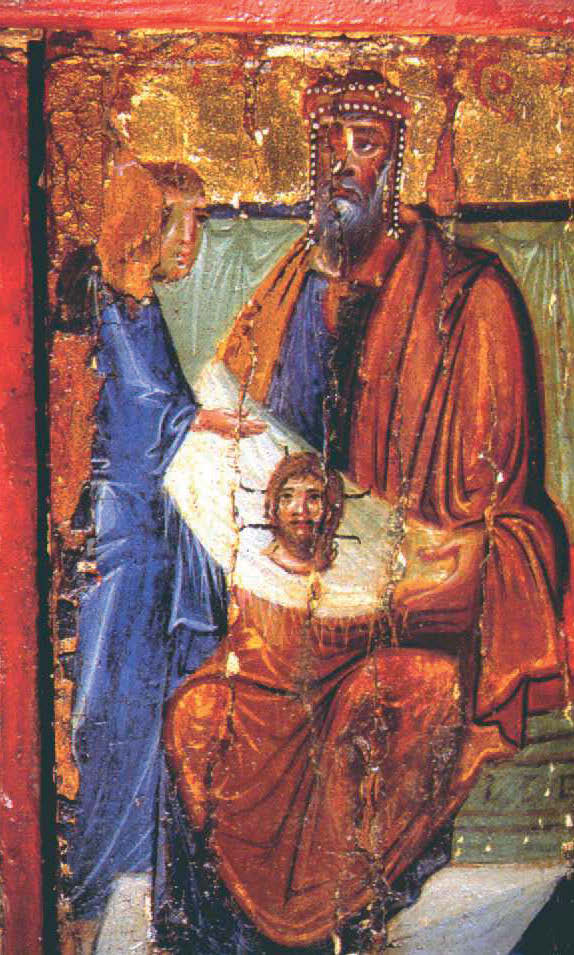
According to the Doctrine of Addai, around the year 31 King Abgar V, who suffered from leprosy, wrote a letter to Jesus, asking for healing and inviting him to Edessa.43 In his reply, Jesus praised the king for believing in him without knowing him; he himself could not come to Abgar, since he had to complete his mission and return home to his Father. But he promised to send a disciple, who would cure him and bless Edessa. While Jesus dictated his response to Abgar’s envoy, Hanan, this man painted his picture and took it back with him to Edessa, where it became a greatly honoured talisman of the city,44 until it was taken to Byzantium in 944. Later, during the iconoclastic controversy, this image, called the Mandylion, served as an iconodulist argument in favour of the Byzantine painting of icons of Christ.45
根据《阿代教义》(Doctrine of Addai),约在公元31年,患有麻风病的国王阿布加尔五世 (Abgar V) 写信给耶稣 (Jesus),请求治愈,并邀请他前往埃德萨 (Edessa)。43 在回信中,耶稣称赞这位国王虽尚未认识他却信了他;他自己不能到阿布加尔那里去,因为他必须完成自己的使命,并回到父那里去。但他应许要派一位门徒去,这位门徒会治愈他并祝福埃德萨。当耶稣向阿布加尔的使者哈南 (Hanan) 口述回信时,此人画下了他的画像,并将其随身带回埃德萨;在那里,它成为该城极受尊崇的护身符,44 直到944年被带到拜占庭 (Byzantium)。后来,在圣像破坏之争 (iconoclastic controversy) 期间,这幅被称为曼迪利翁 (Mandylion) 的画像,成为圣像崇拜者 (iconodulist) 支持拜占庭 (Byzantine) 绘制基督 (Christ) 圣像的一个论据。45
After the ascension of Christ, Thomas sent Addai to the ailing king.46 He cured him and then turned to preaching to the people, condemning the worship of the planets and idolatry: ‘It is a terrible and incurable sickness when creatures worship other creatures. It is blasphemy to place
基督 (Christ) 升天之后,多马 (Thomas) 派阿代 (Addai) 到患病的国王那里。46 他治愈了国王,随后转而向民众布道,谴责对行星的崇拜和偶像崇拜:“当受造物崇拜其他受造物时,这是一种可怕且无法治愈的疾病。将……置于……是亵渎
The Armenian St Thaddeus
亚美尼亚的圣达陡 (St Thaddeus)
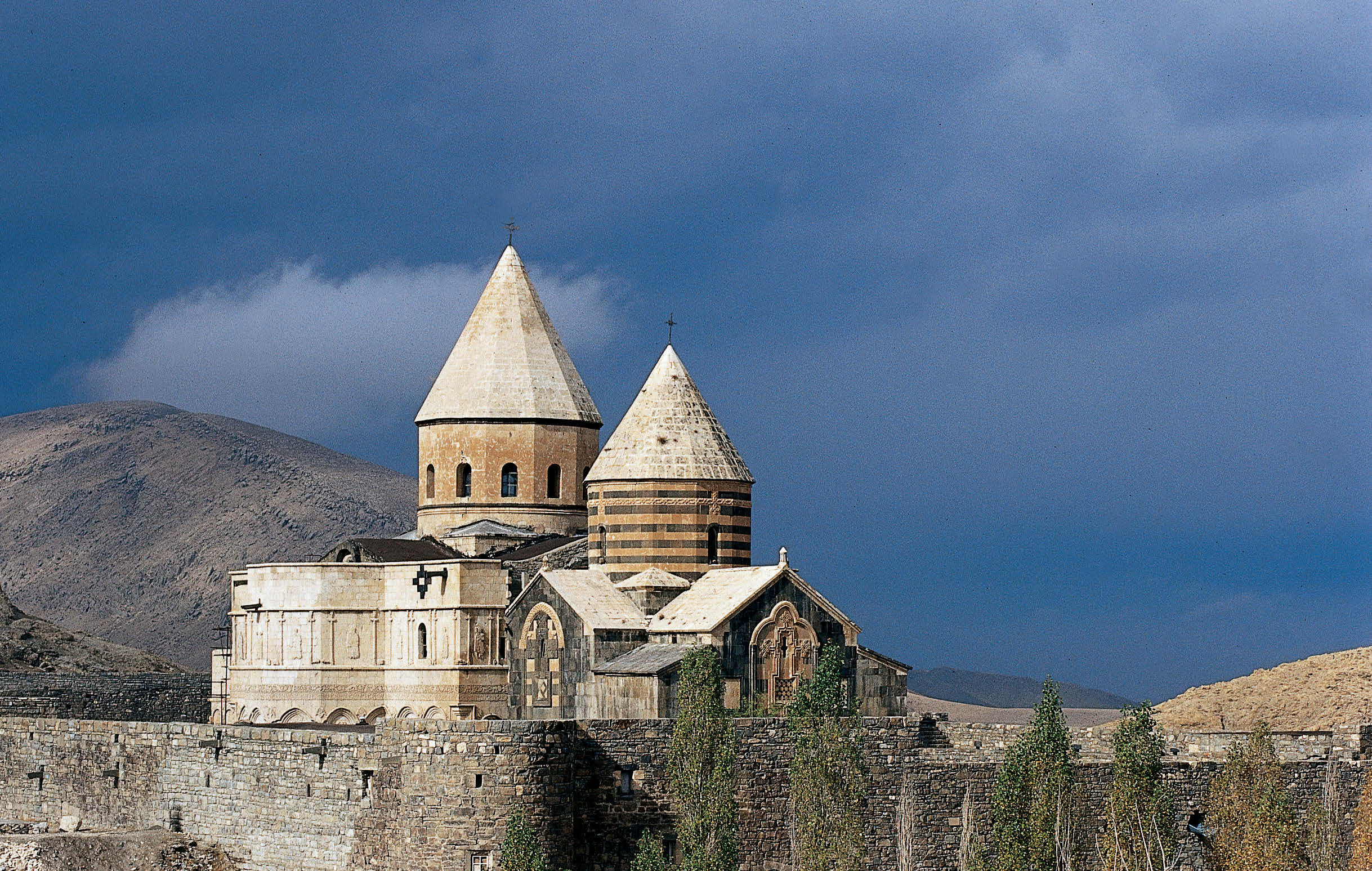
Monastery in north-western Iran is said to have been founded in the fifth century by a hermit in the place where he found the bones of the apostle Thaddeus. The small church, built of dark stone blocks, was erected in 1319–1329 and restored in 1490. The light-coloured church, added to the west, was donated by the Persian crown prince Abbas Mirza in 1810–1820. St Thaddeus is often erroneously equated with Mar Addai, the missionary of Edessa, as Thaddeus was one of the twelve apostles and Addai one of the seventy.6 creatures, which are foreign to His nature, on the same level with the Creator.’ These words antici- pate Mohammed’s rebuke of idol worshippers. Then Addai continued: ‘Even if you do not know the Scriptures, doesn’t nature teach you that the eyes of your idols see nothing? They are not to blame, for they are deaf and dumb, but you are at fault.’ 47 The king then converted, and Addai sent missionaries disguised as traders to Mesopotamia. Shortly before his death he named Aggai as his successor, who likewise sent missionaries to the east. A few years after Abgar’s death, one of his sons had Aggai murdered in the church, and the dying man appointed Palut as his successor. And so go the legends – but what are the facts? destroyed by the great flood of 201.48 Thus the church of Edessa would have been the first historically verified Christian house of worship, even earlier than the chapel of the border city of Dura Europas, on the Euphrates, which was built between 232 and 256.49 It is impossible that King Abgar V was a Christian, though King Abgar VIII, who ruled almost two centuries later (177–212), may have been. The sole witness is Bardaisan of Edsesa (154–222), who wrote in his ‘Book of the Laws of the Lands’: ‘King Abgar adopted the faith’.50 However, Bardaisan was later expelled from the Orthodox Church as a heretic. He also gathered around himself his own followers and founded one of the faith communities that rivalled the Orthodox Church, as had done Marcion (c.85–160) and Mani (216–272/274),
tags. Let’s draft final: 伊朗西北部的一座修道院据说由一位隐修士于五世纪创建,地点就在他发现使徒达太 (Thaddeus) 遗骨之处。这座用深色石块建造的小教堂建于1319–1329年,并于1490年修复。西侧增建的浅色教堂由波斯王储阿巴斯·米尔扎 (Abbas Mirza) 于1810–1820年捐建。圣达太 (St Thaddeus) 常被错误地等同于埃德萨 (Edessa) 的传教士马尔·阿代 (Mar Addai),因为达太 (Thaddeus) 是十二使徒之一,而阿代 (Addai) 是七十门徒之一。6 受造物,它们与他的本性相异,却被置于与造物主同等的地位。’这些话预示了穆罕默德 (Mohammed) 对偶像崇拜者的斥责。随后阿代 (Addai) 继续说道:‘即使你们不认识圣经,难道自然没有教导你们,你们偶像的眼睛什么也看不见吗?它们无可指责,因为它们又聋又哑,但你们却有过错。’47 国王于是皈依,阿代 (Addai) 派遣伪装成商人的传教士前往美索不达米亚 (Mesopotamia)。临终前不久,他任命阿盖 (Aggai) 为继承人,后者同样派遣传教士前往东方。阿布加尔 (Abgar) 死后几年,他的一个儿子在教堂里派人谋杀了阿盖 (Aggai),而这位垂死的人任命帕鲁特 (Palut) 为继承人。传说如此流传——但事实如何?被201年的大洪水摧毁。48 因此,埃德萨 (Edessa) 的教堂将是第一座有历史证实的基督教礼拜场所,甚至早于幼发拉底河 (Euphrates) 畔边境城市杜拉-欧罗普斯 (Dura Europas) 的小教堂,后者建于232年至256年之间。49 国王阿布加尔五世 (King Abgar V) 不可能是基督徒,尽管近两个世纪后统治(177–212年)的国王阿布加尔八世 (King Abgar VIII) 可能曾是基督徒。唯一的见证者是埃德萨的巴戴桑 (Bardaisan of Edsesa, 154–222),他在其《诸国律法书》(Book of the Laws of the Lands) 中写道:‘阿布加尔国王皈依了信仰’。50 然而,巴戴桑 (Bardaisan) 后来作为异端被逐出正统教会 (Orthodox Church)。他还聚集了自己的追随者,并创立了一个与正统教会 (Orthodox Church) 相抗衡的信仰团体,正如马吉安 (Marcion, 约85–160) 和摩尼 (Mani, 216–272/274) 所做的那样,
(Opposite page, left) King Abgar V of Edessa holds the Mandylion, presented to him by his ambassador Hanan. Detail of a wooden icon from the tenth century, Monastery of St Catherine, Sinai, Egypt.7
(对页,左)埃德萨 (Edessa) 国王阿布加尔五世 (Abgar V) 手持曼迪利翁 (Mandylion),由他的使者哈南 (Hanan) 呈献给他。十世纪木制圣像的局部,埃及 (Egypt) 西奈 (Sinai) 圣凯瑟琳修道院 (Monastery of St Catherine)。7
It is certain that Edessa had a church very early, and the city chronicle reports that it was
可以肯定,埃德萨 (Edessa) 很早就有一座教堂,而《城市编年史》(city chronicle) 记载说它曾是
whose churches were active in Edessa. Was Abgar VIII a follower of Bardaisan or of Palut, who, as representative of the Orthodox Church in Edessa in the late second and early third centuries, represented only a minority of believers calling themselves Christian? At that time there predominated in Edessa an internal Christian syncretism of Babylonian proportions, in which Marcionites and Manichaeans referred to themselves as Christians and the followers of Palut were called ‘Palutians’.51 Despite this, it is possible that King Abgar VIII called himself a Christian. The first historically verifiable bishop of Edessa is Qune (†313), who may have further encouraged the Abgar legend. one of Ephrem’s hymns,52 Edessa’s prestige increased. Now this city could claim to be the first Christian principality in world history, as well as to possess the letter of Jesus, a portrait of him from his lifetime and the relics of the apostle Thomas. Edessa prided itself on being the ‘mother city of Syrian Christianity’.53 The theme of the Abgar legend – which presumably served as a model for Eusebius towards the end of the third century – became part of the glorification of Edessa, as it elevated its ruler to a forerunner of Emperor Constantine. In addition, it attested to the orthodoxy of the Christians vis-à-vis rival sects by tracing its Episcopal authority back to an apostle.54 In sum, several Christian groups were found in Edessa in the second century. Still today, Edessa’s contributions in the realms of
其教会活跃于埃德萨 (Edessa)。阿布加尔八世 (Abgar VIII) 是巴戴桑 (Bardaisan) 的追随者,还是帕鲁特 (Palut) 的追随者?帕鲁特作为二世纪末、三世纪初埃德萨 (Edessa) 正统教会 (Orthodox Church) 的代表,只代表了自称基督徒的信徒中的少数。当时,埃德萨 (Edessa) 盛行一种规模堪比巴比伦 (Babylonian) 的基督教内部混合主义,其中马吉安派 (Marcionites) 和摩尼教徒 (Manichaeans) 自称基督徒,而帕鲁特 (Palut) 的追随者则被称为“帕鲁特派”(Palutians)。51 尽管如此,阿布加尔八世 (Abgar VIII) 国王仍有可能自称基督徒。历史上第一位可考证的埃德萨 (Edessa) 主教是库内 (Qune)(†313),他可能进一步推动了阿布加尔 (Abgar) 传说。以法莲 (Ephrem) 的一首赞美诗,52 使埃德萨 (Edessa) 的声望得以提升。如今,这座城市可以宣称自己是世界历史上第一个基督教公国,并且拥有耶稣 (Jesus) 的书信、一幅耶稣在世时的画像以及使徒多马 (Thomas) 的圣髑。埃德萨 (Edessa) 以身为“叙利亚基督教 (Syrian Christianity) 的母城”而自豪。53 阿布加尔 (Abgar) 传说的主题——据推测,它在三世纪末为优西比乌 (Eusebius) 提供了范本——成为对埃德萨 (Edessa) 颂扬的一部分,因为它将其统治者抬高为君士坦丁 (Constantine) 皇帝的前驱。此外,它通过将其主教权威追溯至一位使徒,证明了这些基督徒相对于竞争教派的正统性。54 总之,二世纪时埃德萨 (Edessa) 存在若干基督教群体。直至今日,埃德萨 (Edessa) 在……领域的贡献
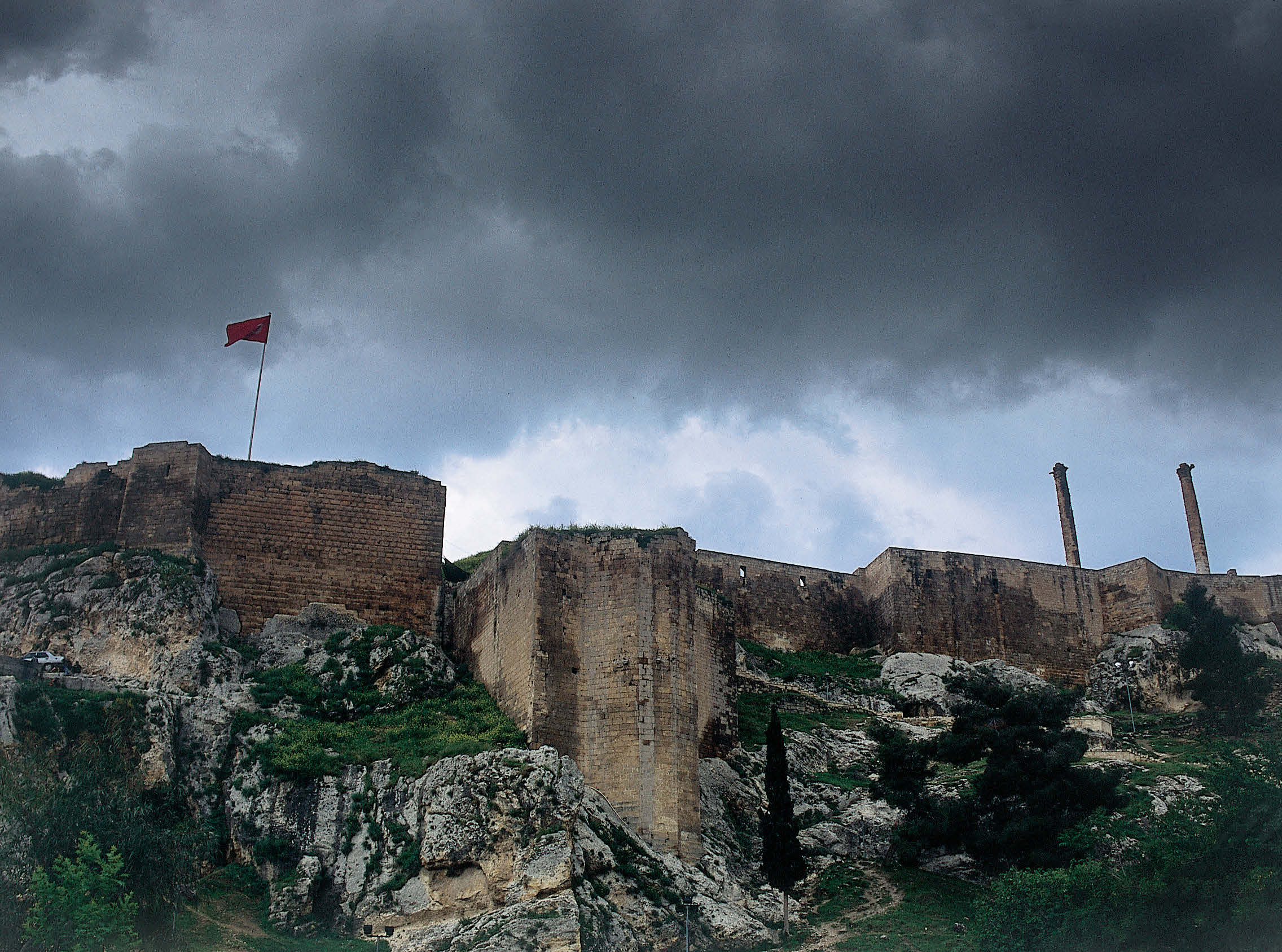
(Right) The citadel of Edessa
(右)埃德萨 (Edessa) 的城堡
(Sanliurfa) Turkey. On the eastern marble column (left in illustration), an inscription in Old Syriac reports that it is dedicated to Queen Shalmath, who was either the wife of Abgar VIII (ruled 177–212) or the daughter of King Ma’nu VIII (ruled 214–239). The fortress seen today dates back to the Crusaders of 1098. The church that was flooded in 201 presumably stood at the north- eastern base of the citadel.
(尚勒乌尔法 (Sanliurfa))土耳其 (Turkey)。在东侧的大理石柱上(见插图左侧),一段古叙利亚语 (Old Syriac) 铭文记载,此柱系献给沙尔玛特女王 (Queen Shalmath),她或是阿布加尔八世 (Abgar VIII)(在位177–212年)的妻子,或是国王马努八世 (King Ma’nu VIII)(在位214–239年)的女儿。今日所见的堡垒可追溯至1098年的十字军 (Crusaders)。201年遭洪水淹没的教堂据推测位于卫城的东北麓。
At the north-western base is shown a cave, venerated by Muslims, which, according to a local legend, was the birthplace of Abraham.8
在西北山麓,有一处受穆斯林敬奉的洞穴;据当地传说,这里是亚伯拉罕 (Abraham) 的出生地。8
When, around 370, the bones of the apostle Thomas were taken to Edessa, as we learn from
约370年,当使徒多马 (Thomas) 的遗骨被带到埃德萨 (Edessa) 时,正如我们从……得知
theology and linguistics are recognized. It was home to the renowned School of Edessa, also called the School of the Persians, where Ephrem the Syrian (306–373) taught after his flight from Nisibis in 363. This school developed into a stronghold of Antiochene theology, which provided the foundation of the dogma of the Church of the East.
神学和语言学得到承认。它曾是著名的埃德萨学校 (School of Edessa) 的所在地,该校也被称为波斯人学校 (School of the Persians),叙利亚的以法莲 (Ephrem the Syrian, 306–373) 在363年从尼西比斯 (Nisibis) 逃亡后曾在此任教。这所学校后来发展成为安提阿神学 (Antiochene theology) 的堡垒,为东方教会 (Ch. of E.) 的教义奠定了基础。
Its consonant alphabet is a further development of the Phoenician. Thanks to the Syriac Gospel harmony of Tatian (c.170) and the Tetragospels called the Peshitta (c.400), Syriac spread rapidly in Asian Christianity.55 The earliest version is Estrangela, which evolved, after the split of the Miaphysite Jacobites from the Dyophysite Nestorians, into the Serto script in the west in the early eighth century and later into the Nestorian script in the east.56 Also belonging to the sphere of Aramaic script culture – in part because of the Nestorian mission to Asia – are the right-to-left and/or top-to-bottom script of the Sogdians, the Uigurs, the Mongols and the Manchurians.57 Finally, since the fourteenth century, Christian texts have often been written in Arabic and a related Syrian script, Garshuni,
其辅音字母表是腓尼基字母 (Phoenician) 的进一步发展。由于塔提安 (Tatian) 的叙利亚语 (Syriac) 福音合参 (Gospel harmony)(约170年,c.170)以及被称为《别西大译本》(Peshitta) 的四福音书 (Tetragospels)(约400年,c.400),叙利亚语在亚洲基督教中迅速传播。55 最早的版本是埃斯特兰格拉 (Estrangela),在合性论派的雅各派 (Miaphysite Jacobites) 从二性论派的聂斯脱利派 (Dyophysite Nestorians) 分裂出去之后,它于8世纪初在西部演变为塞托体 (Serto script),后来又在东部演变为聂斯脱利体 (Nestorian script)。56 同样属于阿拉米字母文化圈 (Aramaic script culture) 的——部分由于聂斯脱利派向亚洲的传教——还有粟特人 (Sogdians)、回鹘人 (Uigurs)、蒙古人 (Mongols) 和满族人 (Manchurians) 的从右到左和/或从上到下的文字。57 最后,自14世纪以来,基督教文本常常用阿拉伯语 (Arabic) 和一种相关的叙利亚文字——加尔舒尼 (Garshuni) 书写,
Likewise unquestioned is the fact that both Syriac languages and scripts developed out of the Aramaic dialect of Edessa. This language, which was widespread in Syria and Parthia and functioned as the lingua franca of Egypt and Asia Minor as far as India, was Jesus’s mother tongue and belongs to the Semitic language family. Beginning in the fifth century BCE, it replaced Hebrew as the colloquial language of the Jews.
同样毋庸置疑的是,叙利亚语 (Syriac) 的语言和文字均发展自埃德萨 (Edessa) 的亚兰语 (Aramaic) 方言。这种语言曾广泛通行于叙利亚 (Syria) 和帕提亚 (Parthia),并在埃及 (Egypt) 和小亚细亚 (Asia Minor) 直至印度 (India) 一带充当通用语 (lingua franca);它是耶稣 (Jesus) 的母语,属于闪米特语族 (Semitic language family)。从公元前五世纪开始,它取代希伯来语 (Hebrew),成为犹太人 (Jews) 的日常口语。
Caspian Sea, the most westerly part of the great Kushan empire was Transoxania, and Hatra lies south of Mosul. At the start of the third century, Christian cells existed in all of these regions. What do other sources report? of which there are, again, a West Syrian and an East Syrian version. [^58]
里海 (Caspian Sea),伟大的贵霜帝国 (Kushan empire) 最西端的部分是河中地区 (Transoxania),而哈特拉 (Hatra) 位于摩苏尔 (Mosul) 以南。3世纪初,所有这些地区都存在基督教团体。其他文献有何记载?其中又有西叙利亚 (West Syrian) 和东叙利亚 (East Syrian) 两个版本。58
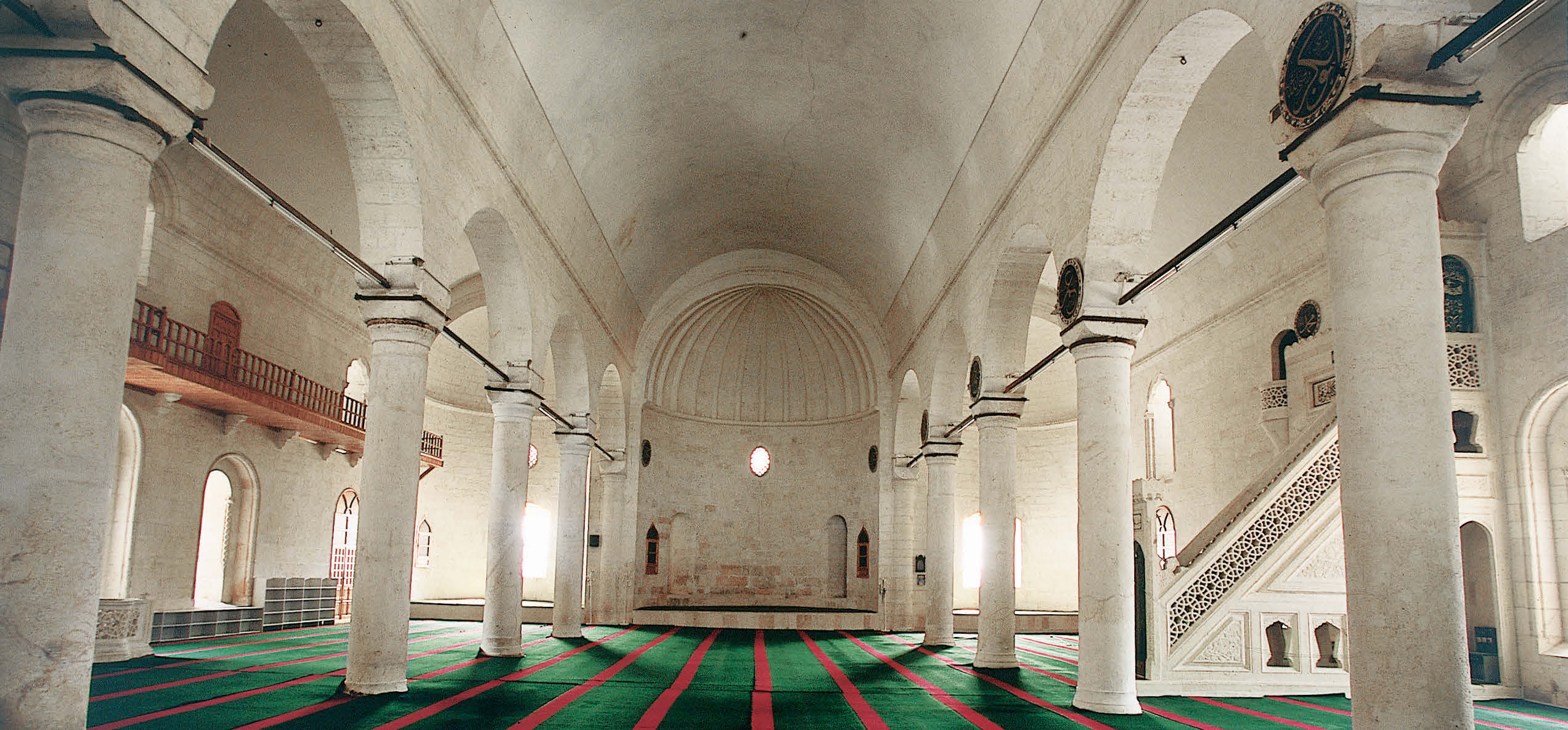
The former St John the Baptist Church of Edessa, which the
埃德萨 (Edessa) 昔日的施洗约翰教堂 (St John the Baptist Church),该
Miaphysite bishop Nona and successor of the Nestorian bishop Ibas had built in 457. In the late fifth century the bones of Mar Addai were brought here. The church served as cathedral for the Crusaders from 1098 to 1144, after which it was converted into a mosque by Saleh ad-Din Ayyubi. In the three-naved, 35-metre-long, 20-metre-wide, and 9-metre-tall building it is notable that the apse is oriented not towards Mecca but towards the east. Each set of six round columns forms five arches, which separate the main nave from the side aisles. The lower windows are decorated on both sides with stone figures depicting entwined snakes, which one also finds in monasteries of Tur Abdin. The mosque was renovated at the end of the eighteenth century. For its part, the Circis Peygamer mosque was built on the Church of St Sergius and St Simeon, erected by the
合性论派主教诺纳 (Nona),即聂斯托利派主教伊巴斯 (Ibas) 的继任者,于457年建造了该教堂。5世纪晚期,圣阿代 (Mar Addai) 的遗骨被迁至此地。该教堂自1098年至1144年曾作为十字军的主教座堂,此后被萨利赫丁·阿尤比 (Saleh ad-Din Ayyubi) 改建为清真寺。在这座三廊式、长35米、宽20米、高9米的建筑中,值得注意的是,其半圆形后殿并非朝向麦加 (Mecca),而是朝向东方。每六根圆柱为一组,构成五个拱,将主中殿与侧廊分隔开来。下层窗户两侧饰有石雕,雕刻着相互缠绕的蛇;这种图案在图尔阿布丁 (Tur Abdin) 的修道院中也能见到。该清真寺于18世纪末进行了修缮。至于奇尔奇斯·佩伊加梅尔清真寺 (Circis Peygamer mosque),它则建在圣塞尔吉乌斯与圣西缅教堂 (Church of St Sergius and St Simeon) 之上,该教堂由……建造。
Nestorian bishop Ibas before 457.9
聂斯托利派 (Nestorian) 主教伊巴斯 (Ibas),457.9之前
Although Syriac is still used today in both Syrian Churches as a liturgical language, its use as a colloquial language is rapidly declining, not least because of the Christians’ emigration to western countries. While in Tur Abdin in south-eastern Turkey the few remaining West Syrians still speak a dialect called Turoyo, the East Syrian dialect family, called Surit, is still spoken by the approximately 200,000 Nestorians and Chaldeans on the plain of Mosul, in Baghdad, in Iranian Azerbaijan and the northern Syrian region of Khabur. In the European, American and Australian Diaspora, however, Surit is slowly dying out as a colloquial language. Yet the West Syrian dialect, still spoken today around Ma’alula, north of Damascus, has lost its religious association and is used by Christians of various denominations, as well as by Muslims. [^59]
尽管叙利亚语 (Syriac) 今天仍作为礼仪语言用于两个叙利亚教会 (Syrian Churches) 中,但其作为口语的使用正迅速减少,尤其是因为基督徒向西方国家移民。在土耳其东南部的图尔阿布丁 (Tur Abdin),仅存的少数西叙利亚人 (West Syrians) 仍使用一种称为图罗约 (Turoyo) 的方言;而被称为苏里特 (Surit) 的东叙利亚方言群,仍为摩苏尔 (Mosul) 平原、巴格达 (Baghdad)、伊朗阿塞拜疆 (Iranian Azerbaijan) 以及叙利亚北部哈布尔 (Khabur) 地区约20万聂斯托利派 (Nestorians) 和迦勒底派 (Chaldeans) 信徒所使用。然而,在欧洲、美洲和澳大利亚的离散群体 (Diaspora) 中,苏里特语作为口语正逐渐消亡。不过,今天在大马士革 (Damascus) 以北的马卢拉 (Ma’alula) 一带仍有人使用的西叙利亚方言 (West Syrian dialect),已失去其宗教属性,各教派的基督徒以及穆斯林都在使用它。59
The Syrian acts of Mar Mari, from the sixth/ seventh century, which take up the Abgar legend, credit Mar Mari with the first complete evangel- ization of Mesopotamia. He serves as the apostle to Mesopotamia, whose two major rivers, the Euphrates and the Tigris, according to Genesis, flowed out of paradise (Gen 2:14). According to the acts, Mar Addai sent him from Edessa to the east. He first taught in Nisibis and then moved on to Arbil, the capital of the principality of Adiabene in modern Iraqi Kurdistan, where he cured the king of leprosy and cast out a demon from the son of an officer. On the way south, he, like Jesus, healed the afflicted, cast demons
叙利亚文的《玛尔·马里行传》(Acts of Mar Mari) 出自六/七世纪,该行传承袭了阿布加尔传说 (Abgar legend),将首次完成美索不达米亚 (Mesopotamia) 福音化归功于玛尔·马里 (Mar Mari)。他担任美索不达米亚 (Mesopotamia) 的使徒;按照《创世记》(Genesis),美索不达米亚的两条主要河流——幼发拉底河 (Euphrates) 和底格里斯河 (Tigris)——从乐园流出 (Gen 2:14)。根据该行传,玛尔·阿代 (Mar Addai) 派他从埃德萨 (Edessa) 前往东方。他先在尼西比斯 (Nisibis) 教导,随后前往阿尔比勒 (Arbil),即现代伊拉克库尔德斯坦 (Iraqi Kurdistan) 境内阿迪亚贝尼 (Adiabene) 公国的首府;在那里,他治愈了患麻风病的国王,并从一位军官的儿子身上赶出一个恶魔。在向南途中,他像耶稣 (Jesus) 一样治愈病人,驱逐恶魔。
Mar Mari and the first missionary journey to the Parthian Empire
玛尔·马里 (Mar Mari) 与首次前往帕提亚帝国 (Parthian Empire) 的传教之旅
‘Our brothers from Parthia do not marry two wives; Jewish Christians are not circumcised, our sisters from Gilan and Kushan do not associate with foreigners; those from Persia do not marry their daughters; those from Media do not abandon their dead, nor do they give them to the dogs to eat, nor do they bury the dying while still alive, Christians from Edessa do not kill their wives or sisters who commit adultery, and those from Hatra do not stone thieves.’60 This quote from Bardaisan’s ‘Book of the Laws of the Lands’ from the early third century is not merely instructive on account of the descriptions of the morals of the Asian peoples mentioned but also provides valuable evidence of how far Christianity had spread to the east by the end of the Parthian dynasty (224/226CE). Parthia should be understood here as Mesopotamia, and Persia and Media as Iran. Gilan lies to the south of the
“我们来自帕提亚 (Parthia) 的弟兄不娶两个妻子;犹太基督徒不受割礼,我们来自吉兰 (Gilan) 和贵霜 (Kushan) 的姊妹不与外人交往;来自波斯 (Persia) 的人不娶自己的女儿;来自米底 (Media) 的人不抛弃死者,也不把死者给狗吃,也不把将死之人活埋;来自埃德萨 (Edessa) 的基督徒不杀死通奸的妻子或姐妹,来自哈特拉 (Hatra) 的人不用石头砸死盗贼。”60 这段引自巴戴桑 (Bardaisan) 三世纪初《诸国律法书》(Book of the Laws of the Lands) 的引文,不仅因其中对所提及的亚洲各民族道德风俗的描述而具有教益,而且还提供了宝贵证据,说明到帕提亚王朝 (Parthian dynasty) 末期(公元224/226年)基督教向东传播已有多远。这里的帕提亚 (Parthia) 应理解为美索不达米亚 (Mesopotamia),波斯 (Persia) 和米底 (Media) 则应理解为伊朗 (Iran)。吉兰 (Gilan) 位于……以南
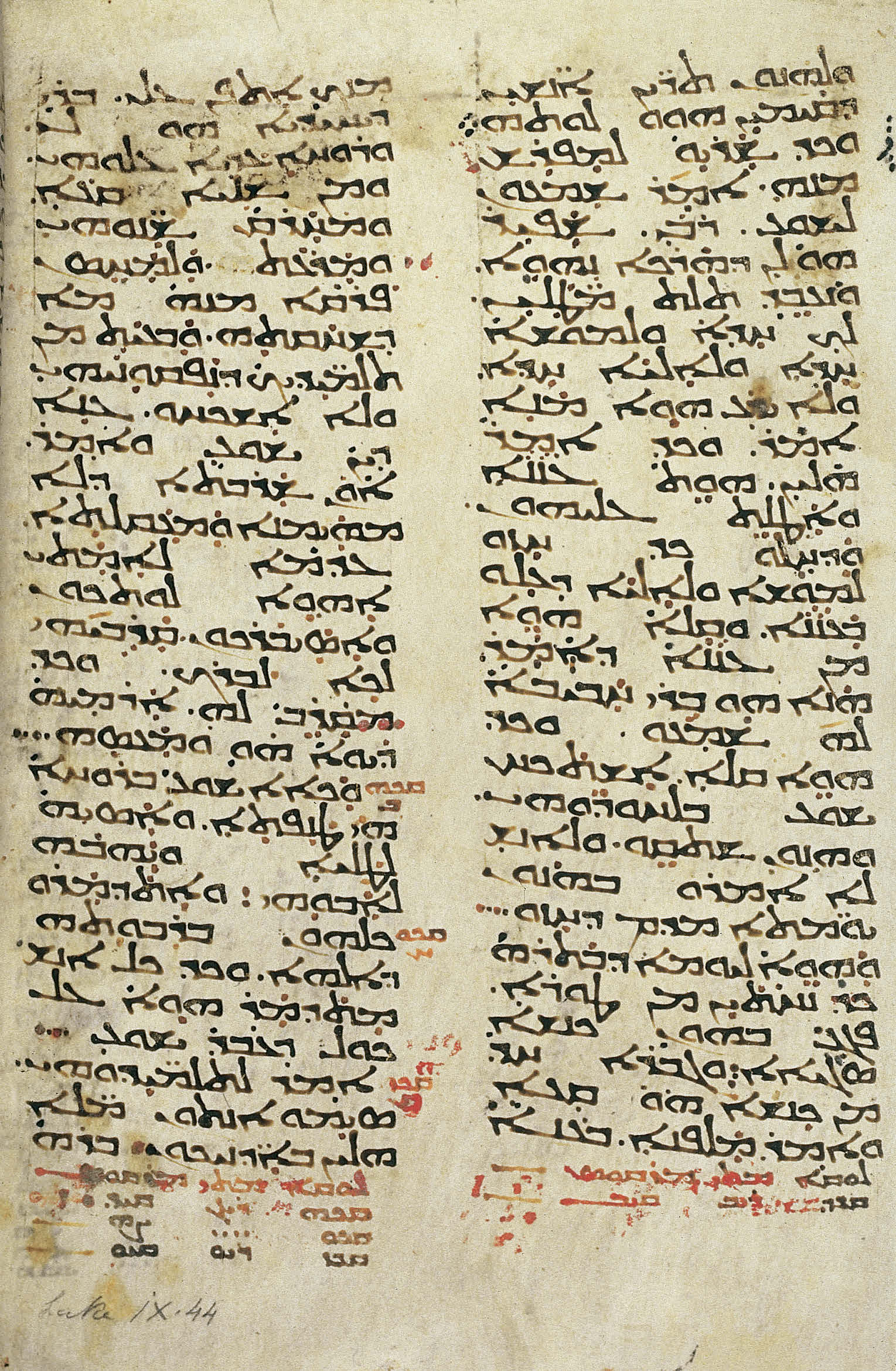
Manuscript Syrus Curetonianus.
An Old Syriac manuscript on
parchment, written in Estrangela script, from the mid-fifth century. (British Museum, London. Add. 14451 f49v.)
库雷顿叙利亚文抄本 (Syrus Curetonianus)。
一部出自五世纪中叶、以埃斯特兰格拉字体 (Estrangela) 书写的羊皮纸古叙利亚文抄本。 (伦敦 (London) 大英博物馆 (British Museum),Add. 14451 f49v.)
out of the possessed and even raised the dead. In Seleucia-Ctesiphon he encountered resistance; the citizens wanted nothing of the Good News. Only a successful demonstration of divine judgement, in which the apostle remained unharmed in a blazing fire,61 enabled a few conversions, after which Mari destroyed a pagan temple and erected atop its ruins a chapel – the future cathedral of Kokhe. He then followed the Tigris south, reached present-day Basra and concluded his journey in Khuzistan and the province of Persia. The acts close with the extolling of Mari, who, like a ‘pillar of fire’, led believers through the desert of ignorance into the kingdom of the Gospel.62
从被附者身上赶出鬼魔,甚至使死人复活。在塞琉西亚-泰西封 (Seleucia-Ctesiphon),他遭遇了抵抗;市民们对福音毫无兴趣。唯有一次成功的神圣审判展示——使徒在熊熊烈火中毫发无伤,61——才使少数人皈依;此后,马利 (Mari) 摧毁了一座异教神庙,并在其废墟上建起一座小教堂——即未来科赫 (Kokhe) 的主教座堂。随后他沿底格里斯河 (Tigris) 向南而行,抵达今天的巴士拉 (Basra),并在胡齐斯坦 (Khuzistan) 和波斯 (Persia) 行省结束了他的旅程。这部行传以对马利 (Mari) 的颂扬作结:他像‘火柱’一样,引领信徒穿过无知荒漠,进入福音的国度。62
The acts represent an obvious attempt to portray the Christianization of the Nestorian heartland as the work of an apostle. They cannot be taken at face value, although the historian J. M. Fiey believes that the church of Kokhe was in fact founded at the time of Mari. On account of the description of Mari’s chapel and the fact that, between 79 and 116, the Tigris altered its course, he concludes that Mari must have laid the cornerstone before 79 / 116.63 However, the first historically certain bishop of Seleucia- Ctesiphon was Papa, who served from c.290 to 315 and died in 327. We can be assured that, beginning in the second century, there existed in Seleucia-Ctesiphon an independent Christian community, which showed evidence of an episcopal structure in the third century. Already around 315 Bishop Papa tried to gain primacy over the other dioceses of the Church and to impose on them a disciplined administration. Although Papa himself failed to achieve this, the other bishops soon accepted that the bishop of the capital should take over the administrative leadership of the Church.64 In any case, it is certain that the diocese of Seleucia-Ctesiphon – that is, the nascent Church of the East – was never subordinated to Antioch. Reports stating that the bishop of Seleucia-Ctesiphon required the recognition of the bishop of Antioch are later forgeries. The article from the corpus of Nicea of 325, according to which no East Syrian synod may
这些行传显然试图将聂斯托利派 (Nestorian) 核心地区的基督教化描绘为使徒的功业。不能仅凭其表面叙述加以采信,尽管历史学家 J. M. 菲耶 (J. M. Fiey) 认为科赫教会 (church of Kokhe) 实际上是在马利 (Mari) 时代建立的。根据对马利 (Mari) 礼拜堂的描述,以及底格里斯河 (Tigris) 在79年至116年间改道这一事实,他得出结论:马利必定在79/116年之前奠基。63 然而,塞琉西亚-泰西封 (Seleucia-Ctesiphon) 第一位在历史上确凿无疑的主教是帕帕 (Papa),他约在290年至315年任职,并于327年去世。我们可以确信,从2世纪开始,塞琉西亚-泰西封 (Seleucia-Ctesiphon) 就存在一个独立的基督徒群体,该群体在3世纪显示出主教制结构的迹象。早在约315年,帕帕 (Papa) 主教就试图取得对教会其他教区的首席权,并将一套有纪律的行政管理强加给它们。尽管帕帕 (Papa) 本人未能实现这一目标,但其他主教很快便接受首都的主教应接管教会的行政领导权。64 无论如何,可以确定的是,塞琉西亚-泰西封 (Seleucia-Ctesiphon) 教区——也就是初生的东方教会 (Ch. of E.)——从未隶属于安条克 (Antioch)。那些称塞琉西亚-泰西封 (Seleucia-Ctesiphon) 主教需要得到安条克 (Antioch) 主教承认的说法,都是后来的伪造。325年尼西亚 (Nicea) 会议文献集 (corpus of Nicea of 325) 中的一条教规规定,任何东叙利亚主教会议都不得
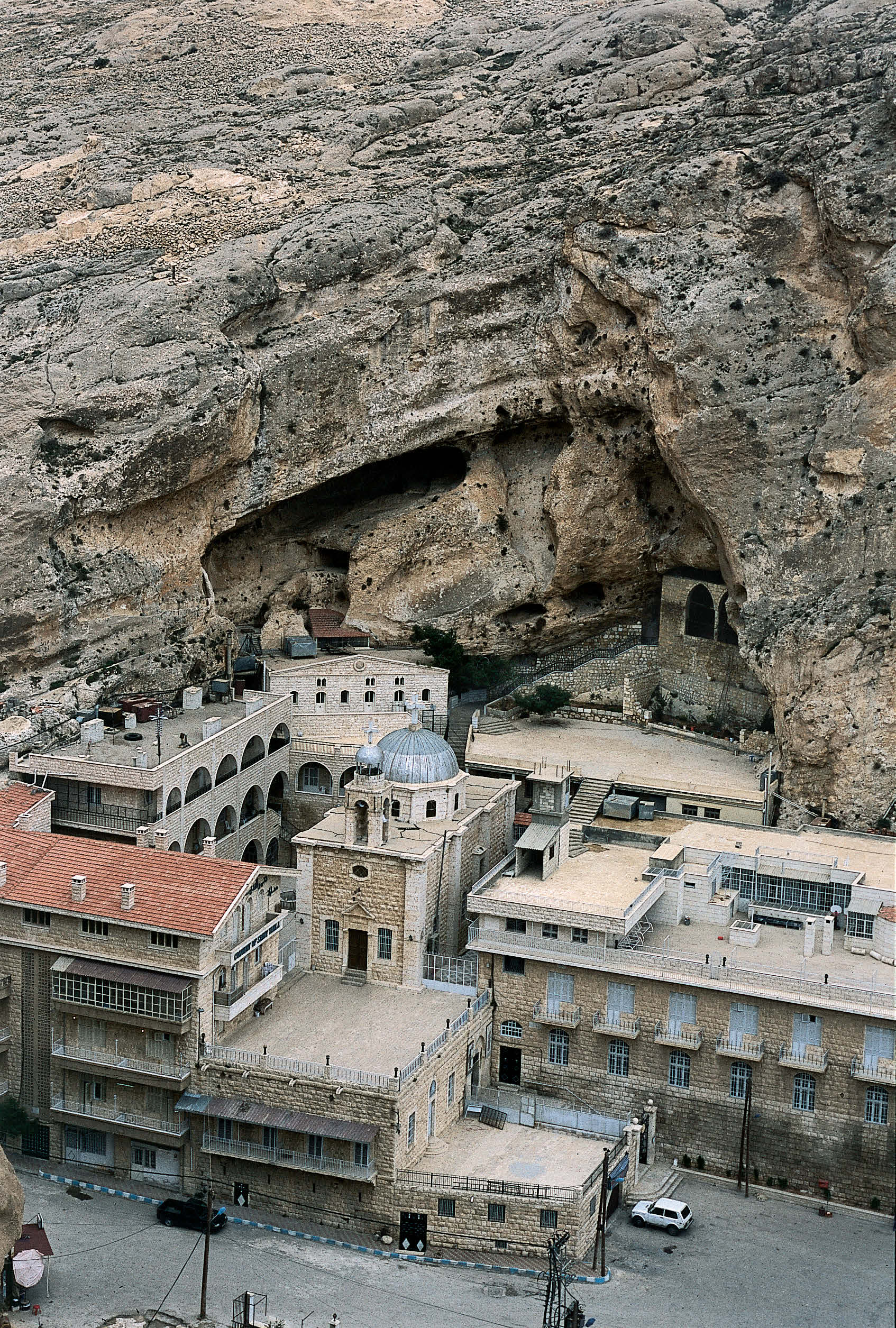
(Right) The large arch of Chosrau the Great (ruled 531–579) in Seleucia- Ctesiphon, which Shapur I (ruled 240 / 41–272) presumably had built by Christian prisoners of war. [^10] The Ivan is the largest brick barrel vault in the world. Until 780 the patriarchal see of the church was in Seleucia-Ctesiphon. take place without the consent of the patriarch of Antioch, is also an apocryphal postscript from the fifth century. [^65] were allied with one another. [^68] It is certain that, following his condemnation in Rome around 172, Tatian (c. [^110]–180), author of the Gospel harmony called the Diatessaron, returned to his homeland of Assyria, probably to Adiabene. He characterized himself as proud to be an Assyrian and scorned the Hellenistic world. His ‘Address to the Greek’ ends as follows: ‘In every way the East excels and most of all in its religion, the Christian religion, which also comes from Asia and which is far older and truer than all the philosophies and crude religious myths of the Greeks.’ 69 After his return, he spread his gospel in Assyria and taught a strict form of asceticism. This uncompromising asceticism – condemned in the West as Encratism – which demanded from true Christians a separation from the world
(右)库思老大帝 (Chosrau the Great,在位 531–579 年) 位于塞琉西亚-泰西封 (Seleucia-Ctesiphon) 的大型拱门,据推测是沙普尔一世 (Shapur I,在位 240/41–272 年) 让基督教战俘建造的。10 伊万 (Ivan) 是世界上最大的砖砌筒形拱顶。直到 780 年,教会的宗主教座一直设在塞琉西亚-泰西封 (Seleucia-Ctesiphon)。未经安条克 (Antioch) 宗主教同意而发生,也是五世纪的一则伪经式后记。65 彼此结盟。68 可以确定的是,在约 172 年于罗马 (Rome) 被定罪之后,塔提安 (Tatian,约 110–180 年),即名为《四福音合参》(Diatessaron) 的福音合参书的作者,回到了他的故乡亚述 (Assyria),很可能是阿迪亚贝尼 (Adiabene)。他自称以身为亚述人 (Assyrian) 而自豪,并蔑视希腊化世界。他的《致希腊人》(Address to the Greek) 结尾如下:“东方在各方面都优越,尤其是在其宗教,即基督教方面;基督教也来自亚洲,比希腊人的所有哲学和粗陋的宗教神话都远为古老和真实。”69 返回后,他在亚述 (Assyria) 传播他的福音,并教导一种严格的禁欲主义。这种不妥协的禁欲主义——在西方被谴责为禁戒主义 (Encratism)——要求真正的基督徒与世界分离。
The Chronicle of Adiabene, dating from the sixth century, offers information about the region north of Baghdad. According to this disputed chronicle. [^66] Mar Addai personally consecrated the first bishop, Mar Pkidha (in office 104–114), which would seem to be a daring claim. [^67] However, conditions in Adiabene were favourable for early missionary efforts, since, as in Edessa and Nisibis, a large Jewish community lived there, and it was there that the Parthian vassal Prince Izates converted to Judaism around the year 60. There were also close diplomatic and trade ties between Edessa and Adiabene, as the two princely families
《阿迪亚贝尼编年史》(The Chronicle of Adiabene) 成书于六世纪,提供了关于巴格达 (Baghdad) 以北地区的信息。根据这部有争议的编年史66,玛尔·阿代 (Mar Addai) 亲自祝圣了第一位主教玛尔·普基达 (Mar Pkidha)(在任 104–114 年),这似乎是一个大胆的说法。67 然而,阿迪亚贝尼 (Adiabene) 的环境有利于早期的传教活动,因为正如在埃德萨 (Edessa) 和尼西比斯 (Nisibis) 一样,那里也居住着庞大的犹太社群,而且正是在那里,帕提亚 (Parthian) 的附庸王子伊扎特斯 (Prince Izates) 于约公元60年皈依了犹太教。此外,埃德萨 (Edessa) 与阿迪亚贝尼 (Adiabene) 之间也有密切的外交和贸易联系,因为这两个王公家族
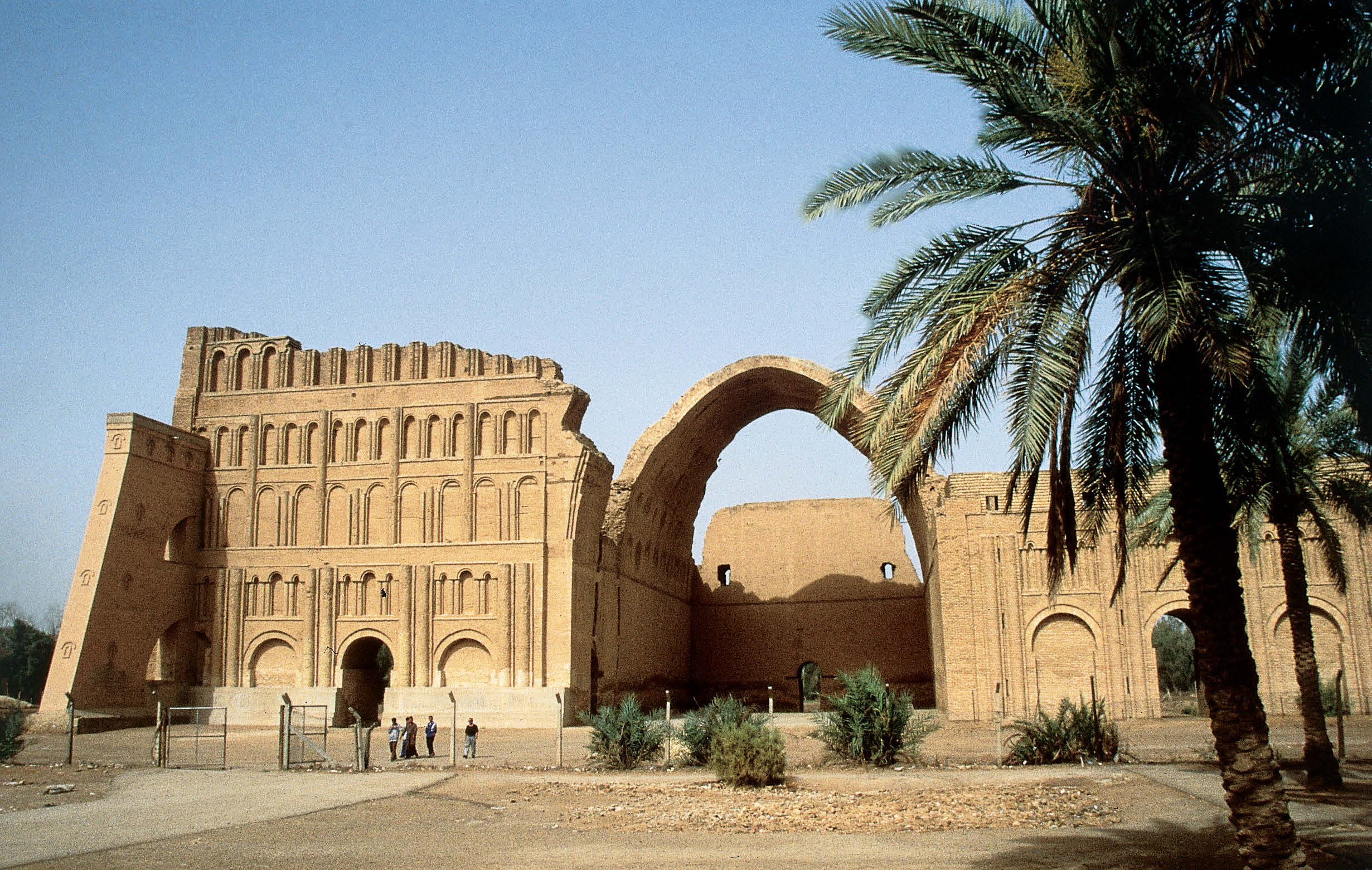
(Opposite page) The Convent of St Thecla in Ma’alula, where Aramaic is still spoken. This important pilgrimage site memorializes the Roman officer’s daughter Thecla, who became a student of the apostle Paul against the will of her parents and took refuge from her persecutors in a cave in Ma’alula.
(对页)马卢拉 (Ma’alula) 的圣特克拉修道院 (Convent of St Thecla),那里至今仍有人讲阿拉米语 (Aramaic)。这一重要的朝圣地纪念罗马军官的女儿特克拉 (Thecla),她违背父母意愿成为使徒保罗 (Paul) 的学生,并在马卢拉 (Ma’alula) 的一个洞穴中躲避迫害者。
and its pleasures, since it condemned matter as evil in itself, left a decisive mark on East Syrian monasticism. century, the Izla Mountains became the meeting place of the two rival Syrian sister Churches, the Nestorian and the Jacobite. The Nestorian metropolitan see of Nisibis officially came to an end in 1616, and the last Nestorian monks left the monastery of Mar Augin between 1838 and 1842.74 Nisibis’s reputation was founded not only on the monasteries of the Izla Mountains, however, but also on the School of Nisibis, which was likewise traced back to Bishop Jacob, who wanted to fight Arianism, which had been condemned at the Council of Nicea in 325. In any case, we know that he employed Ephrem the Syrian as a biblical exegete. When the city was handed over to the Sassanian king Shapur II in 363, Christian instruction ceased, and Ephrem fled to Roman Edessa, where he taught until his death and supported his bishop in the fight against Arianism.75
及其种种享乐,由于它把物质本身判定为恶,对东叙利亚修道主义留下了决定性的印记。在这一世纪,伊兹拉山脉 (Izla Mountains) 成为两个相互竞争的叙利亚姐妹教会——聂斯托利派 (Nestorian) 与雅各派 (Jacobite)——的会聚之地。尼西比斯 (Nisibis) 的都主教区 (metropolitan see) 于1616年正式终结,最后一批聂斯托利派修士于1838年至1842年间离开了马尔奥金修道院 (Monastery of Mar Augin)。74 然而,尼西比斯 (Nisibis) 的声誉不仅建立在伊兹拉山脉 (Izla Mountains) 的诸修道院之上,也建立在尼西比斯学校 (School of Nisibis) 之上;该校同样可追溯至主教雅各 (Bishop Jacob),他想要与在325年尼西亚会议 (Council of Nicea) 上受到谴责的阿里乌主义 (Arianism) 作斗争。无论如何,我们知道他任用叙利亚的以法莲 (Ephrem the Syrian) 为圣经解经家 (biblical exegete)。当该城于363年被移交给萨珊国王沙普尔二世 (Sassanian king Shapur II) 时,基督教教导中断,以法莲逃往罗马的埃德萨 (Roman Edessa),在那里执教直至去世,并支持他的主教与阿里乌主义 (Arianism) 作斗争。75
Also in the region of Nisibis, lying halfway between Edessa and Adiabene, there were Christian communities at the end of the second century, as is evident from inscriptions on the grave of the bishop of Hierapolis, Avircius Marcellus.70 Nisibis was a border city, fought over by the Romans and the Persians, which was fortified into a mighty citadel by Emperor Diocletian in 297. The first bishop of Nisibis for whom there is historical evidence is the one-time ascetic Jacob (†338), who took office around 301 or 308 and participated in the Council of Nicea in 325. From 313 to 320 Bishop Jacob had built the great cathedral that is named for him, to which Bishop Vologes added in 359 the baptistery that still stands today. In the eighth century then Metropolitan Sabrisho I rebuilt the ruined cathedral and integrated the baptistery into it as a southern chapel.71 The ‘discovery’ of the place where Noah’s Ark came to rest also goes back to Bishop Jacob. According to Syrian tradition, this was not Mount Ararat but rather Mount Djudi, east of Cizre in south-eastern Turkey, where the ruins of the Nestorian monastery still stand.72
同样,在尼西比斯 (Nisibis) 地区,即位于埃德萨 (Edessa) 与阿迪亚贝尼 (Adiabene) 之间的地方,二世纪末已有基督教社群,这一点从希拉波利斯 (Hierapolis) 主教阿维西乌斯·马塞卢斯 (Avircius Marcellus) 的墓碑铭文可以证明。70 尼西比斯 (Nisibis) 是一座边境城市,罗马人与波斯人曾为其争夺不休;297年,戴克里先皇帝 (Diocletian) 将其加固为一座强大的要塞。尼西比斯 (Nisibis) 第一位有历史证据的主教是曾为苦修者的雅各 (Jacob, †338),他约于301年或308年就任,并于325年参加了尼西亚公会议 (Council of Nicea)。313年至320年间,雅各主教建造了以他命名的宏伟主教座堂;359年,沃洛格斯主教 (Vologes) 又为其增建了至今仍存的洗礼堂。到了八世纪,都主教萨布里绍一世 (Metropolitan Sabrisho I) 重建了已成废墟的主教座堂,并将洗礼堂并入其中,作为南侧小礼拜堂。71 挪亚方舟 (Noah’s Ark) 停驻之地的“发现”也可追溯至雅各主教。根据叙利亚传统 (Syrian tradition),这处地点并非亚拉腊山 (Mount Ararat),而是土耳其东南部吉兹雷 (Cizre) 以东的朱迪山 (Mount Djudi),那里至今仍存有聂斯托利派修道院 (Nestorian monastery) 的废墟。72
Let us turn now to the delta of the Tigris and Euphrates. Evidence shows that the region around today’s port city of Basra in southern Iraq, then known as Prat de Maishan, was elevated to a metropolitan see shortly after 310,76 after an earlier Bishop David of Basra is said to have carried out missionary work in India,77 from which one can conclude that Christian communities existed here, too, in the third century. Also supporting this claim is the discovery of Christian graves with Syriac inscriptions from the mid-third century on the island of Kharg in the upper Persian Gulf. Archaeological excavations have shown that later, from the fifth to the eleventh centuries, a Nestorian monastery with sixty cells stood on the island. The monastery included a church with three naves, whose walls featured stucco ornamentation in the Sassanian style. In those days the island functioned as a trade centre for ships from India and China on the way to Mesopotamia. The discovery of countless pieces of glass permits the assumption that the monks themselves produced glass for export.78
现在让我们转向底格里斯河 (Tigris) 与幼发拉底河 (Euphrates) 的三角洲。证据表明,今伊拉克 (Iraq) 南部港口城市巴士拉 (Basra) 周边地区——当时称为普拉特·德·迈尚 (Prat de Maishan)——在310年之后不久,76 即被升格为都主教区;此前,据说早先的巴士拉主教大卫 (Bishop David of Basra) 曾在印度 (India) 从事传教工作,77 由此可以推断,三世纪时这里也存在基督徒社群。同样支持这一说法的是,在波斯湾 (Persian Gulf) 北部哈尔克岛 (Kharg) 上发现了带有叙利亚文 (Syriac) 铭文、可追溯至三世纪中期的基督徒墓葬。考古发掘表明,后来从五世纪到十一世纪,岛上曾有一座拥有六十间僧房的聂斯托利派 (Nestorian) 修道院。该修道院包括一座三廊式教堂,其墙壁饰有萨珊 (Sassanian) 风格的灰泥装饰。当时,该岛是来自印度 (India) 和中国 (China) 的船只前往美索不达米亚 (Mesopotamia) 途中的贸易中心。无数玻璃碎片的发现使人们得以推测,修士们自己生产玻璃以供出口。78
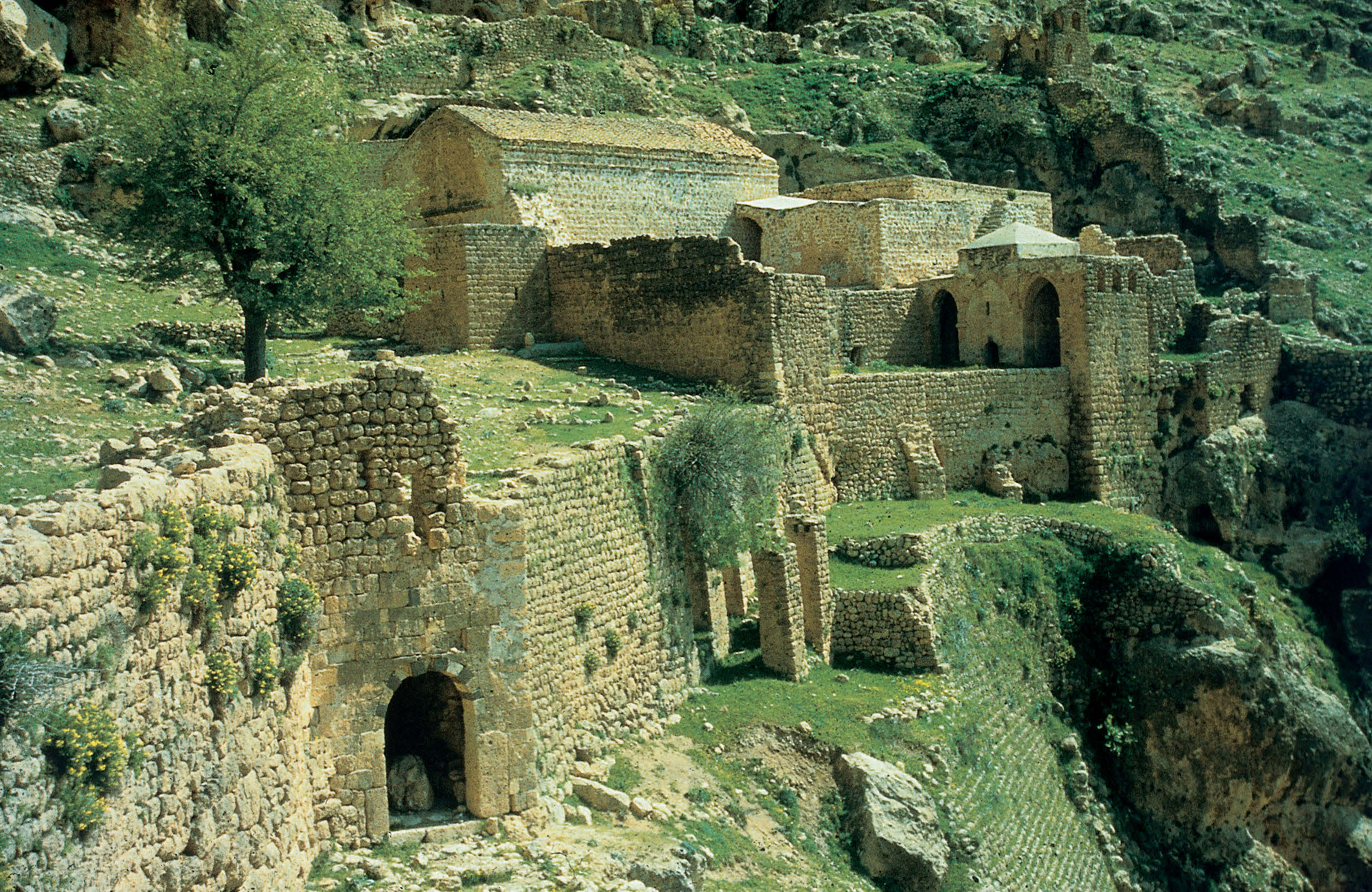
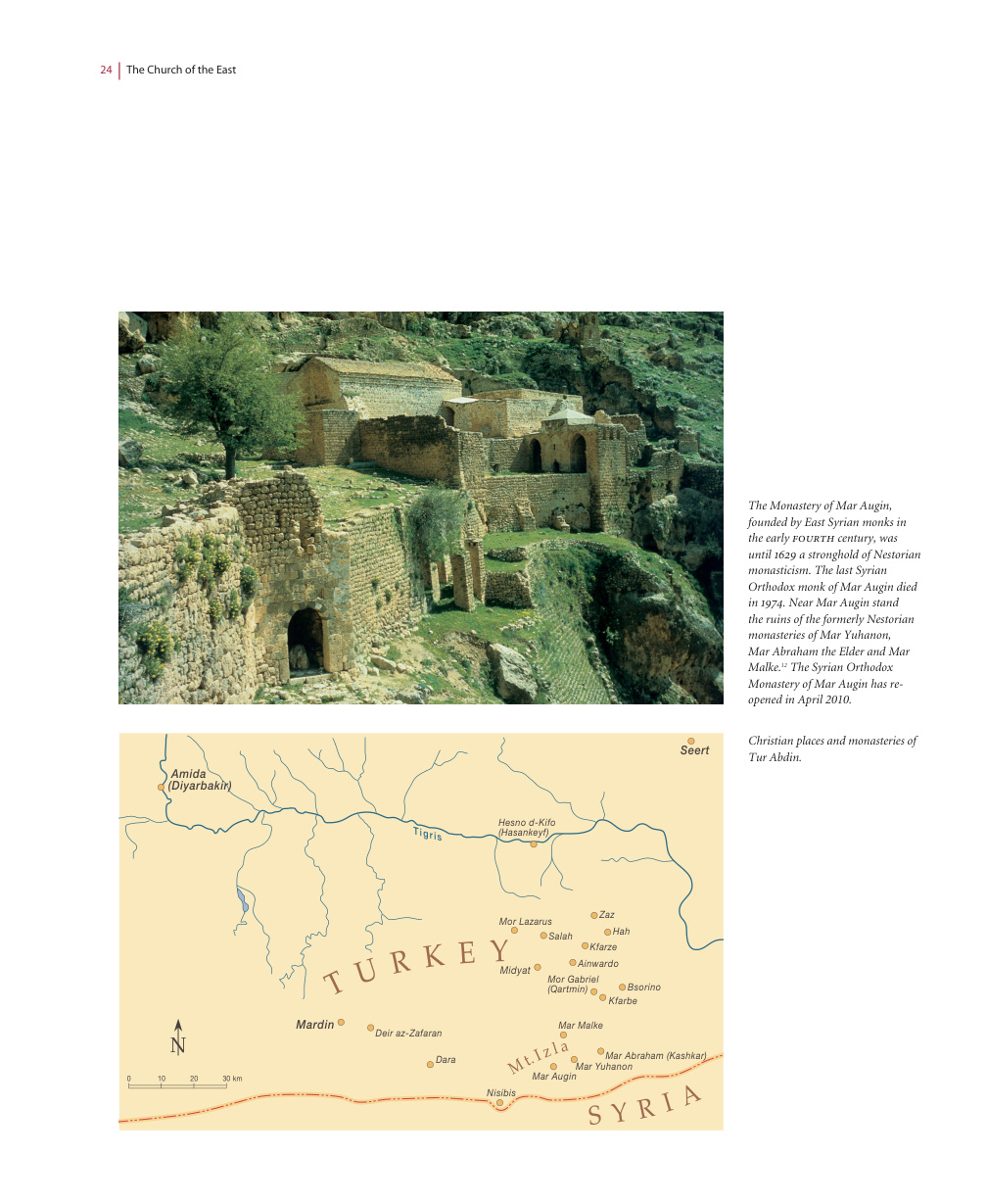
In neighbouring Tur Abdin, ‘Mount of the Servants’, there arose from the fourth century onwards one of the most renowned centres of East Syrian monasticism, whose hermitages and monasteries were grouped high above the plain of Nisibis in the Izla Mountains. Members of the oldest East Syrian monasteries, which dated from the early fourth century, included Mar Augin, Mar Yuhanon and Mar Malke, though the last converted as early as the seventh century to the Syrian Orthodox Church, also called the Jacobite. In the seventh century the Great Monastery, founded in 571 by the reformer of Nestorian monasticism, Abraham of Kashkar (491–586), became a source of renewal for East Syrian spirituality.73 Also beginning in the seventh
在邻近的图尔阿布丁 (Tur Abdin),即“仆人之山” (Mount of the Servants),从四世纪起,兴起了东叙利亚修道制度最负盛名的中心之一;其隐修院和修道院群集于伊兹拉山脉 (Izla Mountains) 中,高踞尼西比斯平原 (plain of Nisibis) 之上。最古老的东叙利亚修道院——其历史可追溯至四世纪初——包括马尔·奥金 (Mar Augin)、马尔·尤哈农 (Mar Yuhanon) 和马尔·马尔克 (Mar Malke),尽管最后一个(马尔·马尔克)早在七世纪就改宗了叙利亚正教会 (Syrian Orthodox Church),该教会亦称雅各派 (Jacobite)。七世纪时,由聂斯脱利派 (Nestorian) 修道制度的改革者卡什卡尔的亚伯拉罕 (Abraham of Kashkar, 491–586) 于571年创建的大修道院 (Great Monastery),成为东叙利亚灵修复兴的源泉。73 同样始于七世纪
The St Jacob Church, founded in 313, in Nisibis (Nusaybin), south-eastern Turkey. Its founder Jacob participated in the Council of Nicea in 325. In the eighth century the Nestorian metropolitan Sabrisho I renovated the cathedral, the oldest remaining part of which is the baptistery from 359, visible on the lower edge of the picture. Nisibis was a metropolitan see of the Church of the East until 1616.11 In 1915 Turkish massacres eradicated the last Christians.
圣雅各教堂 (St Jacob Church) 建于313年,位于土耳其东南部的尼西比斯 (Nisibis)(今努赛宾 (Nusaybin))。其创立者雅各 (Jacob) 参加了325年的尼西亚会议 (Council of Nicea)。8世纪,聂斯托利派都主教萨布里绍一世 (Sabrisho I) 重修了该主教座堂,其现存最古老的部分是建于359年的洗礼堂,可见于图片下缘。尼西比斯一直是东方教会 (Ch. of E.) 的都主教区,直到1616.11。1915年,土耳其人的屠杀消灭了最后的基督徒。
In considering the question of among whom Christianity first found acceptance in Mesopotamia, four groups of people are relevant: first, the numerically significant Jewish Diaspora; and, second, the native Aramaeans, Assyrians and Chaldeans of northern Mesopotamia, to whom the Persians came towards the end of the third century. Beginning in the mid-third century additional Christian refugees streamed into the empire of the Sassanians, as they fled the perse- cutions of the Roman emperors Decius in 250, Valerian in 257–258 and Diocletian in 303–304. The fourth numerically important group were the Roman and later Byzantine prisoners of war and deportees, whom the Sassanian kings resettled in their empire, again beginning in the mid-third century. For instance, in 260 Shapur
在考虑基督教最初在美索不达米亚 (Mesopotamia) 的哪些人群中得到接受这一问题时,有四类人与此相关:第一,人数众多的犹太散居群体 (Jewish Diaspora);第二,北美索不达米亚的原住民阿拉米人 (Aramaeans)、亚述人 (Assyrians) 和迦勒底人 (Chaldeans),波斯人 (Persians) 于三世纪末来到他们那里。自三世纪中叶起,另有基督徒难民涌入萨珊帝国 (Sassanian Empire),他们为逃避罗马皇帝德西乌斯 (Decius) 于250年、瓦勒良 (Valerian) 于257–258年以及戴克里先 (Diocletian) 于303–304年发动的迫害。第四个在人数上重要的群体是罗马以及后来拜占庭 (Byzantine) 的战俘和被强制迁移者,萨珊诸王 (Sassanian kings) 同样自三世纪中叶开始将他们重新安置于其帝国境内。例如,260年,沙普尔 (Shapur)
I (ruled 240–272) laid waste to Syria, Cilicia and Cappadocia and conquered Antioch, from which he deported tens of thousands of Christians, including Bishop Demetrius, and resettled them in Mesopotamia and the ancient province of Susiana. There he had built the city of Gondeshapur, called Beit Lapat by the Syrians. However, the deported Christians of Greek descent refused to be integrated into the Church of the East and instead created their own Episcopal congregations, which used Greek as their liturgical language. The xenophobic Zoroastrian high priest Kartir was also aware of this distinction within Christianity, as he disting- uished in his famous inscription of Naqsh-Radjab (c.290) between Aramaic-speaking ‘Nasraye’ and Greek-speaking ‘Krestyane’.79 Only the
沙普尔一世 (Shapur I)(在位240–272年)蹂躏了叙利亚 (Syria)、奇里乞亚 (Cilicia) 和卡帕多西亚 (Cappadocia),并征服了安条克 (Antioch),从那里将数万名基督徒,包括主教德米特里乌斯 (Bishop Demetrius),驱逐出境,并将他们重新安置在美索不达米亚 (Mesopotamia) 和古老的苏西亚那 (Susiana) 行省。在那里,他建造了贡德沙普尔 (Gondeshapur) 城,叙利亚人称之为贝特·拉帕特 (Beit Lapat)。然而,被驱逐的希腊裔基督徒拒绝融入东方教会 (Ch. of E.),而是创建了自己的主教制会众,使用希腊语作为礼仪语言。排外的琐罗亚斯德教高级祭司卡尔提尔 (Kartir) 也意识到了基督教内部的这一区别,因为他在其著名的纳克什-拉贾卜 (Naqsh-Radjab) 铭文(约290年)中,区分了讲阿拉米语的‘纳斯拉耶’ (Nasraye) 和讲希腊语的‘克雷斯提亚内’ (Krestyane)。79 只有
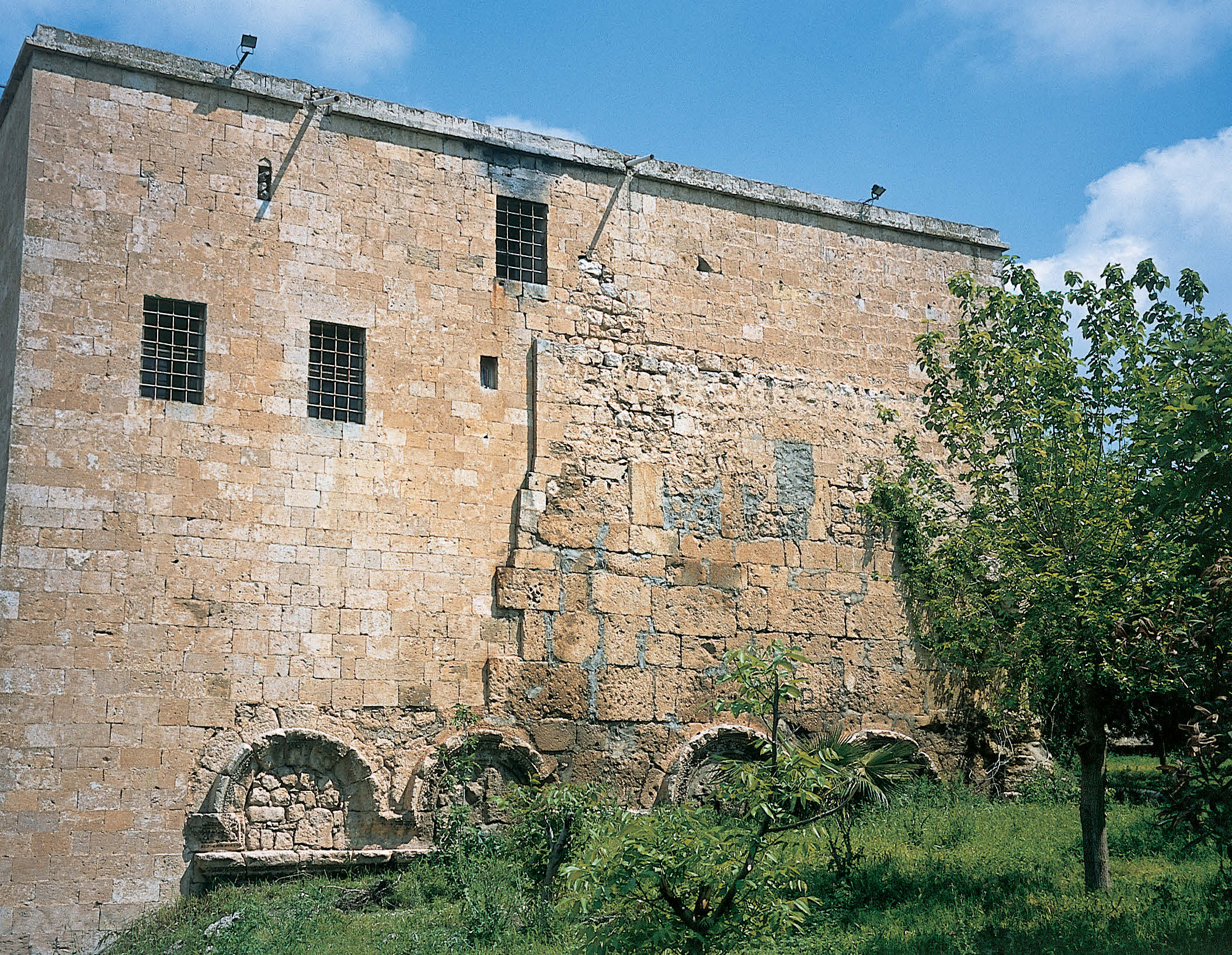
The Monastery of Mar Augin, founded by East Syrian monks in the early fourth century, was until 1629 a stronghold of Nestorian monasticism. The last Syrian Orthodox monk of Mar Augin died in 1974. Near Mar Augin stand the ruins of the formerly Nestorian monasteries of Mar Yuhanon, Mar Abraham the Elder and Mar Malke.12 The Syrian Orthodox Monastery of Mar Augin has re- opened in April 2010.
马尔·奥金(Mar Augin)修道院由东叙利亚修士创建于4世纪初,直到1629年一直是聂斯托利派修道制度的据点。马尔·奥金最后一位叙利亚正教修士于1974年去世。马尔·奥金附近矗立着昔日聂斯托利派修道院的遗址:马尔·尤哈农(Mar Yuhanon)、长者马尔·亚伯拉罕(Mar Abraham the Elder)和马尔·马尔克(Mar Malke)修道院。12 叙利亚正教马尔·奥金(Mar Augin)修道院于2010年4月重新开放。
0 30 km 20 10 N Mar Augin Mar Yuhanon Mar Abraham (Kashkar)
0 30 公里 20 10 北 马尔·阿夫金 (Mar Augin) 马尔·尤哈农 (Mar Yuhanon) 马尔·亚伯拉罕(卡什卡尔)(Mar Abraham (Kashkar))
The Thomas Christians
多马基督徒 (Thomas Christians)
of South India rebuilding of ecclesiastical structures, which followed the seventy-year-long persecutions and occurred on the occasion of the synod of 410, brought an end to this doubling of hierarchies.
南印度教会结构的重建,继长达七十年的迫害之后,并发生于410年主教会议之际,终结了这种教阶的双重化。
‘[The Saviour said to him:] Fear not, Thomas, go to India and preach the Word there, for my grace is with you. But he did not obey and said: Wherever you wish to send me, send me, but somewhere else! For I will not go to the Indians.’ Acts of Thomas.81
“[救主对他说:]不要害怕,多马 (Thomas),往印度 (India) 去,在那里传讲圣言,因为我的恩典与你同在。但他没有听从,说:你愿意差我到哪里,就差我到哪里,但要去别处!因为我不愿到印度人那里去。”《多马行传》(Acts of Thomas) 81
Later prisoners of war were either Orthodox faithful to Chalcedon or Miaphysites, who formed their own congregations and did not assimilate. The monopoly of the Church of the East over Sassanian Christianity came under still greater pressure when the Miaphysites, who were persecuted in the Byzantine Empire starting in 519, sought refuge to the east of the Euphrates and set up their own hierarchy there. These various waves of immigration of Christian refugees help account for the fact that, although at the start of the seventh century Christians constituted nearly half the population of the Iranian Empire, about 75 per cent of these were Nestorians, 20 per cent Miaphysite Jacobites and 5 per cent Melkites faithful to Chalcedon.80
后来的战俘要么是忠于迦克墩 (Chalcedon) 的正统派 (Orthodox) 信徒,要么是合性论者 (Miaphysites),他们组建了自己的会众,未被同化。当自519年起在拜占庭帝国 (Byzantine Empire) 遭受迫害的合性论者 (Miaphysites) 到幼发拉底河 (Euphrates) 以东寻求避难,并在那里建立自己的教阶体系时,东方教会 (Ch. of E.) 对萨珊基督教 (Sassanian Christianity) 的垄断受到了更大的压力。这些基督教难民的多波移民潮有助于解释这一事实:尽管在七世纪初,基督徒占伊朗帝国 (Iranian Empire) 人口的近一半,但其中约75%是聂斯托利派 (Nestorians),20%是合性论派的雅各派 (Miaphysite Jacobites),5%是忠于迦克墩 (Chalcedon) 的麦尔基派 (Melkites)。80
Just as Jonah once refused to go to Nineveh at God’s command, and God outwitted him with the help of a giant fish, Thomas does not want to obey Jesus. Jesus – presented in the Acts of Thomas as the apostle’s twin brother – also plays a trick on him. When he encounters a merchant from India, whom King Gondophares has directed to bring him a builder and carpenter, Jesus sells him his brother Thomas. The merchant travels with Thomas by sea to India and presents him to his king, who assigns him to build a palace. But, instead of building this, he spends months distributing the money entrusted to him, until the king orders Thomas to show him the allegedly completed palace. ‘You cannot see it now,’ the apostle informs him; ‘rather you will see it only when you have departed from this life.’ The message is clear and marked by Neo-Platonic thought: the world assumed by us to be true is unreal and insignificant, and the true world lies on the other side and is accessible only to the enlightened mind’s eye.
正如约拿 (Jonah) 曾拒绝奉上帝之命前往尼尼微 (Nineveh),而上帝借助一条巨鱼智胜了他,多马 (Thomas) 也不愿服从耶稣 (Jesus)。在《多马行传》(Acts of Thomas) 中,耶稣被呈现为使徒的孪生兄弟,他也对多马施了一计。当他遇到一位来自印度 (India) 的商人——贡多法雷斯王 (King Gondophares) 已指示此人为他带来一名建筑师和木匠——耶稣把自己的兄弟多马卖给了他。商人带着多马经海路前往印度,并将他引见给自己的国王,国王派他建造一座宫殿。然而,他并未建造宫殿,而是花了数月时间把托付给他的钱财分发出去,直到国王命令多马向他展示据称已完工的宫殿。“你现在看不见它,”使徒告诉他;“相反,只有当你离开此生之后,你才会看见它。”这一信息清晰明了,并带有新柏拉图主义 (Neo-Platonic) 思想的印记:我们以为真实的世界并不真实,也无足轻重,而真实的世界在彼岸,只有开悟的心灵之眼才能通达。
In retrospect, three factors contributed to the rapid success of the missionary efforts in the east: First, significant Jewish exile communities were living in Mesopotamia. Second, Aramaic served as lingua franca from Antioch to Central Asia, enabling Aramaic-speaking missionaries to communicate easily with both Jews and non- Jewish merchants and members of the upper classes. Third, the close-meshed net formed by the various routes of the Silk Road eased the spread of new religions. Although the Roman- Parthian border was generally tightly maintained, traders or missionaries disguised as traders could cross it unhindered. In fact, the missionizing of Mesopotamia, which moved from Edessa to Nisibis, Arbil, Seleucia-Ctesiphon and Maishan, followed the land routes of the Silk Road. The sea routes then enabled the expansion of missionary activity to the islands of Kharg and Socotra, as well as – presumably – South India.
回顾来看,有三个因素促成了东方传教事业的迅速成功:第一,美索不达米亚 (Mesopotamia) 居住着规模可观的犹太流亡社群。第二,阿拉米语 (Aramaic) 从安条克 (Antioch) 到中亚 (Central Asia) 充当通用语 (lingua franca),使讲阿拉米语 (Aramaic) 的传教士能够轻松地与犹太人以及非犹太商人、上层阶级成员交流。第三,丝绸之路 (Silk Road) 各条路线所形成的密集网络,便利了新宗教的传播。尽管罗马—帕提亚边境 (Roman-Parthian border) 总体上维持着严密防守,但商人或伪装成商人的传教士仍可不受阻碍地穿越。事实上,美索不达米亚 (Mesopotamia) 的传教活动——从埃德萨 (Edessa) 推进至尼西比斯 (Nisibis)、阿尔比勒 (Arbil)、塞琉西亚—泰西封 (Seleucia-Ctesiphon) 和迈尚 (Maishan)——正是沿着丝绸之路 (Silk Road) 的陆路展开的。随后,海路又使传教活动得以扩展至哈尔克岛 (Kharg) 和索科特拉岛 (Socotra),并且——据推测——还扩展至南印度 (South India)。
The ignorant king grows angry and decides to have Thomas skinned and burned. Then the king’s brother Gad dies and angels bear his soul to heaven, where he is to choose his new home. He selects, of all places, the palace built by the apostle, which the angels deny him. But they allow him to return to earth to buy the palace from his brother, after which the king asks Thomas, as the ‘servant of God’, for forgiveness and instruction. The king suspects that his builder is Jesus Christ, who appears to him in the form of his twin brother, which is likewise a Gnostic
无知的国王勃然大怒,决定将多马 (Thomas) 剥皮并烧死。随后,国王的兄弟迦得 (Gad) 死了,天使将他的灵魂带往天堂,在那里他要选择自己的新居。他偏偏选中了使徒所建造的宫殿,天使却拒绝给他。但他们允许他返回人间,从兄弟那里买下这座宫殿。此后,国王以“上帝的仆人” (servant of God) 称呼多马 (Thomas),向他请求宽恕和教导。国王怀疑他的建造者就是耶稣基督 (Jesus Christ),耶稣以他孪生兄弟的形象向他显现,这同样是一个诺斯替主义的 (Gnostic)……
element. Overjoyed, the apostle administers the three sacraments to the king, making him a Christian. These sacraments are the ‘seal’ of baptism, anointing with oil and the Eucharist.82 In the last chapter of the acts, Thomas leaves the king and journeys to South India, where he dies as a martyr at Mylapore near Madras. According to Indian tradition, Thomas did not travel directly from Gondophares’s realm to Madras but, rather, made landfall on the island of Malankara in the bay of Cranganore, in the coastal region of Kerala. Here he founded seven churches along the Malabar Coast before being killed around 68CE in Mylapore. This tradition is also recalled by the official names of six of the eight Oriental Churches of India, which include designations of either Malankar or Malabar.83 The relics of the apostle also made a long journey. Around 370 they were transferred to Edessa, where they remained until they were moved before the fall of the Crusader state of Edessa in 1144 to the island of Chios, and then again in 1258 to Ortona on the Adriatic coast for safe keeping. In 1953 the relics came full circle when the Vatican gave the right arm of the apostle to the newly built Thomas mausoleum in Cranganore.
要素。大喜过望,使徒为国王施行三项圣礼,使他成为基督徒。这三项圣礼是洗礼的“印记”、涂油和圣体圣事。82 在《多马行传》(Acts of Thomas) 的最后一章,多马 (Thomas) 离开国王,前往南印度,并在马德拉斯 (Madras) 附近的迈拉普尔 (Mylapore) 殉道而死。根据印度传统,多马并未从贡多法雷斯 (Gondophares) 的王国直接前往马德拉斯,而是首先在喀拉拉 (Kerala) 沿海地区克兰加诺尔 (Cranganore) 湾的马兰卡拉 (Malankara) 岛登陆。他在这里沿马拉巴尔海岸 (Malabar Coast) 建立了七座教会,后来约于公元68年在迈拉普尔被杀。这一传统也见于印度八个东方教会 (Oriental Churches) 中六个教会的正式名称,这些名称包含“马兰卡尔” (Malankar) 或“马拉巴尔” (Malabar) 的称谓。83 这位使徒的圣髑也经历了一段漫长的旅程。约在370年,它们被迁往埃德萨 (Edessa),并一直保存在那里,直到1144年十字军国家埃德萨陷落之前,它们被转移到希俄斯 (Chios) 岛,随后又于1258年被转移到亚得里亚海沿岸 (Adriatic coast) 的奥托纳 (Ortona) 以妥善保存。1953年,这些圣髑完成了一个循环:梵蒂冈 (Vatican) 将这位使徒的右臂赠予克兰加诺尔 (Cranganore) 新建的多马陵墓 (Thomas mausoleum)。
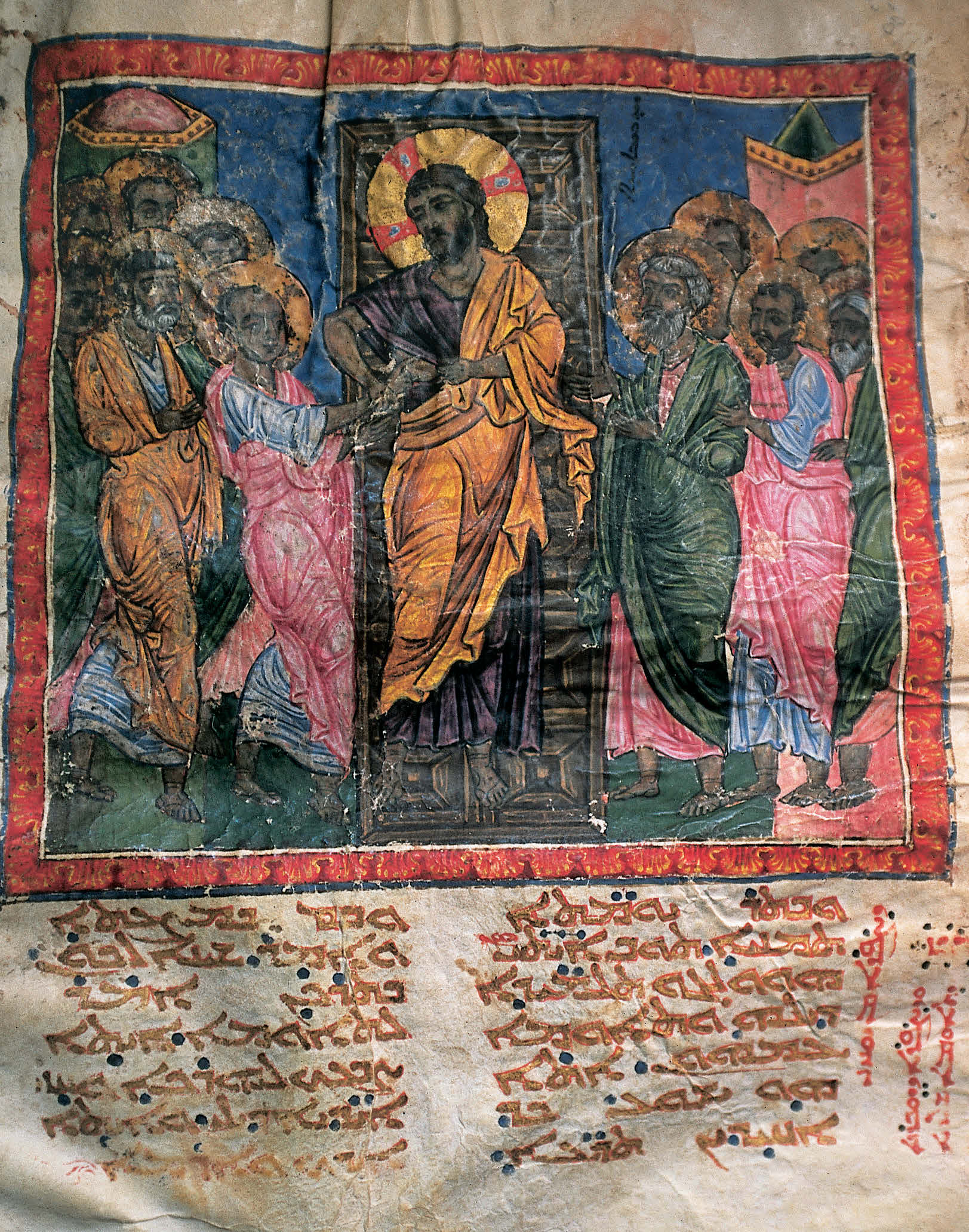
The apostle Thomas, the most highly venerated apostle of the Church of the East, in the illustrated Gospel book on parchment from Mardin. It was given to the Church of the Mother of God of Ziad in 1272 by Bishop Dioscuros (1222–1282), who had it rebound. Its original owner was named as Abu Shahak, possibly a Nestorian jurist who died in 912. Whether the illustrations are in fact older than the text, which is written in the Serto script, remains disputed.13 (Library of the Church of the Forty Martyrs, Mardin, Turkey.)
使徒多马 (Thomas),东方教会 (Ch. of E.) 最受尊崇的使徒,见于马尔丁 (Mardin) 的一本羊皮纸插图本福音书中。1272年,主教狄奥斯库罗斯 (Dioscuros)(1222–1282)将其赠予齐亚德 (Ziad) 的上帝之母教堂 (Church of the Mother of God of Ziad),并让人重新装订了此书。其原所有者名为阿布·沙哈克 (Abu Shahak),可能是一位卒于912年的聂斯托利派 (Nestorian) 法学家。这些插图是否实际上早于以塞尔托字体 (Serto script) 书写的正文,仍存争议。13(土耳其 (Turkey),马尔丁 (Mardin),四十殉道者教堂图书馆 (Library of the Church of the Forty Martyrs)。)
The first historical witness to an autonomous Christian community in Kerala may be Pantaenus, who, according to Eusebius and Jerome, was sent by his bishop between 180 and 190 from Alexandria to India, where he encountered Christians.85 A century later Bishop David of Basra, mentioned above, travelled to India around 295 / 300, establishing the first official contact between the Thomas Christians of South India and the Church of the East.86 Then, around 345, one Bishop Joseph of Edessa – who, at the Council of Nicea, had signed as ‘bishop of all the churches of Persia and of Great India’ – visited Kerala. Presumably, the hierarchal integration of the Thomas Christians into the Church of the East, which endured until the forced ‘conversion’ of the East Syrian Christians of Kerala to Roman Catholicism in 1599, began with Bishop Joseph. This tie to the Thomas Christians was formalized around 410 or 420 with the creation of the metropolitan see of Rew Ardashir, which had jurisdiction over the Indian dioceses.87
关于喀拉拉 (Kerala) 一个自主基督教社群的最早历史见证,可能是潘代诺 (Pantaenus)。根据优西比乌 (Eusebius) 和耶柔米 (Jerome) 的记载,他在180至190年间被其主教从亚历山大里亚 (Alexandria) 派往印度 (India),并在那里遇到了基督徒。85 一个世纪后,上文提到的巴士拉的大卫主教 (Bishop David of Basra) 于约295/300年前往印度,建立了南印度 (South India) 圣多马基督徒 (Thomas Christians) 与东方教会 (Ch. of E.) 之间的首次正式接触。86 随后,约在345年,一位埃德萨的约瑟主教 (Bishop Joseph of Edessa)——此人曾在尼西亚会议 (Council of Nicea) 上以“波斯及大印度所有教会的主教” (bishop of all the churches of Persia and of Great India) 的身份签署——访问了喀拉拉 (Kerala)。据推测,圣多马基督徒在教阶上被整合进东方教会 (Ch. of E.) 的进程,始于约瑟主教;这一进程一直延续到1599年喀拉拉 (Kerala) 的东叙利亚基督徒 (East Syrian Christians) 被迫“皈依”罗马天主教 (Roman Catholicism) 为止。与圣多马基督徒的这种联系,约在410或420年随着雷夫阿尔达希尔 (Rew Ardashir) 都主教区 (metropolitan see) 的设立而正式化;该都主教区对印度各教区拥有管辖权。87
No evidence exists for an apostolic mission to Kerala. However, considerable evidence shows that diplomatic relations, as well as a flourishing maritime trade, existed between the Roman Empire and the west coast of India. Thanks to knowledge of the monsoon winds, ships could cross the Indian Ocean between Egypt and Cranganore, called Muziris by the Romans, in less than two months. Pliny the Elder referred to Muziris as ‘primium emporium Indiae’ – the first port of India – and Strabo (63BCE–21CE) reported that, every year, 120 ships linked the two continents together. The discovery of 2300 Roman coins from the period from 123BCE to 117CE testifies to the significance of this trading relationship.84
没有证据表明使徒曾到喀拉拉 (Kerala) 传教。然而,大量证据表明,罗马帝国 (Roman Empire) 与印度 (India) 西海岸之间曾存在外交关系以及繁荣的海上贸易。由于掌握了季风知识,船只可以在不到两个月内穿越印度洋 (Indian Ocean),往返于埃及 (Egypt) 与克兰加诺尔 (Cranganore)(罗马人称之为穆吉里斯 (Muziris))之间。老普林尼 (Pliny the Elder) 将穆吉里斯 (Muziris) 称为“primium emporium Indiae”——即印度的第一个港口——而斯特拉波 (Strabo,公元前63年–公元21年) 则记载,每年有120艘船将这两个大陆连接起来。在公元前123年至公元117年期间发现的2300枚罗马钱币,证明了这一贸易关系的重要性。84
The stone cross in front of the formerly Nestorian Church of St Mary in Kuravalangad, Kerala, bears a Middle Persian inscription from the seventh/ninth century. The great bronze bell of the church from 1584 has a Nestorian inscription.14 Today the church belongs to the Roman Catholic Church.
位于喀拉拉 (Kerala) 库拉瓦兰加德 (Kuravalangad) 的原属聂斯托利派 (Nestorian) 的圣玛丽教堂 (Church of St Mary) 前的石十字架,刻有一方七/九世纪的中古波斯语 (Middle Persian) 铭文。该教堂1584年的大铜钟上有一处聂斯托利派 (Nestorian) 铭文。14 如今,该教堂属于罗马天主教会 (Roman Catholic Church)。
The Beginnings of East Syrian Christianity | 27
东叙利亚基督教的起源 | 27
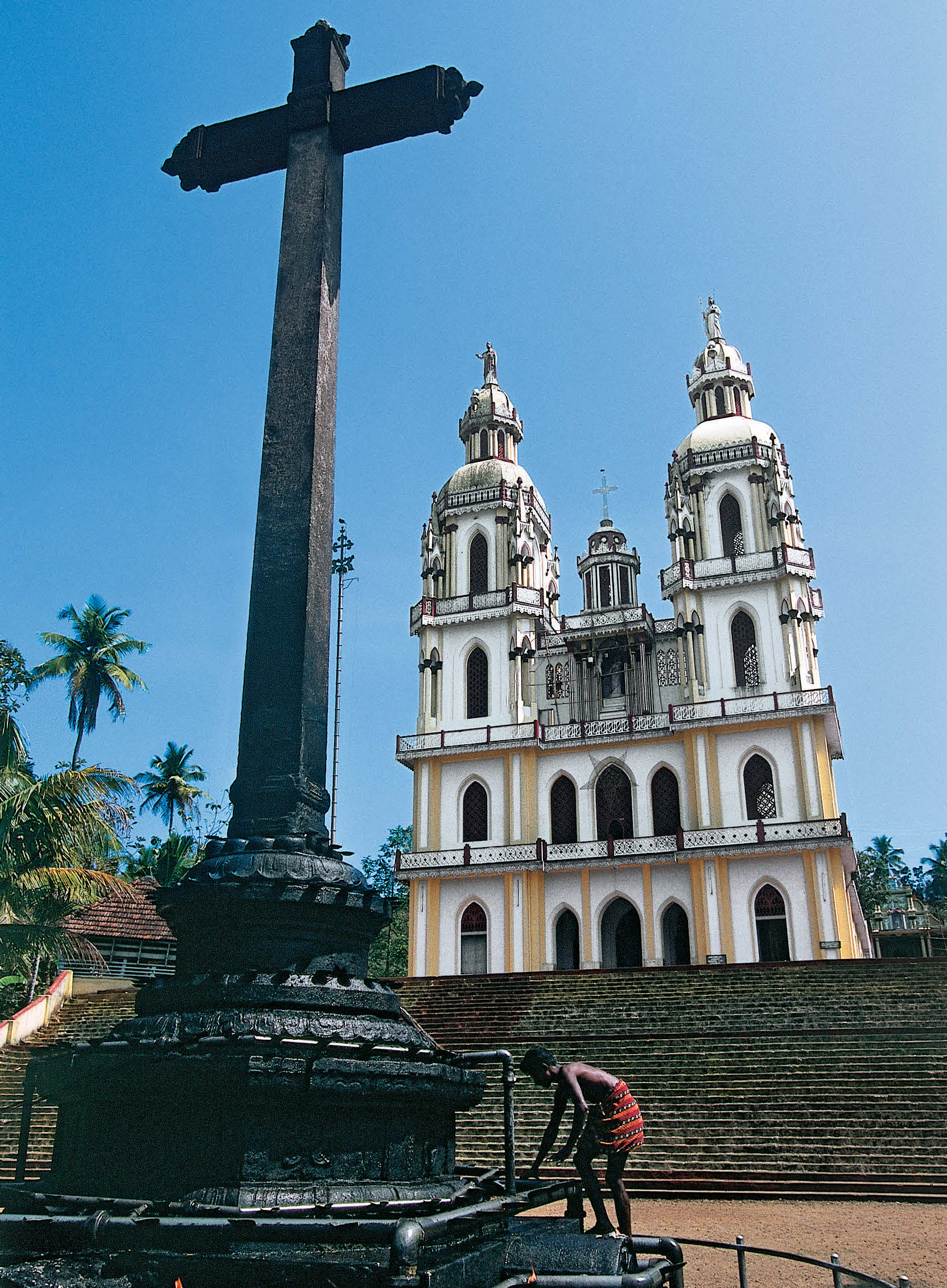
The next two historical witnesses are disputed. One concerns the Byzantine envoy and Bishop Theophilus, who certainly visited the kingdom of Himyar in modern Yemen before 356 but hardly India.88 The other dubious witness concerns a merchant, Thomas of Kana, who landed in Cranganore with 72 families in, depending on the source, 345, 754, 774 or 795.89 Even if this information seems unbelievable, it is conceivable that Christians had fled the Sassanian Empire for India before the severe persecutions instituted by Shapur II around 341. More reliable is the reference by the metropolitan of Merv, Ishodad, that in 425 a priest from India named David translated the Letter to the Romans into Persian.90
接下来的2项历史见证存在争议。其中1项涉及拜占庭使节兼主教狄奥斐鲁(Theophilus);他确实在356年以前到访过位于今也门(Yemen)的希木叶尔(Himyar)王国,但几乎不可能到过印度。88 另一项可疑见证涉及商人迦拿的多马(Thomas of Kana):他带着72个家庭在某一年登陆克兰加诺尔(Cranganore),各来源所载年份分别为345年、754年、774年或795年。89 即使这些说法似乎难以置信,基督徒也可能在沙普尔二世(Shapur II)于约341年开始严厉迫害之前,已从萨珊帝国(Sassanian Empire)逃往印度。更可靠的是默夫(Merv)都主教伊绍达德(Ishodad)的记载:425年,一位名叫大卫(David)的印度司祭将《罗马书》译成波斯语。90
Nestorian stone cross in the now Syrian Orthodox Church of Valiya Palli in Kottayam, Kerala, from the sixth/ninth centuries. It testifies to the close relationship between the Church of the East and the Thomas Christians of Kerala. The text reads: ‘Who believes in the Messiah and God above and in the Holy Ghost is redeemed through the grace of Him who bore the cross.’15
喀拉拉邦(Kerala)科塔亚姆(Kottayam)的瓦利亚帕利教堂(Valiya Palli,现属叙利亚正教会)中的聂斯托利派石十字架,年代为6/9世纪。它见证了东方教会与喀拉拉邦(Kerala)的多马基督徒(Thomas Christians)之间的密切关系。铭文写道:“信仰弥赛亚、至高的上帝和圣灵者,借着那背负十字架者的恩典而得救。”15
A century later an Egyptian sailor, writing under the pseudonym Cosmas Indicopleustes, published an anti-Ptolemaic polemic entitled ‘Topographia christiana’, which described the world not as a sphere but as a disk. The value of
1个世纪后,一位埃及水手以科斯马斯·印度航海家(Cosmas Indicopleustes)为笔名,发表了一篇反托勒密(Ptolemaic)论战文章,题为《基督教地志》(Topographia christiana);他在书中把世界描述为圆盘,而非球体。其价值在于
the book, addressed to the Nestorian patriarch Mar Aba, lies in its description of the Christian communities he encountered during his voyage of 522 / 525 to Ethiopia, India and Sri Lanka. ‘Even in Taprobane [Sri Lanka] there is a church of Christians, with clergy and believers.’ He added later, ‘The island has a church of Persian Christians and a priest who is appointed by Persia.’ Regarding India, we learn that there were also Christians ‘in the region of Malé [Malabar], where pepper grows’. And ‘in Calliana [the city of Quilon] there is moreover a bishop, who is appointed from Persia; likewise on the island of the Dioscorides [Socotra] in the Indian Ocean’. There ‘the inhabitants speak Greek; there are clergy who receive their ordination in Persia and are sent to the island, and a multitude
该书写给聂斯托利派宗主教马尔·阿巴(Mar Aba),对作者在522/525年航行至埃塞俄比亚(Ethiopia)、印度(India)和斯里兰卡(Sri Lanka)期间遇到的基督徒团体作了描述。“甚至在塔普罗巴内(Taprobane)[斯里兰卡(Sri Lanka)]也有一座基督徒教堂,设有圣职人员和信徒。”他后来补充说:“岛上有一座波斯基督徒教堂,还有一位由波斯任命的司祭。”关于印度,我们得知马莱(Malé)[马拉巴尔(Malabar)]地区也有基督徒,“那里生长胡椒”。而且,“在卡利亚纳(Calliana)[奎隆(Quilon)城]还有一位主教,由波斯任命;印度洋上的狄奥斯科里德斯岛(Dioscorides)[索科特拉岛(Socotra)]也有一位主教。”在那里,“居民说希腊语;有些圣职人员在波斯接受祝圣后被派往该岛,还有许多
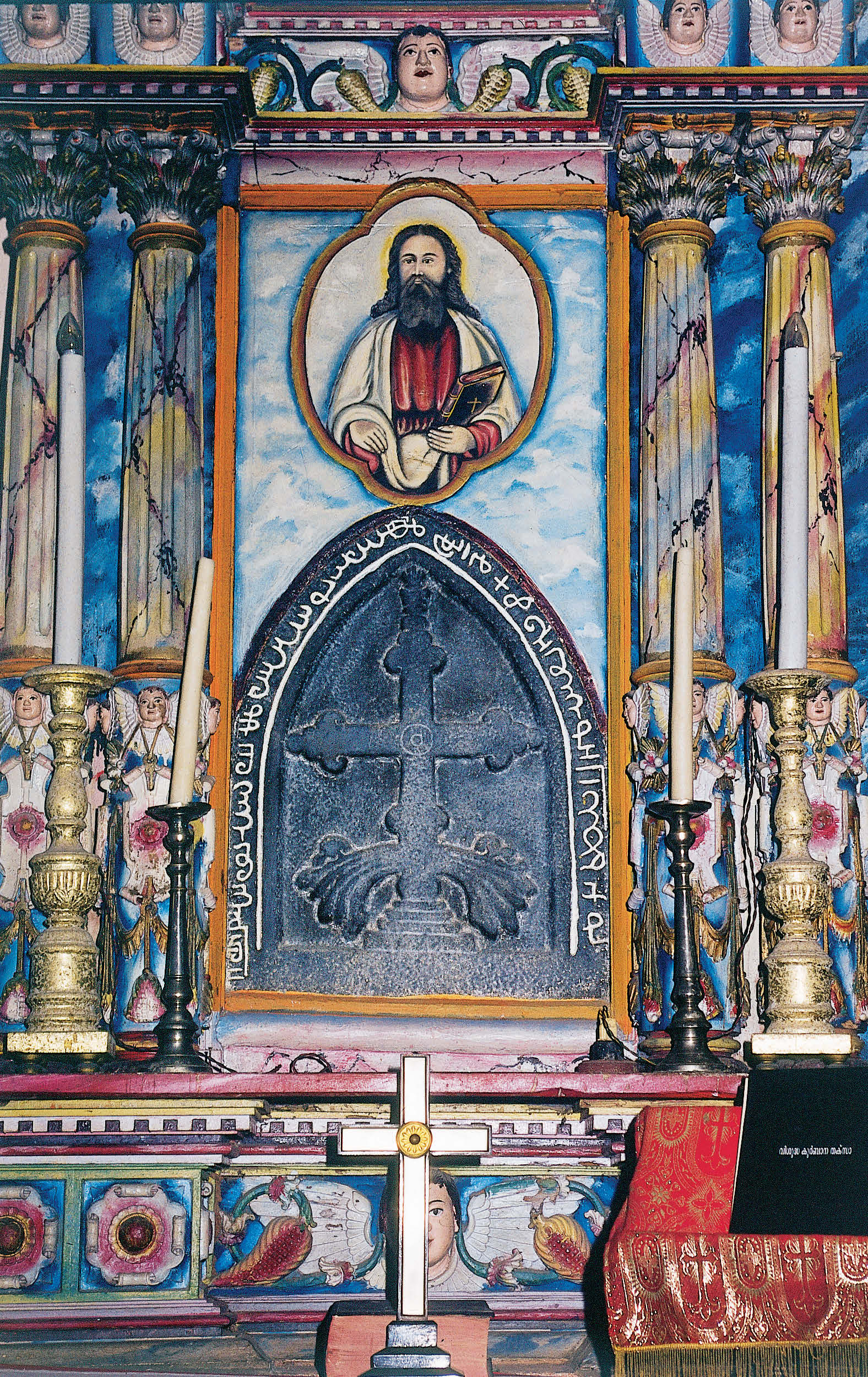
0 150 km 100 50 SRI LANKA
0 150 公里 100 50 斯里兰卡 (SRI LANKA)
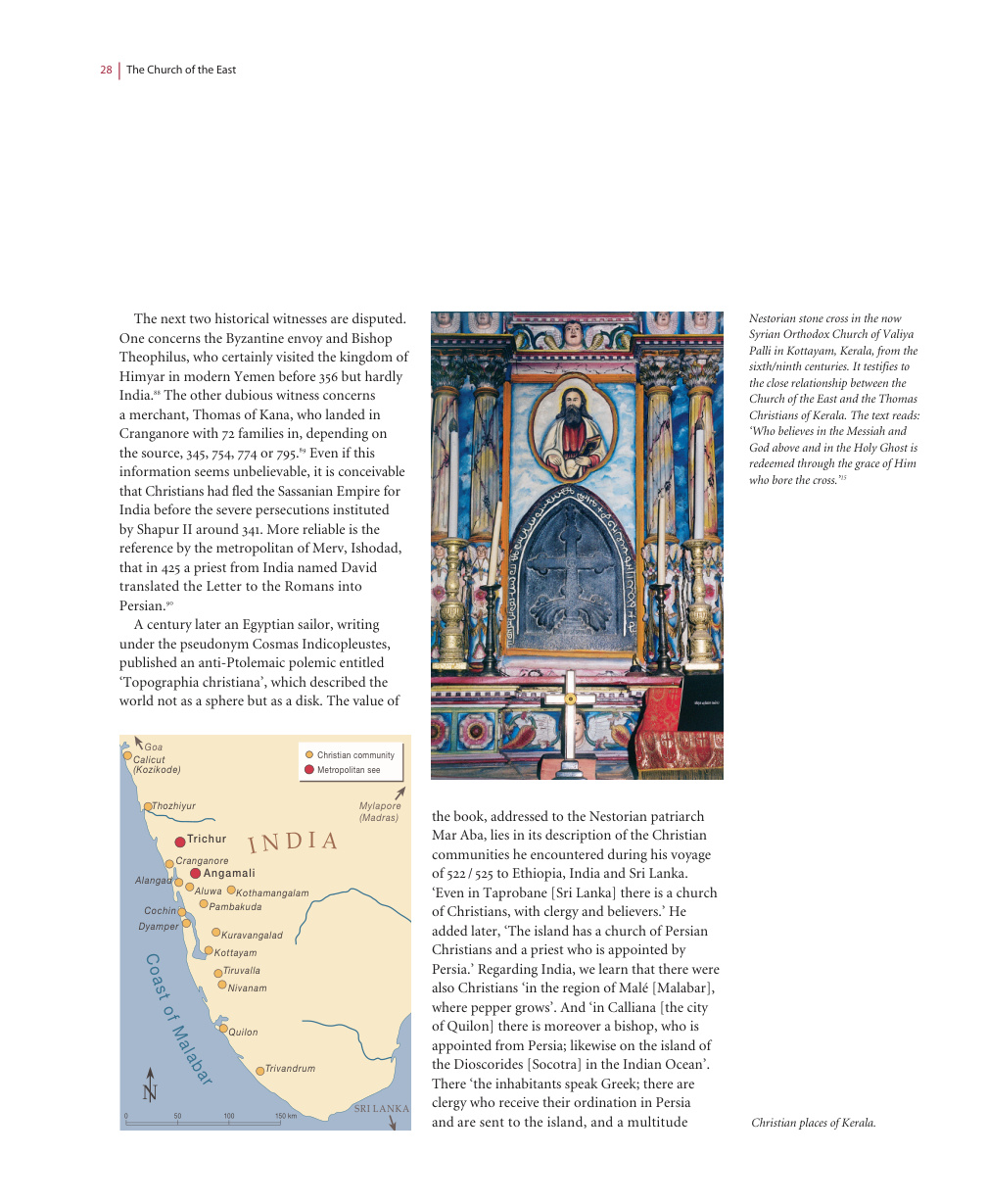
One of the two copper tablets from 849 held by the patriarchal see of the Mar Thoma Syrian Church of Malabar in Tiruvalla, Kerala. The tablet, inscribed on both sides, is the final page of a document in which Governor Atikal Tiruvatikal confirms various privileges to the East Syrian Terisa Church of Quilon. On the front of the tablet the witnesses are listed in Arabic in the Kufic script, as well as in Pahlavi, and on the back in Pahlavi and Judaeo-Persian (Persian in Hebrew script). of Christians’.91 This report demonstrates the integration of the Christian communities of Socotra, Sri Lanka and South India into the Church of the East. As a consequence of the disagreement between Patriarch Ishoyahb III (in office 650–660) and the rebellious metropolitan of Rew Ardashir, Shimun, who incited the Thomas Christians to disobedience against the patriarch, the patriarch removed the Indian bishops from the rebellious metropolitan see and created a metropolitan see of India under his direct authority, which was later confirmed by Patriarch Timothy I (in office 780–823).92
来自849年的两块铜板之一,由位于喀拉拉邦蒂鲁瓦拉的马拉巴尔马尔托马叙利亚教会 (Mar Thoma Syrian Church of Malabar) 的宗主教教座保存。该铜板双面刻写,是一份文件的最后一页,其中总督阿蒂卡尔·蒂鲁瓦蒂卡尔 (Atikal Tiruvatikal) 向奎隆的东叙利亚特里萨教会 (East Syrian Terisa Church of Quilon) 确认了各项特权。铜板正面以库法体 (Kufic script) 阿拉伯文以及巴列维语 (Pahlavi) 列出证人名单,背面则以巴列维语 (Pahlavi) 和犹太-波斯语 (Judaeo-Persian)(以希伯来字母书写的波斯语)列出。基督徒的’。91 这份报告表明,索科特拉 (Socotra)、斯里兰卡 (Sri Lanka) 和南印度 (South India) 的基督徒群体融入了东方教会 (Ch. of E.)。由于宗主教伊绍雅布三世 (Ishoyahb III)(在位 650–660 年)与雷阿尔达希尔 (Rew Ardashir) 的叛逆都主教希蒙 (Shimun) 之间的分歧——后者煽动多马基督徒 (Thomas Christians) 不服从宗主教——宗主教将印度主教从叛乱的都主教区中撤出,并在其直接管辖下设立印度都主教区,此事后来得到宗主教提摩太一世 (Timothy I)(在位 780–823 年)的确认。92
The few exceptions are the ruins of a church on Socotra;93 a ‘Nestorian’ cross carved into a pillar in the ancient royal city of Anuradpura on Sri Lanka;94 a handful of gravestones in Kerala, such as that of Manarcad from 910; the approximately three-metre-high stone cross in front of the Church of St Mary in Kuravalangad; and at least five relief-type stone crosses, about 80 to 100 centimetres high and 60 to 80 centimetres wide.95 Another cross was dug up by the Portuguese in 1547 in Mylapore. These crosses are of two types, and examples of both can be found in the Valiya Palli Church in Kottayam, built in 1550, which belongs today to the Syrian Orthodox Church. They were taken from a much older church in Cranganore. The smaller stone cross, from the sixth to ninth centuries, stands in the altar of the
为数不多的例外包括:索科特拉岛 (Socotra) 上一座教堂的遗址;93 斯里兰卡 (Sri Lanka) 古王城阿努拉德普勒 (Anuradpura) 的一根石柱上刻有“聂斯托利派” (Nestorian) 十字架;94 喀拉拉邦 (Kerala) 的几块墓碑,例如910年马纳尔卡德 (Manarcad) 的那一块;库拉瓦兰加德 (Kuravalangad) 圣玛丽教堂 (Church of St Mary) 前约三米高的石十字架;以及至少五座浮雕式石十字架,高约80至100厘米,宽约60至80厘米。95 另一座十字架于1547年由葡萄牙人在迈拉普尔 (Mylapore) 挖出。这些十字架有两种类型,两种类型的实例均可见于科塔亚姆 (Kottayam) 建于1550年的瓦利亚帕利教堂 (Valiya Palli Church),该教堂今天属于叙利亚正教会 (Syrian Orthodox Church)。它们取自克兰加诺尔 (Cranganore) 一座古老得多的教堂。较小的石十字架,年代为六至九世纪,矗立在……的祭坛中
Although Kerala is now home to about 300 churches, no structures survive from the first millennium, since they have all been rebuilt or newly constructed after the fifteenth century.
尽管喀拉拉 (Kerala) 如今拥有约300座教堂,但第一千年期的建筑无一留存,因为它们都在十五世纪之后被重建或新建。
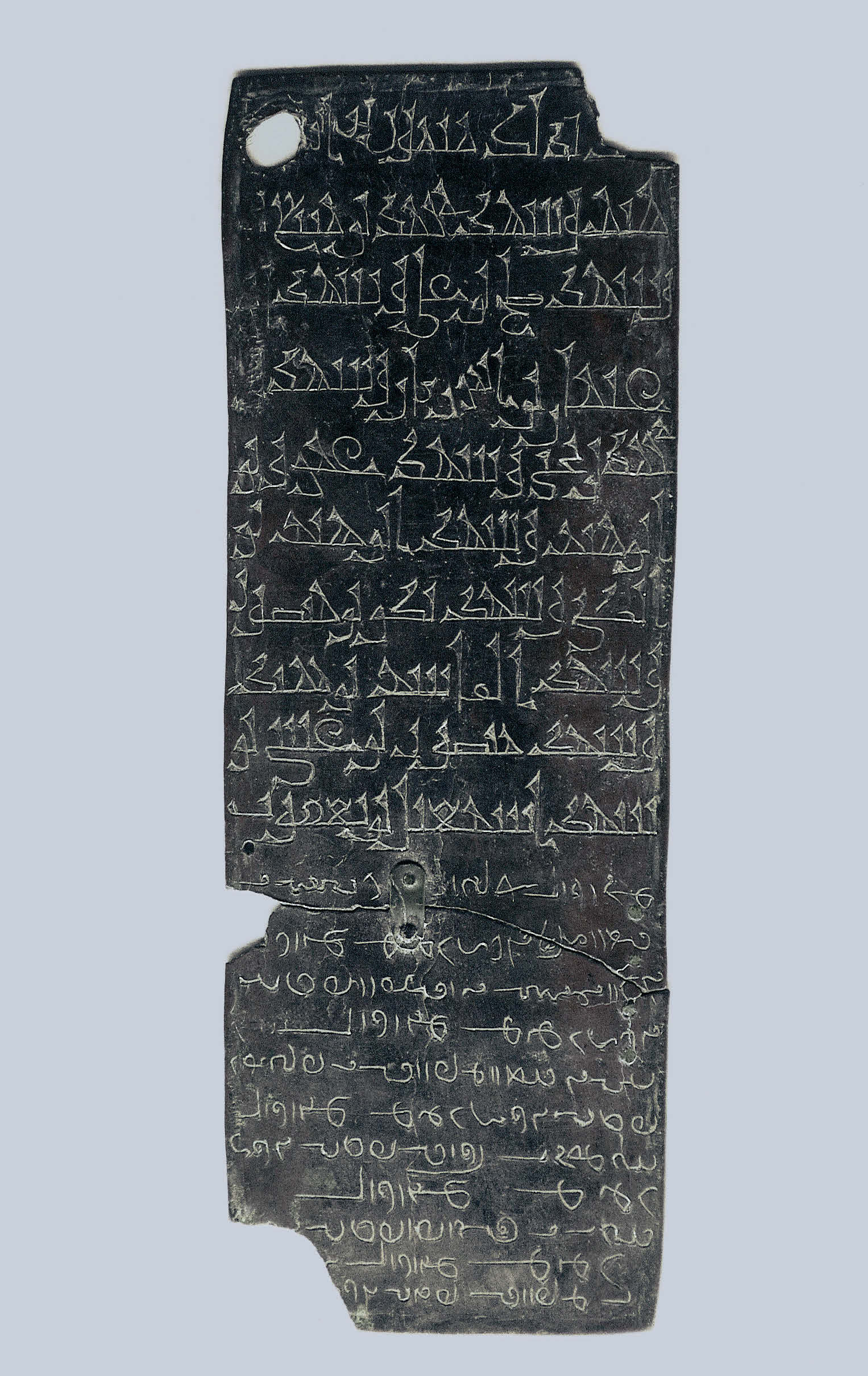
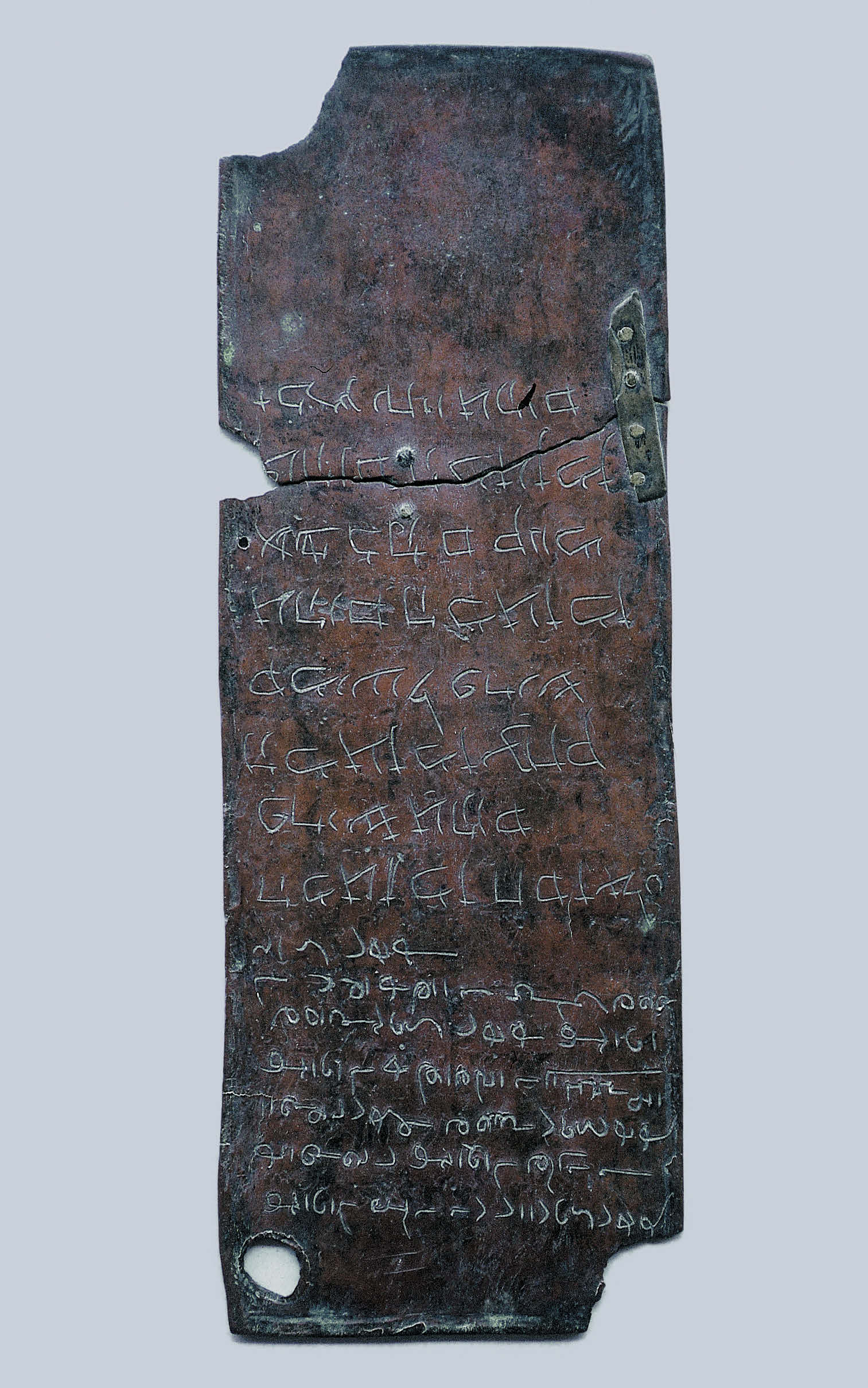
The second copper plate from c.849, found in the patriarchal see of the Mar Thoma Church in Tiruvalla. The plate is inscribed on only one side in the Old Tamil language and Vatellatu script. northern side aisle, and the somewhat larger one, from the tenth century, stands in the southern side aisle. The same Pahlavi (Middle Persian) inscription runs along the outer edge of each cross. It reads: ‘Who believes in the Messiah and God above and in the Holy Ghost is redeemed through the grace of Him who bore the cross.’ The second cross features a second inscription, written in Estrangela and taken from the Letter to the Galatians (6:14): ‘Let me not glorify except the cross of our Lord Jesus Christ.’ 96 and mixed Tamil-Grantha script, written on both sides along the length of the tablet.97 The wording of this document makes clear that this Christian family was considered equal to the second highest Indian caste, the warrior nobles.
约849年的第二块铜板,发现于蒂鲁瓦拉 (Tiruvalla) 的马尔托马教会 (Mar Thoma Church) 宗主教座堂。该铜板仅单面以古泰米尔语 (Old Tamil) 和瓦特卢图文 (Vatellatu) 刻写。北侧廊,而稍大的那一座,来自十世纪,立于南侧廊。同样的巴列维语(Pahlavi,中古波斯语)铭文沿每个十字架的外缘延伸。其文曰:“凡信弥赛亚 (Messiah)、至高上帝和圣灵 (Holy Ghost) 的人,都藉着那位背负十字架者的恩典而得救赎。”第二个十字架还有第二段铭文,以埃斯特兰格拉文 (Estrangela) 写成,取自《加拉太书》(Letter to the Galatians)(6:14):“除了我们主耶稣基督 (Jesus Christ) 的十字架,我别无所夸。”96 以及混合的泰米尔-格兰塔文 (Tamil-Grantha script),沿石板长度两面书写。97 这份文件的措辞清楚表明,这个基督徒家族被视为等同于印度第二高的种姓——武士贵族。
In the second document, from 849 (or 824), the time of the South Indian king Stanu Ravi, Governor Atikal Tiruvatkial extended to the Terisa church of Kollam (Quilon), which had been founded in 824 by Marvan Sapir-Iso, the privilege of taxation and sole jurisdiction over a certain number of subject families. The name Marvan Sapir-Iso is a corruption of the Syrian episcopal title Mar and the name Sabrisho, which means Jesus is my hope. The document confirms a later tradition from the sixteenth/seventeenth centuries, which recounts the arrival of the bishops Mar Sabrisho and Mar Piruz in Quilon. The Christians also maintained in a specific area the privilege of levying customs duties, authority over measurement and administration of the royal seal. An additional document contains further details and states that one established the borders of this transferred region by means of a ceremony in which a female elephant was led along these boundaries.98 The names of the witnesses are marked on both sides of a tablet in Arabic, using the Kufic script, in Pahlavi and in Judaeo-Persian (Persian in Hebrew script). Older sources mention additional tablets, but these have been lost.
在第二份文书中,年代为849年(或824年),即南印度国王斯坦努·拉维 (Stanu Ravi) 在位时期,总督阿提卡尔·蒂鲁瓦特基阿尔 (Atikal Tiruvatkial) 将征税特权以及对一定数量臣属家庭的唯一管辖权,授予了由马尔万·萨皮尔-伊索 (Marvan Sapir-Iso) 于824年创建的科拉姆(奎隆,Kollam/Quilon)特里萨教堂 (Terisa church)。马尔万·萨皮尔-伊索 (Marvan Sapir-Iso) 这一名字是叙利亚主教头衔马尔 (Mar) 与名字萨布里绍 (Sabrisho) 的讹变,后者意为“耶稣是我的希望”。该文书证实了来自16/17世纪的一种较晚传统,该传统叙述了主教马尔·萨布里绍 (Mar Sabrisho) 和马尔·皮鲁兹 (Mar Piruz) 抵达奎隆 (Quilon) 之事。基督徒还在某一特定地区保有征收关税的特权、对度量衡的管辖权以及管理王室印章的权力。另一份文书包含更多细节,并指出人们通过一种仪式确定了这一转让地区的边界,仪式中一头母象被沿着这些边界牵引前行。98 证人的名字以阿拉伯语(使用库法体,Kufic script)、巴列维语 (Pahlavi) 和犹太-波斯语 (Judaeo-Persian,即以希伯来字母书写的波斯语) 刻在一块碑板的两面。更早的文献提到还有额外的碑板,但这些碑板已经失传。
Still more important are two documents, written on a total of six copper tablets, of which five have survived. Two of these are found in the patriarchal palace of the Mar Thoma church in Tiruvalla, and three are held by the Malankar Orthodox-Syrian church of Kottayam. The older document acknowledges that in 774 King Vira Raghava Chakravati granted the following privileges to the Christian Iravi Korttan from Cranganore: he was named leader of the traders’ guild and ‘lord of the city’ and had the right ‘to charge a broker’s commission and customs duty on all that can be weighed, measured and counted’. Additionally, he could carry a sword, employ personal messengers and use such princely insignia as a litter and a ‘royal parasol’. The rights ‘are passed down to his son and his son’s son, as long as sun and moon exist’. This document is inscribed in the Old Tamil language
更为重要的是两份文书,它们总共刻写在六块铜板上,其中五块留存至今。其中两块藏于蒂鲁瓦拉 (Tiruvalla) 的马尔托马教会 (Mar Thoma Church) 宗主教宫,另三块由科塔亚姆 (Kottayam) 的马兰卡拉东正教-叙利亚教会 (Malankar Orthodox-Syrian Church) 保存。较古老的那份文书载明,774年,国王维拉·拉加瓦·查克拉瓦蒂 (Vira Raghava Chakravati) 授予来自克兰加诺尔 (Cranganore) 的基督徒伊拉维·科尔坦 (Iravi Korttan) 以下特权:他被任命为商人行会的领袖和“城市之主”,并有权“对所有可称量、可测量和可计数之物收取经纪人佣金和关税”。此外,他可以佩剑、雇用私人信使,并使用诸如轿子和“王家伞盖”之类的王公徽记。这些权利“只要日月尚存,便传给他的儿子及其孙子”。该文书以古泰米尔语 (Old Tamil) 刻写。