鲍默《东方教会:亚述基督教图史》第四章:基督教普世共同体的瓦解(中英文对照版)
阿甲按:本连载以克里斯托夫·鲍默(Christoph Baumer)2016年英文新版为底本,采用人工智能辅助中译,以中英文对照形式供研读参考。译文及原文提取仍有待校订,人名、地名、专业术语和个别断句未必准确,欢迎读者与专家指正。
本章导读
本章讨论迦克墩会议及其后的基督论分歧,说明政治权力、神学术语与教会关系如何交织,推动原有基督教共同体逐渐分化为不同的教会传统。
凡例
- 翻译自:Christoph Baumer, The Church of the East: An Illustrated History of Assyrian Christianity, new edition, translated by Miranda G. Henry (London and New York: I.B.Tauris, 2016),第四章,原书第 51–58 页。
- 本连载保留英文原文、图版与原书页码,采用双语对照形式,便于参阅和引用。原作页码与 PDF 文件的物理页序不同,本文标示原书页码。
- 中文初稿由 DeepSeek 辅助生成,部分缺译和遗漏段落使用 GPT-6-luna 补译;本次整理不等同于完成学术校订。原文中的个别断句、图注拼接和脚注提取仍需对照原书核查。
- 人名、地名、书名与叙利亚语专业术语的译法仅供参考,相关条目可参阅《高尔吉亚叙利亚遗产百科辞典》。
- 引用建议:克里斯托夫·鲍默,《东方教会:亚述基督教图史》第四章“基督教普世共同体的瓦解”,袁永甲整理(人工智能辅助中译,待校订),教父原文中译计划,2026年10月12日,本文网址,并注明原书页码及访问日期。
第四章:基督教普世共同体的瓦解
The Loss of Christian Ecumene IV
基督教普世性的丧失 IV
The Council of Chalcedon
迦克墩公会议 (Council of Chalcedon)
Nestorius and Ibas should burn in the middle of Antioch! The banishment was fruitless. Nestorius and Ibas should be burned at once! Burn Satan and his son right away.’2 Bishops and abbots were not immune to primitive hatred.
聂斯托利 (Nestorius) 和伊巴斯 (Ibas) 应当被烧死在安提阿 (Antioch) 市中心!流放毫无结果。聂斯托利 (Nestorius) 和伊巴斯 (Ibas) 应当立即被烧死!立刻烧死撒但 (Satan) 和他的儿子。’2 主教和修道院长也未能免于原始的仇恨。
The 433 truce within the Church did not last long. The patriarchates of Antioch and Alexandria continued to fight for influence, with both leaders of the Alexandrian party displaying a marked recklessness. One was Cyril’s successor Dioskoros (†457), patriarch of Alexandria from 444, and the other was the archimandrite (abbot) Eutyches (378–454) in Constantinople. Eutyches was a fanatical opponent of Nestorius and represented an extreme Monophysitism, in which Christ consisted of a single nature. He also denied that ‘the body of our Lord and God was of the same substance as ours’.1 At the Second Council of Ephesus, in 449, Dioskoros and Eutyches intimidated disagreeable partici- pants or excluded them by violent means. So Dioskoros handed the just deposed bishop of Constantinople, Flavianus, over to the mob, who abused him so severely that he died of his injuries. They also prevented the papal legates from presenting the Christological position paper prepared by Pope Leo, which led Leo to condemn the council as the ‘Robber Synod’. The acts of the synod also reveal the extent to which sentiment was aroused in opposition to Nestorius, who had been deposed 18 years earlier. When the letter of the Antiochene bishop Ibas (†457) was read, those present cried, ‘Nestorius and Ibas should burn together!
公元433年的教会休战并未持续多久。安提阿(Antioch)和亚历山大(Alexandria)的宗主教区继续争夺影响力,而亚历山大派的两位领袖都表现出明显的鲁莽。其中一位是西里尔(Cyril)的继任者狄奥斯科鲁(Dioskoros,†457),自444年起任亚历山大(Alexandria)宗主教;另一位则是君士坦丁堡(Constantinople)的总修院院长(修道院院长)欧提刻斯(Eutyches,378—454)。欧提刻斯是聂斯托利(Nestorius)的狂热反对者,代表极端一性论,主张基督由单一性体构成。他还否认“我们的主和上帝的身体与我们的身体具有相同的本质”。1 在449年的第二次以弗所(Ephesus)会议上,狄奥斯科鲁和欧提刻斯恐吓持异议的与会者,或以暴力手段将他们排除。因此,狄奥斯科鲁把刚被废黜的君士坦丁堡主教弗拉维亚努(Flavianus)交给暴民;暴民对他施以严重殴打,致使他伤重而死。他们还阻止教宗利奥(Leo)的使节宣读利奥准备的基督论立场文件,因此利奥谴责该会议为“强盗会议”。会议记录也显示,反聂斯托利的情绪被激起到何种程度——聂斯托利在那之前18年已遭废黜。当安提阿(Antioch)主教伊巴(Ibas,†457)的信件被宣读时,在场者高喊:“聂斯托利和伊巴都该一起烧死!”
The new emperor, Marcian, decided to establish order in the dreadfully estranged Church and summoned a new council, which opened in Chalcedon on 8 October 451 with about 500 participants. For political reasons, the Church of the East was not represented. The council abolished the decisions of the Robber Synod, acquitting the Antiochene bishops condemned there and condemning Dioskoros and Eutyches. It then formulated the Chalcedonian creed, which it based on the Tome of Pope Leo. ‘Christ is acknowledged in two natures which undergo no confusion, no change, no division, no separation; at no point was the difference between the natures taken away through the union, but rather the property of both natures is preserved and comes together into a single person and a single subsistent being; he is not parted or divided into two persons.’3 Although the final clause was clearly directed against Nestorius, the Chalcedonian creed was close to Nestorius’s. The only difference was that the Chalcedonian spoke of the union in the hypostasis – that is, of a single hypostasis – while Nestorius accepted two hypostases and located the union in the prosopon.4 However, the council also confirmed
新皇帝马尔西安(Marcian)决定整顿严重分裂的教会,并召集了1次新会议。该会议于451年10月8日在迦克墩(Chalcedon)开幕,约有500人参加。出于政治原因,东方教会(Church of the East)没有派代表出席。会议废除了“强盗会议”的决议,为此前遭其定罪的安提阿(Antioch)主教平反,并谴责狄奥斯科罗斯(Dioskoros)和欧提基(Eutyches)。随后,会议以教宗良一世(Pope Leo I)的《大卷》(Tome)为基础,制定了迦克墩信经:“基督被承认为具有2性;2性不相混淆、不相改变、不相分割、不相分离;2性的区别并未因联合而消失,反而2性的特性都得以保存,并汇合于1个位格、1个实体之中;他并未被分成或划分为2个位格。”3 尽管最后一句显然是针对聂斯托利(Nestorius)的,迦克墩信经仍与聂斯托利的立场十分接近。唯一的区别在于,迦克墩派认为联合发生于位格(hypostasis)之中,即只有1个位格;而聂斯托利承认2个位格,并认为联合发生于面容(prosopon)之中。4 然而,会议还确认了
Cyril’s letters and Nestorius’s condemnation. Put in oversimplified terms, a paradox emerges: Chalcedon nearly confirmed the teachings of Nestorius but condemned his person, while it largely abjured the teachings of Cyril but lauded him as a saint. The Chalcedonian formula has provided until today the basis of the Christology of the Byzantine-Slavic Orthodox as well as the Roman Catholic Churches.5
西里尔 (Cyril) 的书信与对聂斯脱利 (Nestorius) 的定罪。 用极其简化的说法,一个悖论便浮现出来: 迦克墩 (Chalcedon) 几乎肯定了聂斯脱利的教导,却定罪了他本人;而它大体上弃绝了西里尔的教导,却尊他为圣人。迦克墩信条 (Chalcedonian formula) 直到今天仍是拜占庭-斯拉夫东正教 (Byzantine-Slavic Orthodox) 以及罗马天主教会 (Roman Catholic Churches) 基督论的基础。5
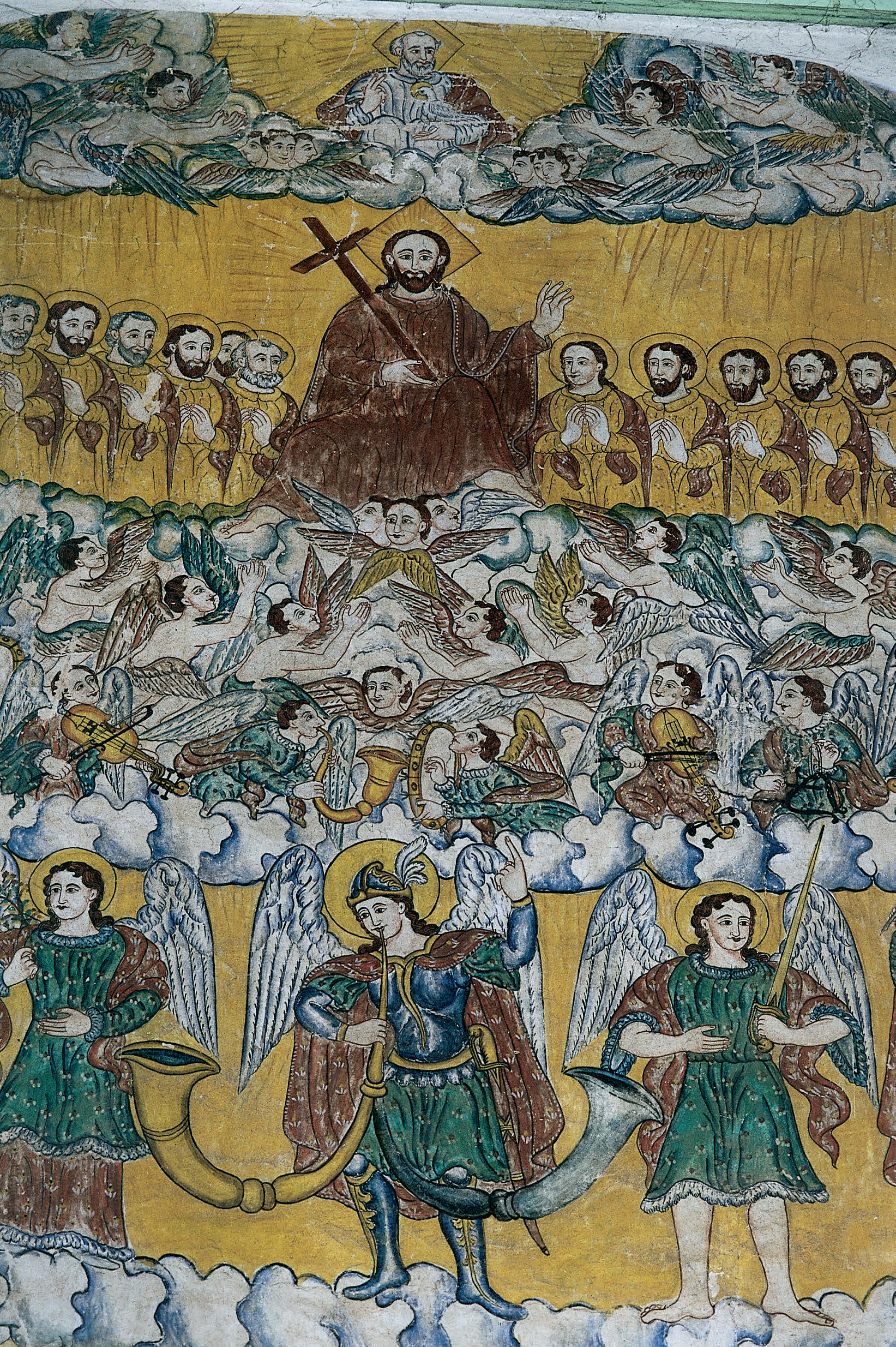
In the Church of the East the resurrection of Christ, rather than the crucifixion, is emphasized. Mural in the Syrian Orthodox Church of St Mary in Angamali, Kerala, seventeenth century. According to tradition, the church was founded in the fifth or ninth century and was closely tied to the Church of the East. Bishop Abraham, consecrated by the Nestorian patriarch Shimun VIII (in office 1551–1558) for India, reached Angamali after an odyssey of about ten years. After his death in 1597, Archdeacon George of the Cross, whom he had ordained, led the Indian metropolitan see. A Syriac inscription in the Church of St Mary memorializes the archdeacon, who died in 1640.17
在东方教会 (Ch. of E.) 中,所强调的是基督的复活,而非受难。位于喀拉拉 (Kerala) 邦安加马利 (Angamali) 的叙利亚正教会 (Syrian Orthodox Church) 圣马利亚 (St Mary) 教堂的壁画,十七世纪。据传统,该教堂建于五世纪或九世纪,并与东方教会 (Ch. of E.) 关系密切。亚伯拉罕主教 (Bishop Abraham) 由聂斯托利派宗主教西满八世 (Shimun VIII,在位 1551–1558 年) 为印度 (India) 祝圣,在历经约十年的曲折旅程后抵达安加马利 (Angamali)。他于 1597 年去世后,由他祝圣的十字架的乔治执事长 (Archdeacon George of the Cross) 领导了印度都主教区 (Indian metropolitan see)。圣马利亚教堂 (Church of St Mary) 中的一则叙利亚文铭文纪念了这位执事长,他卒于 1640.17
Syrians, who love to express themselves in analogies, often use the following circumlocutions for these complex definitions. The Miaphysites compare the nature of Christ to the blending of honey and vinegar into the healing balm oxymel,6 a metaphor the Nestorians strongly rejected on account of the combining of the two natures. Supporters of Chalcedon chose the image of the soul and the body, which make up a single human being.7 This comparison was also unacceptable for the Nestorians, since, when the body suffers, the soul also suffers; but the divine nature of Christ was not affected by the suffering of the body of Jesus. The East Syrians, such as Patriarch Elias II (1111–1134), preferred the image of a ray of light striking a pearl: ‘The light reveals itself in the pearl and the eye of the beholder does not distinguish between them. And, if the pearl cracks, the ray of light remains whole and does not remove itself from the fragments.’8 the third day Jesus Christ rose from the dead as a spiritual body, no longer a human body, for this had in fact died on the cross. The Resurrection was the transformation of the human body into a spiritual body. In other words, the human hypostasis no longer chose an earthly body but rather a spiritual one.’9
叙利亚人喜欢用类比表达思想,常用以下迂回说法来解释这些复杂定义。合性论者(Miaphysites)把基督的本性比作蜂蜜与醋混合后制成的药用蜜醋饮剂(oxymel),6聂斯托利派强烈反对这一比喻,因为它意味着两种本性合而为一。迦克墩派(Chalcedon)支持者则选择灵魂与身体的比喻:二者构成一个完整的人。7聂斯托利派也不能接受这一比较,因为身体受苦时灵魂也会受苦;而耶稣的身体受苦,并没有影响基督的神性本质。东叙利亚人,如宗主教以利亚二世(Elias II,在位1111—1134年),更喜欢用光线照射珍珠来作比:“光在珍珠中显现,观看者的眼睛无法将二者区分开来。而且,如果珍珠裂开,光线仍然完整,不会从碎片上移开。”8第三日,耶稣基督以灵性身体从死者中复活,不再是人身,因为人身事实上已死在十字架上。复活就是人的身体转化为灵性身体。换言之,人的位格不再选择尘世的身体,而是选择灵性的身体。9
This last passage means that the divine nature did not leave the dead body of Jesus in the tomb. The present patriarch of the Church of the East, Mar Dinkha IV, explains this as follows: ‘According to our Christology, God did not die on the cross, but rather the human body did. Jesus the man died of free will for the salvation of humanity. This aspect requires as a consequence that we respect the human aspects of Christ. The divine did not suffer on the cross, but stayed united with him, even in the tomb. When Jesus cried, “Father, why have you forsaken me?”, that did not mean that the divine had left the dying man; the cry expressed Jesus’s desperation. On
这最后一段的意思是,神性并没有将耶稣的尸体遗弃在坟墓中。东方教会 (Ch. of E.) 现任宗主教马尔·丁卡四世 (Mar Dinkha IV) 对此解释如下:“根据我们的基督论,上帝并没有死在十字架上,而是人的身体死了。作为人的耶稣出于自由意志为人类的救赎而死。这一方面因此要求我们尊重基督的人性层面。神性并没有在十字架上受苦,而是与他保持联合,甚至在坟墓中也是如此。当耶稣呼喊‘父啊,你为什么离弃我?’时,这并不意味着神性离开了那垂死的人;这呼喊表达了耶稣的绝望。在
Although the Chalcedonian creed brought to an end the creative phase of the Christological discussion, the mystery of the nature of Christ remained. The Nestorian theologian Mar Odisho acknowledged this fact in 1298: ‘If we say of God that he is invisible, not composite, immovable, and unchangeable, we describe not what He is but rather what He is not.’10 The fact that the creed of Chalcedon was repeatedly reworked in the West had little to do with theological debates and much more to do with the political power situation in the Byzantine Empire.
尽管《迦克墩信经》(Chalcedonian Creed) 终结了基督论讨论的创造性阶段,但基督本性的奥秘依然存在。聂斯托利派 (Nestorian) 神学家马尔·奥迪绍 (Mar Odisho) 于1298年承认了这一事实:“如果我们说上帝是不可见的、非复合的、不动的、不变的,那么我们描述的并不是他是什么,而是他不是什么。”10 迦克墩信经在西方被反复修订这一事实,与神学辩论关系甚微,而更多与拜占庭帝国 (Byzantine Empire) 的政治权力局势有关。
Intra-Byzantine debates over belief and their effects on the Church of the East was under serious threat. Since Egypt and Syria were much more important for imperial unity than were the scattered Antiochenes, the pope or the powerless Western Roman emperor – this last was deposed by the barbarian Odoacer in 476 – the emperor decided to accommodate the outraged Miaphysites, even at the price of a schism with Rome. In this spirit, in 482 Emperor Zeno (ruled 474–491) issued a new Christological formula of union, the so-called Henoticon, which again condemned Nestorius and confirmed Cyril’s anathemas instead of the Tome of Pope Leo. The reaction from Pope Felix III was not long in coming; in 484 he excommunicated Zeno and the patriarch of Constantinople, Acacius, who excommunicated him in turn. The schism persisted until 519.
tags. So final answer should be: 拜占庭内部关于信仰的争论及其对东方教会 (Ch. of E.) 的影响。东方教会受到严重威胁。由于埃及 (Egypt) 和叙利亚 (Syria) 对帝国统一的重要性远胜于分散的安提阿人 (Antiochenes)、教皇或无权无势的西罗马皇帝 (Western Roman emperor)——后者于476年被蛮族奥多亚克 (Odoacer) 废黜——皇帝决定安抚愤怒的合性论者 (Miaphysites),甚至不惜以与罗马 (Rome) 决裂为代价。本着这种精神,482年,皇帝芝诺 (Emperor Zeno)(在位474–491年)颁布了一项新的基督论合一信条,即所谓的《合一诏书》(Henoticon),该信条再次谴责聂斯托利 (Nestorius),并确认西里尔 (Cyril) 的绝罚,而非《教皇利奥大卷》(Tome of Pope Leo)。教皇费利克斯三世 (Pope Felix III) 很快作出反应;484年,他开除了芝诺 (Zeno) 和君士坦丁堡 (Constantinople) 牧首阿卡西乌斯 (Acacius) 的教籍,后者也反过来开除了他的教籍。分裂一直持续到519年。
The Council of Chalcedon intended to safeguard the Christian ecumene, but the consequences of its decisions brought about precisely the opposite effect, namely the disintegration of the ecumene into three independent Churches with their own hierarchies. For the Miaphysite party of Alexandria, the Chalcedonian creed was unacceptable because they saw in it – not entirely without justification – a victory for the Antiochene theology and thus for Nestorius. For the Miaphysites, who rejected the extreme monotheism of Eutyches, a single nature resulted in Christ from the union of the divine with the human nature in the Incarnation. They appealed to the Council of Nicea, which had declared that the Father and the Son were of the same substance.
迦克墩公会议 (Council of Chalcedon) 本意是维护基督教世界 (ecumene),但其决议的后果却恰恰带来了相反的效果,即基督教世界分裂为三个各自拥有独立教阶体制的独立教会。对于亚历山大的合性论派 (Miaphysite party of Alexandria) 而言,迦克墩信条 (Chalcedonian creed) 是不可接受的,因为他们在其中看到了——并非完全没有理由——安提阿神学 (Antiochene theology) 的胜利,因而也是聂斯托利 (Nestorius) 的胜利。对于合性论者 (Miaphysites) 来说,他们拒绝优提克斯 (Eutyches) 的极端一性论,认为在道成肉身 (Incarnation) 中,神性与人性联合之后,在基督里产生了一个本性。他们诉诸尼西亚公会议 (Council of Nicea),该会议曾宣布父与子是同质的。
The ones who suffered on account of the Henoticon were the remaining Antiochenes, who were now persecuted by the state and either sought refuge in the neighbouring Sassanian Empire or joined the Melkites. The closing of the School of the Persians in Edessa in 489 banished the Antiochene theology from the empire once and for all, and bolted the doorway to theological communication between East and West. The policy of conciliation towards the Miaphysites also resulted in many dioceses of Syria and Asia Minor being held by Miaphysite bishops. In the larger cities, two bishops – one Melkite and one Miaphysite – were in residence, so that two parallel patriarchates of Antioch and Alexandria were created.
因《合一诏书》(Henoticon) 而受苦的,是残余的安条克人 (Antiochenes);他们此时受到国家迫害,要么到邻近的萨珊帝国 (Sassanian Empire) 寻求庇护,要么加入了梅尔基特派 (Melkites)。489年,埃德萨的波斯人学校 (School of the Persians in Edessa) 被关闭,这彻底将安条克神学 (Antiochene theology) 逐出帝国,并堵死了东西方之间神学交流的门户。对一性论派 (Miaphysites) 的安抚政策,也导致叙利亚 (Syria) 和小亚细亚 (Asia Minor) 的许多教区由一性论派主教 (Miaphysite bishops) 掌管。在较大的城市中,驻有两位主教——一位是梅尔基特派 (Melkite),一位是一性论派 (Miaphysite)——从而形成了安条克 (Antioch) 和亚历山大里亚 (Alexandria) 两个并行的宗主教区 (patriarchates)。
The mood in the patriarchate of Alexandria was marked by nationalistic indignation against the domineering capital of Byzantium and increasing rejection of imperial authority. Since the emperor had supported the Chalcedonian position with his powers, popular anger was directed against this as well. Now supporters of the council were derided by the Miaphysites as Melkites – that is, as royalists.11 The anti- Byzantine reflex also occurred in Palestine and Syria; here rejection of the council expressed the Syrian-Oriental opposition to the despised central authority. The fundamental rejection of Byzantine sovereignty was made all too obvious 200 years later, when Egypt and Syria welcomed the Arab conquerors as liberators.
亚历山大里亚 (Alexandria) 宗主教区的情绪,以针对专横的拜占庭 (Byzantium) 首都的民族主义义愤,以及对帝国权威日益增强的拒斥为标志。由于皇帝曾以其权力支持迦克墩 (Chalcedon) 立场,民众的愤怒也指向了这一立场。如今,公会议的支持者被米亚弗西派 (Miaphysites) 讥讽为梅尔基特派 (Melkites)——也就是保皇派。11 反拜占庭的反应也出现在巴勒斯坦 (Palestine) 和叙利亚 (Syria);在这里,对公会议的拒斥表达了叙利亚-东方 (Syrian-Oriental) 对可憎的中央权威的反对。对拜占庭主权的根本拒斥,在200年后变得再明显不过:当时埃及 (Egypt) 和叙利亚把阿拉伯 (Arab) 征服者当作解放者来欢迎。
But the political winds changed again with the accession to the throne of Emperor Justin (ruled 518–527), who had as his goal the re- establishment of the unity of the Eastern and Western Roman Empires. To this end, he required the support of the pope, so he revoked the Henoticon and recognized the Council of Chalcedon. He sacrificed the Miaphysites to the goal of a resurrected Roman Empire. At Easter 519 he was able to celebrate this new
但政治风向再次转变:查士丁皇帝 (Justin) 登基(在位 518–527 年),他的目标是重建东、西罗马帝国的统一。为此,他需要教皇 (pope) 的支持,于是撤销了《合一诏书》(Henoticon),并承认了迦克墩公会议 (Council of Chalcedon)。为了一个复兴的罗马帝国的目标,他牺牲了米亚弗西派 (Miaphysites)。在 519 年复活节,他得以庆祝这一新的……
A first tragic highpoint was reached in 457 in Alexandria, when a rampaging mob murdered the pro-Chalcedonian patriarch Proterios in his church,12 and severe unrest broke out in Egypt and Syria. The emperor recognized the danger that the stability of the Eastern Roman Empire
第一个悲剧性高潮出现在457年的亚历山大里亚 (Alexandria):一群暴民在其教堂中杀害了支持迦克墩信条 (pro-Chalcedonian) 的牧首普罗特里乌斯 (Proterios),12 埃及和叙利亚爆发了严重动乱。皇帝意识到了东罗马帝国 (Eastern Roman Empire) 的稳定所面临的危险
West facade of the Byzantine basilica of Baqirha, Syria, built in 546. Byzantium tried, through the construction of numerous great basilicas in the patriarchate of Antioch, to reinforce its hegemony, which was threatened by the Miaphysites. ecumene with Rome and end the 35-year schism. The Miaphysites paid the price for the ecumene with the deposing of their patriarch of Antioch, Severus, as well as 55 other bishops. Justin’s nephew and successor, Justinian (ruled 527–565), continued his uncle’s policies and in 533 elevated to law a new Chalcedonian creed, which the synod of 536 correspondingly ratified. At the same time, persecution of the Miaphysites intensified in the years 521–526, 536–543 and 555–567,13 provoking a massive wave of immigration to Sassanian Mesopotamia and plunging the Church of the East there into a serious crisis.14
叙利亚巴基尔哈 (Baqirha) 的拜占庭式巴西利卡 (Byzantine basilica) 的西立面,建于546年。拜占庭 (Byzantium) 试图通过在安条克牧首区 (patriarchate of Antioch) 修建众多大型巴西利卡 (basilicas),来巩固其受到米亚弗西派 (Miaphysites) 威胁的霸权。与罗马 (Rome) 的共融 (ecumene) 并结束长达35年的分裂。米亚弗西派 (Miaphysites) 为与罗马的共融 (ecumene) 付出了代价:他们的安条克牧首 (patriarch of Antioch) 塞维鲁 (Severus) 以及另外55位主教被废黜。查士丁 (Justin) 的侄子兼继任者查士丁尼 (Justinian)(在位527–565年)延续其叔父的政策,并于533年将一份新的迦克墩信条 (Chalcedonian creed) 颁定为法律,536年的会议 (synod of 536) 也相应地予以批准。与此同时,对米亚弗西派 (Miaphysites) 的迫害在521–526年、536–543年和555–567年加剧,13 引发了一波向萨珊美索不达米亚 (Sassanian Mesopotamia) 的大规模移民潮,并使那里的东方教会 (Ch. of E.) 陷入严重危机。14
The synodal decisions of 536 marked a deep break in the history of Christianity. Since the Miaphysites had been deprived of all their bishops, they had to build a new organization, independent of Byzantium. And so there emerged in Egypt the Coptic Church and in Syria the Syrian Orthodox Church, organized secretly by Jacob Baradaeus beginning in 542.15 The renewed ecumene with Rome was bought at the price of the schism with the Miaphysite Churches.
536年的主教会议决议标志着基督教历史上的一次深刻断裂。由于合性论者 (Miaphysites) 被剥夺了所有主教,他们不得不建立一个独立于拜占庭 (Byzantium) 的新组织。于是,埃及 (Egypt) 出现了科普特教会 (Coptic Church),叙利亚 (Syria) 出现了叙利亚正教会 (Syrian Orthodox Church),它们由雅各·巴拉底乌斯 (Jacob Baradaeus) 从542.15年起秘密组织起来。与罗马 (Rome) 重新恢复的普世共融,是以与合性论教会 (Miaphysite Churches) 分裂为代价换来的。
And matters got still worse. In 544 Emperor Justinian undertook a dubious attempt to win back the Miaphysites by means of the edict of the so-called Three Chapters. The Three Chapters encompassed the condemnation of the person and doctrine of Theodore of Mopsuestia, the writings of the Antiochene bishop Theodoret and the letter of Ibas, the last Antiochene bishop of Edessa, to the Pesian Mari. Pope Vigilius agreed to the corresponding conciliar declaration of 553 only under massive pressure from Justinian. With the condemnation of Theodore, the most significant Church Father of the Church of the East, the entire Church of the East was eo ipso condemned as heretical. This condemnation was all the more tragic since the Nestorian patriarch at the time, Mar Aba the Great (540– 552), was working towards reconciliation with
而情况变得更糟。544年,查士丁尼皇帝 (Emperor Justinian) 采取了一项可疑的尝试,试图借助所谓《三章》(Three Chapters) 的敕令来赢回一性论者 (Miaphysites)。《三章》包含了对摩普苏埃斯蒂亚的狄奥多雷 (Theodore of Mopsuestia) 其人及其学说的谴责、对安提阿学派主教狄奥多雷特 (Theodoret) 著作的谴责,以及对埃德萨最后一位安提阿学派主教伊巴斯 (Ibas) 致波斯的马里 (Mari) 书信的谴责。教宗维吉里 (Pope Vigilius) 只是在查士丁尼 (Justinian) 的巨大压力下,才同意553年相应的公会议声明。随着东方教会 (Ch. of E.) 最重要的教父狄奥多雷 (Theodore) 遭到谴责,整个东方教会 (Ch. of E.) 本身也就因此 (eo ipso) 被定为异端。这一谴责尤其悲剧,因为当时的聂斯托利派宗主教马尔·阿巴大帝 (Mar Aba the Great, 540–552) 正致力于与……和解。
Byzantium and Rome.16 Justinian’s council also accommodated the Miaphysites with regard to the definition of the hypostatic union in Christ, in that it gave the divine nature precedence over the human. In the so-called enhypostasis, the human nature, which is no longer understood as an independent hypostasis but merely as an enhypostasis that does not exist in itself, is incorporated into the divine nature.17
拜占庭 (Byzantium) 与罗马 (Rome)。16 查士丁尼 (Justinian) 的会议在界定基督内位格联合 (hypostatic union) 时,也迁就了米亚弗西派 (Miaphysites),因为它使神性优先于人性。在所谓的“在位格性” (enhypostasis) 中,人性不再被理解为独立的位格 (hypostasis),而仅仅被理解为一种并不自身独立存在的“在位格性” (enhypostasis),被纳入神性之中。17
The reaction of the Church of the East against the concept of a composite hypostasis appeared clearly on the occasion of the 585 synod of Patriarch Ishoyahb I (in office 582–596): ‘The heretics [of the council of 553] dared in their foolishness to attribute to the nature and qnoma of his divinity the qualities and sufferings of the humanity of Christ.’18 The posthumous
东方教会 (Ch. of E.) 对复合位格 (composite hypostasis) 概念的反击,在宗主教伊绍雅布一世 (Ishoyahb I) 于585年召开的主教会议 (synod) 上表现得十分明显:“[553年公会议 (council of 553) 的] 异端分子竟敢在其愚妄中,将基督人性的属性与苦难归之于其神性的本性与位格 (qnoma)。”18 死后的
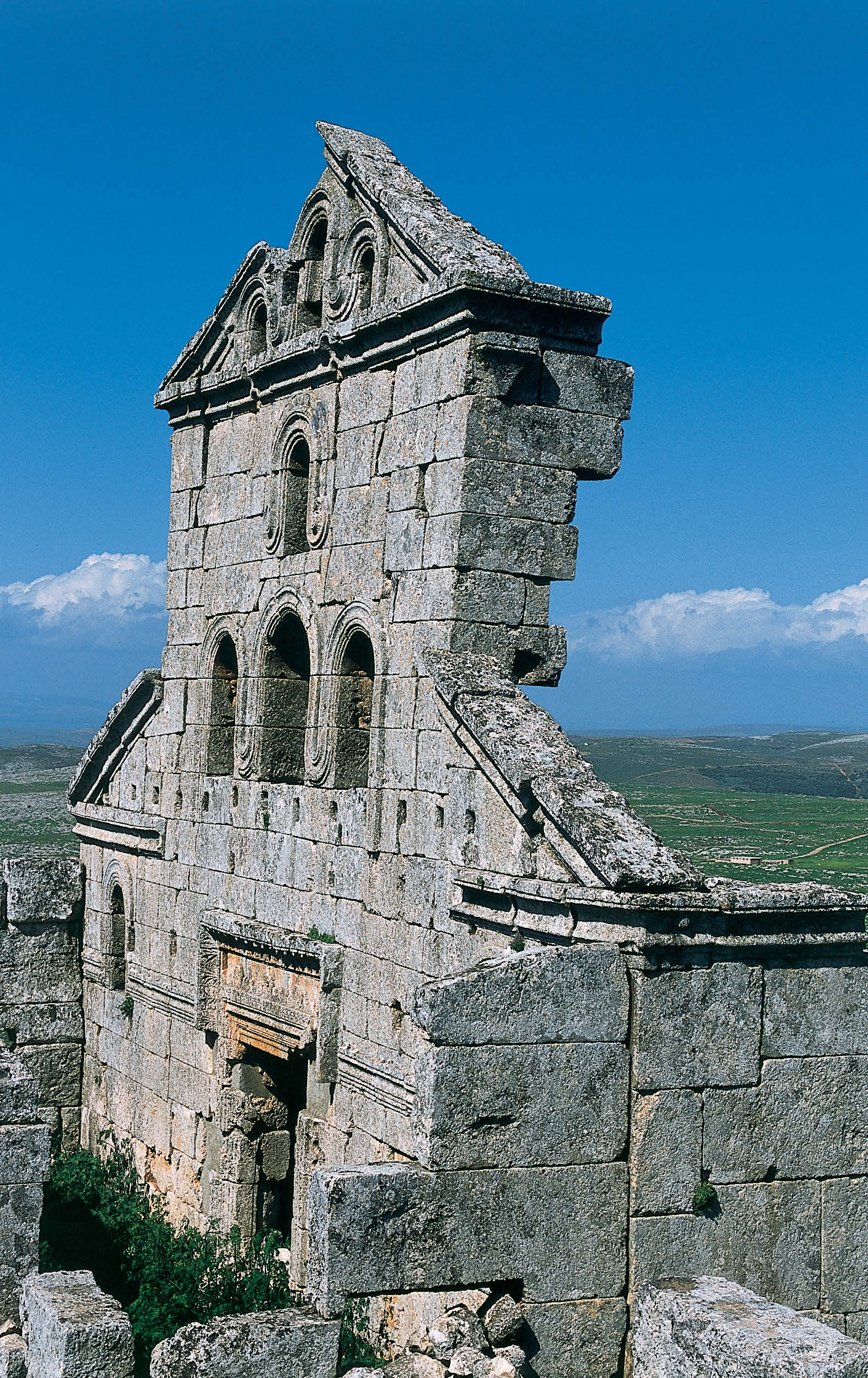
Central octagonal court of the large, quadruple cruciform basilica of St Simeon in Syria. The Byzantine emperor Zeno (ruled 474–491) opposed both Dyophysites and Miaphysites and, by closing the theological university of Edessa, banished the Church of the East to the Sassanian Empire. He built the church, which in its architectonic concept anticipated the Hagia Sophia of Justinian, in order to appropriate for the imperial Church Simeon the Stylite, who was highly venerated by the local Miaphysite population. The ascetic, who died in 459, spent the last 30 years of his life atop a 16-metre-high column. The monastery quickly became the most important pilgrimage site in Syria and played a significant role in the Christianization of the Arab tribes; Simeon’s column, however, was chiselled down by pilgrims to the stump that remains today. denunciation of the Church Father Theodore of Mopsuestia, considered orthodox during his lifetime, is also problematic in principle. In polemical terms, one might ask: ‘Were Luke and Mark not orthodox, since they were not familiar with the Trinity?’ The lone result of the council of 553 was that a second schism occurred and the first persisted, since the Miaphysites were not impressed by the Three Chapters. And so the Christian ecumene split into three independentChurches: first, the state Church of Rome, Constantinople and Jerusalem, as well as that half of the Syrians of Antioch who subscribed to the creed of Chalcedon; second, the anti-Chalcedonian Churches of the Copts and the Syrian Orthod ox; and, third, the Church of the East, lying to the east of the Euphrates.
叙利亚圣西缅(St Simeon)大型四重十字形大教堂的中央八角形庭院。拜占庭皇帝芝诺(Zeno,在位 474–491 年)反对二性论者和合性论者,并关闭埃德萨神学院,将东方教会驱逐至萨珊帝国。他建造了这座教堂,其建筑构想预示着查士丁尼(Justinian)的圣索菲亚大教堂;此举意在把当地合性论者居民极为崇敬的柱上圣西缅纳入帝国教会。圣西缅于 459 年去世,这位苦修者生命最后 30 年都住在一根高 16 米的柱顶。修道院很快成为叙利亚最重要的朝圣地,并在阿拉伯部族基督教化的过程中发挥了重要作用;然而,朝圣者将西缅的柱子凿削至只剩下如今仍可见的柱墩。谴责教父摩普苏埃斯蒂亚的狄奥多雷(Theodore of Mopsuestia)——他在世时被视为正统——原则上同样存在问题。从论战的角度说,人们或许会问:‘路加和马可不熟悉三位一体,难道就不正统吗?’553 年会议唯一的结果,是第二次分裂发生了,而第一次分裂仍然持续,因为合性论者并未被《三章案》说服。于是,基督教世界分裂为三个彼此独立的教会:第一,罗马、君士坦丁堡和耶路撒冷的国教会,以及安提阿叙利亚人中赞同迦克墩信经的那一半;第二,科普特教会和叙利亚正教会这两个反迦克墩教会;第三,位于幼发拉底河以东的东方教会。
According to the majority of interpreters, the breakdown of the Christian ecumene can be explained by two factors. For one, with its elevation to state Church, the Church lost to some degree its independence. Now a certain creed could be accepted not on theological grounds but because it conformed to the ideas of the civil authority. As a consequence of this amalgamation of Church and state, it was inevitable that political opposition directed against the state would eo ipso also turn against the Church and support dissenting religious factions. For another, there arose the tendency to permit only one interpretation of a mystery, such as the nature of Christ, and to condemn representatives of other positions as heretics – the epitome of the spirit of monotheism. If
根据大多数解释者的看法,基督教普世教会的解体可以用两个因素来解释。其一,随着教会升格为国教,它在某种程度上丧失了独立性。于是,某一信条之所以能被接受,并非出于神学理由,而是因为它符合世俗当局的观念。这种教会与国家的合并所导致的一个后果是,针对国家的政治反对必然 (eo ipso) 也会转而反对教会,并支持持异议的宗教派别。其二,出现了一种倾向:只允许对某一奥秘,例如基督的本性,作一种解释,并将持其他立场的代表谴责为异端——这是一神论精神的典型体现。如果
there is only one God, whom one believes can be precisely defined, then there can be but one truth about him, or else one must speak of several gods or several truths regarding the same facts. History shows that the clergy of mono- theistic religions incline towards allowing only a single, universal definition of ‘their’ god and his message. impressions of it, however, the diamond remains one and the same.
只有一位神,人们相信他能够被精确界定,那么关于他就只能有一种真理;否则,人们就必须谈论多个神,或关于同一事实的多种真理。历史表明,一神教的神职人员倾向于只允许对“他们的”神及其信息作出单一、普遍的定义。然而,无论人们对它有何种印象,钻石仍然是同一颗。
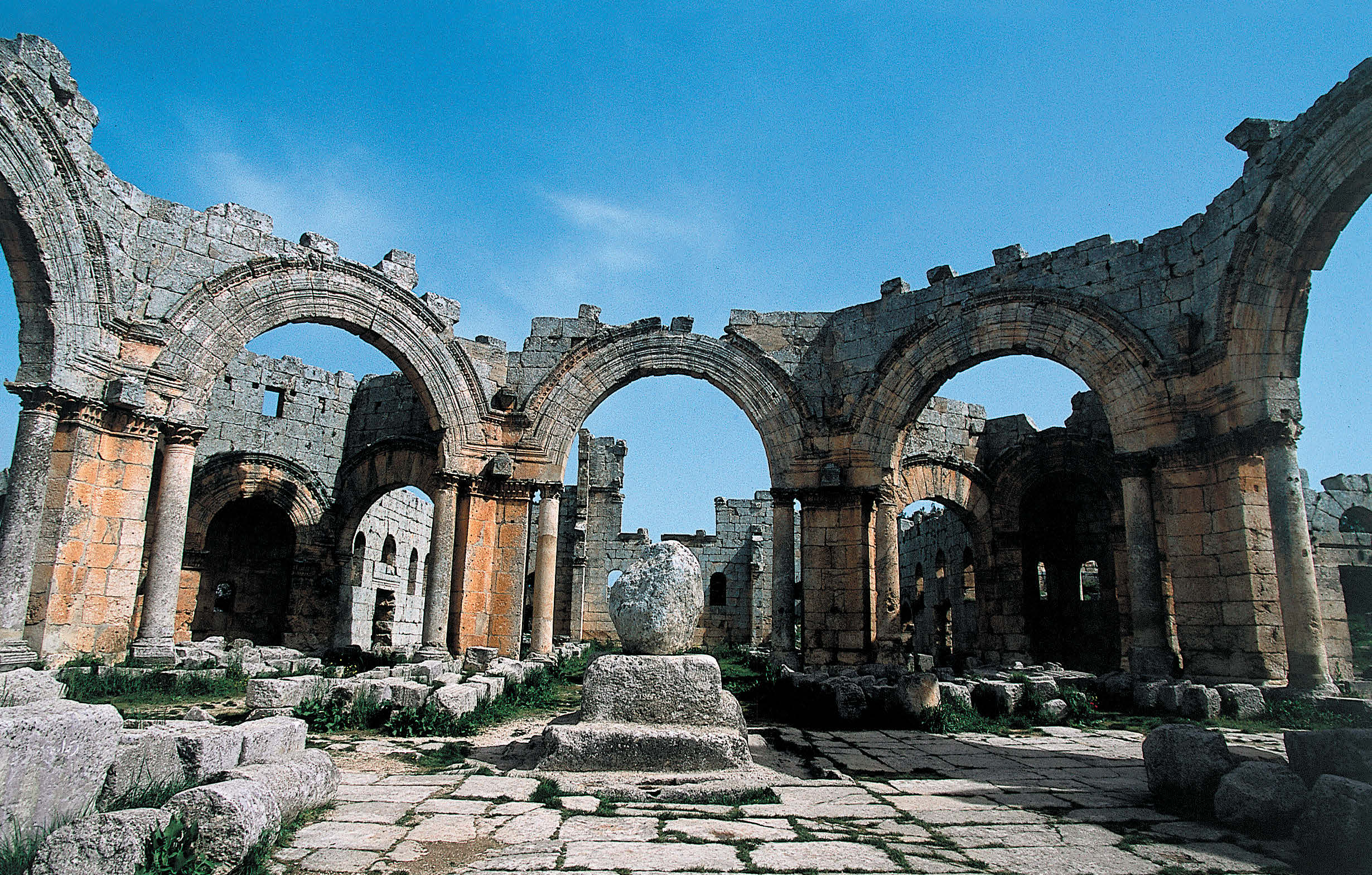
The three-naved basilica of Mushabbaq was built at the same time as the Monastery of St Simeon and likewise served as a pilgrimage site. As at other ancient churches seen by the author in 2002, here vandals have tried, by smashing cornerstones, to knock down entire walls.
穆沙巴格 (Mushabbaq) 的三廊式巴西利卡与圣西缅修道院 (Monastery of St Simeon) 同时建造,同样用作朝圣地。正如作者在2002年所见到的其他古老教堂一样,此处破坏者试图通过砸碎墙角石来推倒整堵墙。
The Peshitta Bible, the common tie between the Syrian Churches
《别西大译本》(Peshitta Bible),叙利亚诸教会 (Syrian Churches) 之间的共同纽带
The erstwhile Syrian Christian community was now split into three mutually antagonistic Churches. But the common language, Aramaic, offered the foundation for a significant shared possession, the Bible known as the Peshitta.20 After the issuing of Tatian’s Diatessaron around 170 the search for a unifying and binding canon of New Testament writings continued in both East and West.21 Bishop Irenaeus (142–c.200) outlined the kernel of the contents of the Latin Vulgate Bible, confirmed in the West at the Council of Trent in 1546, which consisted of the four Gospels and Pauline epistles, and this was followed shortly, around the year 200, by the
昔日的叙利亚基督教社群如今已分裂为三个相互敌对的教会。但共同语言亚兰语 (Aramaic) 为一项重要的共同财富奠定了基础,即被称为《别西大译本》(Peshitta) 的圣经。20 约170年塔提安 (Tatian) 的《四福音合参》(Diatessaron) 问世之后,对新约 (NT) 著作之统一而具有约束力的正典的探求,在东方和西方都持续进行。21 主教爱任纽 (Irenaeus)(142–约200)勾勒出拉丁文《武加大译本》(Vulgate) 圣经内容的核心;该译本于1546年在特兰托会议 (Council of Trent) 上在西方得到确认,由四福音书和保罗书信 (Pauline epistles) 组成。此后不久,约公元200年,又出现了
That other approaches are also possible is shown by, for instance, the Mongol Great Khan Möngke (ruled 1251–1259). When, in 1254, the Franciscan Rubruk wanted him to convert to Catholicism, he replied, ‘We Mongols believe that there is only one God, in whom we live and die, and we direct our whole hearts to him. However, just as God has given the hand several fingers, so did he give human beings several ways to attain salvation.’19 The wisdom of this Mongol prince lay in the recognition that a diamond has many facets and that the human eye can perceive only one facet at a time; despite the various
其他途径同样可能,这一点可由例如蒙古大汗蒙哥 (Möngke)(在位1251–1259年)表明。1254年,方济各会士鲁布鲁克 (Rubruk) 希望他皈依天主教时,他答道:“我们蒙古人相信,只有一位神,我们在他里面生活、死亡,并全心归向他。然而,正如神赐给手几根手指,他也赐给人类若干条获得救恩的途径。”19 这位蒙古王公的智慧在于认识到,钻石有许多切面,而人的眼睛一次只能看见一个切面;尽管各种
so-called Canon Muratori.22 Then, in his Easter letter of 367, the Church Father Athanasius enumerated those 27 books that define the New Testament portion of the Vulgate. In 384 St Jerome (c.342–420) produced the Latin translation of the Greek texts.23 They included the four Gospels, the Acts of the Apostles, 14 letters attributed to Paul, 7 so-called ‘catholic’ letters and the long-disputed Revelation of John. mentioned in a letter from the bishop of Edessa Aitallaha (in office 324–346), it must have appeared around the first quarter of the fourth century. Despite the rapid spread of the Peshitta, the Vetus Syra remained in use in the Church of the East, especially among monks, for a few centuries.26
所谓的《穆拉多利正典》(Canon Muratori)22。随后,在367年的复活节书信中,教父亚他那修 (Athanasius) 列举了界定《武加大译本》(Vulgate) 新约部分的那27卷书。384年,圣耶柔米 (St Jerome,约342–420年) 完成了这些希腊文本的拉丁文翻译。23它们包括四福音书、《使徒行传》(Acts of the Apostles)、14封归于保罗名下的书信、7封所谓的“公普”书信,以及长期存在争议的《约翰启示录》(Revelation of John)。它在埃德萨主教艾塔拉哈 (Aitallaha)(在任324–346年)的一封信中被提及,因此必定出现于4世纪最初二十五年左右。尽管《别西大译本》(Peshitta) 迅速传播,《古叙利亚文译本》(Vetus Syra) 仍在东方教会 (Ch. of E.) 中使用,尤其在修士中间,持续了数百年。26
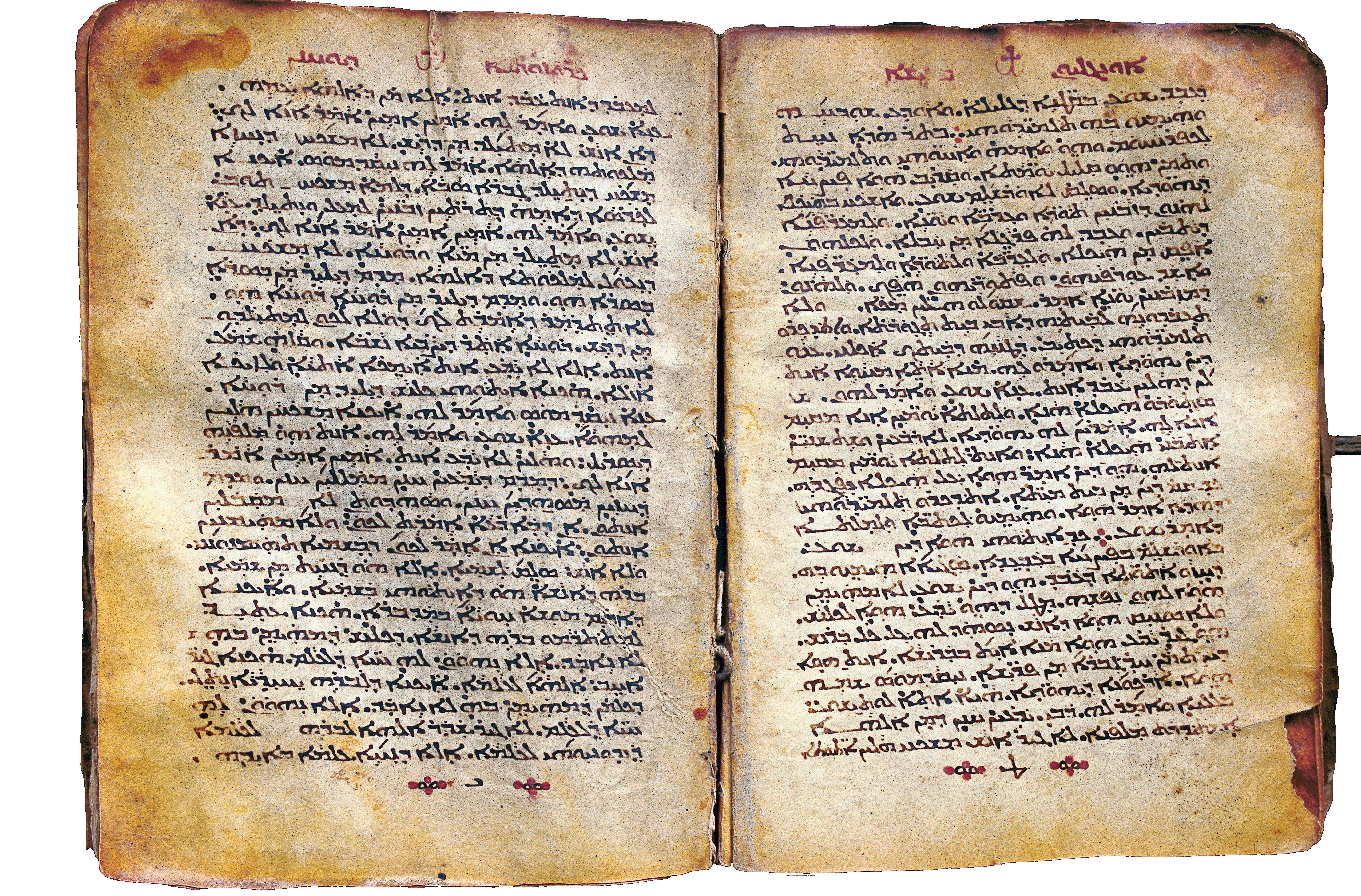
East Syrian Gospel book based on the Peshitta, written in Estrangela script, from Khuzistan, Iran, ninth to thirteenth century. The pages shown are from the Gospel of John, chapter 3. The Gospel book contains about 225 leaves, measuring 16.5 x 23 cm, or 450 pages of text. It is a parchment manuscript, with the exception of the first and the last four sets of pages, a total of 40 leaves, which are made of paper and represent a later restoration. The colophon is missing. (National Library of Tabriz, Iran.) 18
这是一部以《别西大译本》(Peshitta) 为底本的东叙利亚福音书 (East Syrian Gospel book),以埃斯特兰格拉字体 (Estrangela script) 书写,出自伊朗胡齐斯坦 (Khuzistan, Iran),年代为9至13世纪。所示书页出自《约翰福音》(Gospel of John) 第3章。该福音书约含225叶,尺寸为16.5 × 23厘米,即450页文本。除首尾各四组、共40叶为纸质并属后来修补外,它是一部羊皮纸抄本。题记 (colophon) 缺失。(伊朗大不里士国家图书馆 (National Library of Tabriz, Iran)。)18
The Syrian Peshitta Bible was the counterpart of the Latin Vulgate. Its name means ‘the simple’. It is one of the many revisions of the Vetus Syra and must have appeared before the Council of Ephesus in 431, since it would otherwise be incomprehensible that it served as the norm for both Miaphysites and Nestorians. Today a few fragmentary Peshitta manuscripts from the fifth century are extant as well as another thirty from the sixth century. The oldest Peshitta manuscript is from 459/460 for the Old Testament and 510 for the Gospels. The oldest extant Syriac manuscript, dated to 411, is non-biblical.27 In comparison to the Vulgate, the New Testament of Peshitta is
叙利亚语《别西大译本》(Peshitta) 圣经是《拉丁武加大译本》(Latin Vulgate) 的对应译本。其名称意为“简单者”。它是《古叙利亚译本》(Vetus Syra) 的众多修订本之一,必定出现于431年以弗所公会议 (Council of Ephesus) 之前,否则便无法理解它何以能同时成为合性论派 (Miaphysites) 与聂斯托利派 (Nestorians) 的规范。今天尚存若干五世纪的《别西大译本》残篇抄本,以及另外三十件六世纪的抄本。最古老的《别西大译本》抄本,其旧约部分为459/460年,福音书部分为510年。现存最古老的叙利亚语抄本定年为411年,并非圣经文本。27 与《武加大译本》(Vulgate) 相比,《别西大译本》的新约是
It is debated which gospel writing was in circulation east of the Euphrates before the Diatessaron. Vööbus and Kawerau cite the Aramaic Gospel of the Hebrews, which displays certain similarities to the Gospel of Matthew,24 while Henneke assigns it to the Jewish Christian circle of Egypt.25 The Diatessaron was followed by the Vetus Syra, written in the Syriac language and Estrangela script, that includes the four Gospels separate from one another. Since its use is evident in the sermons of the Persian Church Father Aphrahat from 337–345, and it is
在《四福音合参》(Diatessaron) 之前,幼发拉底河 (Euphrates) 以东流传的是哪部福音著作,尚有争议。沃布斯 (Vööbus) 与卡韦劳 (Kawerau) 引证亚兰文《希伯来福音》(Aramaic Gospel of the Hebrews),该福音与《马太福音》(Gospel of Matthew) 有某些相似之处,24 而亨内克 (Henneke) 则将其归入埃及的犹太基督徒群体。25 继《四福音合参》之后的是《古叙利亚译本》(Vetus Syra),以叙利亚语和埃斯特兰格拉字体 (Estrangela script) 写成,包含彼此独立的四部福音书。由于它在波斯教父阿弗拉哈特 (Aphrahat) 于 337–345 年的讲道中的使用显而易见,并且它
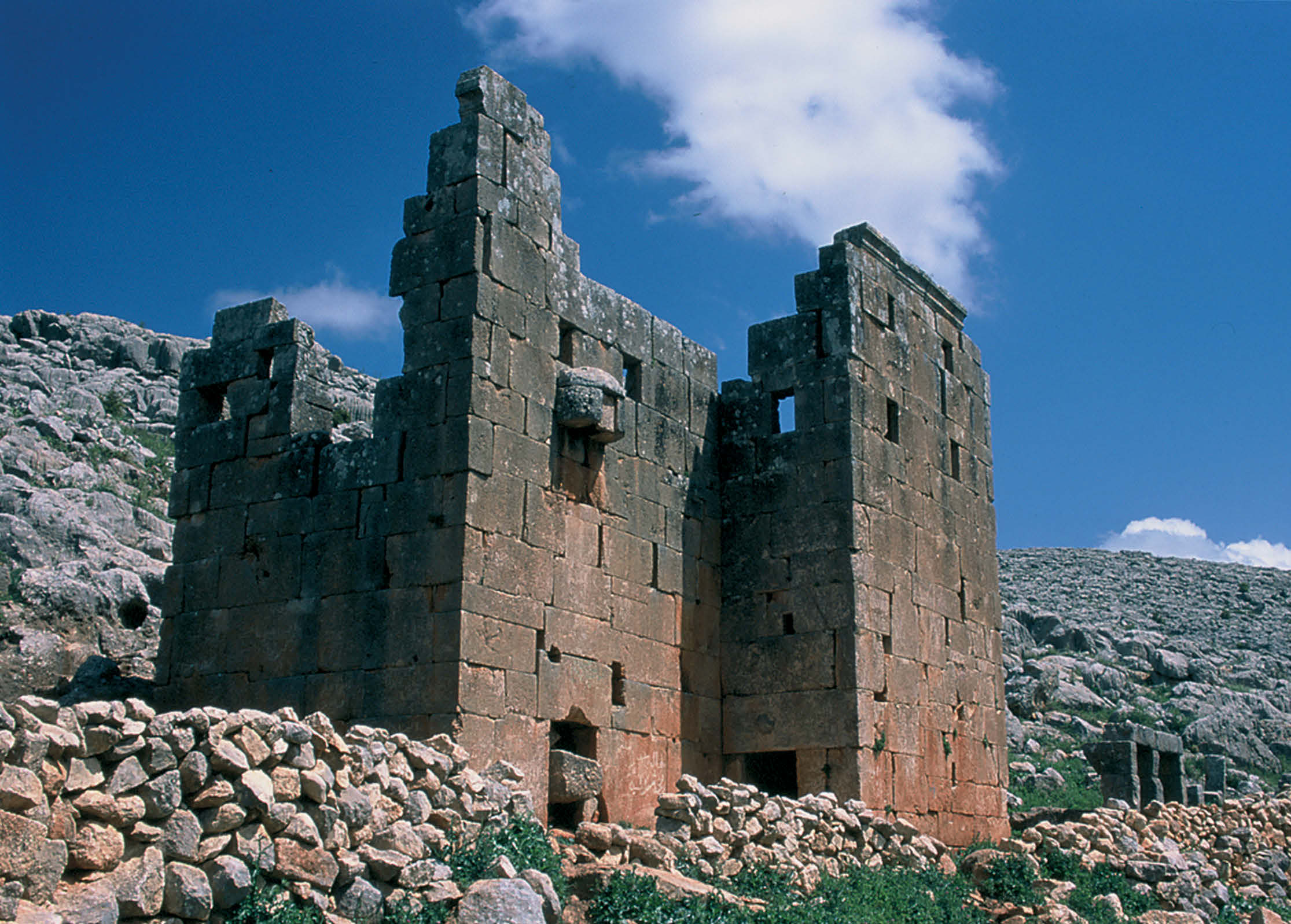
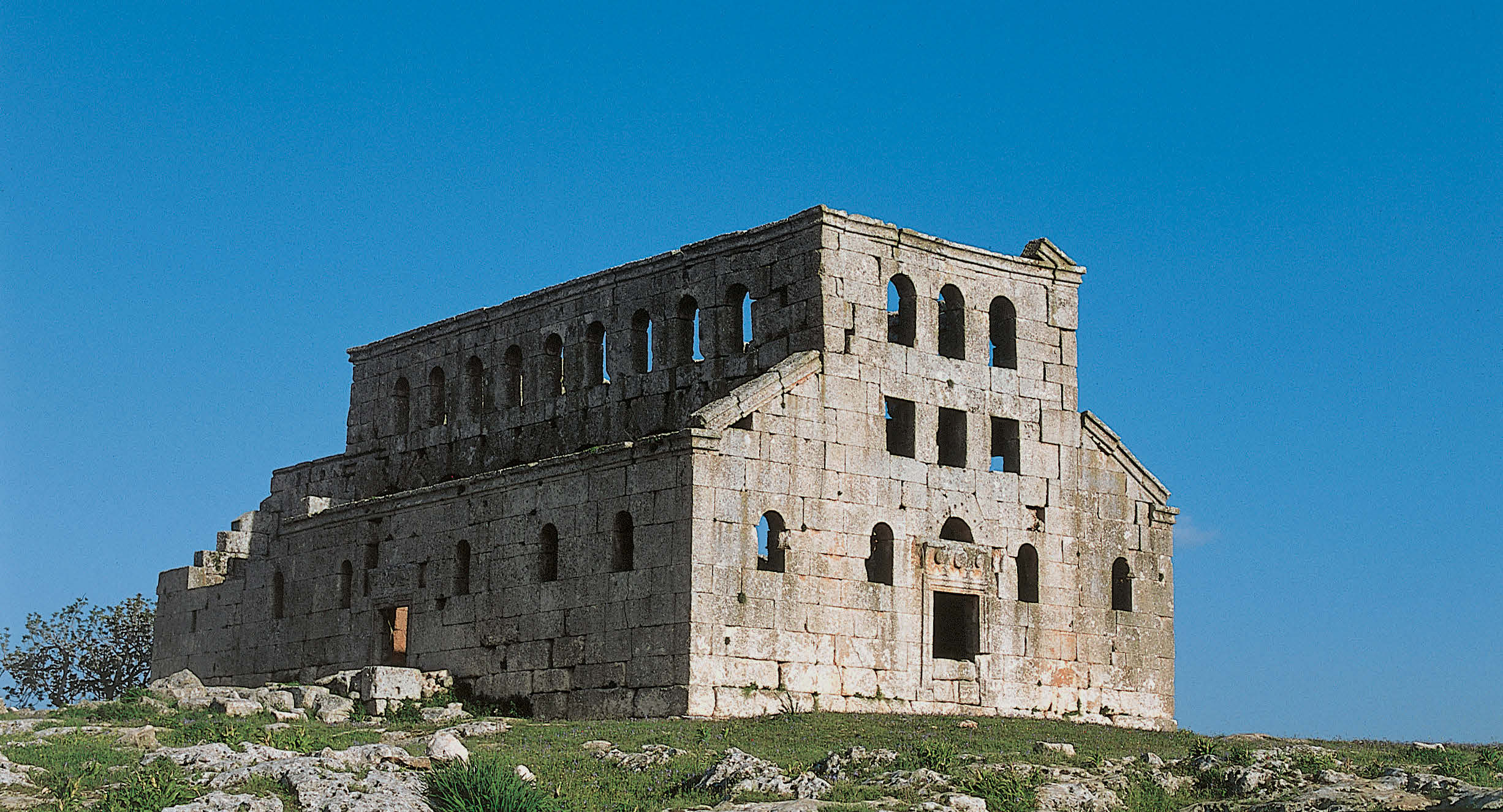
The church of the Miaphysite Monastery of St Daniel of Deir Breij in northern Syria, late sixth century. Although the Miaphysites were considered heretics by the Byzantine imperial Church, they were also able to head their own monasteries in Syria in the second half of the sixth century. missing the Second Letter of Peter, the Second and Third Letters of John, the Letter of Jude, and Revelation. Thus the New Testament of the Syrian churches numbers 22 books instead of the 27 books of the Vulgate. At the beginning of the sixth century, the Miaphysites undertook the attempt to conform the Peshitta to their requirements. Bishop Philoxenos of Mabbug (c.440–523) ordered the creation of a more polemically formulated Bible, which was, however, never accepted by the Miaphysites and disappeared during the slackening of the Christological controversy in the seventh/ eighth centuries. From another Bible from the Miaphysite bishop Heraclius of Mabbug appearing around 616/ 617, the Acts and Epistles were quickly abandoned, but the Gospels remained popular.28 The Peshitta has remained to this day the bond linking the West and East Syrians together.
叙利亚北部代尔布雷吉 (Deir Breij) 的圣丹尼尔 (St Daniel) 修道院的一性论派 (Miaphysite) 教堂,六世纪晚期。尽管一性论派被拜占庭帝国教会视为异端,他们在六世纪下半叶仍能在叙利亚领导自己的修道院。缺少《彼得后书》(Second Letter of Peter)、《约翰二书》(Second Letter of John) 和《约翰三书》(Third Letter of John)、《犹大书》(Letter of Jude) 以及《启示录》(Revelation)。因此,叙利亚诸教会的《新约》共有22卷,而不是《武加大译本》(Vulgate) 的27卷。六世纪初,一性论派尝试使《别西大译本》(Peshitta) 符合他们的要求。马布格的菲洛克塞努斯主教 (Philoxenos of Mabbug)(约440–523年)下令编纂一部措辞更具论战性的圣经,然而该圣经从未被一性论派接受,并在七/八世纪基督论争论缓和期间消失。另一部出自马布格的一性论派主教赫拉克利乌斯 (Heraclius of Mabbug) 的圣经约出现于616/617年,其中的《使徒行传》(Acts) 和书信 (Epistles) 很快被弃用,但福音书 (Gospels) 仍广受欢迎。28 时至今日,《别西大译本》(Peshitta) 仍是连接西叙利亚人 (West Syrians) 和东叙利亚人 (East Syrians) 的纽带。
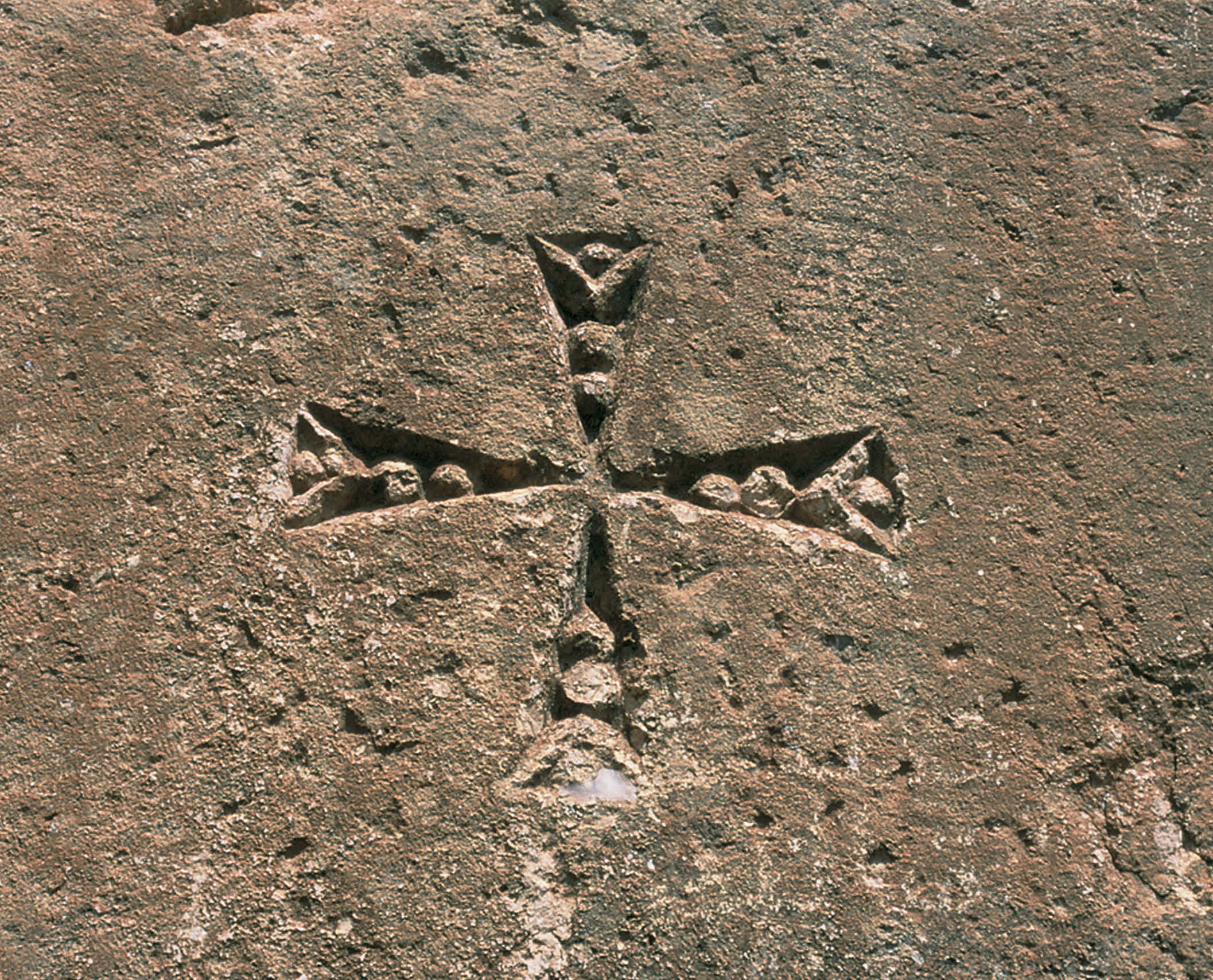
Cross on a door lintel of the St Daniel Church of Deir Breij, northern Syria.
叙利亚北部 (northern Syria) 代尔布雷吉 (Deir Breij) 的圣丹尼尔教堂 (St Daniel Church) 门楣上的十字架。