鲍默《东方教会:亚述基督教图史》第五章:塞琉西亚—泰西封宗主教区(中英文对照版)
阿甲按:本连载以克里斯托夫·鲍默(Christoph Baumer)2016年英文新版为底本,采用人工智能辅助中译,以中英文对照形式供研读参考。译文及原文提取仍有待校订,人名、地名、专业术语和个别断句未必准确,欢迎读者与专家指正。
本章导读
本章以塞琉西亚—泰西封宗主教区为中心,叙述萨珊帝国境内东方教会的组织、教义发展与处境,兼及教会内部争论、修道生活及其与其他叙利亚教会的关系。
凡例
- 翻译自:Christoph Baumer, The Church of the East: An Illustrated History of Assyrian Christianity, new edition, translated by Miranda G. Henry (London and New York: I.B.Tauris, 2016),第五章,原书第 59–104 页。
- 本连载保留英文原文、图版与原书页码,采用双语对照形式,便于参阅和引用。原作页码与 PDF 文件的物理页序不同,本文标示原书页码。
- 中文初稿由 DeepSeek 辅助生成,部分缺译和遗漏段落使用 GPT-6-luna 补译;本次整理不等同于完成学术校订。原文中的个别断句、图注拼接和脚注提取仍需对照原书核查。
- 人名、地名、书名与叙利亚语专业术语的译法仅供参考,相关条目可参阅《高尔吉亚叙利亚遗产百科辞典》。
- 引用建议:克里斯托夫·鲍默,《东方教会:亚述基督教图史》第五章“塞琉西亚—泰西封宗主教区”,袁永甲整理(人工智能辅助中译,待校订),教父原文中译计划,2026年10月12日,本文网址,并注明原书页码及访问日期。
第五章:塞琉西亚—泰西封宗主教区
The Patriarchate
宗主教区
of Seleucia-Ctesiphon V
塞琉西亚-泰西封 (Seleucia-Ctesiphon) 的 V
The political and religious situation under the early Sassanians for the elevation of Zoroastrianism to the state religion of the Sassanians.
早期萨珊人 (early Sassanians) 统治下,琐罗亚斯德教 (Zoroastrianism) 被提升为萨珊王朝 (Sassanians) 国教的政治与宗教状况。
In 227, after the conquest of Seleucia- Ctesiphon, Ardashir turned eastward and conquered, one after the other, Seistan (south- eastern Iran), Merv and Bactria (western Afghanistan), and defeated the empire of the Kushan, which extended from the Indus basin to Turkistan in the north. The task of putting Rome in its place fell to his son, Shapur I (ruled 240/241–272), who humiliated the Roman Empire three times in quick succession. First he defeated Emperor Gordinaus III (ruled 228–244), after which he captured emperors Philip the Arab (ruled 244–249) and Valerian (ruled 253–260) in battle. Shapur’s empire stretched from Edessa on the Euphrates in the west to the Indus delta in the east and from Oman in the south to Sogdia (Uzbekistan) in the north. In the years 244, 256 and 259 /260 Shapur entered Syria, Cilicia and Cappadocia, deporting hundreds of thousands of prisoners to Iran and settling them in new cities. The most famous was Gondeshapur, site of a Nestorian School, which was converted in 529 into a laicized national university of the Sassanians. Paradoxically, it was Shapur I, who used his authority to promote the renaissance of Zoroastrianism, who, by means of his deportations, planted Christianity in the Iranian heartland of Fars, Elam and Khuzistan.
公元227年,在征服塞琉西亚-泰西封 (Seleucia-Ctesiphon) 之后,阿尔达希尔 (Ardashir) 转向东方,逐一征服了锡斯坦 (Seistan,伊朗 (Iran) 东南部)、梅尔夫 (Merv) 和巴克特里亚 (Bactria,阿富汗 (Afghanistan) 西部),并击败了从印度河 (Indus) 流域延伸至北方突厥斯坦 (Turkistan) 的贵霜帝国 (Kushan)。让罗马 (Rome) 就范的任务落到了其子沙普尔一世 (Shapur I,在位240/241–272年) 身上,他接连三次羞辱了罗马帝国 (Roman Empire)。他首先击败了皇帝戈尔迪安三世 (Gordinaus III,在位228–244年),随后在战斗中俘获了皇帝阿拉伯人菲利普 (Philip the Arab,在位244–249年) 和瓦莱里安 (Valerian,在位253–260年)。沙普尔 (Shapur) 的帝国西起幼发拉底河 (Euphrates) 畔的埃德萨 (Edessa),东至印度河 (Indus) 三角洲,南起阿曼 (Oman),北抵粟特 (Sogdia,乌兹别克斯坦 (Uzbekistan))。在244年、256年和259/260年,沙普尔 (Shapur) 进入叙利亚 (Syria)、奇里乞亚 (Cilicia) 和卡帕多西亚 (Cappadocia),将数十万俘虏强制迁移到伊朗 (Iran),并将他们安置在新城市中。其中最著名的是贡德沙普尔 (Gondeshapur),它是聂斯托利派学校 (Nestorian School) 的所在地;该校于529年被改为萨珊王朝 (Sassanians) 的一所世俗化国立大学。矛盾的是,正是沙普尔一世 (Shapur I) 利用其权威推动了琐罗亚斯德教 (Zoroastrianism) 的复兴,却又通过其强制迁移,把基督教播撒到伊朗 (Iran) 腹地法尔斯 (Fars)、埃兰 (Elam) 和胡齐斯坦 (Khuzistan)。
The Christian missionaries understood how to exploit the liberal climate under the hellenophile Parthians, not just spreading the Good News among the Jewish Diaspora and the local Aramaic populations but also carrying it to the other side of Persia into Central Asia. As already mentioned, between 196 and 222 Bardaisan reported about Christian communities in Transoxania.1 At the start of the third century Christianity reached from the Euphrates to the foot of the Hindu Kush mountains.
基督教传教士懂得如何利用亲希腊的帕提亚人 (Parthians) 统治下的宽松氛围,不仅向犹太散居群体 (Jewish Diaspora) 和当地讲阿拉米语的人群 (Aramaic populations) 传播福音,还将其带过波斯 (Persia) 的另一侧,传入中亚 (Central Asia)。如前所述,在196年至222年间,巴戴桑 (Bardaisan) 报告了河中地区 (Transoxania) 的基督教社群。1 到三世纪初,基督教已从幼发拉底河 (Euphrates) 传播到兴都库什山脉 (Hindu Kush) 脚下。
This situation conducive to the spread of Christianity changed with the overthrow of the increasingly weak Parthians by the Sassanians around 224 / 226. The founder of the dynasty was Ardashir (ruled 224 / 226–240 / 241), grandson of a Zoroastrian high priest of Persepolis. The national rebellion of the Sassanians was also a religious revolt, and the objectives of the two complemented each other perfectly. On the political plane it was necessary to ward off the Roman threat on the western border and to re-establish the former military strength and splendour of the Iranian empire of the Achaemenians, and in the realm of religion the ancient Persian religion of Zoroastrianism had to be revived and the invasion of foreign religions such as Christianity, Judaism and Buddhism checked. The conditions created the foundation
这种有利于基督教 (Christianity) 传播的局势,随着萨珊人 (Sassanians) 在约 224/226 年推翻日益衰弱的帕提亚人 (Parthians) 而改变。该王朝的创立者是阿尔达希尔 (Ardashir)(在位 224/226—240/241 年),他是波斯波利斯 (Persepolis) 一位琐罗亚斯德教 (Zoroastrianism) 高级祭司之孙。萨珊人 (Sassanians) 的民族起义也是一场宗教起义,二者目标完美互补。在政治层面,必须抵御西部边境的罗马威胁,并重建阿契美尼德人 (Achaemenians) 的伊朗帝国昔日的军事力量与辉煌;在宗教领域,则必须复兴古老的波斯宗教琐罗亚斯德教 (Zoroastrianism),并遏制基督教 (Christianity)、犹太教 (Judaism) 和佛教 (Buddhism) 等外来宗教的入侵。这些条件奠定了根基。
But the Romans did not concede defeat, and Emperor Carus (ruled 282–283) rapidly advanced as far as Ctesiphon, where he was
但罗马人并未认输,皇帝卡鲁斯(Carus,在位 282–283 年)迅速推进至泰西封 (Ctesiphon),他在那里
struck by lightning and died. Ten years later the Sassanian Narses (ruled 293–302) found himself forced to make peace and cede Armenia and north-western Mesopotamia to Rome. Prior to this time the Christians of Iran had been unaffected by the Roman-Sassanian war, since Rome was still pagan. Two factors changed the situation of Sassanian Christians for the worse. First, Shapur and his successors gradually elevated Zoroastrianism to the state religion, and second, in 312 / 13 the Roman emperor Constantine professed Christianity, making it into a state-supported religion. From the Sassanian perspective, the religion of the Christian minority was from then on the statereligion of the arch-enemy Rome – a disastrous development for the Christians of Iran, as now they were encumbered by the suspicion that they were a ‘fifth column’ of Rome. The political history of the Sassanians from the fourth century to the invasion of the Arabs, which will be surveyed in the section after next, demonstrates that every Roman-Sassanian war brought with it the persecution of Christians, which always eased after peace treaties were concluded. as the 12,000-year-long struggle between the god of goodness and light, Ahura Mazda, and the god of evil and darkness, Ahriman, whom one can consider a kind of precursor to the Christian devil. Within the framework of the Zoroastrian cosmology, the omnipotence of Ahura Mazda is limited only temporally, and he needs the help of humanity to win it back. In order to defeat Ahriman, Ahura Mazda first creates the universe as the battlefield for a titanic war of the gods.
遭雷击身亡。十年后,萨珊王朝的纳尔塞斯 (Narses)(在位 293–302 年)被迫求和,并将亚美尼亚 (Armenia) 和西北美索不达米亚 (north-western Mesopotamia) 割让给罗马 (Rome)。在此之前,伊朗 (Iran) 的基督徒未受罗马-萨珊战争 (Roman-Sassanian war) 影响,因为罗马当时仍信奉异教。有两个因素使萨珊王朝基督徒的处境恶化。第一,沙普尔 (Shapur) 及其继任者逐渐将琐罗亚斯德教 (Zoroastrianism) 提升为国教;第二,312/13 年,罗马皇帝君士坦丁 (Constantine) 公开信奉基督教,使其成为受国家支持的宗教。从萨珊王朝的角度看,从那时起,这个基督教少数派的宗教就是宿敌罗马的国教——这对伊朗的基督徒而言是灾难性的发展,因为他们现在背负着被怀疑为罗马“第五纵队” (fifth column) 的嫌疑。萨珊王朝从四世纪到阿拉伯人 (Arabs) 入侵的政治史——这将在下下节中概述——表明,每一场罗马-萨珊战争都伴随着对基督徒的迫害,而迫害总是在缔结和约后缓和。 作为善与光明之神阿胡拉·马兹达 (Ahura Mazda) 与恶与黑暗之神阿里曼 (Ahriman) 之间长达 12,000 年的斗争,后者可被视为基督教魔鬼的一种前身。在琐罗亚斯德教宇宙论 (Zoroastrian cosmology) 的框架内,阿胡拉·马兹达 (Ahura Mazda) 的全能仅在时间上受到限制,他需要人类的帮助才能将其赢回。为了击败阿里曼 (Ahriman),阿胡拉·马兹达 (Ahura Mazda) 首先创造宇宙,作为诸神进行一场泰坦式战争的战场。
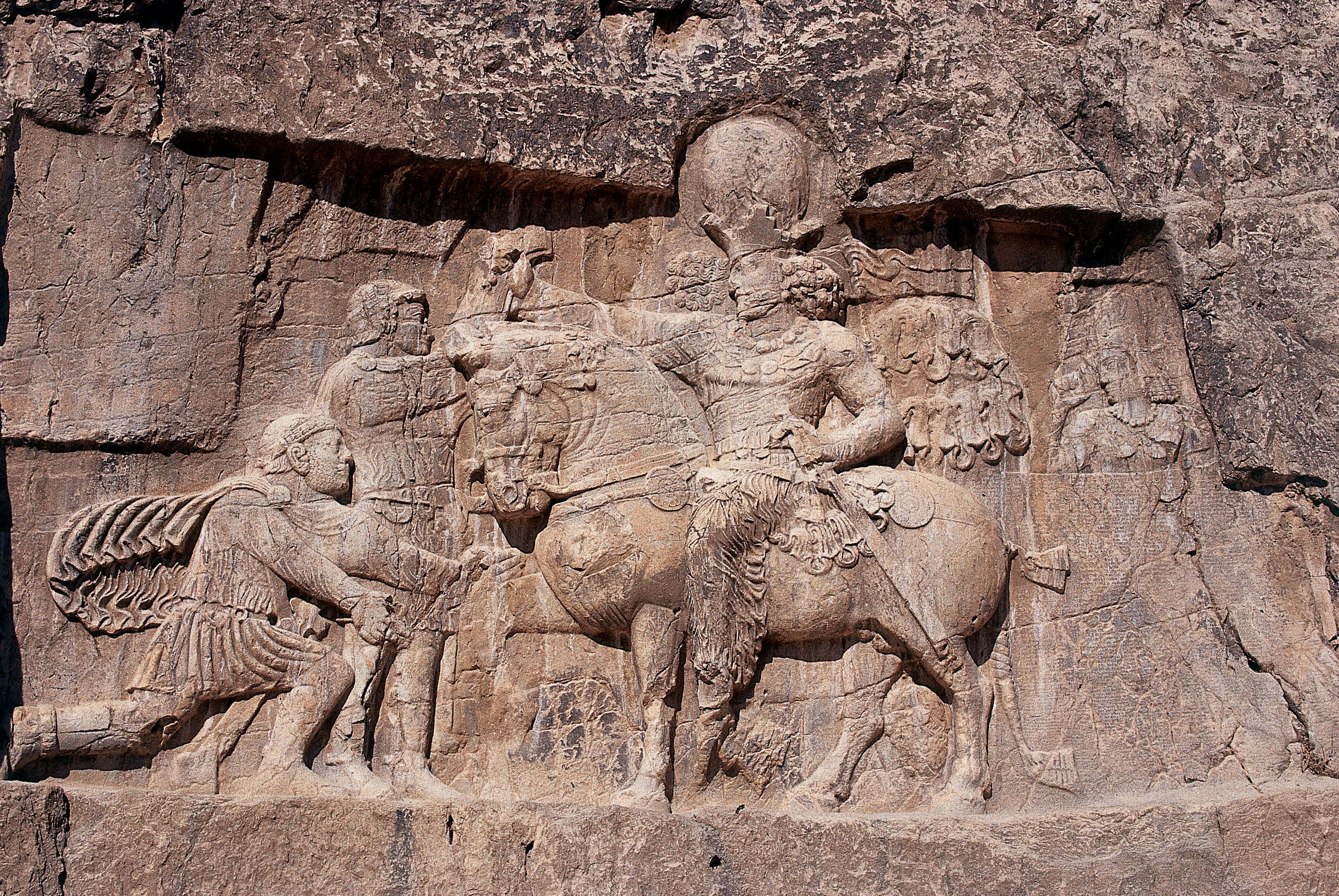
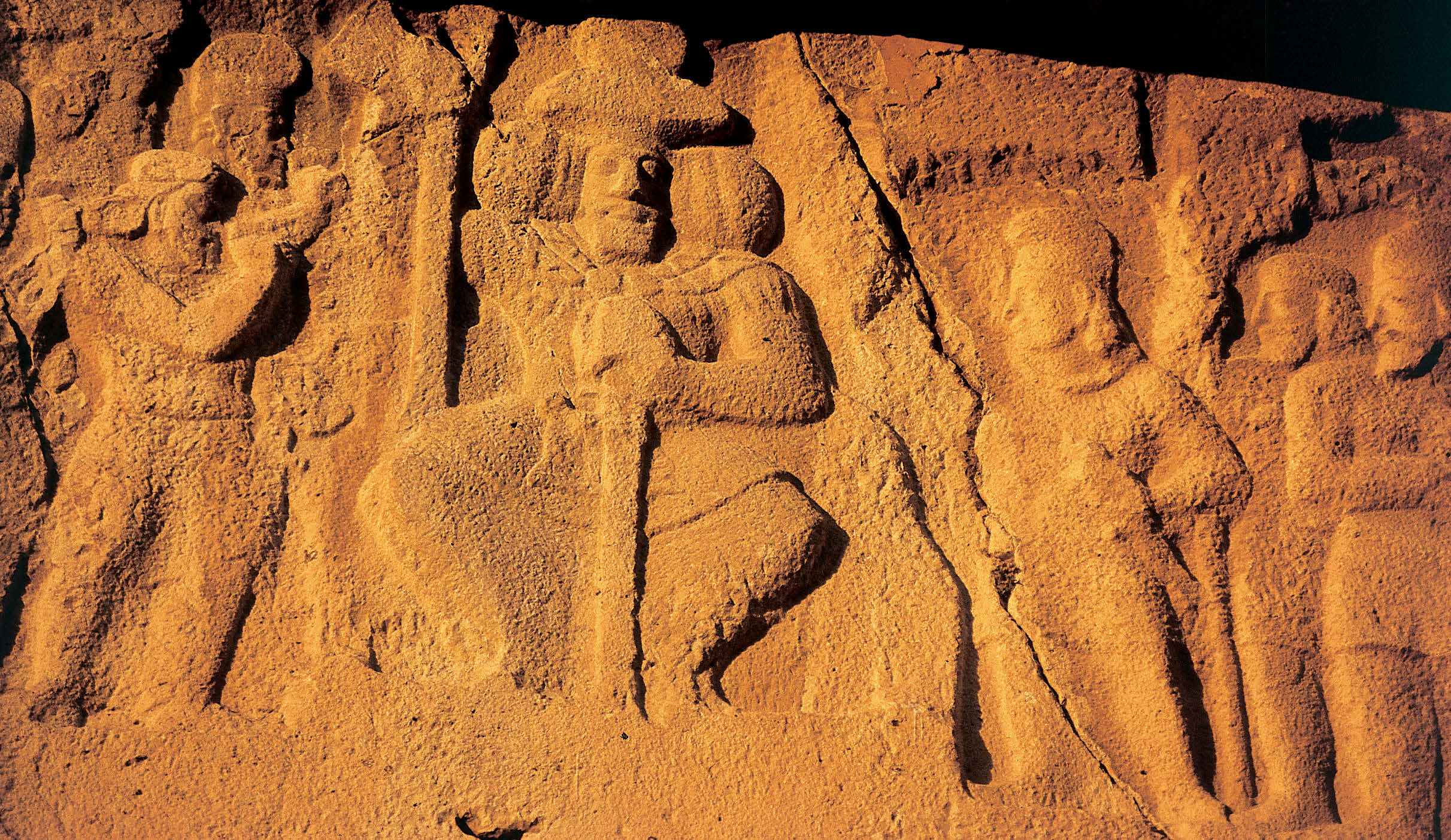
Stone relief in Naqsh-e Rostam, Iran, mid-third century CE. Kneeling before the victorious Shah Shapur I is the vanquished Roman emperor Philip the Arab; behind him stands Emperor Valerian, taken prisoner in 260. Gordianus III, likewise defeated in 244, is missing.
伊朗纳克什-伊·罗斯塔姆 (Naqsh-e Rostam) 的石雕浮雕,公元3世纪中叶。在胜利的沙阿沙普尔一世 (Shah Shapur I) 面前跪着的是战败的罗马皇帝阿拉伯人菲利普 (Philip the Arab);在他身后站着260年被俘的皇帝瓦莱里安 (Valerian)。同样于244年战败的戈尔迪安三世 (Gordianus III) 则未出现。
Zoroastrianism in the
琐罗亚斯德教 (Zoroastrianism) 在
Sassanian Empire
萨珊帝国 (Sassanian Empire)
As a consequence of the free will given to human beings, they must, within the context of the cosmic battle, take a position and decide in favour of good or evil. As the microcosmic image of the macrocosmic universe, the human being is both the stage for and a participant in the struggle of Ahura Mazda against Ahriman. The way of the good demands the proper attitude, truthful speech, and good and just actions. Zarathustra especially detested lying. For this reason, Zarathustra ordered the worship of the eternal fire, as a symbol of pure truth. In contrast to Augustinian Christianity and Manichaeism, the opposition between good and
由于人类被赋予自由意志,他们必须在宇宙之战的语境中采取立场,决定支持善还是恶。作为宏观宇宙的微观映象,人既是阿胡拉·马兹达 (Ahura Mazda) 对抗阿里曼 (Ahriman) 之斗争的舞台,也是其参与者。善之道要求有正确的态度、诚实的言语,以及善良而公正的行为。查拉图斯特拉 (Zarathustra) 尤其憎恶说谎。因此,查拉图斯特拉 (Zarathustra) 规定要崇拜永恒之火,以此作为纯粹真理的象征。与奥古斯丁式基督教 (Augustinian Christianity) 和摩尼教 (Manichaeism) 不同,善与
The pre-Zoroastrian Iranians were, like the related Aryans of India, polytheists, who worshipped some of the same gods. At that time the three chief gods were Ahura Mazda, the ‘wise god’; the god of the sun and truth, Mithra; and the goddess of love and war, Anahita. The eastern Iranian prophet Zarathustra, called Zoroaster in Greek, was active in the early first millennium BCE.2 He was an ethical prophet with a basically monotheistic vision, which was embedded in a relative dualism. This dualism was understood not as an absolute and eternal opposition of two antagonistic powers but rather
前琐罗亚斯德教的伊朗人,如同与之有亲缘关系的印度雅利安人一样,是多神教徒,崇拜一些相同的神祇。当时,三大主神是“智慧之神”阿胡拉·马兹达 (Ahura Mazda)、太阳与真理之神密特拉 (Mithra),以及爱与战争女神阿娜希塔 (Anahita)。东伊朗先知查拉图斯特拉 (Zarathustra),希腊语中称为琐罗亚斯德 (Zoroaster),活跃于公元前一千纪早期。2 他是一位伦理先知,其愿景基本上是一神论的,但嵌入在一种相对的二元论之中。这种二元论并不被理解为两种敌对力量之间绝对而永恒的对立,而是
evil is not identical with that between spirit and matter. The Zoroastrian anthropology, like its cosmology, is fundamentally optimistic, teaching the perfection of creation and of the human being, who is sinless in himself, as well as the triumph of good over evil at the conclusion of the eschatological process. Since matter can be just as perfect as spirit – indeed, it can even be interpreted as its salvific fulfilment – the human being supports the good with his spirit, his soul and his body, and not, as in Syrian monasticism and Manichaeism, against his body. Because the struggle for the good also requires the strength- ening of creation, positive in its nature, which is continually attacked and damaged by Ahriman, the human being is obligated not only to have the correct attitude, correct speech and correct acts, but also to sustain life though agriculture, the breeding of livestock and, above all, the begetting of offspring. of the most frequent accusations made by the Zoroastrian clergy against Christian monks and nuns concerned their vows of celibacy. In times of persecution, Zoroastrian priests presented captured Christian clerics, monks and nuns with the choice between worshipping the sacred fire and the sun and marrying or suffering an agonizing death.3
恶并不等同于灵与物质之间的那种二元对立。琐罗亚斯德教的人类学 (Zoroastrian anthropology) 与其宇宙论一样,从根本上说是乐观的,教导创造和人的完善,人本身是无罪的,也教导在末世论进程终结时善对恶的胜利。既然物质可以像灵一样完善——事实上,它甚至可以被解释为灵的救赎性圆满——人便以其灵、魂和身体来支持善,而不是像在叙利亚修道主义 (Syrian monasticism) 和摩尼教 (Manichaeism) 中那样,以身体为敌来支持善。因为为善而进行的斗争也需要加强创造——创造在本性上是积极的——而创造不断受到阿里曼 (Ahriman) 的攻击和损害,所以人不仅有义务拥有正确的态度、正确的言语和正确的行为,而且有义务通过农业、畜牧,尤其是生育后代来维持生命。琐罗亚斯德教神职人员 (Zoroastrian clergy) 对基督教修士和修女 (Christian monks and nuns) 最常见的指责之一,涉及他们的独身誓愿。在迫害时期,琐罗亚斯德教祭司 (Zoroastrian priests) 让被俘的基督教教士、修士和修女 (Christian clerics, monks and nuns) 在崇拜圣火和太阳并结婚,与遭受痛苦的死亡之间做出选择。3
In addition to disrespect for the sacred fire and celibacy, the third accusation made against Christians concerned their burials. Because Zarathustra not only affirmed the enjoyment of earthly pleasures but also prohibited the besmirching of the earth, the four foundational elements of fire, water, earth and air were considered sacred, so they could under no circumstances be defiled by the burial of impure corpses. Only the offering of corpses to birds of prey in designated places was permitted. Accordingly, the official complaint against the Christians from the year 376 reads: ‘The Christians destroy our teachings and teach not to worship the sun and not to honour the fires, to pollute the water through nasty ablutions, not to marry, not to produce sons and daughters, not to enter into war [against Christian Byzantium] alongside the king, not to slaughter and eat animals without pangs of conscience, [and] to bury the dead in the earth.’ 4 Compromise was hardly possible between religions based on fundamentally opposed anthropologies.
除了对圣火和独身的不敬之外,针对基督徒的第三项指控与他们的丧葬方式有关。由于琐罗亚斯德 (Zarathustra) 不仅肯定享受尘世欢愉,而且禁止玷污大地,火、水、土、气这四大基本元素被视为神圣,因此绝不可因埋葬不洁的尸体而受到玷污。只允许在指定地点将尸体供猛禽啄食。因此,公元376年针对基督徒的官方控诉如此写道:“基督徒破坏我们的教义,教导人们不崇拜太阳,不敬奉诸火,以可憎的沐浴污染水,不结婚,不生育儿女,不与国王一同参战[对抗基督教拜占庭 (Christian Byzantium)],不无良心不安地宰杀和食用动物,[还]将死者埋葬于地下。”4 在基于根本对立的人论的宗教之间,几乎不可能达成妥协。
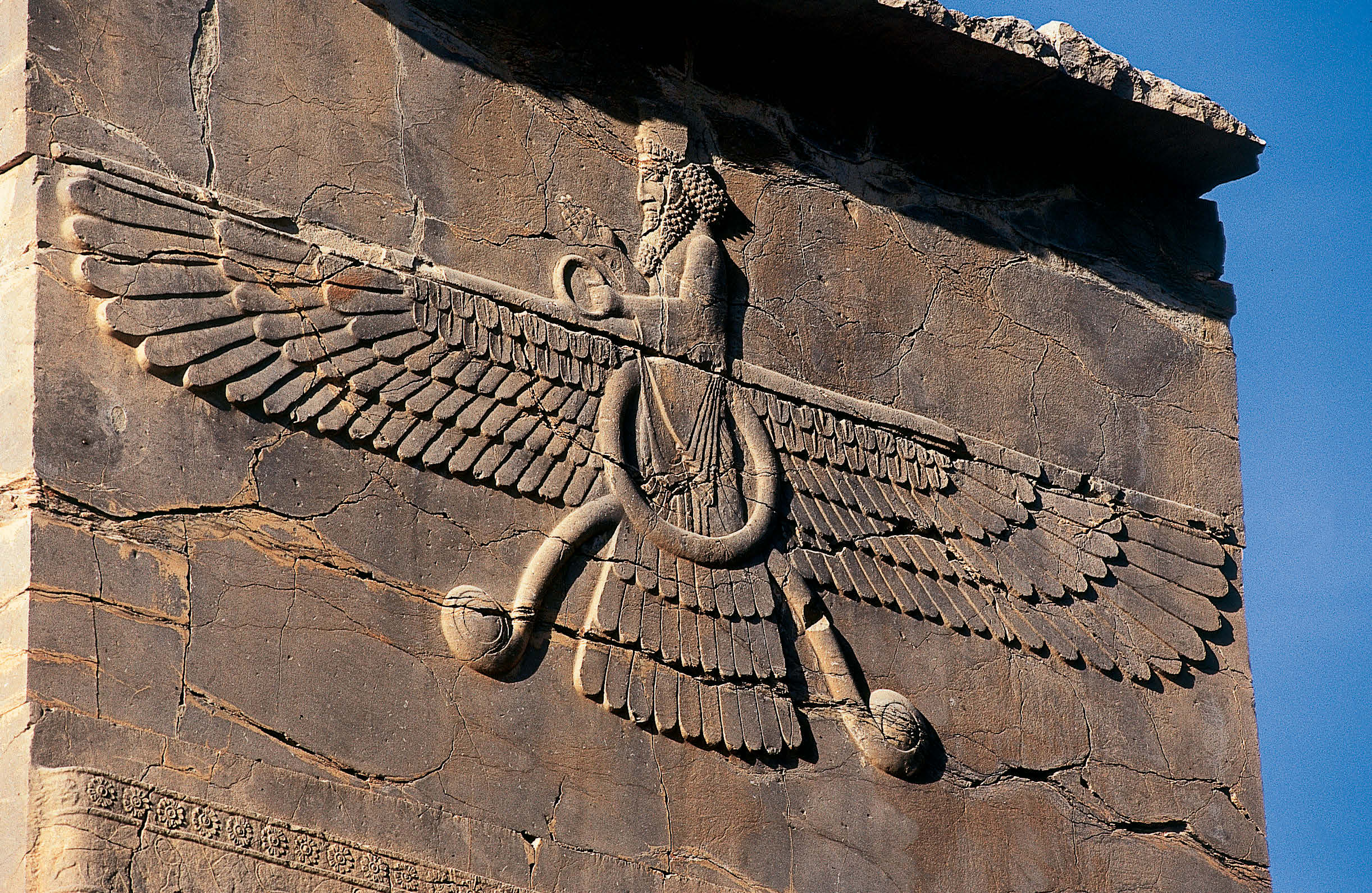
Farawahar of the king in the hall of a hundred pillars, Persepolis, Iran. The symbol represents the eternal spirit of humanity. The three parts of the wings symbolize the moral mandates of pure thoughts, pure words and pure deeds; the ring in the middle the immortality of the spirit; and the two nooses falling from it, as well as the alignment of the head, the turning away from evil and the turning towards good. The raised right hand gestures towards the invisible Ahura Mazda, and the left holds the ring of fidelity.
国王的法拉瓦哈(Farawahar),位于百柱厅(Hall of a Hundred Pillars),波斯波利斯(Persepolis),伊朗(Iran)。该符号代表人类永恒的精神。翅膀的三个部分象征纯洁思想、纯洁言语和纯洁行为的道德律令;中间的圆环象征精神的不朽;从圆环垂下的两条套索,以及头部的端正,则象征远离邪恶、趋向善良。抬起的右手朝向不可见的阿胡拉·马兹达(Ahura Mazda)示意,左手握着忠诚之环。
This moral obligation of labour and marriage to produce children is diametrically opposed to the monastic ideal of an abstinence from bodily labour in favour of prayer, vegetarianism, strict fasting and celibacy. As we will see below, one
这种劳动和婚姻以生育子女为目标的道德义务,与修道理想截然对立,后者主张戒除体力劳动,转而致力于祈祷、素食、严格斋戒和独身。正如我们将在下文看到的,一
The fundamental importance of marriage to Zoroastrians can also be seen in the conversation between King Vahram III (ruled 293) and Bishop Papa of Seleucia-Ctesiphon. Since both theManichaean clergy and the East Syrian bishops lived celibately, they were to the king equivalent heretics, hostile to the state and deserving of death. ‘Since the king saw that the bishops abstained from marriage, in accordance with the School of the Manichees, he commanded the execution of the Manichees and the Christians.’
婚姻对琐罗亚斯德教徒 (Zoroastrians) 的根本重要性,也可从国王瓦赫拉姆三世 (Vahram III,在位时间为293年) 与塞琉西亚-泰西封 (Seleucia-Ctesiphon) 的主教帕帕 (Papa) 之间的对话中看出。由于摩尼教神职人员 (Manichaean clergy) 和东叙利亚主教 (East Syrian bishops) 都过独身生活,在国王眼中,他们等同于异端分子,敌视国家,该当处死。“由于国王看到主教们依照摩尼教徒的学派 (School of the Manichees) 禁绝婚姻,便下令处死摩尼教徒 (Manichees) 和基督徒 (Christians)。”
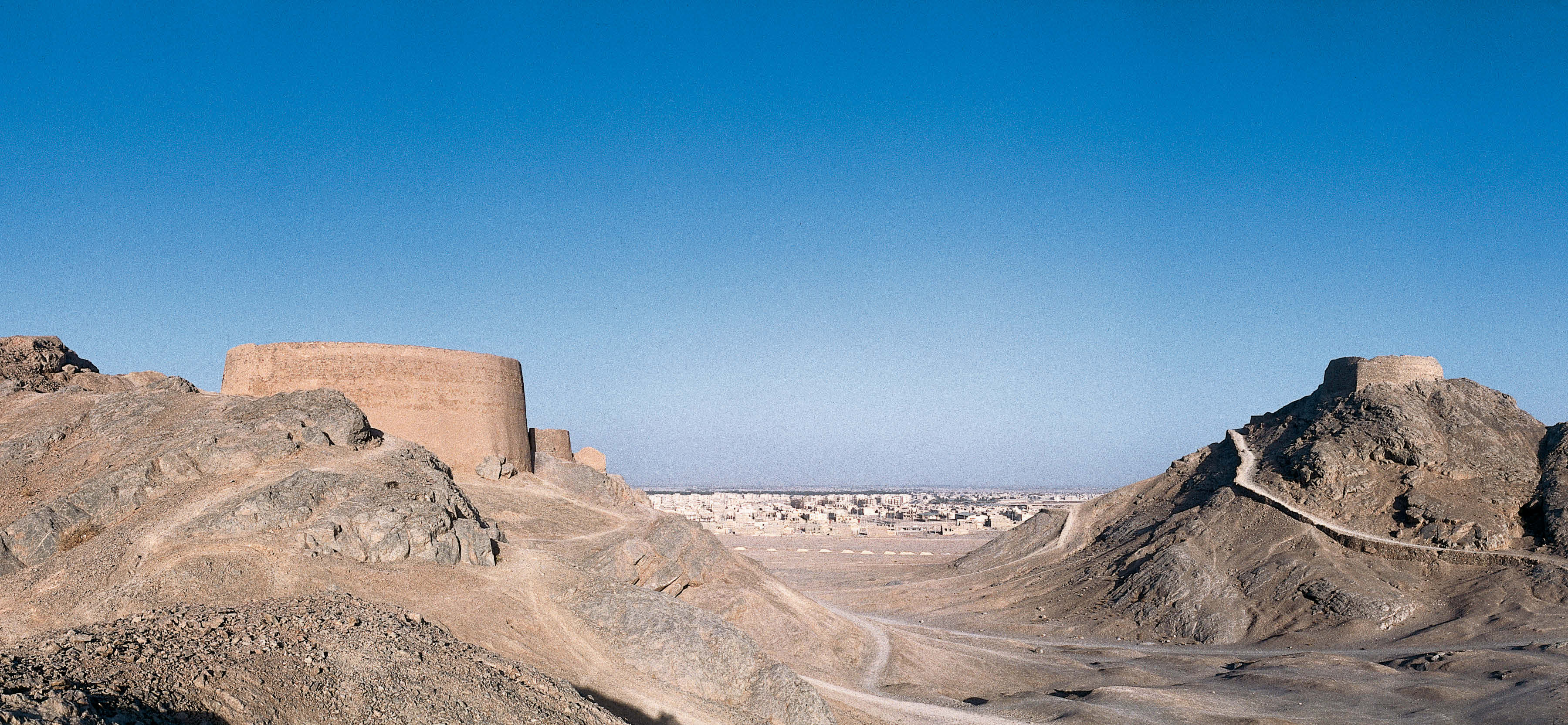
The two Zoroastrian towers of silence in Yazd, Iran. In such funeral towers the Zoroastrians left their dead to be eaten by vultures, after which they placed the bare bones in ossuaries or stone niches. This traditional type of funeral has been outlawed in Iran since 1970 for hygienic reasons. if the bad had predominated, the deceased fell from the bridge into hell, likewise for a limited time. In the chaos of the cosmic final battle the final saviour appears to resurrect all the dead and determine a second, final judgement. Once again, the good are assigned to paradise and the evil to hell.6 After the final victory of good over evil and after serving their sentences, the former inhabitants of hell, now purified, also reach the paradise of God. Ahura Mazda has now regained his omnipotence, and humanity enjoys eternal life. The gates of hell remain closed for ever.
伊朗 (Iran) 亚兹德 (Yazd) 的两座琐罗亚斯德教寂静之塔 (towers of silence)。在这种丧葬塔中,琐罗亚斯德教徒 (Zoroastrians) 将死者置于其中,任由秃鹫啄食,随后将裸露的骨骸放入藏骨堂 (ossuaries) 或石龛 (stone niches)。由于卫生原因,这种传统丧葬方式自1970年起在伊朗已被禁止。如果恶曾占上风,死者便从桥上坠入地狱,同样也只是在有限时间内。在宇宙最终之战的混乱中,最终救世主 (final saviour) 出现,使所有死者复活,并确定第二次、最终的审判。善者再次被分入天堂,恶者则被分入地狱。6 在善最终战胜恶之后,并且在服完刑期之后,先前地狱的居民如今已被净化,也抵达上帝的天堂。阿胡拉·马兹达 (Ahura Mazda) 如今重新获得了其全能,人类享有永恒生命。地狱之门永远关闭。
In this crisis, Bishop Papa approached the king and explained, ‘The Manichees believe in two gods, that the earth has life, that souls can move from one body to another, and that marriage is abominable. The Christians acknowledge one God, condone marriage, and this is forbidden only to its leaders, in order that they might persist in prayer.’ 5 Papa’s clarification helped lead to a short-lived and limited cessation of persecution. To refute this accusation, the synod of 486 determined to require marriage of all clergy.
在这场危机中,主教帕帕 (Papa) 觐见国王并解释道:“摩尼教徒 (Manichees) 相信有两位神,相信大地有生命,相信灵魂可以从一个身体转移到另一个身体,并且认为婚姻是可憎的。基督徒 (Christians) 承认一位神,容许婚姻,而只有其领袖被禁止结婚,以便他们能恒切祈祷。”5 帕帕 (Papa) 的澄清有助于促成迫害短暂而有限的停止。为了驳斥这一指控,486年主教会议 (synod of 486) 决定要求所有神职人员结婚。
According to Zoroastrian ideas, after death the dead must cross the Bridge of Judgement. In the case that the good outweighed the bad in the life in question, the deceased found on the other side of the bridge a temporary paradise;
根据琐罗亚斯德教 (Zoroastrian) 的观念,人死后必须跨过审判之桥 (Bridge of Judgement)。如果在相关的一生中善行多于恶行,死者就会在桥的另一边发现一个临时天堂;
There is little doubt that Zoroastrian thought found its way into both Jewish and Christian ideas. These ideas include the juxtaposition of the opposites of good/evil and light/darkness,7 an ultimate saviour, the resurrection of the dead
毫无疑问,琐罗亚斯德教思想已渗入犹太教和基督教的观念之中。这些观念包括善/恶与光/暗7这两组对立面的并置、一位终极救主以及死者的复活。
and their sentencing on Judgement Day, as well as the belief, widespread among Nestorians, that the period in hell for purposes of atonement is for a limited time.8 confronted ‘for eternity’ by an equal god of nothingness, an anti-god. In order to overcome this strict dualism and re-establish the mono- theistic vision of Zarathustra, the heresy of Zurvanism arose. In this teaching, time, Zurvan, becomes the father of the estranged twin spirits. Although Zurvanism further diminished the status of Ahura Mazda and the absolute nature of time implied the predestination of all events, abolishing Zarathustrian free will, it appears to have been popular with the Sassanian kings. However, Zurvanism remained merely an intellectual trend within official Zoroastrianism, and it commanded neither its own clergy nor an exclusive cult. Perhaps the monotheistic character of Zurvanism accounts for the occasional affinity of individual kings for Christianity.13 However, the hopes of the Christians, that a Sassanian king would convert to Christianity, were never fulfilled, as political pressure and, above all, the influence of the Zoroastrian clergy was too powerful.
以及他们在审判日 (Judgement Day) 所受的判决,还有在聂斯托利派 (Nestorians) 中广泛流传的信念,即地狱中为赎罪而受的期限是有限的。8 被一个与之对等、代表虚无的神——一个反神——‘永恒地’对抗着。为了克服这种严格的二元论,并重新确立琐罗亚斯德 (Zarathustra) 的一神论愿景,佐尔万主义 (Zurvanism) 这一异端便兴起了。在这一教说中,时间,即佐尔万 (Zurvan),成为彼此疏离的孪生神灵之父。尽管佐尔万主义进一步贬低了阿胡拉·马兹达 (Ahura Mazda) 的地位,而时间的绝对性质又意味着一切事件皆已预定,从而取消了琐罗亚斯德教的自由意志 (Zarathustrian free will),但它似乎颇受萨珊诸王 (Sassanian kings) 欢迎。然而,佐尔万主义在官方琐罗亚斯德教 (Zoroastrianism) 内部仍只是一种思想潮流,它既没有自己的祭司,也没有排他性的祭祀。或许正是佐尔万主义的一神论性质,解释了个别国王为何偶尔对基督教 (Christianity) 抱有好感。13 然而,基督徒 (Christians) 希望某位萨珊国王 (Sassanian king) 皈依基督教 (Christianity) 的愿望从未实现,因为政治压力,尤其是琐罗亚斯德教祭司 (Zoroastrian clergy) 的影响,实在过于强大。
Zoroastrianism was able to develop to a certain degree under the Achaemenians
在阿契美尼德人 (Achaemenians) 统治下,琐罗亚斯德教 (Zoroastrianism) 得以在一定程度上发展。
(559–330 BCE) but had to tolerate the cults of Mithra and Anahita. Under the Parthians it was at first more and more forgotten, but, as a result of the anti-Hellenistic reaction, the gathering of Zoroastrian texts into the sacred book of the Avesta began under King Vologases (ruled
(公元前559—前330年)但不得不容忍密特拉 (Mithra) 和阿娜希塔 (Anahita) 的崇拜。在帕提亚人 (Parthians) 统治下,它起初日益被遗忘,但由于反希腊化反应,将琐罗亚斯德教文献汇编成圣书《阿维斯陀》(Avesta) 的工作始于国王沃洛吉斯 (Vologases) 统治时期(在位
51–78 CE).9 The first two Sassanian kings, Ardashir and Shapur I, systematically continued the written compilation of Zoroastrian doctrine. While in the time of the Parthians the Arsacid, north-western Pahlavi script was used for this, Sassanian scholars developed their own script from the Sassanian, south-western Pahlavi for the writing of the Avesta, as evidenced by a consequent use of vowels in the text. While Arsacidian script, derived from Aramaic, numbers 20 letters, and the Sassanian 19, the Avesta alphabet, called Pazand, consists of 54 symbols, of which 14 are vowels. All three scripts of Pahlavi run right to left.10 The Sassanian Avesta represented a blend of Zarathustra’s teachings and ideas from popular religion, as ancient Persian gods, such as Mithra, Anahita and the victory god Verethraghna, who had been ignored by Zarathustra, reappear in the Avesta.
公元51–78年)。9 萨珊王朝 (Sassanian) 的最初两位国王阿尔达希尔 (Ardashir) 和沙普尔一世 (Shapur I) 系统地继续了琐罗亚斯德教 (Zoroastrian) 教义的书面编纂。在帕提亚人 (Parthians) 时代,阿尔萨息 (Arsacid) 的西北巴列维文 (north-western Pahlavi script) 曾用于此,而萨珊学者则从萨珊王朝的西南巴列维文 (south-western Pahlavi) 发展出自己的文字,用于书写《阿维斯塔》 (Avesta),其证据是文本中随之使用了元音。阿尔萨息文字 (Arsacidian script) 源自阿拉米文 (Aramaic),有20个字母,萨珊文字则有19个,而称为帕赞德 (Pazand) 的《阿维斯塔》字母表 (Avesta alphabet) 由54个符号组成,其中14个是元音。巴列维文 (Pahlavi) 的三种文字均从右向左书写。10 萨珊时期的《阿维斯塔》体现了查拉图斯特拉 (Zarathustra) 的教义与民间宗教观念的融合,因为古代波斯诸神,如密特拉 (Mithra)、阿娜希塔 (Anahita) 和胜利之神韦雷特拉格纳 (Verethraghna),这些曾被查拉图斯特拉忽视的神祇,重新出现在《阿维斯塔》中。
This clergy actually formed a caste, since their functions were hereditary. It consisted at its base of the Herpad, the so-called magicians, who tended the sacred fire in the local temples. Above them served the hierarchically structured Magupat, also called Mobed, the actual priests. At the peak of the hierarchical pyramid stood the Magupatan Magupat (Mobedan Mobed). This last functioned not only as the authority over all the magicians and priests but also had wide-ranging juridical competence and played a decisive role in determining a successor to the royal throne.
这一祭司阶层实际上形成了一个种姓,因为其职能是世袭的。其底层由赫尔帕德 (Herpad) 组成,即所谓的术士,他们在地方神庙中照管圣火。在他们之上任职的是按等级组织起来的马古帕特 (Magupat),又称穆贝德 (Mobed),即真正的祭司。在等级金字塔的顶端,是马古帕坦·马古帕特 (Magupatan Magupat),又称穆贝丹·穆贝德 (Mobedan Mobed)。这一最高职位不仅统辖所有术士和祭司,还拥有广泛的司法权,并在决定王位继承人方面起着决定性作用。
It seems that the dualism between good and evil is radicalized in the Sassanian Avesta. ‘There are two original spirits, twins, who are known for being in opposition to one another. In thought, word and deed they are two, the good and the bad.’11 The following verse from the Yasna, a part of the Avesta, maintains, ‘When these two spirits, Ahura Mazda and Ahriman, encountered each other, one created existence and the other non-existence. This situation will last for eternity.’12 In this interpretation of dualism, Ahura Mazda sees himself as
在萨珊王朝的《阿维斯陀》(Avesta) 中,善与恶之间的二元论似乎被激进化了。“有两个原初的灵,孪生,以彼此对立而闻名。在思想、言语和行为上,他们是二者,善者与恶者。”11 《阿维斯陀》(Avesta) 中《亚斯纳》(Yasna) 的下一诗节主张:“当这两个灵,即阿胡拉·马兹达 (Ahura Mazda) 和阿里曼 (Ahriman),彼此相遇时,一个创造了存在,另一个创造了非存在。这种状况将永远持续。”12 在这种二元论解释中,阿胡拉·马兹达 (Ahura Mazda) 将自己视为
The architect of the Zoroastrian clergy was the Zoroastrian high priest Kartir, who elevated Zoroastrianism to the Sassanian state religion and fought against all ‘foreign’ religions. Four great stone inscriptions in the province of Fars provide information about the life and work of Kartir.14 The mere fact that Kartir was able to put up his own self-glorifying inscriptions in
琐罗亚斯德教祭司阶层的缔造者是琐罗亚斯德教高级祭司卡尔提尔 (Kartir),他将琐罗亚斯德教提升为萨珊王朝的国教,并与所有“外来”宗教作斗争。位于法尔斯省 (Fars) 的四块大型石刻铭文提供了关于卡尔提尔生平与事迹的信息。14 仅仅卡尔提尔能够于……竖立自己的自我颂扬铭文这一事实
such sacred places as Naqsh-e Rajab and Naqsh-e Rostam – the Sassanian valley of the kings, where four of the most important Achaemenids found their final resting place – indicates that he occupied a position in the nation equal to the king’s. In Sassanian Iran, state and Church formed an inseparable pair. [^15]
诸如纳克什-拉贾卜 (Naqsh-e Rajab) 和纳克什-罗斯塔姆 (Naqsh-e Rostam) 这样的圣地——萨珊王朝 (Sassanian) 的帝王谷,四位最重要的阿契美尼德君主 (Achaemenids) 在此长眠——表明他在国中占据了与国王同等的地位。在萨珊 (Sassanian) 伊朗,国家与教会构成了不可分割的一对。15
The career of the Herpad Kartir as Magupatan Magupat and ‘judge of all the empire’ was unusual, with regard to both its duration and its power. Over a period of more than half a century, from c. [^240] to 293, Kartir served six kings. First he served as priest under Ardashir (†240/241), after which he worked under Shapur I for the spread of Zoroastrian doctrine and its recording in writing. His real rise to the inner circle of power took place with his being named highest Magupat of Ahura Mazda by Hormizd I (ruled 272–273). In this capacity he organized the hierarchy of the Zoroastrian clergy, oversaw the orthodoxy of doctrine and announced the foundations of the new state religion in over 700 stone inscriptions. [^16]
赫尔帕德 (Herpad) 卡尔提尔 (Kartir) 作为马古帕坦·马古帕特 (Magupatan Magupat) 及“全帝国的法官”的生涯,无论就其持续时间还是权力而言,都非同寻常。在超过半个世纪的时期里,约从240年至293年,卡尔提尔 (Kartir) 先后侍奉了六位国王。他最初在阿尔达希尔 (Ardashir)(†240/241)治下担任祭司,此后在沙普尔一世 (Shapur I) 治下致力于琐罗亚斯德教教义的传播及其书面记录。他真正进入权力核心圈,是在霍尔米兹德一世 (Hormizd I)(统治于272–273年)任命他为阿胡拉·马兹达 (Ahura Mazda) 的最高马古帕特 (Magupat) 之时。以此身份,他组织了琐罗亚斯德教祭司的等级体系,监督教义的正统性,并在700多块石碑铭文中宣告了新国教的基础。16
Vahram I (ruled 273–276) confirmed him in this leading role, allowing him to destroy his archrival Mani (216–272 or 276), who had enjoyed the favour of Shapur I. Vahram had recognized that the pessimistic asceticism of Mani, who condemned everything earthly and material as evil, could threaten the social order and the state. So Kartir ordered the systematic persecution of the Manichees, which he extended to the Christians around 287 for the reasons mentioned above. [^17] Kartir reached the zenith of his power under Vahram II (ruled 276–293), who elevated him to the nobility and granted him the highest jurisdiction in the empire. As leader of all the clergy, guardian of orthodoxy and ‘judge of all judges’, he anticipated the later office of Mobedan Mobed and rose to become a kind of omnipotent Grand Inquisitor. During the time of Vahram II Kartir had his four inscriptions chiselled, and he continued to serve under
瓦赫拉姆一世 (Vahram I)(统治期273—276年)确认了他这一领导地位,使他得以消灭其头号对手摩尼 (Mani)(216—272或276年),后者曾受到沙普尔一世 (Shapur I) 的恩宠。瓦赫拉姆认识到,摩尼那种将一切尘世和物质事物都斥为邪恶的悲观禁欲主义,可能威胁社会秩序和国家。因此,卡尔提尔 (Kartir) 下令对摩尼教徒进行系统性迫害,并出于上述原因,约在287年将迫害扩大到基督徒。17 卡尔提尔在瓦赫拉姆二世 (Vahram II)(统治期276—293年)治下权力达到顶峰,后者将他擢升为贵族,并授予他帝国最高司法权。作为全体神职人员的领袖、正统教义的守护者和“众法官之法官”,他预示了后来的穆贝丹·穆贝德 (Mobedan Mobed) 职位,并崛起为某种全能的“大审判官”。在瓦赫拉姆二世 (Vahram II) 时期,卡尔提尔命人凿刻了他的四篇铭文,并继续在……之下任职。
Varham III (ruled 293) and at the beginning of the reign of Narses (ruled 293–302), when his name appeared for the last time in the inscription proclaiming the new king’s accession to the throne. [^18] Since no inscription reports his death, it may be assumed that he rapidly lost influence under Narses.
瓦赫拉姆三世 (Varham III)(在位293年),以及在纳尔赛 (Narses) 统治初期(在位293–302年),他的名字最后一次出现在宣告新国王登基的铭文中。18 由于没有铭文记载他的死亡,可以推测他在纳尔赛统治下迅速失去了影响力。
The Zoroastrianism shaped into the state religion by Kartir was neither tolerant nor pacifist. Since its prophet had demanded from all people the promotion of the good and the fight against evil, this obligation for Church and state was equated with promotion of the Zoroastrian religion and its morality and the destruction of all other, ‘false’ religions. As a consequence of the close connection between Church and state, rejection of Zoroastrianism in favour of another
由卡尔提尔 (Kartir) 塑造成国教的琐罗亚斯德教 (Zoroastrianism) 既不容忍,也不奉行和平主义。由于其先知曾要求所有人弘扬善、对抗恶,教会与国家的这一义务便被等同于推广琐罗亚斯德教及其道德,并摧毁所有其他“虚假的”宗教。由于教会与国家之间的紧密联系,拒绝琐罗亚斯德教而转向另一种
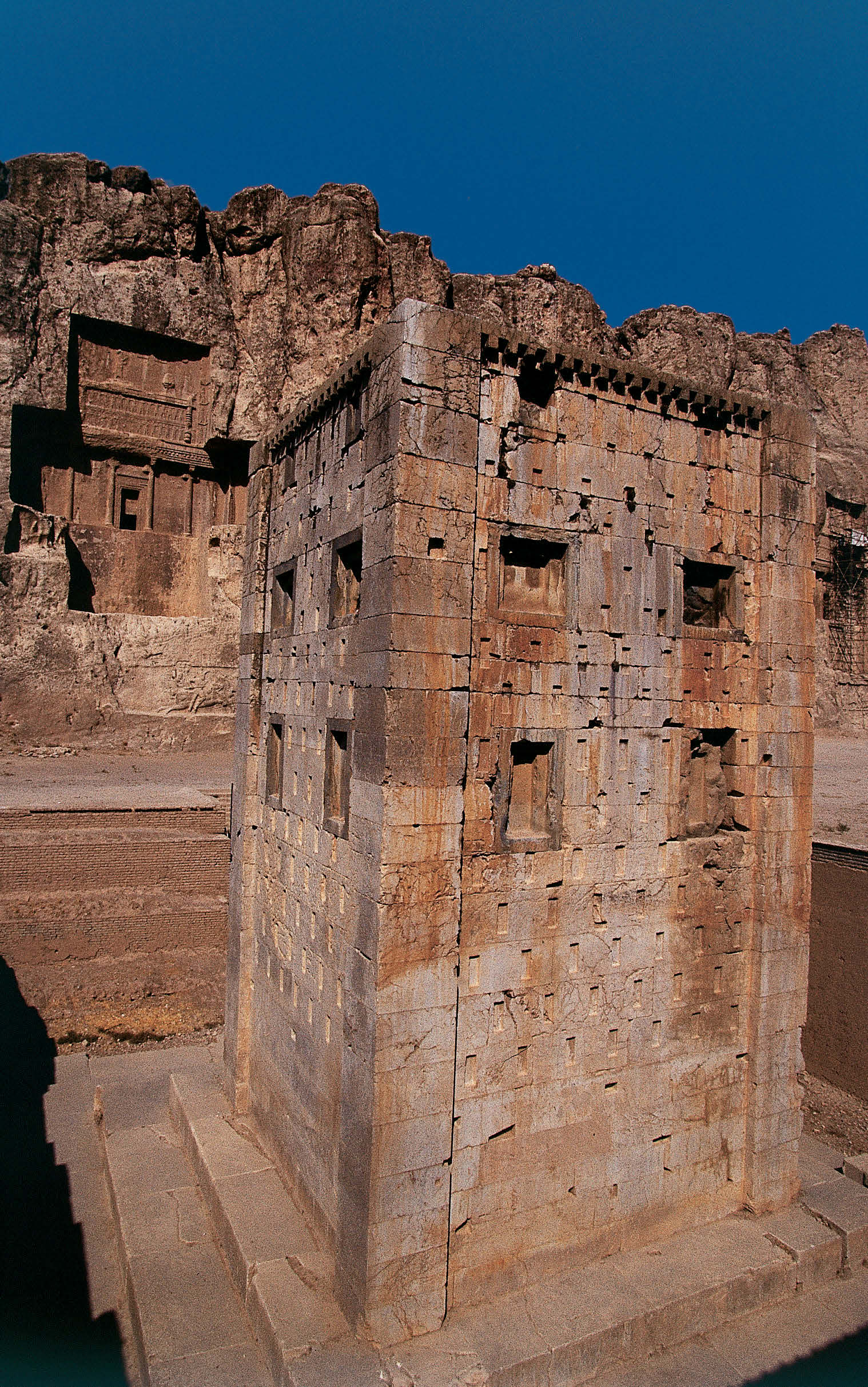
The Zoroastrian high priest Kartir (in office c.240–293CE) had engraved on this Achaemenian tower-like shrine in Naqsh-e Rostam, Iran, his own inscription, in which he boasted of his achievements. He counted among these the promotion of Zoroastrianism and the persecution of all other religions found in Iran. To the left of the shrine, called the Kaaba-ye Zardosht, can be seen the grave of Darius II (ruled 423–404BCE), and to the right that of Darius I (ruled 522–486BCE).
琐罗亚斯德教大祭司卡尔提尔 (Kartir)(约公元240—293年在任)曾在这座位于伊朗 (Iran) 纳克什·鲁斯塔姆 (Naqsh-e Rostam) 的阿契美尼德 (Achaemenian) 时期塔状圣所上刻下自己的铭文,在其中夸耀自己的功绩。他将推广琐罗亚斯德教 (Zoroastrianism) 以及迫害伊朗境内存在的所有其他宗教列为其功绩之一。在该圣所左侧,即所谓的琐罗亚斯德之卡巴 (Kaaba-ye Zardosht),可以看到大流士二世 (Darius II) 的陵墓(在位公元前423—前404年);右侧则可以看到大流士一世 (Darius I) 的陵墓(在位公元前522—前486年)。
religion meant treason, which brought the death penalty. But, since there were only a few native Zoroastrians in Mesopotamia and south-western Iran, Christianity could spread there even under the Sassanians, while in the Zoroastrian heartland of the province of Fars it could attract only a minority. It should be noted that the pattern of varying attitudes of the state-supported religion and the government it legitimated towards Christianity, which swung between poles of benevolent tolerance and brutal repression, has remained the same in Mesopotamia and Iran to this day. The study of the history of Christianity under the Sassanians helps us understand the situation of the Christians there in modern times. his life’s work by listing his various tasks and titles: ‘In province after province, place after place, worship of Ormazd [Ahura Mazda] and the gods predominates. The Mazdan religion [Zoroastrianism] and the magicians enjoy the greatest respect in the empire, the teachings of Ahriman and the demons have been expelled and destroyed: the Jews, the shamans [Buddhists], the [Indian] Brahmans, the Nazarenes [Aramaic- and Middle-Persian-speaking East Syrians], the Christians [kristiyân, the Greek-speaking Christian refugees from the Roman Empire and Christian prisoners of war], the Maktaks [the Baptist sects of the Mandeans] and the Zandik [Manichees] have all been destroyed in the empire. Their idols were smashed and the homes of the demons [the foreign temples] destroyed.’19
宗教意味着叛国,而叛国可判处死刑。但是,由于美索不达米亚(Mesopotamia)和伊朗(Iran)西南部只有少数本地琐罗亚斯德教徒(Zoroastrians),基督教甚至能在萨珊王朝(Sassanians)统治下于当地传播;而在法尔斯(Fars)省的琐罗亚斯德教核心地带,它只能吸引少数人。应当指出,国家支持的宗教及其所合法化的政府对基督教态度的变化模式——在仁慈宽容与残酷镇压两极之间摇摆——在美索不达米亚和伊朗一直延续至今。研究萨珊王朝统治下基督教的历史,有助于我们理解当地基督徒在现代的处境。他通过列举自己的各种任务和头衔来总结其毕生事业:“在一个又一个行省,一个又一个地方,对奥尔马兹德(Ormazd)[阿胡拉·马兹达(Ahura Mazda)]和诸神的崇拜占据主导。马兹达教(Mazdan religion)[琐罗亚斯德教(Zoroastrianism)]和术士(magicians)在帝国中享有最高尊崇,阿里曼(Ahriman)和恶魔的教义已被驱逐和摧毁:犹太人、沙门(shamans)[佛教徒(Buddhists)]、[印度的]婆罗门(Brahmans)、拿撒勒人(Nazarenes)[讲阿拉米语和中古波斯语的东叙利亚人(East Syrians)]、基督徒(Christians)[kristiyân,即来自罗马帝国的讲希腊语的基督徒难民和基督徒战俘]、马克塔克人(Maktaks)[曼达教徒中的浸礼派(the Baptist sects of the Mandeans)]以及赞迪克(Zandik)[摩尼教徒(Manichees)]在帝国中都已遭摧毁。他们的偶像被砸碎,恶魔的居所[外来神庙]也被摧毁。”19
In the great inscription on the Zoroastrian tower of Naqsh-e Rostam Kartir boasted of
在纳克什-伊·罗斯塔姆 (Naqsh-e Rostam) 的琐罗亚斯德教塔上的伟大铭文中,卡尔提尔 (Kartir) 夸耀了
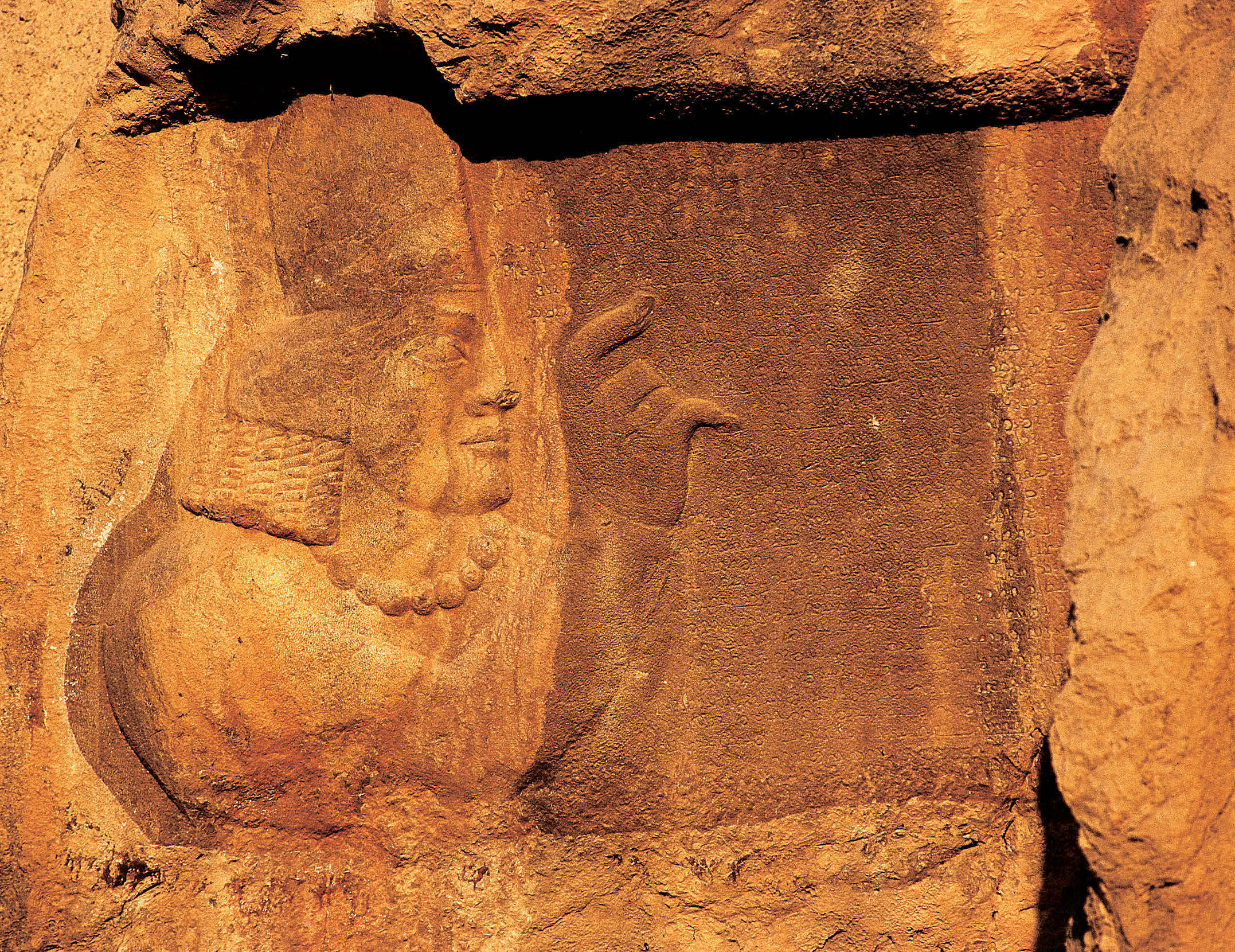
Half-length portrait of the high priest Kartir in Naqsh-e Rajab, Iran, from the time of Vahram II (ruled 276– 293CE). In the Pahlavi inscription Kartir promises paradise to the good and hell to the evil. The two crooked fingers are a sign of respect.
大祭司卡尔提尔 (Kartir) 的半身像,位于伊朗 (Iran) 的纳克什-拉贾卜 (Naqsh-e Rajab),出自瓦赫拉姆二世 (Vahram II) 时期(公元276–293年在位)。在巴列维语铭文 (Pahlavi inscription) 中,卡尔提尔 (Kartir) 向善者许诺天堂,向恶者许诺地狱。两根弯曲的手指是表示尊敬的标志。
In the final section of the inscription Kartir enumerated additional acts in promotion of religion: ‘With the help of the gods, the king and my labour, countless fire temples were founded in the empire, many marriages between blood relatives took place and many unbelievers came to believe.’20 The marriage of blood relatives desired by Zoroastrianism – kings often wedded their sisters and daughters – was another unavoid-able bone of contention between Christians and Zoroastrians. And so, for instance, the ban forbidding Christians from entering into Persian marriages between blood relatives, issued by Catholicos Mar Aba, led to the persecutions of 544.21 family, as is shown by the example of the Christian Candida, of Roman origin, who was one of the wives of Vahram II. She refused to accord to the wishes of the king and convert to Zoroastrianism and was for this reason cruelly tortured and then executed.24 The first persecution of Christians, which subsided under Narses, was nonetheless merely a harmless prelude when compared to those of the following two centuries.
在铭文的最后一部分,卡尔提尔 (Kartir) 列举了为促进宗教而采取的更多行动:“在诸神、国王和我的努力帮助下,帝国境内建立了无数火庙,缔结了许多血亲婚姻,许多不信者也皈信了。”20 琐罗亚斯德教 (Zoroastrianism) 所期望的血亲婚姻——国王常常娶自己的姐妹和女儿为妻——是基督徒与琐罗亚斯德教徒 (Zoroastrians) 之间另一个不可避免的争执焦点。因此,例如,大公宗主玛尔·阿巴 (Catholicos Mar Aba) 颁布的禁止基督徒缔结波斯人血亲婚姻的禁令,导致了544年的迫害。21 家庭,正如罗马出身的基督徒坎迪达 (Candida) 的例子所示,她是瓦赫拉姆二世 (Vahram II) 的妻子之一。她拒绝顺从国王的意愿并皈依琐罗亚斯德教,因此遭到残酷折磨,随后被处决。24 第一次对基督徒的迫害在纳尔塞斯 (Narses) 治下平息,然而与随后两个世纪的迫害相比,只不过是无害的序幕。
A century-long martyrdom from 340 to 457 and the first creation of an ecclesiastical hierarchy
从340年至457年长达百年的殉道,以及教会教阶制度的首次建立
In the last 19 lines Kartir summarized the heart of Zoroastrian anthropology, which is formulated in greater detail in the nearby inscription of Naqsh-e Rajab: ‘He who sees and reads this inscription should be generous and faithful to the gods, the kings and his own soul, as I was. He who does good will attain paradise, he who does evil will be thrown into hell. He who does good and behaves properly, to him will be granted glory and prosperity for his physical body, and his corporeal soul preserves upright- ness, as was granted to me, Kartir.’ 22 In contrast to the teachings of Mani, in which the human body represents the work of the evil principle and only the particles of light in the soul can be redeemed, the doctrine of Kartir emphasized that the body of the human being, along with his spirit and soul, were all three created by the good god Ahura Mazda and thus have a divine nature. For this reason, the whole person – body, spirit and soul – reaches paradise. Since the Manichees condemned the begetting of children as a further damaging and defiling of the divine light, and Christian monks, nuns and the ascetic ‘brothers and sisters of the covenant’23 lived celibately, they were declared enemies of the good creator god Ahura Mazda and persecuted accordingly. The persecution of Christians did not spare the royal
在最后19行中,卡尔提尔 (Kartir) 概括了琐罗亚斯德教 (Zoroastrian) 人论的核心,这一核心在附近的纳克什-拉贾卜 (Naqsh-e Rajab) 铭文中得到了更详细的表述:“凡看见并阅读此铭文者,应当像我一向那样,对诸神、诸王和自己的灵魂慷慨而忠诚。行善者将抵达天堂,作恶者将被投入地狱。行善且举止端正者,其肉身将获赐荣耀与繁荣,其肉体性的灵魂则保持正直,正如赐予我——卡尔提尔 (Kartir)——的那样。”22 与摩尼 (Mani) 的教义相反——在摩尼教中,人的身体代表恶本原的作为,只有灵魂中的光明粒子才能得到救赎——卡尔提尔 (Kartir) 的教义则强调,人的身体连同其精神和灵魂,三者皆由善神阿胡拉·马兹达 (Ahura Mazda) 所造,因而具有神性。因此,完整的人——身体、精神和灵魂——都能抵达天堂。由于摩尼教徒 (Manichees) 谴责生育子女,认为这进一步损害并玷污了神性之光,而基督教修士、修女以及禁欲的“盟约兄弟姐妹” (brothers and sisters of the covenant)23 又过着独身生活,他们便被宣布为善的造物主神阿胡拉·马兹达 (Ahura Mazda) 的敌人,并因此遭到迫害。对基督徒的迫害也没有放过王室
‘If any want to become my followers, let them deny themselves and take up their cross and follow me. For those who want to save their life will lose it, and those who lose their life for my sake, and for the sake of the gospel, will save it.’25
“若有人要跟从我,就当舍己,背起他的十字架来跟从我。因为凡要救自己生命的,必丧掉生命;凡为我和福音丧掉生命的,必救了生命。”25
At the beginning of the fourth century two events decisive for the Church of the East occurred. One was the development of an ecclesiastical hierarchy, and the other the elevation of Christianity to state church in the Roman Empire. As a consequence of the latter the systematic persecution of Christians began inthe Sassanian Empire at the same time that such persecutions ceased in Rome. In that moment in which the emperor of Rome, who had to that point been hostile to Christians, accepted Christianity, the Sassanian Empire, which had before been more or less neutral, became suspicious of or hostile towards its Christian population.
四世纪初,发生了两件对东方教会 (Ch. of E.) 具有决定性意义的事件。其一是教会教阶制度的发展,其二是基督教在罗马帝国 (Roman Empire) 被提升为国教。由于后者,对基督徒的系统性迫害在萨珊帝国 (Sassanian Empire) 开始了,与此同时,这类迫害在罗马 (Rome) 却停止了。就在此前一直敌视基督徒的罗马皇帝接受基督教的那一刻,此前或多或少保持中立的萨珊帝国 (Sassanian Empire) 开始对其基督徒民众产生怀疑或敌意。
As with the question of the first missionary activity in Mesopotamia, with regard to the creation of an ecclesiastical hierarchy we move in a fluid, grey area between legend and historical fact. It is certain that in the third century the East Syrian congregations were familiar with the five-part hierarchical structure of bishop, archdeacon, chorepiscopus, presbyter and
与美索不达米亚 (Mesopotamia) 最早的传教活动问题一样,就教会教阶制度的创立而言,我们同样游走于传说与历史事实之间一个流动不定的灰色地带。可以确定的是,在3世纪,东叙利亚 (East Syrian) 各会众已经熟悉五重教阶结构,即主教、总执事、乡村主教、长老以及
deacon. The bishop stands at the apex of the offices within a given province of the Church, which bears the name of its capital city; he celebrates the ordination of new clerics and is responsible for obedience to orthodox doctrine. Unlike in Byzantium and Rome, the archdeacon holds the next highest clerical rank below bishop, and he has charge over the administration of the diocese, guides and controls the priests and deacons under his authority with full powers of instruction and punishment, and oversees the maintenance of Church doctrine. The arch- deacon can be characterized as the bishop’s representative, since he can take on the bishop’s functions on an interim basis in the case of an episcopal vacancy. Below the archdeacon is the chorepiscopus, whose task is the visiting of churches and monasteries. Later the periodeutai (visitors), ranked below the chorepiscopi, took over this duty. The presbyter leads the congre- gations in worship and is supported in his work by the deacons and subdeacons, who are also active in the area of instruction.26 Only the ecclesiastical office of deacon was open to women, who participated in the baptism of adults and the instruction of women. In the case of a deaconess who was also an abbess, she could also distribute holy communion as the representative of the bishop or the assigned priest.27 as priest.’29 Presumably this priest was Papa bar-Aggai (†c.327), whom Shalupa’s successor Ahadabui (c.273–291), at the request of local Christians, consecrated as bishop between 285 and 291.30
执事 (deacon)。主教 (bishop) 在教会的某一教省中位居诸职分之首,该教省以其首府城市命名;他主持新神职人员的按立,并负责确保对正统教义的遵从。与拜占庭 (Byzantium) 和罗马 (Rome) 不同,总执事 (archdeacon) 位居主教之下的次高神职品级;他掌管教区的行政事务,以充分的教导和惩戒权柄引导并管束其权下的司铎和执事,并监督教会教义的维护。总执事可被视为主教的代表,因为在主教职位空缺时,他可以在过渡期间代行主教的职能。总执事之下是乡村主教 (chorepiscopus),其任务是巡视各教堂和修道院。后来,品级低于乡村主教的巡视员 (periodeutai) 接管了这项职责。长老 (presbyter) 带领会众崇拜,并在其工作中得到执事和副执事 (subdeacons) 的支持;后者也活跃于教导领域。26 只有执事这一教会职务向女性开放,她们参与成年人的洗礼和妇女的教导。若一位女执事 (deaconess) 同时兼任女修道院长 (abbess),她还可以作为主教或所指定司铎的代表分送圣体。27 作为司铎。’29 据推测,这位司铎是帕帕·巴尔-阿盖 (Papa bar-Aggai)(†约327年),沙拉帕 (Shalupa) 的继任者阿哈达布伊 (Ahadabui)(约273–291年)应当地基督徒的请求,于285年至291年间将他祝圣为主教。30
Around 315 Papa undertook the first attempt to place all the bishops of the Sassanian Empire under the authority of the bishop of the capital and to end the duplication of offices in the ecclesiastical provinces. As a consequence of the settlement of Christians deported from Syria, there resided in several provinces, such as, e.g., Beit Lapat (Gondeshapur), two bishops – an East Syrian-Aramaic and a West Syrian-Greek. Papa’s vision was the creation of a tightly organized Iranian national Church under the primacy of the bishop of Seleucia-Ctesiphon. But Papa’s plan and claim to leadership met with bitter opposition from his fellow bishops, who deposed him at a stormy synod – at which he suffered a stroke – and appointed in his place his archdeacon Shimun bar Sabba’e, whose parents maintained an excellent relationship with the king. The deposed bishop then appealed to the bishop of Edessa – not the bishop of Antioch – and other Western bishops, who supported him in his plan. The nascent Church of the East found itself in a crucial test, but a compromise saved the Church from the threat of schism. Seleucia-Ctesiphon’s claim to authority was recognized out of political considerations, Papa was returned to his office according to the proper form, and the demoted Shimun was assured that he would be Papa’s successor.31 The recognition of the primacy of Seleucia-Ctesiphon can be considered the moment of birth for the Church of the East. A century later, the 424 Synod of Dadisho rehabilitated Papa and condemned the rebellious bishops.32
约315年,帕帕 (Papa) 首次尝试将萨珊帝国 (Sassanian Empire) 的所有主教置于首都主教的权威之下,并终结教省中教职重叠的现象。由于从叙利亚 (Syria) 被驱逐的基督徒得到安置,在若干省份中,例如贝特·拉帕特 (Beit Lapat,即贡德沙普尔 [Gondeshapur]),同时驻有两位主教——一位是东叙利亚-阿拉米语主教,一位是西叙利亚-希腊语主教。帕帕 (Papa) 的构想是建立一个组织严密的伊朗民族教会,由塞琉西亚-泰西封 (Seleucia-Ctesiphon) 的主教担任首席。但帕帕 (Papa) 的计划和领导权主张遭到同侪主教的激烈反对,他们在一次风波迭起的主教会议上将他废黜——会上他中风——并任命其总执事希蒙·巴尔·萨巴 (Shimun bar Sabba’e) 代替他,后者的父母与国王保持着极好的关系。被废黜的主教随后向埃德萨 (Edessa) 的主教——而非安条克 (Antioch) 的主教——以及其他西方主教求助,他们支持他的计划。初生的东方教会 (Ch. of E.) 面临一次关键考验,但一项妥协使教会免于分裂的威胁。出于政治考量,塞琉西亚-泰西封 (Seleucia-Ctesiphon) 的权威主张得到承认,帕帕 (Papa) 按正当形式复职,而被降职的希蒙 (Shimun) 则得到保证,他将成为帕帕 (Papa) 的继任者。31 塞琉西亚-泰西封 (Seleucia-Ctesiphon) 首席权的承认,可被视为东方教会 (Ch. of E.) 诞生的时刻。一个世纪后,424年达迪绍会议 (Synod of Dadisho) 为帕帕 (Papa) 平反,并谴责了反叛的主教们。32
Until the start of the fourth century the East Syrian dioceses were largely autonomous. The centralization of the ecclesiastical hierarchy beginning in 204, asserted by Fiey, as well as the purported consecration of the bishop of Seleucia-Ctesiphon by the bishop of Antioch28 belong in the realm of later legend. The Chronicle of Arbela specifically reports that the small Christian community of the capital had no priest until the visit of Bishop Shalupa of Arbil (c.258–273), who looked after it. ‘Shalupa went to Ctesiphon, in order to visit the recently established small community of faith. There he laid hands upon a man and ordained him
直到四世纪初,东叙利亚各教区在很大程度上仍是自治的。自204年开始的教会等级体系中央集权化——由菲耶 (Fiey) 所主张——以及据称安条克 (Antioch)28主教为塞琉西亚-泰西封 (Seleucia-Ctesiphon) 主教祝圣一事,均属于后世传说的范畴。《阿尔贝拉编年史》(Chronicle of Arbela) 特别记载,首都的小型基督徒团体没有司铎,直到阿尔比勒 (Arbil) 主教沙卢帕 (Shalupa)(约258–273年)到访并照管该团体为止。‘沙卢帕前往泰西封 (Ctesiphon),为探望新近建立的小型信仰团体。他在那里为一个人按手,并把他按立了
Although the Church had overcome its first internal crisis, it was soon confronted with an external danger that threatened its very existence: forty years of ongoing persecution
尽管教会已经克服了其最初的内部危机,但不久便面临一个危及其存亡的外部危险:长达四十年之久的持续迫害。
Stone relief of Shapur II (ruled 309–379), who is leaning on his sword. Bishapur, Iran. The shah tried in vain by means of severe persecutions to impede the spread of Christianity. under Shapur II (ruled 309–379). The first cause of this is offered by the rash letter sent around 315 by Emperor Constantine, recently converted to Christianity, to the young shah: ‘I am pleased to hear that the most beautiful provinces of Persia are adorned with Christians. Since you are so powerful and pious, I entrust them to your care and place them under your protection.’ 33 By addressing Shapur in a rather patronizing tone, Constantine, as patron of all Christians, effected the opposite of his intention. Instead of aiding the Christians, he kindled in the shah a not unjustified suspicion that the Christians in his empire could, in the case of war with Rome, make up a dangerous fifth column. Constantine’s support of the Christians of Armenia reinforced this impression.
沙普尔二世 (Shapur II) 的石雕浮雕(在位 309–379 年),他倚剑而立。比沙普尔 (Bishapur),伊朗 (Iran)。这位沙阿 (shah) 试图通过严酷的迫害来阻止基督教的传播,但徒劳无功。在沙普尔二世 (Shapur II) 统治下(在位 309–379 年)。造成这一局面的第一个原因,是新近皈依基督教的皇帝君士坦丁 (Constantine) 于约 315 年寄给这位年轻沙阿 (shah) 的那封轻率信件:“我很高兴听说,波斯 (Persia) 最美丽的诸行省因基督徒而增光。既然您如此强大而虔诚,我将他们托付给您照料,并置于您的保护之下。” 33 作为所有基督徒的庇护者,君士坦丁 (Constantine) 以相当居高临下的语气致信沙普尔 (Shapur),却产生了与其意图相反的效果。他非但没有帮助基督徒,反而在沙阿 (shah) 心中激起了一种并非毫无根据的猜疑:一旦与罗马 (Rome) 开战,其帝国境内的基督徒可能构成危险的第五纵队。君士坦丁 (Constantine) 对亚美尼亚 (Armenia) 基督徒的支持,更强化了这一印象。
The change of heart of the once tolerant shah became clear around 339/340, after his military offensive to recapture the north-western provinces around Nisibis, which had been ceded to Rome in 297, failed miserably, as did his vain attempt to besiege Nisibis. The refusal of the Christians to take an active part in the war increased Shapur’s anger. In order to finance the war effort, he determined to impose a special tax on the Christians and to burden the bishop of Seleucia-Ctesiphon with its collection. He wrote in his edict to the prefects of the prosperous province of Beit Aramaye (the fertile region around and to the south of Ctesiphon), ‘Seize Shimun, leader of the Nazarenes, and do not set him free until he seals a document that he takes it upon himself to levy and pay doubled
曾经宽容的沙阿 (shah) 的态度转变,约在339/340年变得明朗:此前,他为夺回尼西比斯 (Nisibis) 周边的西北诸省而发动的军事攻势惨遭失败,这些省份已于297年割让给罗马 (Rome);他围攻尼西比斯 (Nisibis) 的徒劳尝试也同样失败。基督徒拒绝积极参与战争,这加剧了沙普尔 (Shapur) 的愤怒。为了筹措战争经费,他决定向基督徒征收一种特别税,并将征收此税的重担加给塞琉西亚-泰西封 (Seleucia-Ctesiphon) 的主教。他在敕令中向富庶的贝特阿拉迈 (Beit Aramaye) 省(泰西封 (Ctesiphon) 周边及以南的肥沃地区)的长官们写道:“逮捕拿撒勒人 (Nazarenes) 的领袖希蒙 (Shimun),不要释放他,直到他签署一份文件,承诺由他负责征收并缴纳双倍税款。”
head money and twice the taxes from the whole population of Nazarenes, who are staying in our land of the gods and live in our empire. For we, the gods, are in a state of war; they are in a state of joy and pleasure. They live in our land but are of like mind with the emperor, our enemy.’34 occasion of a disputation in 612, provided a more sophisticated answer than had the shah. He said, ‘We do not consider the fire God, but rather we worship God by means of the fire, just as you worship your God by means of the cross.’37
人头税和双倍税款,向全体拿撒勒人 (Nazarenes) 征收,他们滞留在我们诸神之地,居住在我们的帝国中。因为我们诸神处于战争状态;他们却处于欢乐和愉悦之中。他们住在我们的土地上,却与我们的敌人——皇帝——同心。’34 在612年的一场辩论中,[他]给出了比沙阿 (shah) 更为精妙的回答。他说:“我们不把火视为神,而是借火崇拜上帝,正如你们借十字架崇拜你们的上帝。”37
But Bishop Shimun I refused: ‘We will not agree to collect taxes, for our power is not worldly, so that we may murder our brothers.’35 This argument of Shimun was invalid, since the East Syrian Christians of Mesopotamia, like the Jews there, were organized into a semi- autonomous community – called ‘millets’ in the Ottoman period – whose ecclesiastical head had a political role, as well, and functioned as a link between his faithful and the civil administration. The Christians formed a kind of state within a state under the leadership of their religious head. Even when the king threatened Shimun with death, he remained steadfast, saying, ‘For it is better for me to be stripped of the skin of my body than to take the clothing of the poor.’36 The furious shah then ordered all churches and monasteries to be torn down and one hundred bishops, priests and deacons to be arrested.
但主教西满一世 (Shimun I) 拒绝道:“我们不会同意征税,因为我们的权柄不属于此世,我们岂可杀害自己的弟兄。”35 西满的这一论据并不成立,因为美索不达米亚 (Mesopotamia) 的东叙利亚基督徒与那里的犹太人一样,被组织成一个半自治社群——在奥斯曼 (Ottoman) 时期被称为“米勒特 (millets)”——其教会领袖也拥有政治角色,并充当其信众与民政当局之间的纽带。基督徒在其宗教领袖的领导下,形成了一种国中之国。即使国王以死威胁西满 (Shimun),他仍坚定不移,说:“因为我宁可被剥去身上的皮,也不愿夺取穷人的衣服。”36 愤怒的沙阿 (shah) 随即下令拆毁所有教堂和修道院,并逮捕一百名主教、神父和执事。
Shimun: ‘Heaven forbid, sire, that God would suffer and die. He [Christ] certainly did die, came back to life and arose, but not God. And this sun, which you now command me to worship, went dark when he was crucified.’
西满 (Shimun):“上天不容,陛下,上帝会受苦并死去。他 [基督] 确实死了,又活了过来,并且复活了,但不是上帝。而你现在命令我敬拜的这轮太阳,在他被钉十字架时变暗了。”
Shapur II: ‘If you will not worship fire because it is mortal, then worship the immortal sun.’
沙普尔二世 (Shapur II):“如果你们不崇拜火,因为它是有死的,那就崇拜不死的太阳吧。”
Shimun: ‘How should I pray to something that, though immortal, has neither knowledge nor reason? I will not worship you, O king, although you are superior to the sun, since you possess intelligence and reason. The sun, how- ever, is unintelligent, and we do not know if it prefers you, who worship it, to me, who curse it.’
西满 (Shimun):“我怎能向一个虽不朽却既无知识又无理性的东西祈祷呢?国王啊,我不会崇拜你,尽管你胜过太阳,因为你拥有智慧和理性。然而太阳是无智的,我们不知道它是否更喜欢崇拜它的你,而不是诅咒它的我。”
The king’s threat that he would have thousands of Christians executed if he continued to refuse to worship sun and fire even just once did not persuade him. He ordered that the one hundred imprisoned clerics be beheaded before Shimun’s eyes and that Shimun be executed last, which took place on 17 April or 14 September 341. On their way to the execution, the bishop encouraged his fellow sufferers in light of Shapur’s final demand to worship sun and fire with these words: ‘Why should we worship something that does not see our worshipping? And why pray to one who does not hear our prayers? And why praise something that knows nothing of its own light? Far be it from Christians to worship creatures as they should the Creator and confuse the Creator with his creation.’38
国王威胁说,如果西缅 (Shimun) 继续拒绝哪怕仅一次敬拜太阳与火,他就要处死数千名基督徒;但这并未说服西缅。他下令将那一百名被囚的教士在西缅 (Shimun) 眼前斩首,并下令将西缅最后处决;此事发生于 341 年 4 月 17 日或 9 月 14 日。在赴刑途中,主教面对沙普尔 (Shapur) 要求他们敬拜太阳与火的最后通牒,用以下话语鼓励同受苦难者:“我们为何要敬拜那看不见我们敬拜的?又为何要向那不听我们祈祷的祈祷?又为何要赞美那连自己的光都不认识的东西?基督徒绝不应敬拜受造物如同敬拜造物主,也不应将造物主与其受造物混为一谈。”38
However, Shapur renounced the double taxation and now summoned Bishop Shimun to worship the sun and the fire. According to the acts of Persian martyrs, a revealing dispute started between the shah and the bishops which gave the pattern for futher inquisitorial interro- gations. For the Zoroastrian Mobeds usually first tried by argumentation to induce the arrested Christians to betray their religion.
然而,沙普尔 (Shapur) 放弃了双重征税,如今又传召西缅主教 (Bishop Shimun) 去敬拜太阳和火。根据《波斯殉道者行传》(Acts of the Persian Martyrs),沙阿 (shah) 与主教们之间开始了一场发人深省的争论,这为后来进一步的宗教裁判式审讯提供了模式。因为琐罗亚斯德教祭司 (Mobeds) 通常首先试图通过论辩,诱使被捕的基督徒背叛自己的宗教。
Shimun: ‘Heaven forbid that I worship sun and moon, whose course is transitory, or fire, which daily dies and goes out.’
西满 (Shimun):“上天不容我崇拜太阳和月亮,它们的运行转瞬即逝;也不容我崇拜火,它每日死去并熄灭。”
Shapur II: ‘If you will not worship fire because it is mortal, you may also not worship your god. For he died, as well, when the Jews crucified him. The mortality of fire means as much as the mortality of your god.’ Regarding this claim of fire worship, a Zoroastrian Mobed, on the
沙普尔二世 (Shapur II):“如果你们因为火会死而不崇拜火,那么你们也不可崇拜你们的神。因为当犹太人把他钉死在十字架上时,他也死了。火的必死性与你们神的必死性意义相同。”关于这一拜火主张,一位琐罗亚斯德教祭司 (Mobed),在
After this martyrdom there began an unmitigated hounding of the Christians, which was fomented, according to various sources, not only by the Zoroastrian priests but also by the Jews, as the latter actively participated in the
在这次殉道之后,开始了一场对基督徒的无情迫害;根据各种资料,这场迫害不仅由琐罗亚斯德教祭司煽动,也由犹太人煽动,因为后者积极参与了
denunciation of Christians. The Jews were said to have convinced the ailing queen, who had recently converted to Judaism, that Shimun’s two ascetic sisters had cast a spell on her to avenge their brother’s death. They were then arrested and each sawed in half.39 The state-mandated persecution rapidly deteriorated into wild, uncontrolled massacres, to which Zoroastrians also mistakenly fell victim. For example, in what is today Kirkuk, criminals had to help the overworked executioners. ‘Many murderers were led from the prisons of Karkâ to kill [the Christians]. In the end, there were not enough murderers or swords for murdering.’40 Not just the executioners but also the martyrs worked themselves into a frenzy of death, as many Christians condemned themselves and proceeded willingly to the places of execution to be awarded the crown of martyrdom. ‘Many Christians, who came from various places, joined the confessors and said, “We belong to these Christians”, and so were killed. The disorder increased, and one no longer knew whom one was killing.’41
对基督徒的告发。据说,犹太人说服了那位病中的女王——她最近刚皈依犹太教——说西满 (Shimun) 的两位苦修姐妹为报兄弟之死,对她施了咒。她们随后被捕,并被各自锯成两半。39 国家下令的迫害迅速恶化为疯狂失控的屠杀,琐罗亚斯德教徒也误遭其害。例如,在今天的基尔库克 (Kirkuk),罪犯不得不协助不堪重负的刽子手。“许多杀人犯被从卡尔卡 (Karkâ) 的监狱中带出来,去杀害[基督徒]。到最后,杀人犯和刀剑都不够用来杀人。”40 不仅是刽子手,殉道者自己也陷入死亡的狂热,因为许多基督徒自我定罪,甘愿前往刑场,以获赐殉道冠冕。“许多来自各地的基督徒加入认信者之列,说:‘我们属于这些基督徒’,于是被杀。混乱愈演愈烈,人们再也分不清自己杀的是谁。”41
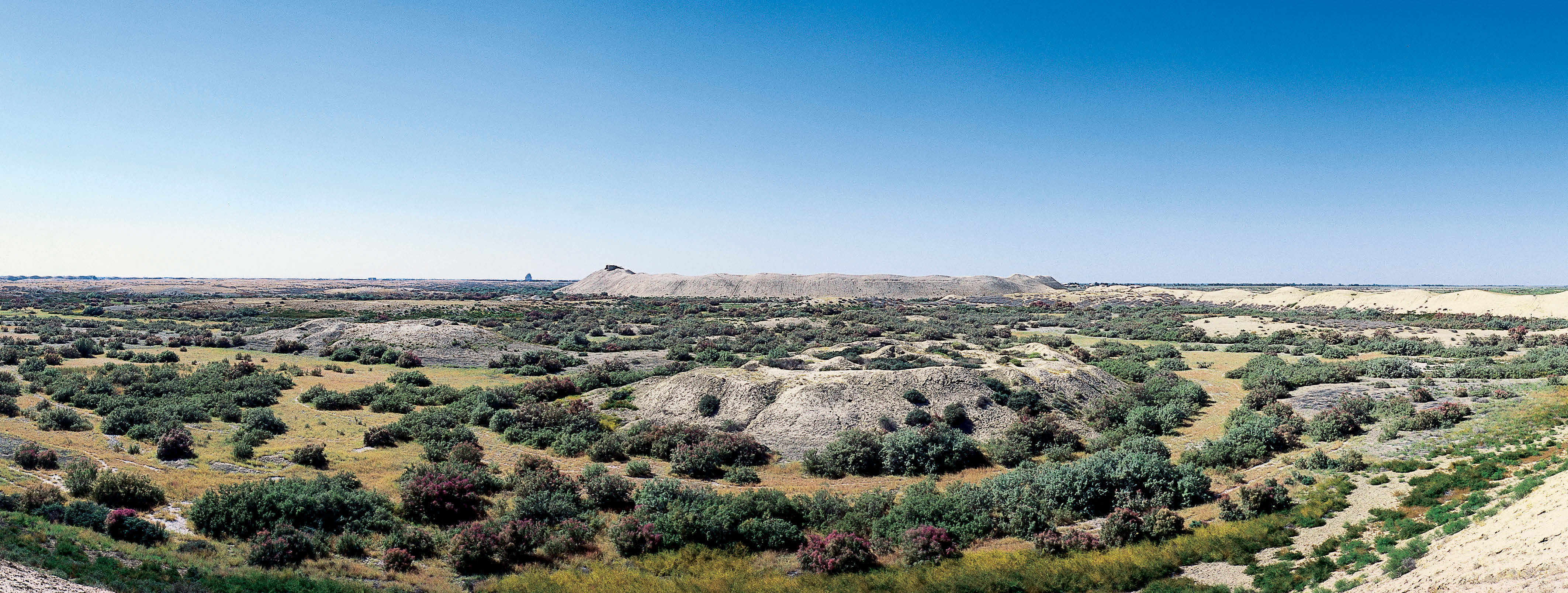
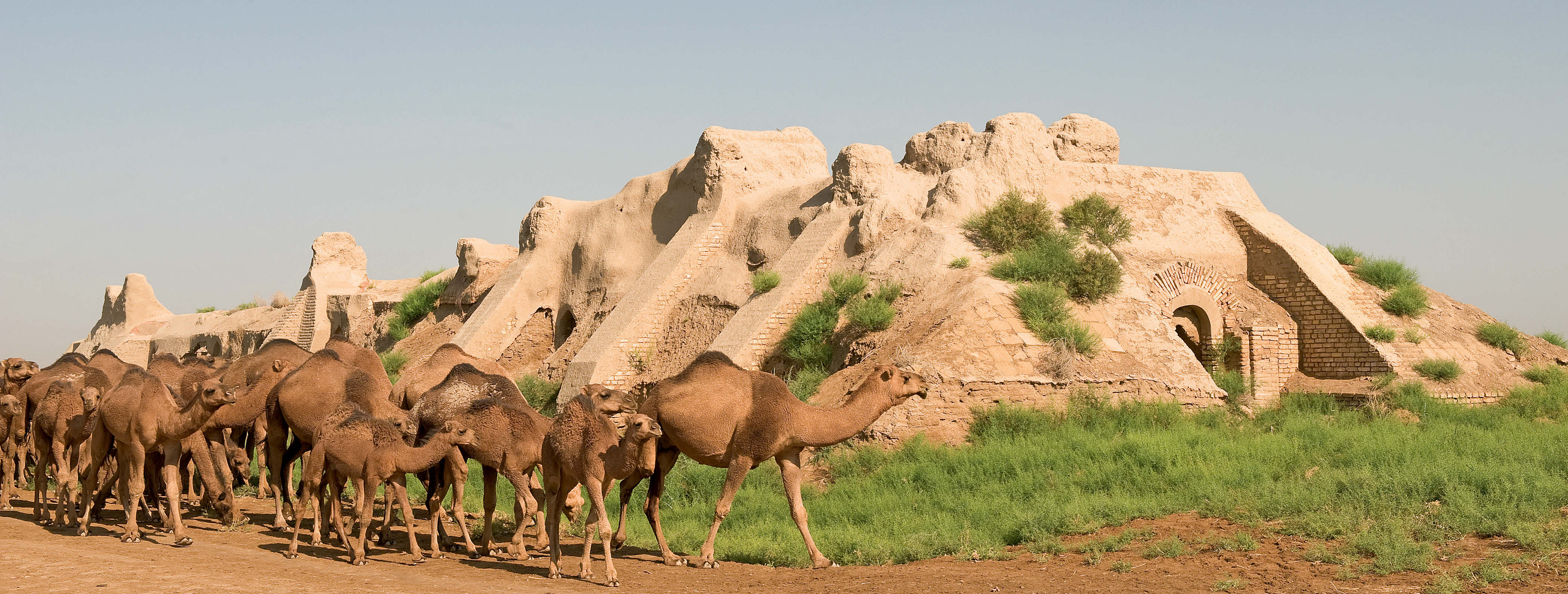
The oval-shaped building, made up of 43 rooms, in the north-eastern corner of Gyaur Kala in Merv, Turkmenistan, has been interpreted as a Christian mona- stery by the Russian archaeologist G.A. Dreswanskaya. She found a cross in the plaster on one wall, and another on a tile, both of which she dates to the fifth/ sixth centuries. In the background of the picture may be seen the older citadel of Erk Kala, which was mentioned in writing for the first time in the sixth century BCE by the Achaemenians. In the 1960s Dreswanskaya discovered to the north-east of the presumed monastery a necropolis, where she found ossuaries marked with crosses and even Jewish inscriptions, analogous to those from Mizdachkhan. However, Burchard Brentjes believed that the presumed monastery with oval floorplan belonged to the Melkites.19
位于土库曼斯坦梅尔夫 (Merv) 的吉亚乌尔卡拉 (Gyaur Kala) 东北角、由43个房间组成的椭圆形建筑,被俄罗斯考古学家 G.A. 德列斯万斯卡娅 (G.A. Dreswanskaya) 解读为一座基督教修道院。她在一面墙的灰泥中发现了一个十字架,又在另一块砖瓦上发现了一个十字架,并将二者断代为五/六世纪。照片背景中可以看到更古老的埃尔克卡拉 (Erk Kala) 卫城,阿契美尼德人 (Achaemenians) 于公元前六世纪首次在文字中提及它。20世纪60年代,德列斯万斯卡娅在据推测的修道院东北方发现了一处墓地,并在那里发现了带有十字架标记的骨灰瓮,甚至还有犹太铭文,这些与米兹达赫坎 (Mizdachkhan) 出土的同类遗物相似。然而,布尔夏德·布伦特耶斯 (Burchard Brentjes) 认为,这座平面呈椭圆形的所谓修道院属于梅尔基特派 (Melkites)。19
In light of these uncontrolled pogroms and the flight of Christian farmers and merchants into the mountains, Shapur feared for the inner stability and prosperity of the empire. For this reason, he ordered that the persecutions be limited to the clergy and Christians who had converted from Zoroastrianism, which led to the destruction of the leading clergy and the organization put in place by Papa. Both Shimun’s secretly elected successors were condemned after only a few months in office and executed along with hundreds of clerics –
鉴于这些失控的迫害暴行,以及基督徒农民和商人逃入山区,沙普尔 (Shapur) 担忧帝国内部的稳定与繁荣。因此,他下令将迫害范围限制在神职人员以及由琐罗亚斯德教 (Zoroastrianism) 改宗的基督徒之内,这导致主要神职人员以及帕帕 (Papa) 所建立的组织遭到摧毁。西缅 (Shimun) 秘密选出的两位继任者上任仅数月便遭定罪,并与数百名神职人员一起被处决——
Bishop Shahdost in 341 and Bishop Barbashmin around 345/346.42 Since appointment as bishop of Seleucia-Ctesiphon was tantamount to a death sentence, this see remained vacant for more than half a century until the election of Isaac I (in office 399–410).43
341 年的主教沙赫多斯特 (Shahdost) 与约 345/346 年的主教巴尔巴什明 (Barbashmin)。42 由于被任命为塞琉西亚-泰西封 (Seleucia-Ctesiphon) 主教无异于宣判死刑,该教座在长达半个多世纪的时间里一直空缺,直到伊萨克一世 (Isaac I) 当选(在位 399–410 年)。43
Even though there were many cases of apostasy, the great number of confessing Christians, who for the sake of their faith joyfully accepted martyrdom, is astonishing. The confessors drew the necessary inner strength from the ideal of taking up the cross of Christ. As the first martyr, Christ had willingly accepted death, and now the martyrs, as alter Christus (second Christ) followed him. Their death was, so to speak, a re-enactment of the passion of Christ. This image makes clear that during the Sassanian persecution a genuine desire for martyrdom emerged.48
尽管背教的事例众多,但宣信基督徒的数量之庞大仍令人惊叹:他们为了信仰而欣然接受殉道。宣信者从背负基督十字架的理想中汲取了必需的内在力量。作为第一位殉道者,基督曾甘愿接受死亡;如今,殉道者们作为第二个基督 (alter Christus) 跟随了他。可以说,他们的死亡是对基督受难的重演。这一意象清楚表明,在萨珊王朝迫害期间,一种真正的殉道渴望出现了。48
The Sassanian persecutions were notable for both the nearly unlimited willingness of the Christians to make sacrifices and the extra- ordinarily cruel, indeed sadistic, performance of the executions. The confessors of faith were not just beheaded, stoned or crucified, they were murdered in clever ways that caused the greatest amount of pain. For instance, the executioner slit the victim’s throat in such a way that he could tear out his tongue through the gaping wound. Others ripped off the skin of the face down to the neck or subjected them to the torture of the ‘iron combs’: ‘[The victim] was thrown to the ground with limbs outstretched, nails were driven into his hands and feet, and his body was combed over with iron combs until the flesh was torn from his bones.’44 In other instances, victims were bound hand and foot and tossed into a pit filled with countless hungry rats and other vermin, where they were eaten alive by these creatures. In special cases, martyrs suffered the ‘ninefold death’, in which the executioner, over the course of six successive days, slowly cut off the limbs: first the fingers, then the toes, wrist, ankles, forearms and lower legs, upper arms and thighs, ears, nose, and finally the head. In order to forestall a premature death from blood loss, the fresh wounds were cauterized.45 In the countryside, the Mobeds often forced the faithful laity to stone their own priests and deacons, which led many farm families to flee their villages for the mountains of Kurdistan.46 Finally, mass executions were carried out by cramming Christians together into a tight space and using as many as three hundred elephants to trample them to death.47
萨珊王朝 (Sassanian) 的迫害之所以引人注目,既在于基督徒几乎无限度地甘愿作出牺牲,也在于处决方式极其残忍,甚至可谓施虐狂式的行刑。信仰宣信者不仅被斩首、石击或钉十字架,还被以巧妙的方式杀害,以造成最大程度的痛苦。例如,刽子手以某种方式割开受害者的喉咙,使他能够从张开的伤口中把舌头扯出来。另一些人则被从面部一直剥皮到颈部,或者遭受“铁梳”之刑:“[受害者]四肢伸开被扔在地上,钉子被钉入他的双手和双脚,他的身体被铁梳反复梳刮,直到皮肉从骨头上被撕下。”44 在其他情形中,受害者被绑住手脚,扔进一个满是无数饥饿老鼠和其他害虫的坑中,在那里被这些生物活活吃掉。在特殊情况下,殉道者遭受“九重死”,即刽子手在连续六天里缓慢地割去其肢体:先是手指,然后是脚趾、手腕、脚踝、前臂和小腿、上臂和大腿、耳朵、鼻子,最后是头。为了防止因失血而过早死亡,新伤口被烧灼止血。45 在乡村,穆贝德 (Mobeds) 常常强迫平信徒用石头砸死自己的司铎和执事,这导致许多农户家庭逃离村庄,逃往库尔德斯坦 (Kurdistan) 的山区。46 最后,大规模处决的方式是把基督徒塞进一个狭窄空间,并使用多达三百头大象将他们踩死。47
In the political-military realm, Shapur II again took up the war against the Eastern Roman Empire, after he had defeated the White Huns, who had advanced into eastern Iran, in a five-year campaign. First he conquered the city of Amida, today’s Diyarbakir, after which he destroyed the attacking Emperor Julian (ruled 361–363) at Seleucia-Ctesiphon. Shapur forced his successor Jovian (ruled 363–364) to accept a humiliating peace agreement, requiring him to return to Iran the provinces conquered in 297, including Nisibis. Since Shapur granted the Christians of Nisibis safe conduct, most of them, including the biblical exegete and poet Ephrem the Great, fled to Edessa. At the same time, Shapur annexed the eastern regions of Armenia and Georgia, which had to that point been Byzantine protectorates. In the following centuries, this territorial expansion of Iran to the north-east offered the Church of the East the opportunity to engage in missionary activity in Armenia and Georgia. In Armenia it was Gregory the Illuminator who, around 314, converted King Tiridates III, whereupon the king declared Christianity the state religion; the analogous development occurred in Georgia around 337. While Georgia recognized the Council of Chalcedon around 600/608, the Armenian Church rejected it around 506 and in 555 explicitly confessed its adherence to the
在政治-军事领域,沙普尔二世 (Shapur II) 在历经五年战役击败已推进至伊朗东部的白匈奴 (White Huns) 之后,再次对东罗马帝国 (Eastern Roman Empire) 开战。他首先征服了阿米达 (Amida) 城,即今天的迪亚巴克尔 (Diyarbakir),随后在塞琉西亚-泰西封 (Seleucia-Ctesiphon) 击溃了前来进攻的皇帝尤利安 (Julian)(在位361–363年)。沙普尔迫使他的继任者约维安 (Jovian)(在位363–364年)接受一项屈辱的和约,要求他将297年征服的诸行省,包括尼西比斯 (Nisibis),归还给伊朗。由于沙普尔给予尼西比斯的基督徒安全通行权,他们中的大多数人,包括圣经注释家与诗人大厄弗冷 (Ephrem the Great),逃往埃德萨 (Edessa)。与此同时,沙普尔吞并了亚美尼亚 (Armenia) 和格鲁吉亚 (Georgia) 的东部地区,这些地区此前一直是拜占庭的保护国。在随后的几个世纪中,伊朗向东北的领土扩张为东方教会 (Church of the East) 提供了在亚美尼亚和格鲁吉亚开展传教活动的机会。在亚美尼亚,正是启蒙者格列高利 (Gregory the Illuminator) 于约314年使国王梯里达底三世 (Tiridates III) 皈依,随后国王宣布基督教为国教;类似的发展于约337年发生在格鲁吉亚。格鲁吉亚于约600/608年承认迦克墩公会议 (Council of Chalcedon),而亚美尼亚教会则于约506年拒绝该会议,并于555年明确宣认其坚持
Ruins of a church north-west of the city of Merv, Turkmenistan, which was a diocese of the Church of the East from the end of the fourth century. The church, presently called Khoruba Koshuk, was in use, probably with disruptions, till the eleventh century. Merv was an archdiocese from 544 until around the middle of the fourteenth century. In 1951 the Russian archaeologist G.A. Pugachenkova investigated the well-preserved structure and identified it as an early church from the period of the Sassanians.20 The rectangular room measures 41x11.4 metres and is divided into four larger and two smaller chambers. The framework of the vault, which was at that time still partially extant, was in the form of a slightly pointed arch. The series of rooms culminated in a three-part apse, which was oriented with deviation of almost 5° to the east. Unfortunately, not only have the arches that were still standing in 1966 been destroyed but in comparison to 1966 not even 20 per cent of the structure then extant remains. The surrounding region is used for agriculture, and rain has ruined some of the stonework. Discoveries of Sassanian pottery and coins from the time of Kavad I (ruled 488–531) and Hormizd IV (ruled 579–590) substantiate Pugachenkova’s dating. Much later, during the Seljuk seizure of power in the eleventh century, the church was converted into secular living quarters, as the presence of Seljuk pottery attests.21
土库曼斯坦梅尔夫 (Merv) 城西北的一座教堂遗址;梅尔夫自4世纪末起是东方教会 (Ch. of E.) 的一个教区。这座教堂现称霍鲁巴科舒克 (Khoruba Koshuk),可能时断时续地使用至11世纪。梅尔夫从544年至14世纪中叶左右一直是大主教区。1951年,俄罗斯考古学家普加琴科娃 (G.A. Pugachenkova) 考察了这座保存完好的建筑,并认定它是萨珊王朝 (Sassanians) 时期的一座早期教堂。20 长方形房间尺寸为41×11.4米,分为四个较大的房间和两个较小的房间。拱顶的构架当时仍部分尚存,其形状为微尖拱。这一系列房间的尽头是一个三段式半圆形后殿,其朝向为东,偏差近5°。不幸的是,1966年仍矗立的拱门不仅已被毁,而且与1966年相比,当时尚存的结构如今连20%都未留下。周边地区用于农业,雨水已毁坏部分石作。发现的萨珊陶器以及卡瓦德一世 (Kavad I,在位488–531年) 和霍尔米兹德四世 (Hormizd IV,在位579–590年) 时期的钱币,证实了普加琴科娃 (Pugachenkova) 的断代。很久以后,在11世纪塞尔柱人 (Seljuks) 夺取政权期间,这座教堂被改作世俗住所,塞尔柱 (Seljuk) 陶器的存在可资证明。21
Miaphysite creed.49 Beginning no later than 424, as a result of its successful missionary work, the Church of the East had a diocese in Armenia, which Timothy I (ruled 780–823) elevated to a metropolitan see.50 Starting in 363, eastern Georgia was for a century another target of East Syrian missionaries.51
合性论信条。49 最迟自424年起,由于其成功的传教工作,东方教会 (Ch. of E.) 在亚美尼亚 (Armenia) 设有一个教区,提摩太一世 (Timothy I)(在位780–823年)将其升格为都主教区。50 自363年起,格鲁吉亚东部 (eastern Georgia) 在一个世纪里成为东叙利亚传教士的另一个传教目标。51
One of the few bishops to escape the massacres was Bar Shaba. The Chronicle of Seert reports that around 363 Bar Shaba allegedly cured Shapur’s sister and wife Shirahan of a mental illness, whereupon she had herself baptized. Although the conversion from Zoroastrianism to Christianity brought the death penalty, the shah spared his sister and kept her from the fate of his Christian concubine Estassa, who suffered a martyr’s death. He married Shirahan to the governor of the eastern Iranian city of Merv and sent her there for her protection. She took Bar Shaba, who had been named bishop, with her to Merv, where she undertook the building of several churches. Since his name appears in the list of participants in the episcopal synod of 424, there existed such a bishop around 420. Missionaries fanned out from Merv through the province of Khorassan and farther to the east to the White Huns. It appears that the province of Khorassan, far from the capital, largely escaped the persecutions. The Russian archaeologists G.A. Pugachenkova and G.A. Dreswanskaya discovered in Merv
少数逃脱屠杀的主教之一便是巴尔·沙巴 (Bar Shaba)。《塞尔特编年史》(The Chronicle of Seert) 记载,约363年,巴尔·沙巴 (Bar Shaba) 据称治好了沙普尔 (Shapur) 的姐妹兼妻子希拉汉 (Shirahan) 的精神疾病,她随即受洗。尽管从琐罗亚斯德教 (Zoroastrianism) 改宗基督教会被处以死刑,沙阿 (shah) 却宽恕了他的姐妹,使她免遭其基督教妃嫔埃斯塔萨 (Estassa) 的命运——后者殉道而死。他将希拉汉 (Shirahan) 嫁给伊朗东部城市梅尔夫 (Merv) 的总督,并将她送到那里以保护她。她带着已被任命为主教的巴尔·沙巴 (Bar Shaba) 一同前往梅尔夫 (Merv),并在那里着手修建了数座教堂。由于他的名字出现在424年主教会议 (episcopal synod of 424) 的与会者名单中,可见约420年时存在这样一位主教。传教士从梅尔夫 (Merv) 出发,散布到呼罗珊 (Khorassan) 省,并进一步向东前往白匈奴 (White Huns) 地区。看来,远离首都的呼罗珊 (Khorassan) 省大体上未受迫害波及。俄罗斯考古学家 G.A. 普加琴科娃 (G.A. Pugachenkova) 和 G.A. 德列斯万斯卡娅 (G.A. Dreswanskaya) 在梅尔夫 (Merv) 有所发现。
Although the persecutions of Christians, which were concentrated in Mesopotamia, subsided somewhat with the establishment of peace with Byzantium, they came to an end only with the death of Ardashir II (379–383), Shapur II’s successor, in 383. Nevertheless, local pogroms continued to flare up, fuelled by fanatical Mobeds or greedy officials who wanted to appropriate the confiscated possessions of the martyrs. It is unknown how many victims they claimed. Some sources speak of 16,000 martyrs, whose names are recorded; others name as many as 190,000 dead.52 Given the initially unchecked murder, it may be assumed that many victims were not known by name, so the truth may lie closer to the higher estimate.
尽管对基督徒的迫害主要集中在美索不达米亚 (Mesopotamia),并随着与拜占庭 (Byzantium) 缔结和平而有所缓和,但直到沙普尔二世 (Shapur II) 的继任者阿尔达希尔二世 (Ardashir II)(379–383 年)于 383 年去世,迫害才告结束。然而,地方性的迫害仍不断爆发,其推动者或是狂热的祆教祭司 (Mobeds),或是觊觎没收来的殉道者财产的贪婪官员。这些迫害夺去了多少人的生命,已不得而知。一些资料提到有 16,000 名殉道者,其姓名有记载;另一些资料则称死者多达 190,000 人。52 鉴于最初的杀戮未受制止,可以推测许多受害者姓名不详,因此真相可能更接近较高的估计。
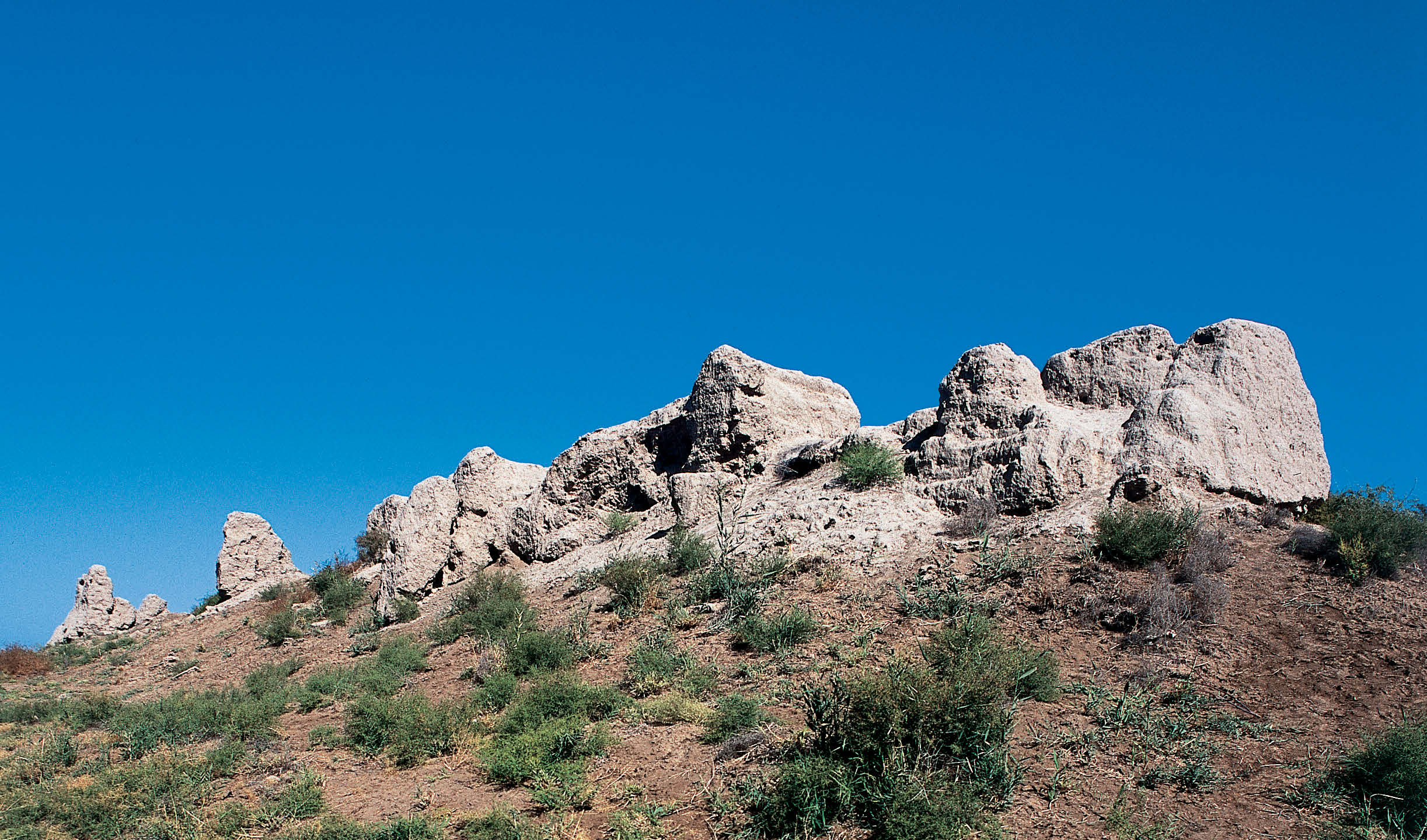
the remains of a church, a presumed Christian monastery, and of Christian sepultures.53 planets, mountains, trees, fish and wooden idols. Missionary activity among the Manichees and Marcionites was likewise allowed. In order to create a lasting counterweight to the Zoroastrian clergy, the shah encouraged the Christian bishops to convene a synod, under the leadership of the Byzantine envoy Bishop Maruta, in the capital for the purpose of establishing a new hierarchy.
一座教堂的遗迹、一座据推测为基督教修道院的遗迹,以及基督教墓葬的遗迹。53 行星、山脉、树木、鱼和木制偶像。在摩尼教徒 (Manichees) 和马吉安派 (Marcionites) 中的传教活动同样被允许。为了对琐罗亚斯德教教士 (Zoroastrian clergy) 形成持久的制衡,沙阿 (shah) 鼓励基督教主教在首都召开一次主教会议 (synod),由拜占庭使节主教马鲁塔 (Maruta) 主持,目的是建立新的教阶体系。
The Nestorian Church called Khoruba Koshuk, north of Merv, after its restoration in 2012.
2012年修复后,位于梅尔夫 (Merv) 以北、名为霍鲁巴·科舒克 (Khoruba Koshuk) 的聂斯托利派教会 (Nestorian Church)。
The accession to the throne of Shapur III (ruled 383–388) marked a positive change for the Christians, as he renewed diplomatic contact with Byzantium. When the White Huns threatened the northern borders of both empires around 395, the one-time enemies moved closer together. The successor of Vahram IV (ruled 388–399), Yazdgerd I (ruled 399–420), also continued the policy of détente pursued by his two predecessors. His pro-Christian position grew out of political considerations, since in times of peace with Byzantium the Christians represented valuable allies, who enabled the shah to extricate himself somewhat from the clutches of the nobility and the Mobeds. In 410 Yazdgerd issued an edict of toleration, which granted the Christians freedom of worship;54 as before, however, apostate Zoroastrians faced the death penalty. Nevertheless, Christian missionaries were now free to convert the pagans, living mainly in northern Iran, who worshipped
沙普尔三世 (Shapur III) 登基(在位 383–388 年)对基督徒而言标志着积极转变,因为他恢复了与拜占庭 (Byzantium) 的外交接触。约 395 年,当白匈奴 (White Huns) 威胁两个帝国的北部边境时,昔日的敌人彼此靠拢。瓦赫拉姆四世 (Vahram IV)(在位 388–399 年)的继任者伊嗣俟一世 (Yazdgerd I)(在位 399–420 年)也延续了其两位前任奉行的缓和政策。他亲基督徒的立场源于政治考量,因为在与拜占庭 (Byzantium) 和平时期,基督徒是宝贵的盟友,他们使沙阿 (shah) 得以在一定程度上摆脱贵族和祆教祭司 (Mobeds) 的钳制。410 年,伊嗣俟一世 (Yazdgerd I) 颁布宽容敕令,授予基督徒信仰自由;54 然而,和以前一样,叛教的琐罗亚斯德教徒 (Zoroastrians) 仍面临死刑。尽管如此,基督教传教士如今可以自由地使异教徒皈依,这些异教徒主要居住在伊朗北部 (northern Iran),他们崇拜
For the Zoroastrian magicians and Mobeds, however, the rapid growth of the Church, which met with approval even in the highest levels of the nobility, was a thorn in the side. At the same time, they tried without success to convert the Christian Armenians to the doctrine of Zarathustra by means of crude violence, leading to serious tensions with Byzantium. Yazdgerd thus came under pressure from the jealous clergy, the power-hungry nobility and the frustrated military. Rebellion against the king threatened. The aggressive and thoughtless behaviour of a few Christian clerics, such as the priest Hashu and the ascetic Narsai, both of whom desecrated and destroyed a fire temple, provided the pretext
然而,对于琐罗亚斯德教 (Zoroastrian) 的术士和穆贝德 (Mobeds) 而言,教会 (the Church) 的迅速增长——甚至得到最高层贵族的认可——却如芒在背。与此同时,他们曾试图以粗暴的暴力手段使信奉基督教的亚美尼亚人皈依琐罗亚斯德 (Zarathustra) 的教义,但未能成功,这导致与拜占庭 (Byzantium) 之间出现严重紧张。伊嗣俟 (Yazdgerd) 因此受到心怀嫉妒的教士、贪恋权力的贵族和受挫的军方的压力。针对国王的叛乱一触即发。少数基督教教士——如祭司哈舒 (Hashu) 和苦修者纳尔赛 (Narsai),二人亵渎并摧毁了一座火庙——的咄咄逼人且轻率的行为,提供了口实。
for renewed pogroms. The refusal of the guilty parties to atone for their crimes by rebuilding the temple resulted in a persecution of incredible force.55 ‘The city squares echoed with people who were being tortured in prison with violence and cunning. The decorated churches were destroyed, their mortar strewn about; from the roofs, once so glorious to behold, bridges were made. No church remained standing.’56 Yazdgerd’s successor, Vahram V (ruled 421–438), further intensified the extensive persecutions and had the Christian cemeteries desecrated.57 Christians fled in massive numbers to the Byzantine Empire. But, when the shah demanded the handing over of the refugees from Emperor Theodosius II, the latter entered Mesopotamia in 422 and imposed a peace agreement on the shah that explicitly maintained freedom of religion for the Christians in the Sassanian Empire and the Zoroastrians in Byzantium.
以发动新一轮的迫害。有罪各方拒绝通过重建神庙来为其罪行赎罪,结果招致了一场极其猛烈的迫害。55 “城市广场上回荡着那些在狱中遭受暴力和诡计折磨之人的声音。装饰华丽的教堂被毁,灰泥四散;曾经如此壮丽悦目的屋顶被拆下,用来架桥。没有一座教堂得以留存。”56 亚兹德格尔德 (Yazdgerd) 的继任者瓦赫拉姆五世 (Vahram V)(在位421—438年)进一步加剧了这场大规模的迫害,并下令亵渎基督教墓地。57 大量基督徒逃往拜占庭帝国 (Byzantine Empire)。但是,当沙阿 (shah) 要求皇帝狄奥多西二世 (Theodosius II) 交出难民时,后者于422年进入美索不达米亚 (Mesopotamia),迫使沙阿接受了一项和平协议,该协议明确保障了萨珊帝国 (Sassanian Empire) 境内基督徒以及拜占庭 (Byzantium) 境内琐罗亚斯德教徒 (Zoroastrians) 的宗教自由。
The general pogroms ended with Piroz; later martyrs were individuals who, in most cases, were apostate converts from the state religion.
全面迫害到卑路斯(Piroz)时结束;后来的殉道者多为个人,且大多数是从国教叛教改宗者。
It is truly astounding that the Christians accepted their martyrdom practically without resistance, and no rebellion arose. Presumably the inner fire of faith and the ideal of following Christ absorbed all the vital energies of the victims, so that armed opposition was not an option. However, around 542 Shah Chosrau I (ruled 531–579) did not dare to carry out a death sentence against Patriarch Mar Aba, out of fear of a Christian revolt, and sent him instead into exile in Azerbaijan.59 Presumably at that time Christians constituted the majority in individual provinces of Mesopotamia.
真正令人震惊的是,基督徒几乎毫无抵抗地接受了殉道,也没有爆发任何叛乱。想必,信仰的内在火焰和追随基督的理想耗尽了殉道者的全部生命活力,以致武装反抗并非可行之选。然而,约在542年,沙阿·霍斯劳一世 (Shah Chosrau I)(531–579年在位)因惧怕基督徒起义,不敢对牧首马·阿巴 (Patriarch Mar Aba) 执行死刑,而是将他流放至阿塞拜疆 (Azerbaijan)。59 想必当时基督徒在美索不达米亚 (Mesopotamia) 的个别行省中已占多数。
The organization of the Church of the East
东方教会 (Ch. of E.) 的组织
The Christians were granted only a brief respite, for with the ascension of Yazdgerd II (ruled 438–457) the throne was occupied by a king fundamentally hostile to Christianity, who wanted to cleanse his empire of all non-Zoroastrian religions. From 445 to 457 persecutions raged in Mesopotamia and Armenia, where the patriarch was also numbered among the victims. The worst massacre took place in 446/447 in the metropolitan see of Karka of Beit Selok, modern Kirkuk, where ten bishops and the enormous number of 153,000 faithful were allegedly slaughtered. At the end of the massacre, the leading Mobed, Tahmyezgard, professed Christianity, whereupon the king had him crucified upside down.58 Yazdgerd’s death in 457 brought an end to the pogroms, since Hormizd III (ruled 457–459) and Piroz I (ruled 459–484) were well disposed towards the Christians. However, in the final year of his reign Piroz forbade Christianity, resulting in another wave of persecution. Piroz’s death in a battle against the White Huns soon saved the Christians.
基督徒只获得了短暂的喘息,因为随着伊嗣俟二世 (Yazdgerd II,在位438–457年) 登基,王位被一位从根本上敌视基督教的国王占据,他想要从他的帝国中清除所有非琐罗亚斯德教 (Zoroastrian) 的宗教。从445年到457年,迫害在美索不达米亚 (Mesopotamia) 和亚美尼亚 (Armenia) 肆虐,那里的牧首也被列入受害者之中。最严重的屠杀发生在446/447年,地点是贝特塞洛克的卡尔卡 (Karka of Beit Selok) 都主教区,即今基尔库克 (Kirkuk),据称有十位主教和数量惊人的153,000名信徒被杀害。屠杀结束时,首席穆贝德 (Mobed) 塔赫米耶兹加德 (Tahmyezgard) 公开宣称信仰基督教,国王因此下令将他倒钉在十字架上。58 伊嗣俟二世于457年去世,结束了这些大屠杀,因为霍尔木兹三世 (Hormizd III,在位457–459年) 和卑路斯一世 (Piroz I,在位459–484年) 对基督徒抱有好感。然而,卑路斯在其统治的最后一年禁止基督教,导致又一轮迫害。卑路斯不久后在对抗白匈奴 (White Huns) 的战役中阵亡,从而使基督徒得救。
The clergy of the Church of the East, terribly decimated by the persecutions under Shapur II, took advantage of the liberal climate under Yazdgerd I to rebuild their organization and eliminate the hierarchical redundancies between the East Syrians and the West Syrians who had been deported from Rome. This occurred with the express approval of the shah at the synod of 410, which was led by the Byzantine envoy Maruta. This Bishop Maruta, whose diocese of Maipherkat lay to the north-east of Edessa on the Byzantine–Sassanian border, was in three regards the saviour of the Church of the East. First, in 399 he negotiated a lasting peace between Byzantium and Rome. Second, around 406 he gained from the king the release from prison of the archbishop of Seleucia-Ctesiphon, Isaac (ruled 399–410), who had been slandered by his own bishops. Third, he wrested approval from Yazdgerd for an episcopal synod and guided this synod to a successful conclusion.
东方教会 (Ch. of E.) 的神职人员因沙普尔二世 (Shapur II) 治下的迫害而损失惨重,他们利用亚兹德格尔德一世 (Yazdgerd I) 统治下的宽松环境,重建其组织,并消除东方叙利亚人 (East Syrians) 与从罗马被驱逐的西方叙利亚人 (West Syrians) 之间的教阶重叠。此事在410年主教会议 (synod of 410) 上得到沙阿 (shah) 的明确批准,该会议由拜占庭使节马鲁塔 (Maruta) 主持。这位马鲁塔主教 (Bishop Maruta) 的教区迈费尔卡特 (Maipherkat) 位于埃德萨 (Edessa) 东北、拜占庭—萨珊边界 (Byzantine–Sassanian border) 上,他在三个方面是东方教会 (Ch. of E.) 的拯救者。第一,399年,他促成了拜占庭 (Byzantium) 与罗马 (Rome) 之间持久的和平。第二,约406年,他从国王那里争取到释放塞琉西亚—泰西封大主教伊萨克 (Isaac,在位399–410年) 出狱,后者曾遭其自己的主教们诬陷。第三,他从亚兹德格尔德 (Yazdgerd) 那里争取到批准召开一次主教会议 (episcopal synod),并引导这次会议圆满结束。
The Synodicon Orientale, written in the ninth
《东方会议录》(Synodicon Orientale),成书于九世纪
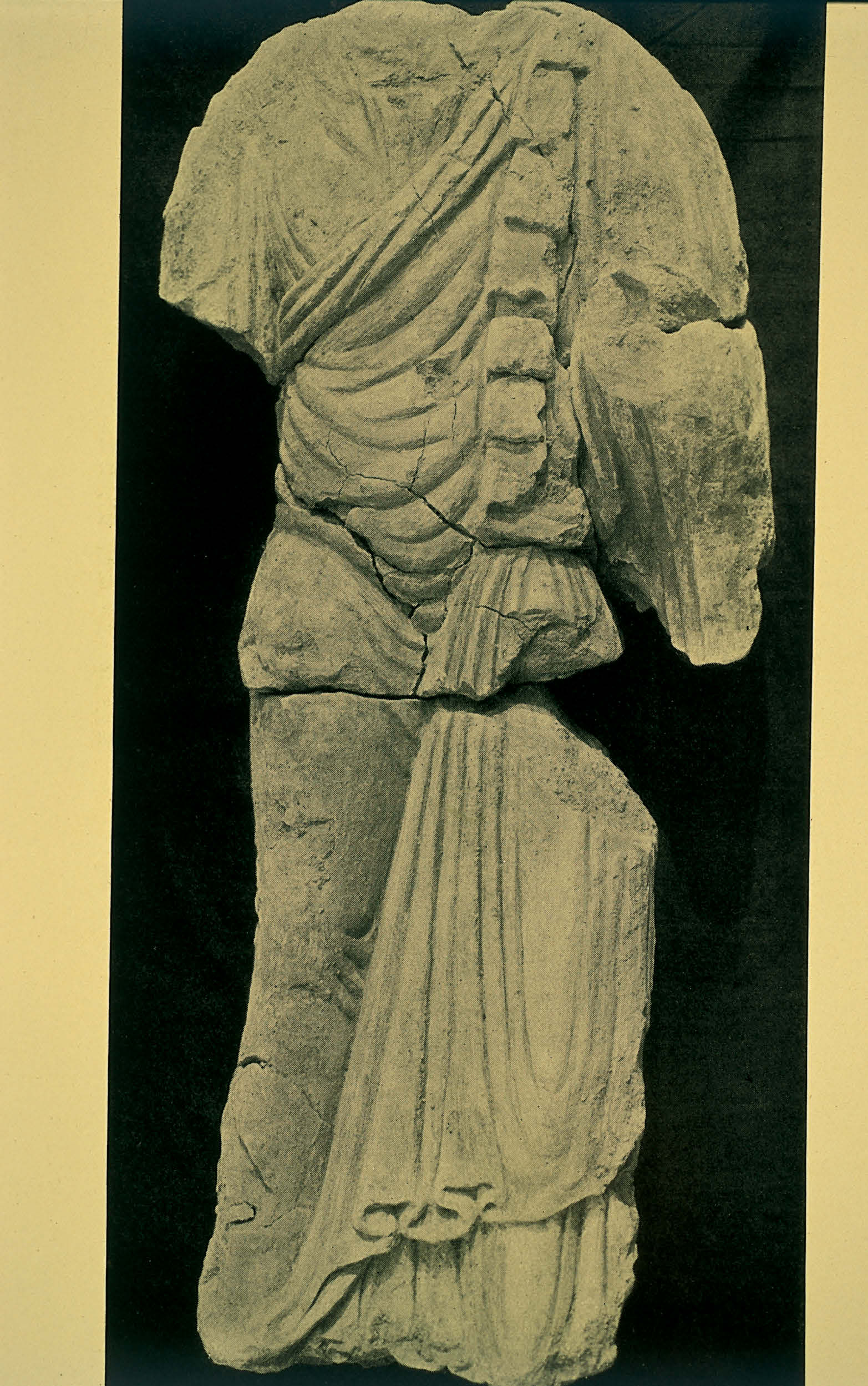
Life-size male stucco figure with traces of paintings from a church of Seleucia-Ctesiphon from the late sixth century. Beneath this church are found the remains of an earlier church. Although it cannot be determined which Nestorian church was involved, the discovery nevertheless proves that the Church of the East also used figurative representations.22 century, informs us about the course of the synod and its 21 canons, which 36 East Syrian bishops signed.60 After the bishops had ratified the decisions of the Council of Nicea, they were summoned before the grand vizier and the military commander of the capital.61 The two Sassanian dignitaries confirmed Isaac as bishop of the imperial capital and his authority over the other dioceses of the empire. ‘Since Isaac, the catholicos, went in and out before the shah, he made him head of all the Christians of the East, according to his pleasure. If, however, anyone rises up against him and opposes his will, we should be told, [so that he] will be condemned.’62 None of the bishops dared to oppose the royal order; rather, they confirmed it in Canon XII: ‘We all collectively accept that we bishops of all part of the Orient and our successors are subject in all that is rightfully commanded to the bishop-catholicos, the master of the bishops, the metropolitan of Seleucia-Ctesiphon, until the arrival of Christ.’ The above proclamation and the synodal decision were of great consequence, since they affirmed the shah’s right to appoint the catholicos – that is, the head of the Church of the East. Not only the East Syrians but all the Christians of the empire were later under his authority, and he could impose his will with the help of the civil judiciary. Since the synodal acts mention no Western patriarch as authority, it is clear that the Church of the East understood itself to be an autonomous and autocephalous self-determining communion. confirms his ordination. Every two – later every four – years a synod convened by the catholicos took place, which the bishops were required to attend. Above the ordinary bishops stands the metropolitan-bishop, whose responsi-bilities extend over an entire province. In 410 six of these were established, listed here in hierarchical order: the great metropolitan see of the capital, the metropolitan sees of Beit Lapat (Gondeshapur), Nisibis, Prat de Maishan (Basra), Arbela and Karka of Beit Selok (Kirkuk). However, the metropolitan, who oversaw six to twelve dioceses, had no authority to issue instructions: ‘he is a help and an encouragement to them [the bishops] in all that is proper. If discord occurs among them, he establishes peace with the counsel of love, not with the force of power. If an issue cannot
一尊真人大小的男性灰泥像,带有彩绘痕迹,出自塞琉西亚—泰西封(Seleucia-Ctesiphon)一座六世纪晚期的教堂。该教堂下方发现了更早一座教堂的遗迹。虽然无法确定涉及的是哪一座聂斯托利派教堂,但这一发现仍然证明,东方教会也使用具象图像。22 世纪介绍了该会议的经过及其21条教规;36位东叙利亚主教签署了这些教规。60 主教们批准尼西亚(Nicea)会议的决定后,被召至首都的大维齐尔和军事统帅面前。61 两位萨珊王朝显贵确认以撒(Isaac)为帝国首都的主教,并确认他对帝国其他教区的权威。“既然天主教宗以撒出入沙阿面前,他便依自己的意愿立他为东方全体基督徒的首领。然而,若有人起来反对他、违逆他的意愿,就应当告知我们,[以便此人]受到惩处。”62 没有一位主教敢反对王命;相反,他们在第十二条教规中予以确认:“我们全体一致接受:东方各地的我们众主教及我们的继任者,在一切正当命令之事上,都服从主教—天主教宗、众主教之首、塞琉西亚—泰西封都主教,直至基督再临。”上述宣告和会议决议意义重大,因为它们确认沙阿有权任命天主教宗——也就是东方教会的首领。后来,受他管辖的不仅有东叙利亚人,还有帝国境内所有基督徒;他还能借助民事司法机构贯彻自己的意志。会议记录没有提到任何西方宗主教作为权威,因此显然,东方教会认为自己是一个自治、自主、能够自我治理的共融团体。确认其祝圣。每2年——后来改为每4年——由天主教宗召集一次会议,主教必须出席。普通主教之上设有都主教,其职责范围遍及整个教省。410年设立了六个都主教区,按等级顺序如下:首都的大都主教座,以及贝特拉帕特(Beit Lapat;贡迪沙普尔〔Gondeshapur〕)、尼西比斯(Nisibis)、普拉特·德·迈尚(Prat de Maishan;巴士拉〔Basra〕)、阿贝拉(Arbela)和贝特塞洛克的卡尔卡(Karka of Beit Selok;基尔库克〔Kirkuk〕)等都主教座。然而,负责统辖6至12个教区的都主教无权发号施令:“他在一切合宜之事上,给予他们[主教们]帮助和鼓励。若他们之间发生纷争,他便以爱的劝勉缔造和平,而不凭权力强制。若有问题无法
In order to overcome the hierarchal duplication between the Aramaic-Persian Christians and the Greek Christians deported from the Roman Empire, the synod defined the means of election and the duties of each level of the clergy. Only one bishop could reside in each city and region, and he had to be ordained by at least three bishops after the hearing of the faithful. Then the designated bishop must travel to the metropolitan of the capital, who ‘completes’ him – that is,
为了克服阿拉米—波斯基督徒 (Aramaic-Persian Christians) 与从罗马帝国 (Roman Empire) 被驱逐的希腊基督徒 (Greek Christians) 之间的教阶重叠,该主教会议界定了选举方式以及各级神职人员的职责。每个城市和地区只能有一位主教驻留,并且他必须在听取信徒意见后,由至少三位主教祝圣。随后,被指定的主教必须前往首都的都主教 (metropolitan) 那里,由后者“完成”他——也就是说,
The ruins of the Nestorian Church of Mar Shmuni in Beth Bedeh, northern Iraq, which was destroyed by dynamite in 1988. be resolved amicably, he writes of it to the great metropolitan [catholicos], who is entitled to give orders and decide’ (Canon XVIII). The metropolitan organizes an annual provincial synod with his bishops. Upon the death of a metropolitan, the bishops and the faithful of the province choose his successor, whom the catholicos confirms in his office through ordination. mutilated eunuchs – a practice found among ascetics – are not permitted into the clergy (Canon II). Bishops and priests may celebrate the Eucharist only in church on Sundays; private masses in homes are forbidden. To each bishop is permitted a maximum of one chorepiscopus as visitor and one archdeacon. The latter should ‘be the bishop’s arm, tongue and honorer, whose hidden will is made manifest through him’ (Canon XIV). Under the priest figure the deacon and the hypodeacon, who support him and who also function as exorcists and drive demons out of the possessed. The important office of bailiff is open only to the laity; he oversees the income and expenses of the dioceses, as well as their property. Thus the Church of the East was supported by nine hierarchical levels:
位于伊拉克(Iraq)北部贝特·贝德(Beth Bedeh)的马尔·什穆尼(Mar Shmuni)聂斯托利派教堂遗址;该教堂于1988年被炸药炸毁。得到友好解决后,他便将此事报告给大都主教〔宗主教〕;大都主教有权下令并作出裁决”(第十八条法规)。大都主教与其主教们每年举行1次省级主教会议。大都主教去世后,该省的主教和信众选出继任者,由宗主教祝圣并确认其职务。残缺的宦官——苦修者中有此做法——不得进入圣职人员行列(第二条法规)。主教和司铎只能在星期日于教堂举行圣体礼;禁止在家中举行私人弥撒。每位主教最多可设1名巡访各地的乡村主教(chorepiscopus)和1名总执事。后者应当“作主教的手臂、舌头和荣耀;主教隐而未宣的意愿,要藉着他显明”(第十四条法规)。司铎之下是辅佐司铎的执事和副执事,他们也担任驱魔者,把附身者身上的魔鬼赶出去。重要的管事职务只向平信徒开放;管事负责监督教区的收入、支出及其财产。因此,东方教会的等级体系由9个层级构成:
Within his diocese, the bishop is given wide-ranging authority: he can ordain priests and deacons, teach and build churches; the monasteries are also under his jurisdiction. Priests must be at least thirty years old and be able to recite the Psalms in Syriac, ‘so that the servants of Christ do not resemble the laity as idiots in word and doctrine’ (Canon XVI). Self-
在其教区内,主教被赋予广泛的权力:他可以按立司铎和执事,教导并建造教堂;修道院也归其管辖。司铎必须至少年满三十岁,并能用叙利亚语 (Syriac) 诵念《诗篇》(Psalms),“以免基督的仆人在言语和教义上像无知者一样与平信徒无异”(第十六条教规 (Canon XVI))。自—
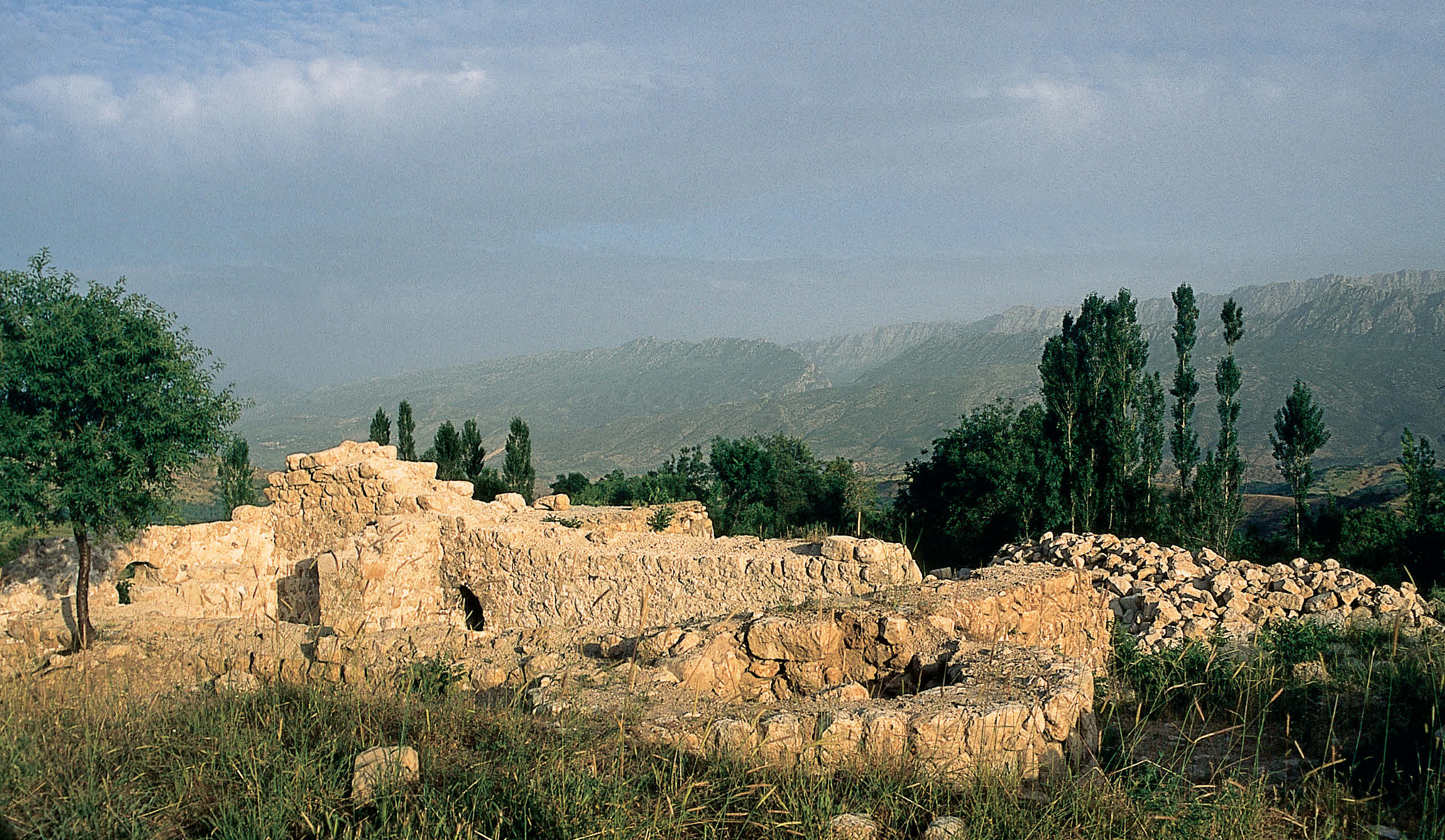
The once Nestorian, later Chaldean, Church of Mar Abraham in Deir Aboun, which means Monastery of our Father, northern Iraq. The original monastery enjoyed exemption from taxation under Patriarch Mar Aba I (540–552) and was linked with the grave of Noah by Arab authors in the thirteenth century. Fiey believes, however, that these are the ruins of the monastery of Mar Awa, of which nothing else is known.23 patriarch, metropolitan, bishop, archdeacon, chorepiscopus, priest, deacon, hypodeacon and reader. As a layman, the bailiff did not belong to the clergy. was the most severe ecclesiastical sanction. Less dramatic was the revocation of an ecclesiastical office, which meant a return to the lay state; milder still was a temporary suspension, from which the offender could be returned to his office after sufficient atonement.
曾属聂斯托利派 (Nestorian)、后属迦勒底派 (Chaldean) 的马尔·亚伯拉罕教堂 (Church of Mar Abraham),位于伊拉克北部的代尔阿本 (Deir Aboun),其意为“我们父的修道院”。原修道院在宗主教马尔·阿巴一世 (Patriarch Mar Aba I, 540–552) 治下享有免税权,并在十三世纪被阿拉伯作者 (Arab authors) 与挪亚之墓 (grave of Noah) 联系起来。然而,菲耶 (Fiey) 认为,这些是马尔·阿瓦修道院 (monastery of Mar Awa) 的废墟,除此之外别无所知。23 宗主教、都主教、主教、总执事 (archdeacon)、乡村主教 (chorepiscopus)、司铎、执事、副执事 (hypodeacon) 和读经员。作为平信徒,管家 (bailiff) 不属于神职人员。这是最严厉的教会制裁。不那么戏剧性的是撤销教会职务,这意味着回归平信徒身份;更温和的则是暂时停职,在充分补赎之后,犯过者可以恢复其职务。
The synod then ordered that the feast of Epiphany, the 40 days of Lent and the Resurrection had to be celebrated in common and everywhere on the same day (Canon XII). Finally, punishment for possible disobedience was laid out: ‘Whoever dares to disobey these orders, the fire of God will descend upon him, the wrath of God will remain over him, and he will be anathematized by the entire Church of Christ in the four regions of the world. The anathema and the punishment of the shah will remain over him’ (Canon XVII). Anathema, expulsion from the community of believers,
该主教会议随后规定,主显节 (Epiphany)、大斋期的四十天 (Lent) 和复活节 (Resurrection) 必须共同庆祝,并在各地于同一天庆祝(第十二条教规 (Canon XII))。最后,还规定了对可能的不服从行为的惩罚:“凡胆敢违抗这些命令者,上帝之火将降临于他,上帝的愤怒将留在他身上,他将被世界四方的整个基督教会 (Church of Christ) 绝罚 (anathema)。绝罚和沙阿 (shah) 的惩罚将留在他身上”(第十七条教规 (Canon XVII))。绝罚,即从信徒团体中逐出,
With these regulations, the Church of the East constituted itself as a clearly structured hierarchical pyramid, at whose apex was the catholicos, endowed with nearly unlimited executive authority, whose decisions were as far as necessary imposed by the civil judiciary. However, his instrument of power was blunted if the civil judiciary refused to emphasize the decisions of the catholicos, so temporary schisms often arose. Only the biennial, later quadrennial, synods, comparable to a parliament, checked
凭借这些规章,东方教会 (Ch. of E.) 将自身构建为一个结构清晰的等级制金字塔,其顶端是大公宗主 (catholicos),被赋予几乎不受限制的行政权,其决定在必要时由世俗司法机构强制执行。然而,如果世俗司法机构拒绝支持大公宗主的决定,他的权力手段就会受到削弱,因此常常出现暂时的分裂。唯有两年一度、后来改为四年一度的教务会议,堪比议会,制约着
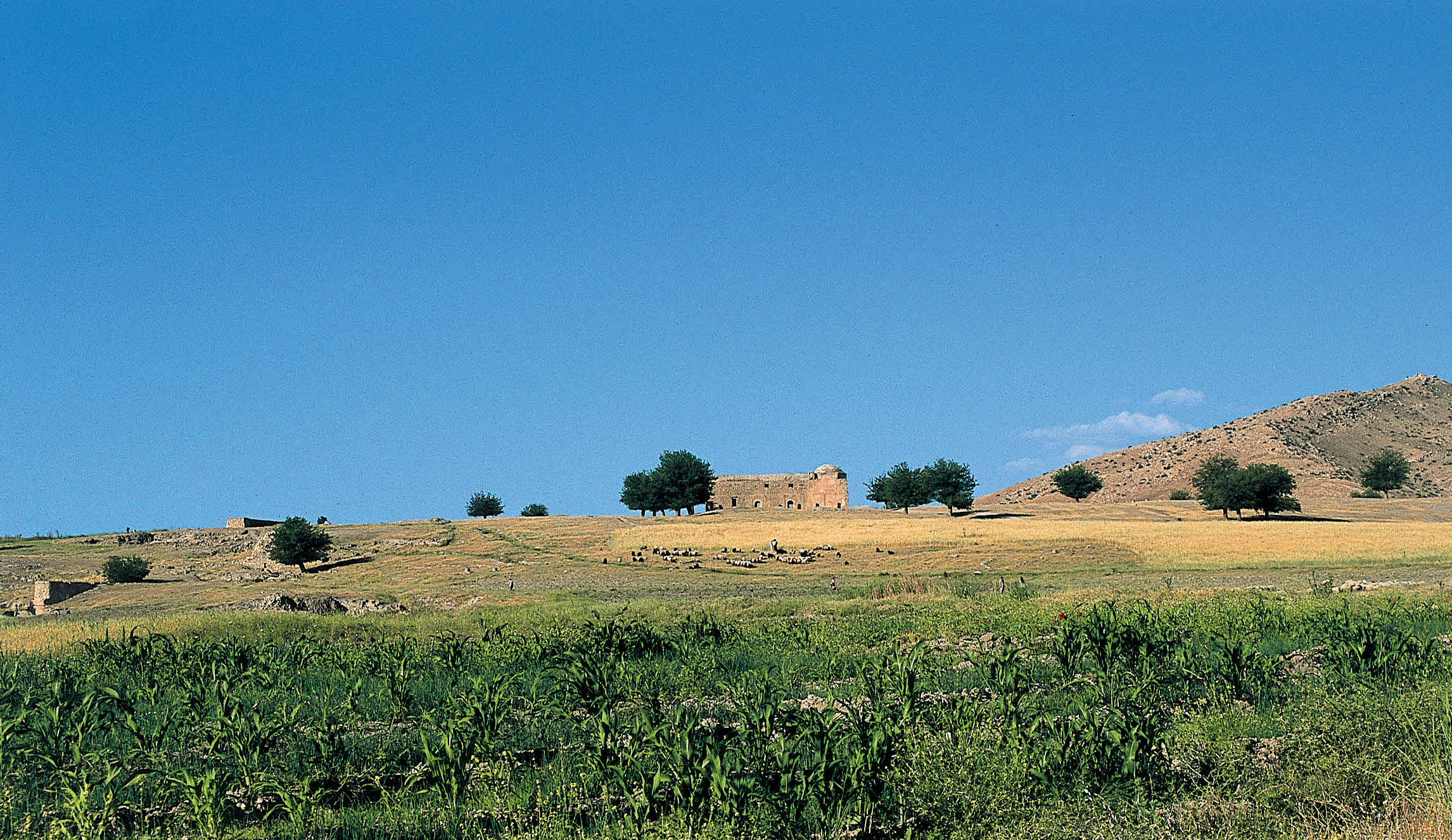
his omnipotence. The inner cohesion of the Church rested on the unconditional adoption of Antiochene dogma and the corresponding two-nature doctrine, which was taught at such great educational institutions as those in Nisibis and Seleucia-Ctesiphon. The majority of bishops and abbots of the Church of the East came out of these forgings of cadres. It was only thanks to this strict organization that the Church of the East, which never enjoyed the support of the state, was able to hold its own in an often hostile environment.
他的全能。教会的内在凝聚力取决于对安提阿学派教义的无条件接受以及相应的二性论,而这一教义是在诸如尼西比斯 (Nisibis) 和塞琉西亚-泰西封 (Seleucia-Ctesiphon) 等伟大的教育机构中传授的。东方教会 (Ch. of E.) 的大多数主教和修道院院长都出自这些培养骨干的熔炉。正是依靠这种严格的组织,从未得到国家支持的东方教会 (Ch. of E.) 才得以在往往充满敌意的环境中站稳脚跟。
Patriarch Acacius (in office 485–496) declared in 486 that ‘from now on, no bishop may ordain anyone to the diaconate [which was the entryway to a career in the clergy] unless he lives in a legal union and begets children’.64 This canon imposed marriage upon candidates for a clerical career. The driving force behind this decision was the controversial metropolitan of Nisibis, Bar Sauma (†496), who was powerful because of his friend- ship with Shah Piroz and who had a relationship with a concubine, a nun.65 Celibacy was permitted only for monks. Since many bishops were appointed from the monastic community, bishops lived celibately despite the synod’s declaration. The 497 synod of Catholicos Babai (497–502) confirmed not only the decisions of the synod of 486 but also ordered that all clergy in the Church of the East, ‘from the patriarch to the lowest-ranking, enter into a public bond of matrimony with a woman and produce children’.66 Given the scandals involving child abuse and the illegitimate children of priests and bishops that have shocked the modern Catholic Church,67 the argument of Catholicos Acacius that ‘it is much better to take a wife than to burn with desire’68 seems sensible. In this regard, Acacius could appeal to the First Letter to the Corinthians: ‘For it is better to marry than to be aflame with passion’ (1 Cor 7:9). In 544, however, Mar Aba I annulled the marriage requirement for patriarchs and declared that they had to remain celibate.69 For bishops, on the other hand, marriage was permitted until the twelfth century.
宗主教阿卡修斯 (Patriarch Acacius,在任485–496年) 于486年宣布:“从今以后,任何主教都不得按立任何人担任执事 [这是进入神职生涯的入口],除非此人生活在合法婚姻中并生育子女”。64 这项教规将婚姻强加于有志于神职生涯的候选人。这一决定背后的推动者是颇具争议的尼西比斯 (Nisibis) 都主教巴尔·萨乌马 (Bar Sauma, †496),他因与沙阿·皮鲁兹 (Shah Piroz) 的友谊而权势显赫,并与一名身为修女的妾侍有染。65 独身仅允许修士。由于许多主教是从修道团体中选任的,因此尽管有主教会议的声明,主教们仍过着独身生活。大公宗主巴巴伊 (Catholicos Babai, 497–502) 于497年召开的主教会议不仅确认了486年主教会议的决定,还命令东方教会 (Ch. of E.) 的所有神职人员,“从宗主教到最低等级者,都要与一名女子缔结公开的婚姻关系并生育子女”。66 鉴于涉及儿童虐待以及神父和主教非婚生子女的丑闻曾令现代天主教会震惊,67 大公宗主阿卡修斯 (Catholicos Acacius) 的论点——“娶妻远比欲火中烧好得多”68——似乎不无道理。在这一点上,阿卡修斯可以援引《哥林多前书》:“与其欲火攻心,倒不如嫁娶为妙”(1 Cor 7:9)。然而,544年,马尔·阿巴一世 (Mar Aba I) 废除了对宗主教的婚姻要求,并宣布他们必须保持独身。69 另一方面,对主教而言,婚姻则一直获准延续到12世纪。
Astonishingly, the synod refrained from determining the means of selecting the catholicos. This was settled by Catholicos Mar Abba in 544 as follows: the bishop of Kashkar informs the metropolitans of Beit Lapat, Prat of Maishan, Arbil and Beit Selok, who come to the city accompanied by three bishops each. They nominate the patriarch, who must be confirmed by the notables and faithful of Ctesiphon. Later Patriarch Joseph widened the circle of archbishops who could participate in the election process to include all the metropolitan sees of the interior, and in 585 Patriarch Ishoyahb I added that in times of crisis, such as persecutions, a minimum of three metropolitans would suffice.63 Practice showed, however, that a candidate could hardly succeed without the consent of the shah. Notable among the criteria for election is the fact that the faithful of each diocese had the right to participate in the selection of the bishop and could success- fully boycott bishops imposed upon them from the outside. In light of the lack of interest in their Church on the part of many West European Christians today, the question arises of whether such direct democracy in the selection of clergy might not help reduce the obvious distance between clergy and faithful.
令人惊讶的是,教务会议 (synod) 并未确定遴选大公宗主教 (Catholicos) 的方式。这一问题由大公宗主教马尔·阿巴 (Mar Abba) 于 544 年按如下方式解决:卡什卡尔 (Kashkar) 的主教通知贝特·拉帕特 (Beit Lapat)、迈尚的普拉特 (Prat of Maishan)、阿尔比勒 (Arbil) 和贝特·塞洛克 (Beit Selok) 的都主教 (metropolitans),这些都主教各由三位主教陪同前往该城。他们提名宗主教,而宗主教必须得到泰西封 (Ctesiphon) 显贵与信众的确认。后来,宗主教约瑟 (Patriarch Joseph) 扩大了可参与选举进程的大主教范围,将内地所有都主教教座都包括在内;585 年,宗主教伊绍雅布一世 (Patriarch Ishoyahb I) 又补充说,在迫害等危机时期,至少三位都主教即可。63 然而实践表明,候选人若未获沙阿 (shah) 同意,几乎不可能成功。选举标准中值得注意的是,每个教区的信众有权参与主教遴选,并能成功抵制外部强加给他们的主教。鉴于当今许多西欧基督徒对其教会缺乏兴趣,问题随之而来:这种在神职人员遴选中的直接民主,是否可能有助于缩小神职人员与信众之间显而易见的距离。
As a consequence of the rapid expansion of the Church of the East, it became necessary to adapt the duties and rights of outlying metropolitan sees to their geographical circumstances and to create two categories of archbishops. First were those entitled to elect the catholicos, the metropolitan sees of the interior, who covered the heartland of the Church of the East. These were, in hierarchical order, the metropolitan see of the patriarch, as well as the provinces of 1, Beit
由于东方教会 (Ch. of E.) 的迅速扩张,有必要使边远都主教区 (outlying metropolitan sees) 的职责与权利适应其地理环境,并设立两类大主教。第一类是有权选举大公宗主 (catholicos) 者,即内陆的都主教区,它们覆盖了东方教会的核心地带。按等级顺序,这些包括宗主教 (patriarch) 的都主教区,以及 1、贝特 (Beit) 诸教省。
The celibacy of East Syrian clerics was a thorn in the side of the Zoroastrians and offered them a perpetual target. In order to take the wind out of the Mobeds’ sails in this regard, the synod of
东叙利亚教士的独身制是琐罗亚斯德教徒 (Zoroastrians) 的眼中钉,并为他们提供了一个长期攻击的靶子。为了在这方面挫败穆贝德 (Mobeds) 的锐气,……会议
(Right) The old Nestorian Church of Mar Giwargis in Bidial, northern Iraq. The name Bidial is derived from the Syriac Beit El, which means House of God. The church, which dates from the sixth century, was destroyed by Saddam Hussein’s troops during the so-called Anfal campaign in 1988 and rebuilt shortly thereafter.
(右)位于伊拉克北部比迪亚尔 (Bidial) 的古老的聂斯托利派 (Nestorian) 马尔·吉瓦尔吉斯教堂 (Mar Giwargis)。比迪亚尔 (Bidial) 这一名称源自叙利亚语 (Syriac) 的贝特埃尔 (Beit El),意为上帝之家。这座教堂的历史可追溯至六世纪,在1988年所谓的安法尔行动 (Anfal campaign) 期间被萨达姆·侯赛因 (Saddam Hussein) 的军队摧毁,不久后得以重建。
(Bottom) Iraqi Christians in Khabur, north-eastern Syria.
(下)叙利亚 (Syria) 东北部哈布尔 (Khabur) 的伊拉克 (Iraqi) 基督徒。
The Patriarchate of Seleucia-Ctesiphon | 79
塞琉西亚-泰西封宗主教区 (The Patriarchate of Seleucia-Ctesiphon) | 79
Lapat; 2, Nisibis; 3, Prat de Maishan (Basra); 4, Mosul; 5, Arbela; 6, Beit Selok (Kirkuk); and 7, at times Halwan in western Iran. Second were the metropolitan sees of the outer regions, which were farther away from the capital and thus not entitled to vote for the catholicos. According to a fourteenth-century history these allegedly included the following archdioceses: 8, Jerusalem; 9, Edessa; 10, Rew Ardashir in Fars (southern Iran); 11, Merv in Khorassan (Turkmenistan); 12, Herat (Afghanistan); 13, Fatraba (Qatar); 14, China (possibly today’s Beijing); 15, India; 16, Barda (in today’s Azerbaijan); 17, Damascus; 18, Ray near Teheran; 19, Tabaristan (northern Iran); 20, Dailam on the Caspian Sea; 21, Samarqand; 22, Turkistan (Southern Kazakhstan?); 23, Halih (location unsure); 24, Sigistan (Seistan in south-western Afghanistan); 25, Khan Baliq (today’s Beijing) or much more probable Jan Baliq (Beshbaliq north-east of Turfan in Xinjiang) and Alfaliq (Almalik in north-western Xinjiang, China); 26, Tangut (the provinces of Gansu and Ningxia, as well as the Ordos region of China); and 27, Kashgar and Nawakat (in western Xinjiang and in Kyrgyzstan).70 In addition, there had long been the metropolitan see of Atropatene in Azerbaijan. Around the tenth century Cairo and Alexandria were also metropolitan sees. Towards the end of the eighth century there may have been a metropolitan see of Tibet, as well.71 At that time, the Church of the East extended from west to east over more than eighty degrees of latitude, from the Euphrates to Manchuria and the Yellow Sea, a distance corresponding to over 7000 kilometres.
拉帕特(Lapat);2,尼西比斯(Nisibis);3,普拉特德迈尚(Prat de Maishan,巴士拉);4,摩苏尔(Mosul);5,阿尔贝拉(Arbela);6,贝特塞洛克(Beit Selok,基尔库克);7,有时还有伊朗西部的哈勒万(Halwan)。其次是外地的都主教辖区,这些地区离首都较远,因此无权投票选举宗主教。据一部十四世纪的史书记载,这些地区据称包括以下总教区:8,耶路撒冷;9,埃德萨(Edessa);10,法尔斯(伊朗南部)的雷乌阿尔达希尔(Rew Ardashir);11,呼罗珊(今土库曼斯坦)的梅尔夫(Merv);12,赫拉特(Herat,阿富汗);13,法特拉巴(Fatraba,卡塔尔);14,中国(可能是今天的北京);15,印度;16,巴尔达(Barda,今阿塞拜疆);17,大马士革(Damascus);18,德黑兰(Teheran)附近的雷伊(Ray);19,塔巴里斯坦(Tabaristan,伊朗北部);20,里海沿岸的代拉姆(Dailam);21,撒马尔罕(Samarqand);22,突厥斯坦(Turkistan,哈萨克斯坦南部?);23,哈利赫(Halih,地点不详);24,锡吉斯坦(Sigistan,即阿富汗西南部的锡斯坦〔Seistan〕);25,汗八里(Khan Baliq,今北京),或更可能是雅恩巴里克(Jan Baliq,即新疆吐鲁番东北的别失八里〔Beshbaliq〕)和阿尔法里克(Alfaliq,即中国新疆西北部的阿力麻里〔Almalik〕);26,唐兀(Tangut,中国甘肃、宁夏两省以及鄂尔多斯地区);27,喀什(Kashgar)和纳瓦卡特(Nawakat,分别位于新疆西部和吉尔吉斯斯坦)。70此外,阿塞拜疆的阿特罗帕特尼(Atropatene)都主教区早已存在。约在十世纪,开罗和亚历山大也成为都主教区。八世纪末,西藏或许也设有都主教区。71当时,东方教会从西向东横跨八十多个经度,从幼发拉底河延伸至满洲和黄海,距离相当于7000多公里。
In contrast to the archbishops of the interior, who were elected by the clergy and their laity, the patriarch himself nominated the metropolitans of the outer regions, with the exception of the sees of Rew Ardashir in Fars and, at times, Ray near Teheran. The nominees were almost always monastic missionaries from the Mesopotamian heartland. The archbishops of the outer regions
与内陆地区的大主教不同——他们由神职人员及其平信徒选举产生——宗主教本人任命外围地区的都主教,但法尔斯 (Fars) 的雷夫阿尔达希尔 (Rew Ardashir) 教座以及有时德黑兰 (Teheran) 附近的雷伊 (Ray) 教座除外。被任命者几乎总是来自美索不达米亚 (Mesopotamian) 腹地的修士传教士。外围地区的大主教
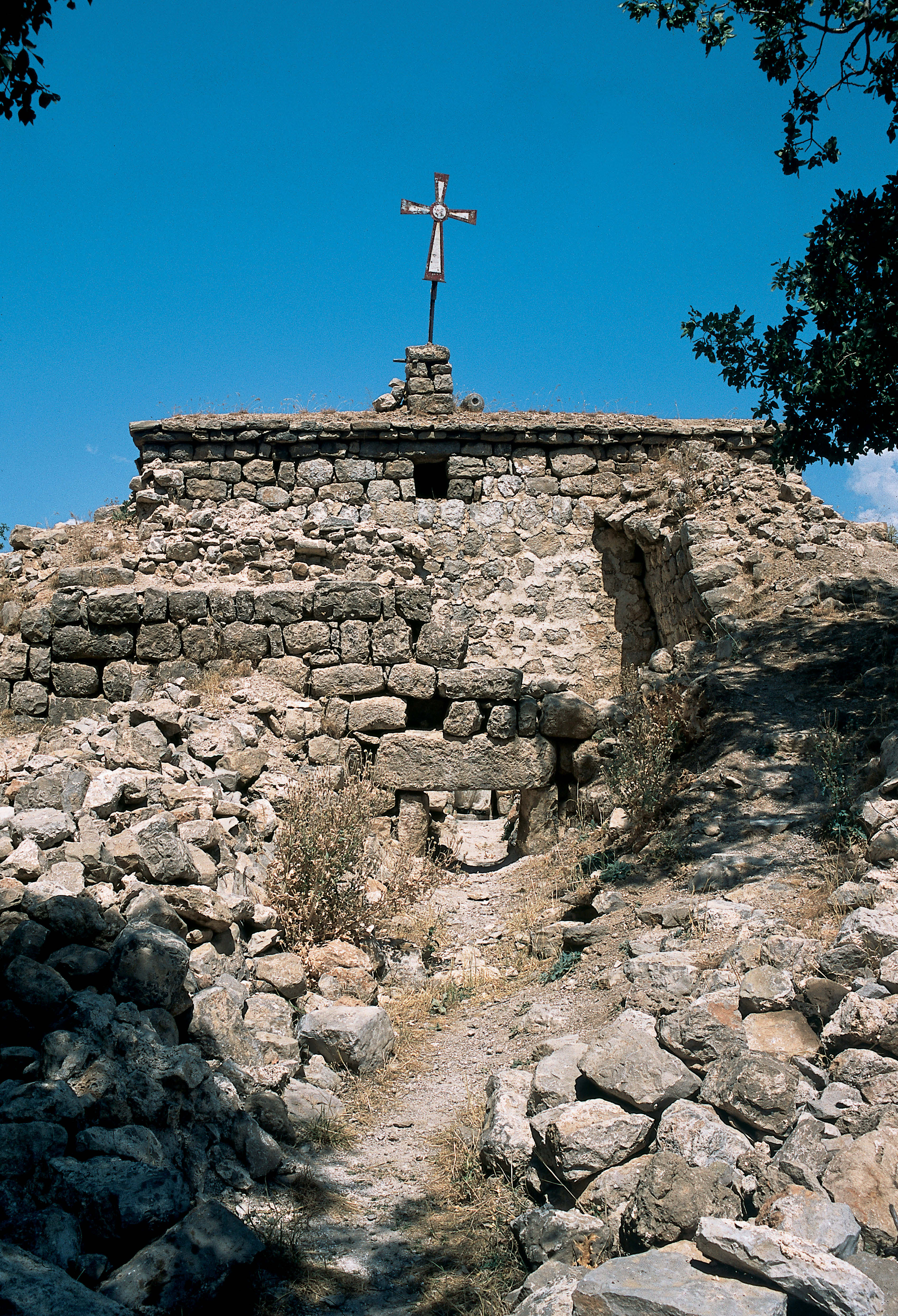
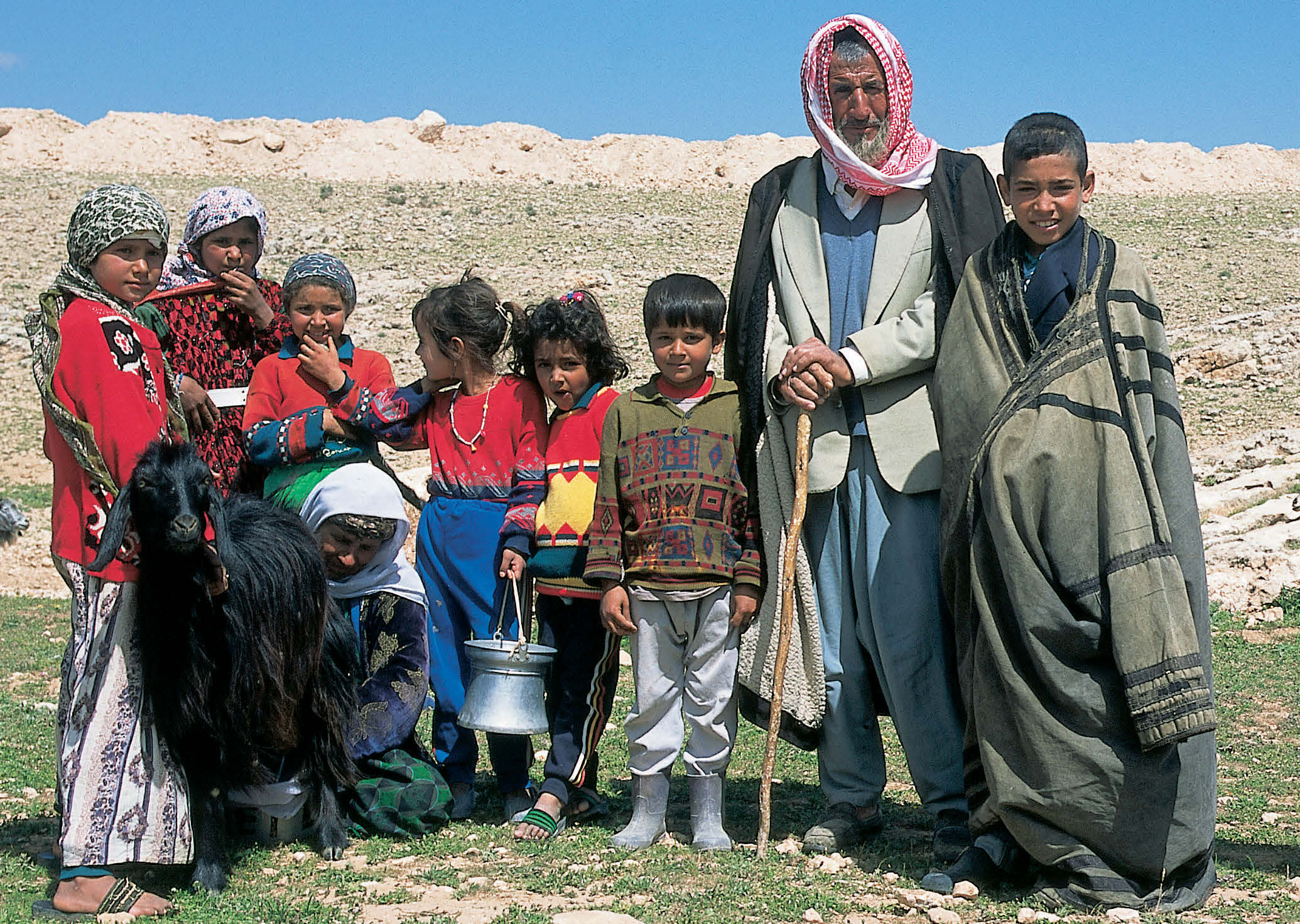
The 3620-metre-high mountain range of Dare Rosh in Azerbaijan, Iran, divides the plains of Urmiah from the Kurdish mountain region. Today Urmiah is, besides Teheran, the most important stronghold of the Church of the East in Iran. possessed greater autonomy than did their colleagues in the interior, since they did not have to participate in the patriarch’s synods. It sufficed for them to send the patriarch a written report, including a creed and a description of the current state of affairs, once every six years. Furthermore, the metropolitans could themselves consecrate their bishops, without these having to go to the patriarch for confirmation. Most of the dioceses of Asia had their see in a city, but there were also bishops assigned to nomadic peoples, who adapted their residence to the migration patterns of their charges. Because of the huge expanse of certain archdioceses in the outer regions, the metropolitans and bishops had at their disposal several archdeacons and chorepiscopi.72
位于伊朗阿塞拜疆 (Azerbaijan) 的达雷罗什 (Dare Rosh) 山脉海拔3620米,将乌尔米耶 (Urmiah) 平原与库尔德 (Kurdish) 山区隔开。如今,乌尔米耶 (Urmiah) 是伊朗境内除德黑兰 (Teheran) 之外东方教会 (Ch. of E.) 最重要的据点。他们享有比内陆同僚更大的自治权,因为他们不必参加宗主教 (patriarch) 召开的主教会议 (synods)。他们只需每六年向宗主教递交一份书面报告,其中包括一份信经 (creed) 和对当前局势的描述。此外,都主教 (metropolitans) 可以自行祝圣他们的主教 (bishops),而无需后者前往宗主教处获得确认。亚洲 (Asia) 的大多数教区 (dioceses) 都将主教座 (see) 设在城市中,但也有一些主教被派往游牧民族 (nomadic peoples),他们随其所牧养群体的迁徙模式而调整居所。由于外围地区 (outer regions) 某些大教区 (archdioceses) 幅员辽阔,都主教 (metropolitans) 和主教 (bishops) 可支配数名总执事 (archdeacons) 和乡村主教 (chorepiscopi)。72
Syriac was used as the liturgical language in all provinces and dioceses. However, during worship the hymns were sung and the Scripture read in the vernacular language, and the same was true of the sermons. In contrast to Islam, which forbids the translation of the Koran, conveyed to the prophet Mohammed by God in Arabic, the Nestorians translated missals, hymns and psalms, as well as excerpts from the New Testament, into local languages. So there have been discovered in Central Asia ancient documents in Middle Persian (Pahlavi), Arabic, Old Turkish, Sogdian, Uigur, Mongolian and Chinese.
叙利亚语 (Syriac) 曾在所有行省和教区中用作礼仪语言。然而,在礼拜期间,赞美诗是用本地语言吟唱的,圣经也是用本地语言诵读的,讲道亦然。与伊斯兰教 (Islam) 不同——伊斯兰教禁止翻译《古兰经》(Koran),因为它是真主用阿拉伯语 (Arabic) 传达给先知穆罕默德 (Mohammed) 的——聂斯托利派 (Nestorians) 将弥撒经书、赞美诗和诗篇,以及《新约》(New Testament) 选段,翻译成当地语言。因此,在中亚 (Central Asia) 发现了用中古波斯语(巴列维语)(Middle Persian/Pahlavi)、阿拉伯语 (Arabic)、古突厥语 (Old Turkish)、粟特语 (Sogdian)、回鹘语 (Uigur)、蒙古语 (Mongolian) 和汉语 (Chinese) 写成的古代文献。
In order to strengthen the unity of the Church,
为了加强教会的合一,
The final declaration of independence of the Church of the East
东方教会 (Ch. of E.) 的最终独立宣言
‘The Oriental bishops may no longer appeal to the Western patriarchs against their [own] patriarch. Rather every judgement that does not find its resolution before him shall be preserved for the judgement of Christ. [The patriarch] shall judge all his subjects; judgement over him, however, shall be reserved for Christ, who chose him, elevated him, and placed him at the head of his Church’ (Synodal statement of 424).73
“东方主教不得再向西方宗主教上诉,以控告他们[自己的]宗主教。相反,凡不能在他面前得到解决的裁决,都应留待基督审判。[宗主教]应审判他所有的属下;但对他本人的审判,则应保留给基督,就是那位拣选他、高举他,并立他为自己教会之首的基督。”(424年主教会议声明,Synodal statement of 424)。73
The synod of 424 was, after that of 410, the most important episcopal conference of the Church of the East. In the background of this synod stood renewed intra-ecclesiastical disputes and turmoil during the persecutions of 420–422. First, Yazdgerd I deposed Patriarch Ma’na (in office 420) – who was supported by a military leader – because he would not carry out the reconstruction of destroyed fire temples. He was followed by Patriarch Dadisho (in office 421–456), who was legitimately elected, but jealous bishops slandered him as a Roman spy before Shah Vahram V, who threw him in prison. The rebellious bishops did not shy away from getting help from Zoroastrians and another leader of the army and appointing an anti-patriarch, Faraboht (in office 421), whom the majority of bishops rejected.74 After the establishment of Byzantine–Sassanian peace in 422, Dadisho was released, whereupon he returned embittered to his Monastery of Noah’s Ark on Mount Djudi. Only when, at the synod, all six metropolitans and 30 additional bishops tearfully implored him to return to his office did he agree.75 to him. This declaration of independence did not imply a schism, since the creed of Nicea provided a common foundation with the Western patriarchates. However, the patriarch of the Church of the East is on an equal footing with the Western patriarchs and is as such fully autonomous in his actions. In this vision, the universal Church consists not in a single, global hierarchy but rather in an ecumenical com- munion of independent Churches.
424年的主教会议是继410年会议之后东方教会 (Ch. of E.) 最重要的主教会议。这次会议的背景是420–422年迫害期间重新爆发的教会内部争端和动荡。首先,伊嗣俟一世 (Yazdgerd I) 废黜了牧首马纳 (Ma’na)(在任420年)——他得到一位军事领袖的支持——因为他不愿执行重建被毁火庙的任务。继任他的是牧首达迪绍 (Dadisho)(在任421–456年),他经合法选举产生,但心怀嫉妒的主教们在沙阿瓦赫拉姆五世 (Shah Vahram V) 面前诬告他是罗马间谍,沙阿便将他投入监狱。叛乱的主教们不惮于从琐罗亚斯德教徒和另一位军队领袖那里获取帮助,并任命了一位对立牧首法拉博赫特 (Faraboht)(在任421年),而大多数主教拒绝承认他。74 在422年拜占庭—萨珊和平确立后,达迪绍获释,随后他愤懑地回到朱迪山上的挪亚方舟修道院 (Monastery of Noah’s Ark on Mount Djudi)。只有在会议上,所有六位都主教和另外30位主教含泪恳求他重返其职位时,他才同意。75 在他看来,这一独立宣言并不意味着分裂,因为尼西亚信经 (creed of Nicea) 提供了与西方各牧首区共有的基础。然而,东方教会 (Ch. of E.) 的牧首与西方各牧首地位平等,并因此在行动上完全自主。在这种愿景中,普世教会并不在于一个单一的全球性等级体系,而在于独立教会之间的普世共融。
The Church of Mar Giwargis in Khosrow Abad near Delemon (Salmas), Azerbaijan, Iran, whose bishop, according to tradition, participated in the Council of Nicea in 325. The inscription in the stone above the portal reports that the first structure was erected in 520. The church, which dates from the eleventh century and was restored by Catholic missionaries in 1845, was destroyed by an earthquake in 1930.
位于伊朗阿塞拜疆 (Azerbaijan) 地区德莱蒙 (Delemon)(萨尔马斯 (Salmas))附近的霍斯罗阿巴德 (Khosrow Abad) 的马尔·吉瓦尔吉斯教堂 (Church of Mar Giwargis),据传统,其主教曾参加325年的尼西亚公会议 (Council of Nicea)。入口上方石头上的铭文记载,最初的建筑建于520年。该教堂可追溯至11世纪,1845年由天主教传教士修复,1930年毁于地震。
After the closing of the School in Nisibis in 363 it resumed its teaching around 457, thanks to the initiative of Bishop Barsauma (†496). In 449, while still a student, Barsauma had to flee Edessa when Monophysite agitators deposed the Dyophysite bishop of Edessa, Ibas (in office 435–457), for a short time. In 457 a second exodus of adherents of the Antiochene-Dyophysite theology began with the death of Ibas, who had been restored to his office. Then, in 471, when the renowned theologian and poet Narsai (†503) left Edessa in great haste on account of renewed unrest, Bishop Barsauma persuaded him to take over leadership of the School of Nisibis. When Emperor Zeno closed the School of the Persians in Edessa in 489 he finally drove the Antiochene-
尼西比斯学校 (School in Nisibis) 于363年关闭后,约在457年恢复教学,这得益于主教巴尔萨乌马 (Barsauma)(†496)的推动。449年,巴尔萨乌马 (Barsauma) 还是学生时,不得不逃离埃德萨 (Edessa),因为一性论派 (Monophysite) 鼓动者一度废黜了埃德萨的二性论 (Dyophysite) 主教伊巴斯 (Ibas)(在任 435–457 年)。457年,随着已复职的伊巴斯 (Ibas) 去世,安提阿—二性论神学 (Antiochene-Dyophysite theology) 追随者的第二次出走开始了。随后,在471年,当著名神学家和诗人纳尔赛 (Narsai)(†503)因再度动荡而匆匆离开埃德萨 (Edessa) 时,主教巴尔萨乌马 (Barsauma) 说服他接掌尼西比斯学校 (School of Nisibis) 的领导权。489年,当芝诺皇帝 (Emperor Zeno) 关闭埃德萨的波斯人学校 (School of the Persians in Edessa) 时,他最终驱逐了安提阿—
The synod of 424 confirmed the autocephaly of the Church of the East and the absolute primacy of its patriarch-catholicos. It is Christ himself who appoints the patriarch, as he once had Peter, as his vicar on Earth. Only he can judge him, not the bishops subordinate
424年的主教会议 (synod of 424) 确认了东方教会 (Ch. of E.) 的自主地位 (autocephaly),以及其宗主教-大公 (patriarch-catholicos) 的绝对首席权。是基督 (Christ) 亲自任命宗主教,正如他曾经让彼得 (Peter) 作他在世上的代表。只有基督才能审判宗主教,而非其下属的主教们。
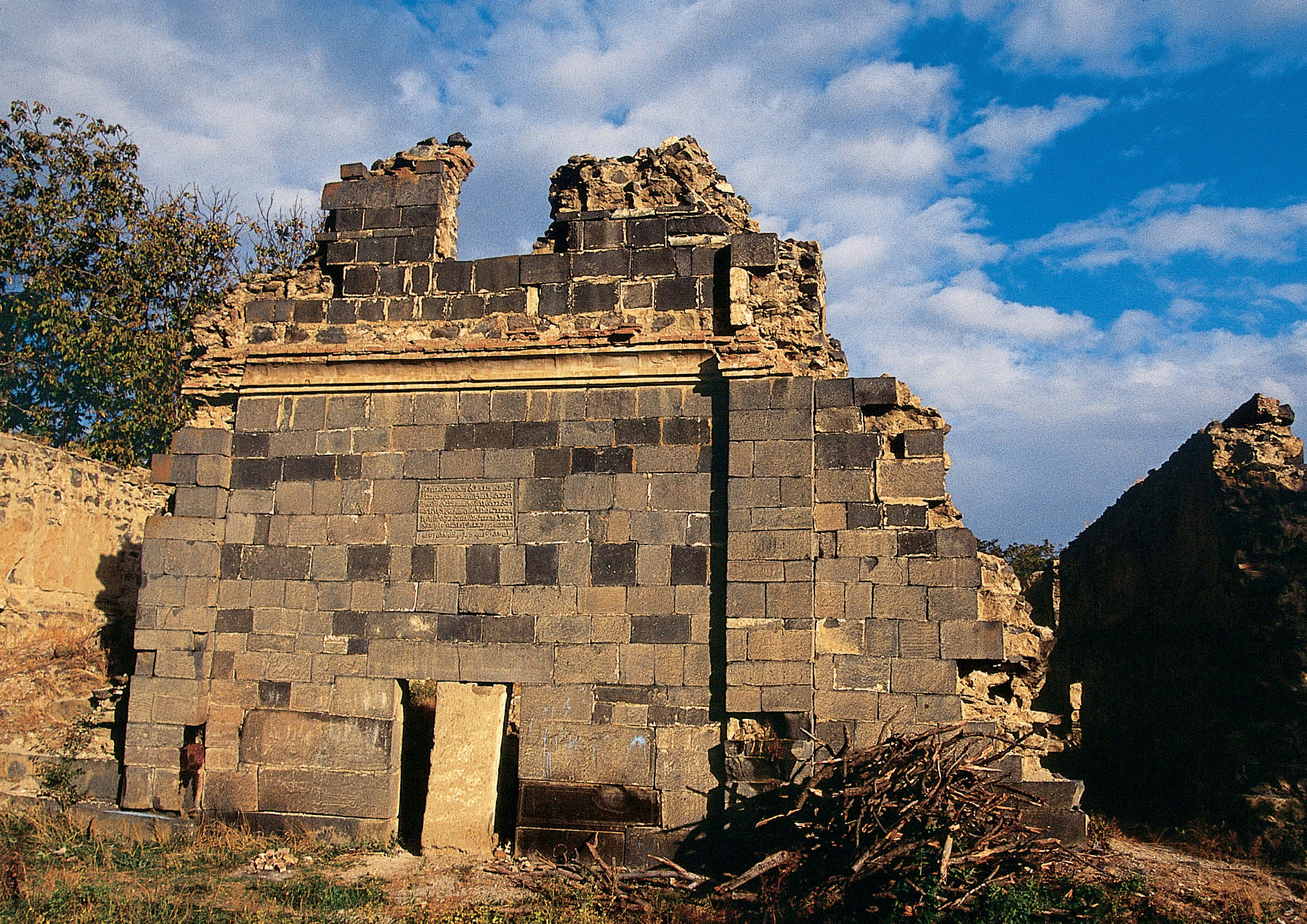
Dyophysite theology out of the Byzantine Empire. With the establishment of the School of Nisibis within the Sassanian Empire, an end was brought to the anachronism that the East Syrian patriarchal see was in the Sassanian capital, but the educational centre for the higher clergy was in the hostile Eastern Roman Empire. Nisibis now became the theological élite school of the Church of the East. Thanks to Narsai, nicknamed ‘the harp of the Holy Spirit’, the theology of Theodore of Mopsuestia, whose work he helped translate from Greek into Syriac, became the standard for East Syrian orthodoxy.76 The study of the works of Aristotle and his students supplemented the instruction in biblical exegesis. And so in Nisibis, Greek ideas and Syrian culture came into contact with one another; the School became the gate through which Greek culture captured the mind of Mesopotamia.
二性论神学从拜占庭帝国 (Byzantine Empire) 传出。随着尼西比斯学校 (School of Nisibis) 在萨珊帝国 (Sassanian Empire) 内建立,一种不合时宜的局面得以终结:东叙利亚宗主教座 (East Syrian patriarchal see) 位于萨珊帝国首都,而高级神职人员的教育中心却位于敌对的东罗马帝国 (Eastern Roman Empire)。尼西比斯 (Nisibis) 如今成为东方教会 (Ch. of E.) 的神学精英学校。多亏了绰号“圣灵的竖琴”的纳尔赛 (Narsai),摩普苏埃斯蒂亚的狄奥多雷 (Theodore of Mopsuestia) 的神学——他曾协助将其著作从希腊文译为叙利亚文——成为东叙利亚正统教义的标准。76 对亚里士多德 (Aristotle) 及其学生著作的研究,补充了圣经解经的教学。于是,在尼西比斯 (Nisibis),希腊思想与叙利亚文化彼此接触;该校成为希腊文化俘获美索不达米亚 (Mesopotamia) 心智的门户。
The nave of the Church of St Sergius in Bos Vatch. Beneath the church is an incubation room still used today by both Christians and Muslims, in which mentally ill people are healed overnight by relics encased in the walls.
博斯瓦奇 (Bos Vatch) 的圣塞尔吉乌斯教堂 (Church of St Sergius) 的中殿。教堂下方有一间孵育室 (incubation room),至今仍被基督徒和穆斯林使用;精神疾病患者在此过夜,靠嵌在墙内的圣髑 (relics) 得以治愈。
In its heyday the School of Nisibis had about 1000 students, whose lives were governed by monastic principles. At least for the duration of their studies, they had to forgo worldly pleasures, take a vow of chastity and, presumably, also place their personal possessions at the disposal of the community. The curriculum was divided into two cycles. In the first, students learned correctly to read, write and recite from memory the Psalms. The second cycle included philosophy, rhetoric and, above all, exegesis, which, in accordance with the Antiochene historical understanding of the Bible, interpreted Scripture in its literal sense. Geography, astronomy, secular history, and as a separate course of study, medicine came later.
在其鼎盛时期,尼西比斯学校 (School of Nisibis) 约有1000名学生,他们的生活受修道院准则的规范。至少在学习期间,他们必须放弃世俗享乐,发贞洁愿,并且想必还要将个人财产交由团体支配。课程分为两个阶段。在第一阶段,学生要学习正确阅读、书写并背诵《诗篇》(Psalms)。第二阶段包括哲学、修辞学,尤其是释经学;释经学依照安提阿学派 (Antiochene) 对圣经的历史性理解,按字面意义解释经文。地理学、天文学、世俗历史,以及作为一门独立课程的医学,则是后来才加入的。
The confession of Dyophysite Christology and the dispute with the Miaphysite Jacobites
二性论 (Dyophysite) 基督论的信仰告白以及与一性论 (Miaphysite) 雅各派 (Jacobites) 的争论
The theological alienation between West and East began not with the Church of the East but, rather, with the Roman-Byzantine state Church. It was the Council of Chalcedon – in which, for political reasons, no representatives of Seleucia-Ctesiphon participated – that accepted a moderate Antiochene Christology yet failed to rehabilitate its most prominent exponent, Nestorius, leading to the first rift in the ecumene. The Henoticon of 482, which was close to the Miaphysite position, deepened the cleft, which, on the occasion of the condemnation of the Three Chapters in 553, grew into an unbridgeable chasm. All the synodal
西方与东方之间的神学疏离并非始于东方教会 (Ch. of E.),而是始于罗马-拜占庭国家教会。正是迦克墩公会议 (Council of Chalcedon)——出于政治原因,塞琉西亚-泰西封 (Seleucia-Ctesiphon) 没有任何代表参加——接受了温和的安提阿基督论,却未能为其最著名的代表人物聂斯托利 (Nestorius) 恢复名誉,从而导致了普世教会 (ecumene) 中的第一次分裂。482年的《合一诏书》(Henoticon) 接近米亚弗西派 (Miaphysite) 立场,加深了裂痕;而在553年谴责三章案 (Three Chapters) 之际,这道裂痕扩大为无法弥合的鸿沟。所有教务会议的
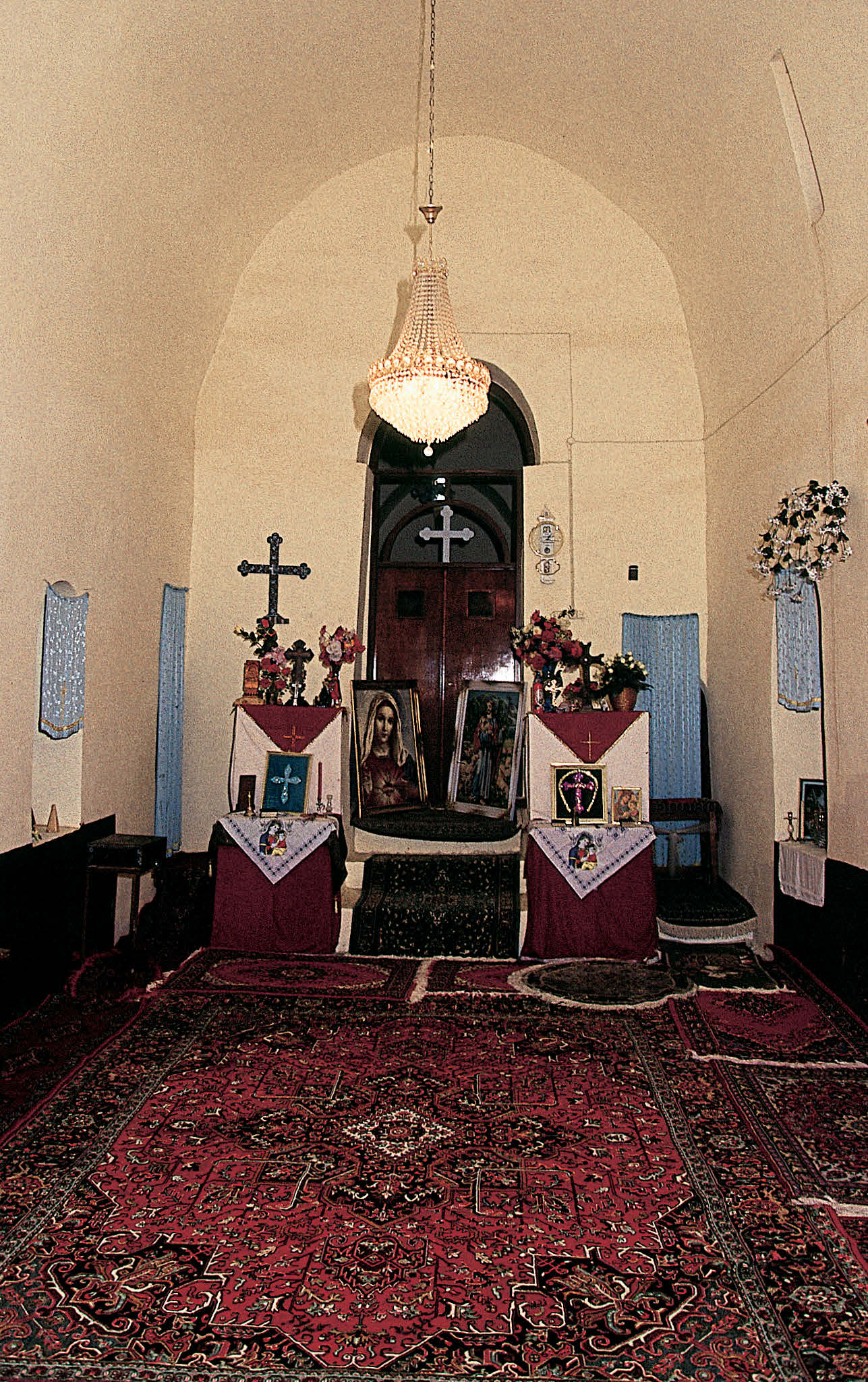
creeds of the Church of the East remained, from the standpoint of Antiochene theology, orthodox. The Church of the East always emphatically defended itself against the Western charge of making Christ into ‘two Sons’ and thus turning the Trinity into a quaternity.
从安提阿神学的立场来看,东方教会 (Ch. of E.) 的信经始终是正统的。东方教会 (Ch. of E.) 始终坚决地为自己辩护,反驳西方关于它把基督变成“两个儿子”,从而把三位一体变成四位一体的指控。
Jacobites off against each other by forcing them to hold public disputations. Since both of the rival Churches depended on the favour of the shah, they had to give in to the undignified spectacle of facing off against one another before a Zoroastrian ruler. In the debate, the ‘pagan’ shah served as judge of the truth of either the Miaphysite one-nature doctrine of Christ or the two-nature doctrine of the Church of the East. The feared Miaphysite debater Simeon of Beit Arsham, for instance, humiliated Patriarch Babai before King Kavad I. He polemically accused the Nestorians of denying the divinity of Jesus, as did the Jews (sic), and expanding the Trinity into a quaternity, since they worshipped God the Father, God the Son, the man Jesus and the Holy Spirit.81 After his rhetorical triumph, Simeon was named bishop-at-large for Mesopotamia.82 He succeeded in gaining the support of the likewise Miaphysite patriarch of Armenia. Around the year 521 he travelled to al-Hira, the Arab vassal state in south-eastern Mesopotamia, to convert the East Syrians there. But the intervention of Nestorian bishops compelled Kavad to throw him in prison for seven years.83 The royal favour lay still with the Nestorians.
让雅各派 (Jacobites) 彼此对立,迫使他们举行公开辩论。由于两个敌对教会都依赖沙阿 (shah) 的恩宠,他们不得不屈从于在一位琐罗亚斯德教统治者面前相互对峙这一有失体面的场面。在辩论中,这位“异教”沙阿充当裁判,判定米亚弗西派 (Miaphysite) 的基督一性论与东方教会 (Ch. of E.) 的二性论孰真孰假。例如,令人畏惧的米亚弗西派辩论家贝特阿尔沙姆的西门 (Simeon of Beit Arsham) 在国王卡瓦德一世 (Kavad I) 面前羞辱了巴比宗主教 (Patriarch Babai)。他在论战中指责聂斯托利派 (Nestorians) 否认耶稣的神性,正如犹太人(原文如此)一样,并把三位一体扩展为四位一体,因为他们崇拜父神、子神、人耶稣和圣灵。81 在取得修辞上的胜利后,西门被任命为美索不达米亚 (Mesopotamia) 的无任所主教 (bishop-at-large)。82 他成功获得了同样属于米亚弗西派的亚美尼亚 (Armenia) 宗主教 (patriarch) 的支持。约在公元521年,他前往美索不达米亚东南部的阿拉伯附庸国希拉 (al-Hira),去使那里的东叙利亚人 (East Syrians) 皈依。但聂斯托利派主教的干预迫使卡瓦德 (Kavad) 将他投入监狱七年。83 王室的恩宠仍然在聂斯托利派一边。
In 486 the synod of Patriarch Acacius (in office 485–496) responded to the Henoticon in its first canon: ‘Regarding Christ, our faith consists in the confession of the two natures of divinity and humanity, and none of us dares to introduce into the distinction between these two natures a blending, mixing or confusion. But anyone who thinks or teaches that suffering and change adhere to the divinity of our Lord, let him be anathema.’77 This confession preserves both the ontological unity of Christ and the wholeness of each nature, and thus opposes Theopaschism, the doctrine of the suffering of God. The second canon regulated the status of monasteries and the lives of the monks. ‘They [monks] are not allowed to enter cities and villages in order to live there. In addition, they should not hold any gatherings there, whether to celebrate the sacrifice [Eucharist] or perform baptisms, but rather they should enter the monasteries and places that have renounced civilization and there be voluntary for the bishops, priests and periodeutai, who have the power and are the superiors of their monasteries and cells.’78
486 年,牧首阿卡修斯 (Acacius)(在任 485–496 年)的主教会议在其第一条教规中回应了《合一诏书》(Henoticon):“关于基督,我们的信仰在于承认神性与人性这两个本性,我们中无人敢在这两个本性的区分中引入混合、混杂或混淆。但任何人若认为或教导苦难与变化附着于我们主的神性,就让他受绝罚。”77 这一信仰告白既维护了基督在本体论上的统一,也维护了每一本性的完整,因此反对神受难论 (Theopaschism),即上帝受苦的学说。第二条教规规定了修道院的地位与修士的生活。“他们 [修士] 不得进入城市和村庄居住。此外,他们不得在那里举行任何集会,无论是为举行献祭 [圣体圣事] 还是施行洗礼,而应进入那些已弃绝世俗文明的修道院和场所,并在那里自愿服从主教、司铎和巡回监督 (periodeutai),这些人拥有权柄,并且是其修道院和居所的长上。”78
The Nestorians suffered a second blow when, before 559, the Miaphysite bishop Ahudemmeh so impressed Shah Chosrau I (ruled 531–579) that he allowed him to build churches and monasteries. Thanks to this success, the Miaphysites enjoyed significantly greater freedom in the Zoroastrian Empire than in the Christian-Byzantine realm. But, when Ahudemmeh dared to baptize one of Chosrau’s sons with the name George, he was arrested and died in prison in 575. A few years later an internal split threatened the Church of the East when, beginning around 572, Hanana (†c.610), head of the School at Nisibis, promulgated the one-nature doctrine of Christ and the ability of his divinity to suffer, and also taught the existence of original sin.84 East Syrian orthodoxy
聂斯托利派 (Nestorians) 遭受了第二次打击:在559年之前,合性论派主教阿胡德梅 (Ahudemmeh) 给沙阿·霍斯劳一世 (Shah Chosrau I,在位531–579年) 留下了如此深刻的印象,以至于他允许阿胡德梅修建教堂和修道院。由于这一成功,合性论派在琐罗亚斯德教帝国中享有比在基督教-拜占庭世界中大得多的自由。但是,当阿胡德梅胆敢以乔治 (George) 之名为霍斯劳的一个儿子施洗时,他被逮捕,并于575年死于狱中。几年后,一场内部分裂威胁到东方教会 (Ch. of E.):大约从572年开始,尼西比斯学校 (School at Nisibis) 的负责人哈纳纳 (Hanana,†约610年) 宣扬基督的一性论以及其神性能够受苦的教义,并且还教导原罪的存在。84 东叙利亚正统派
The rapid expansion of the Miaphysite Church of the Jacobites to the east of the Euphrates forced the Church of the East to state its position.79 In this spirit, in 497 the synod of Catholicos Babai (in office 497–502) presented the metropolitan of Beit Lapat, the second-highest dignitary of the Church, who was inclined towards Miaphysitism, with an ultimatum: either ‘agree to the true faith of the church with signature and seal’ or be excommunicated.80 The Church of the East found itself again forced to be on the defensive when the shah began to play Nestorians and
雅各派合性论教会 (Miaphysite Church of the Jacobites) 在幼发拉底河 (Euphrates) 以东的迅速扩张,迫使东方教会 (Ch. of E.) 表明立场。79 本着这一精神,497年,大公宗主 (Cath.) 巴巴伊 (Babai)(在任497–502)召开的主教会议向贝特·拉帕特 (Beit Lapat) 的都主教——教会中地位第二高的神长,且倾向于合性论——发出最后通牒:要么“以签名和印章同意教会真正的信仰”,要么被绝罚。80 东方教会 (Ch. of E.) 再次发现自己被迫处于守势,当时沙阿 (shah) 开始利用聂斯托利派 (Nestorians) 和
then opposed him as a traitor to the doctrine of the Church Father Theodore of Mopsuestia. Without referring to Hanana by name, the 585 synod of Ishoyahb I (in office 582–596) clearly condemned him: ‘In their foolishness, the heretics [meaning Hanana and his followers] dare to attribute to the nature and person of his [Christ’s] divinity the qualities and suffering of the humanity’ (Canon I). The second canon unmistakably defends the normative orthodoxy of Theodore’s teaching: ‘No one from any of the ecclesiastical orders may defame this church teacher, whether secretly or publicly, nor reject his holy writings. If one dares [nonetheless], let him be anathema.’85 Hanana’s position of power quickly eroded, as soon thereafter hundreds of students left Nisibis to attend other educational institutions. Among these were the Great Monastery on Mount Izla; the School of Beth Sahdeh, founded before 580 and also in Nisibis; the School founded by Patriarch Mar Aba I (in office 540–552) in Seleucia-Ctesiphon; and the school in Beit Lapat (Gondeshapur). To these were added the episcopal schools of Balad, Arbil, Kashkar, Merv and Hira, as well as the monastery school of Deir Qunna, south-east of Seleucia. in Edessa in 489 had already produced an influx of East Syrian theologians.
随后,他又反对哈纳纳(Hanana),指责他背叛教父摩普苏埃斯蒂亚的狄奥多雷(Theodore of Mopsuestia)的教义。伊绍亚卜一世(Ishoyahb I,在任 582–596 年)于 585 年召开的会议没有点名哈纳纳,却明确谴责了他:‘异端分子[指哈纳纳及其追随者]愚昧无知,竟敢把人性所具有的性质与受苦归于[基督]神性的本性和位格。’(第一条教规)第二条教规则毫不含糊地捍卫狄奥多雷教导的规范性正统地位:‘任何教会品级的人,无论私下还是公开,都不得诋毁这位教会教师,也不得弃绝他的圣作。若有人胆敢如此行,就应受绝罚。’85 哈纳纳的权势很快衰落;不久之后,数百名学生离开尼西比斯,转往其他教育机构就读。其中包括伊兹拉山上的大修道院;约在 580 年以前创立、同样位于尼西比斯的贝特萨赫德学校;由牧首马尔·阿巴一世(Mar Aba I,在任 540–552 年)在塞琉西亚—泰西封创办的学校;以及贝特拉帕特(贡德沙普尔)的学校。此后又增设了巴拉德、阿尔贝拉、卡什卡尔、梅尔夫和希拉的主教学校,以及位于塞琉西亚东南方的代尔库纳修道院学校。489 年埃德萨的[事件]已经导致东叙利亚神学家纷纷涌入。
It speaks to the relatively relaxed situation between the Sassanian state and its Christian minority that Chosrau had the Nestorian School in Gondeshapur converted into a ‘laicized’ state university. Indian medicine and philosophy, Greek and Indian astronomy and astrology, mathematics, logic and agricultural science were added as new subjects. In addition, Zoroastrian ethics and theology were taught, as well as jurisprudence, finance and civil administration. Chosrau also ordered the acquisition and collection of Greek manuscripts and sent the famous physician Burzoe to India to bring scholarly books to Gondeshapur. Allegedly, Burzoe also introduced chess into Iran. In order to unite theory and practice, the School also had a hospital and an observatory. With the exception of the Zoroastrian subjects, the language of instruction was Syriac, even during the first two centuries of Arab rule. The significance of the medical faculty of Gondeshapur is evident in the fact that practically all the doctors of the Abbasid caliphs were Nestorians who had been trained there. Only the state library and university founded by Caliph Al-Ma’mun (ruled 813–833), the ‘House of Knowledge’, superseded Gondeshapur as the state university of the Abbasids.87
库思老 (Chosrau) 将贡德沙普尔 (Gondeshapur) 的聂斯托利派学校 (Nestorian School) 改造成一所“世俗化的”国立大学,这反映出萨珊国家 (Sassanian state) 与其基督教少数群体之间相对宽松的关系。印度医学与哲学、希腊和印度的天文学与占星术、数学、逻辑学以及农业科学被增设为新学科。此外,还教授琐罗亚斯德教 (Zoroastrian) 伦理学与神学,以及法学、财政和民政管理。库思老还下令获取并收集希腊手稿,并派遣著名医生布尔佐 (Burzoe) 前往印度,将学术书籍带到贡德沙普尔。据称,布尔佐还将国际象棋引入伊朗 (Iran)。为了将理论与实践结合起来,该学院还设有一所医院和一座天文台。除琐罗亚斯德教科目外,教学语言为叙利亚语 (Syriac),甚至在阿拉伯统治的最初两个世纪里也是如此。贡德沙普尔医学系的重要性体现在这样一个事实中:阿拔斯哈里发 (Abbasid caliphs) 的医生几乎全都是在那里接受过培训的聂斯托利派信徒 (Nestorians)。只有哈里发马蒙 (Al-Ma’mun)(在位 813–833 年)所创办的国家图书馆与大学——“智慧宫” (House of Knowledge)——才取代贡德沙普尔,成为阿拔斯王朝 (Abbasids) 的国立大学。87
The city of Gondeshapur was founded by Shapur I around 260 and constructed by Roman Christian prisoners of war. The School, headed by East Syrians, distinguished itself by teaching an encyclopedic variety of academic subjects. In 529 the earlier disciplines of biblical exegesis, theology and Greek medicine were joined by Greek philosophy, after the Byzantine emperor closed the Neo-Platonic School of Athens and Shah Chosrau I invited the expelled instructors to come to his empire. Thus the far-sighted shah, who used his power to promote cultural endeavours, laid the cornerstone for the future work of translating Greek philosophy, medicine and astronomy into Syriac and then into Arabic.86 The earlier closing of the Persian school
贡德沙普尔城 (Gondeshapur) 由沙普尔一世 (Shapur I) 于约260年建立,并由罗马基督徒战俘建造。这所学校由东叙利亚人 (East Syrians) 领导,以教授百科全书式的各类学科而著称。529年,在拜占庭皇帝关闭雅典新柏拉图学园 (Neo-Platonic School of Athens) 之后,沙阿·霍斯劳一世 (Shah Chosrau I) 邀请被驱逐的教师来到他的帝国,于是希腊哲学加入了此前已有的圣经解经、神学和希腊医学等学科。因此,这位有远见的沙阿运用其权力推动文化事业,为日后将希腊哲学、医学和天文学翻译成叙利亚语、再翻译成阿拉伯语的工作奠定了基础。86 波斯学校更早的关闭
But soon a still greater danger threatened the Church of the East through the intrigues of the Christian physician Gabriel of Singar, who exercised great influence over Shah Chosrau II (ruled 590–628). Gabriel’s power came from the fact that Chosrau’s favourite wife, the Nestorian Shirin (who had been childless to that point) bore a healthy son, the prince Merdenshah, shortly after a bleeding performed by Gabriel. At that time Gabriel was a Jacobite convert – that is, a Nestorian – who promoted matters of concern to the Church before the shah. But, when Gabriel renounced his Christian wife
但不久,一场更大的危险便通过辛加尔的加百列 (Gabriel of Singar) 的阴谋威胁到东方教会 (Ch. of E.);这位基督徒医生对沙阿霍斯劳二世 (Shah Chosrau II,在位 590–628 年) 拥有巨大影响力。加百列的权势来自这样一个事实:霍斯劳最宠爱的妻子、聂斯托利派的希琳 (Shirin)(此前一直无子)在加百列施行放血术后不久,生下了一个健康的儿子——王子梅尔登沙 (Merdenshah)。当时,加百列是一名雅各派 (Jacobite) 改宗者——也就是说,一名聂斯托利派信徒 (Nestorian)——他在沙阿面前推动教会所关切的事务。但是,当加百列背弃他的基督徒妻子
The biography of the martyr Giwargis (George), composed by the East Syrian theologian Mar Babai (551–628), provides information about this dramatic period for both Churches. In 612, convinced of the victory of Hanana’s party, Gabriel arranged for another public disputation between Nestorians and Jacobites before the shah. The leader of the Nestorian delegation was the monk Giwargis, son of a Zoroastrian commanding officer of the strategically important border region of Nisibis. Before he converted to Christianity, he was educated as a Zoroastrian magician. The Christological creed George presented at the disputation bore the mark of Babai, since he had studied with him. ‘The holy fathers, namely Nestorius and his followers, declared: “two natures and two hypostases, their qualities preserved in the one person of Christ.” The blessed Theodore also clearly declared two natures and two hypostases in the one person of Christ.’ After attacks on Hanana, George affirmed the normative authority of the three Church Fathers: ‘Anyone who defames or criticizes these three blessed, holy, ecumenical teachers, the pillars of the Church, and their apostolic doctrine, which has illuminated the whole Church, namely, the blessed Diodore, the blessed Theodore and the blessed Nestorius, may not receive communion in this Church.’90 The creed of the Nestorian bishops, composed at the same time, likewise followed the ideas of Babai: ‘We acknowledge our Lord Jesus Christ as a prosopon, the Son of God, born in the nature of his divinity of the Father before time, without beginning, born in the end in the nature of his humanity of the blessed Virgin.’91 These complementary confessions of faith brought a conclusion to the traditional development of East Syrian dogma. and married two Zoroastrian women, Patriarch Sabrisho I (in office 596–604) excommunicated him, whereupon the infuriated favourite converted back to the Jacobite Church and, at the same time, induced Shirin to convert too. By his severity, the patriarch made unyielding enemies of the two most powerful people in the empire after the shah.88 After the death of Catholicos Gregory I (in office 605–608) Gabriel knew how to prevent the election of a successor; moreover, he attempted to place Hanana or one of his students on the throne.89 Both Shirin and Gabriel advanced their ‘Church policy’ not according to theological criteria but, rather, out of their personal interests. It is conceivable that Chosrau, for his part, was contemplating combining all Christians into a Sassanian imperial Church.
东叙利亚神学家马尔·巴拜(Mar Babai)(551—628)撰写的殉道者吉瓦尔吉斯(Giwargis;乔治〔George〕)传记,为我们提供了这一对两座教会而言都极为动荡的时期的资料。612年,加百列(Gabriel)确信哈纳纳(Hanana)一派已获胜,便安排在沙阿面前再次举行聂斯托利派与雅各派之间的公开辩论。聂斯托利派代表团的领袖是修士吉瓦尔吉斯,他是战略要地边境地区尼西比斯(Nisibis)一位祆教指挥官之子。皈依基督教之前,他曾受训成为祆教术士。乔治在辩论中提出的基督论信经带有巴拜的思想印记,因为他曾跟随巴拜学习。“圣教父们,即聂斯托利(Nestorius)及其追随者,宣认:‘二性、二位格,其属性保存在基督的一个位格之内。’蒙福的摩普苏埃斯蒂亚的狄奥多雷(Theodore of Mopsuestia)也明确宣认,在基督的一个位格之内有二性、二位格。”在有人攻击哈纳纳之后,乔治申明三位教父的规范性权威:“凡诋毁或批评这三位蒙福、圣洁、大公的导师——教会的支柱——及其照亮整个教会的使徒教义者,即蒙福的狄奥多(Diodore)、蒙福的摩普苏埃斯蒂亚的狄奥多雷(Theodore of Mopsuestia)和蒙福的聂斯托利(Nestorius),都不得在这座教会领受圣餐。”90 同一时期编成的聂斯托利派主教信经同样遵循巴拜的思想:“我们承认我们的主耶稣基督为一个位格(prosopon):上帝之子在时间以前、无始之时,按其神性本性由父所生;在末世,按其人性本性由蒙福的童贞女所生。”91 这两份彼此互补的信仰告白,为东叙利亚教义的传统发展画上了句号。并娶了两名祆教女子后,宗主教萨布里绍一世(Sabrisho I)(在位596—604)将他逐出教会;愤怒的宠臣于是改宗回雅各派教会,同时也劝使琳(Shirin)改宗。宗主教的严厉做法,使帝国中沙阿之后最有权势的两个人都成了他坚定不移的敌人。88 天主教宗格列高利一世(Gregory I)(在位605—608)去世后,加百列设法阻止继任者当选;此外,他还试图让哈纳纳或其一名学生登上宗主教座。89 使琳和加百列推动各自的“教会政策”,依据的不是神学标准,而是个人利益。楚斯劳(Chosrau)或许也在考虑把所有基督徒合并为一个萨珊帝国教会。
The Nestorian Shirin looking at the picture of Chosrau II. Manuscript of Sultan Husayn ben Sultan Ali, 1485. Regarding her fate after Chosrau’s death in the spring of 628, little is clear: Firdowsi’s Shahnameh of 1009 reports that she committed suicide when Kavad II desired her as a wife.24 The Chronicle of Seert, however, accuses Shirin of poisoning King Shiroi – who took the name Kavad II and presumably was secretly Nestorian – out of revenge for having had her Miaphysite son Merdenshah murdered upon taking the throne.25 (State Library of Berlin, Prussian cultural property. Ms.or.quart 1665, fol.40v.)
聂斯托利派的希琳 (Shirin) 正在观看霍斯劳二世 (Chosrau II) 的画像。苏丹·侯赛因·本·苏丹·阿里 (Sultan Husayn ben Sultan Ali) 抄本,1485年。关于她在霍斯劳二世 (Chosrau II) 于628年春去世后的命运,人们所知甚少:菲尔多西 (Firdowsi) 于1009年成书的《列王纪》 (Shahnameh) 记载,当卡瓦德二世 (Kavad II) 欲纳她为妻时,她自尽了。24 然而,《塞尔特编年史》 (Chronicle of Seert) 则指控希琳 (Shirin) 毒杀国王希罗伊 (Shiroi)——他取名卡瓦德二世 (Kavad II),据推测暗中是聂斯托利派信徒——以报复他在登基后命人杀害了她那位合性论派 (Miaphysite) 的儿子梅尔登沙 (Merdenshah)。25(柏林国家图书馆 (State Library of Berlin),普鲁士文化财产。Ms.or.quart 1665, fol.40v.)
Although the disputation could have served as the basis for the shah to choose a new catholicos, Chosrau made no selection; the patriarchal see remained vacant until his death in 628. Babai
尽管这场辩论本可作为沙阿 (shah) 遴选新大公宗主教 (catholicos) 的依据,但霍斯劳 (Chosrau) 并未作出选择;宗主教座一直空缺,直到他于628年去世。巴巴伊 (Babai)
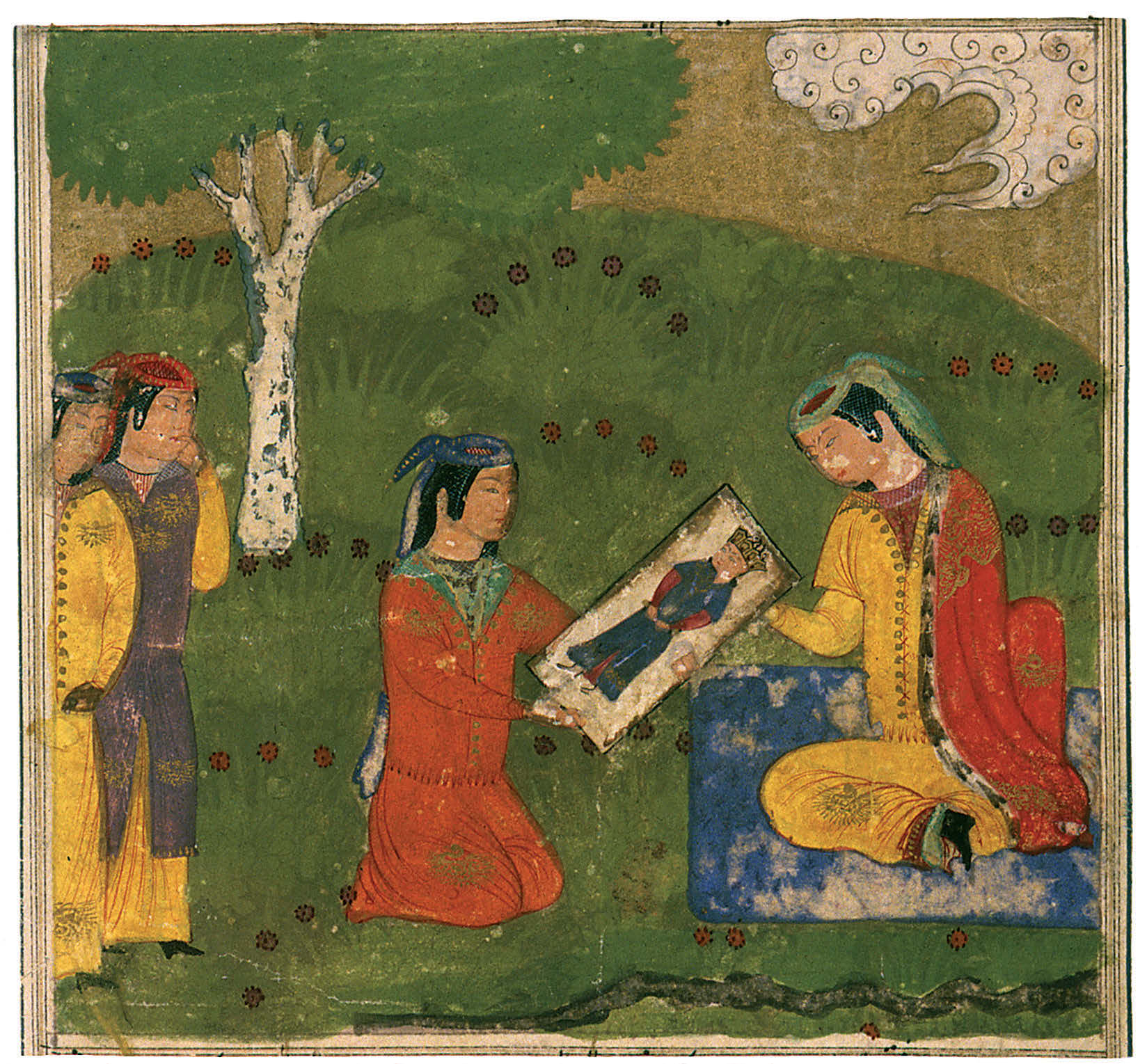
orthodoxy’, in a manner of speaking. So Barsauma persuaded King Piroz that it would be most favourable for his empire if all Christians belonged to the Church of the East, which had nothing in common with Byzantium.94 the Great, together with the archdeacon of the capital, filled the leadership vacuum, acting, so to speak, as the unappointed patriarch. The disputation was a success for the Nestorians inasmuch as they avoided the appointment of a Miaphysite patriarch. For the Jacobites, on the other hand, it ended as a defeat, as they missed the opportunity to take over leadership of the Church of the East. The vanquished Gabriel of Singar sought revenge by denouncing the powerfully eloquent Mar Giwargis before the king as an apostate from the state religion. The king had him arrested and crucified.92 This denunciation of a Christian by another Christian before the ‘pagan’ king indicates how poisonous the relationship between the two Churches had become. An official reconciliation, reached by the Nestorian patriarch Abdisho III (1138–1148) and the Jacobite patriarch Dionysius, occurred only in 1142, when each Church recognized the other as legitimate.93
“正统”,可以说。于是巴尔萨乌马 (Barsauma) 说服皮罗兹国王 (King Piroz),如果所有基督徒都归属于与拜占庭 (Byzantium) 毫无共同之处的东方教会 (Church of the East),那将对他的帝国最为有利。94 “大帝” (the Great) 与首都的总执事 (archdeacon) 一起填补了领导权真空,可以说,充当了未获任命的宗主教。这场辩论对聂斯托利派 (Nestorians) 而言是一次成功,因为他们避免了任命一位一性论派宗主教 (Miaphysite patriarch)。而对雅各派 (Jacobites) 来说,它则以失败告终,因为他们错失了接管东方教会 (Church of the East) 领导权的机会。落败的辛加尔的加百列 (Gabriel of Singar) 寻求报复,在国王面前告发极具口才的马尔·吉瓦尔吉斯 (Mar Giwargis) 为背弃国教的叛教者。国王下令逮捕他,并将他钉十字架。92 一个基督徒在“异教”国王面前告发另一个基督徒,这表明两个教会之间的关系已变得何等恶毒。直到1142年,聂斯托利派宗主教阿布迪绍三世 (Abdisho III, 1138–1148) 与雅各派宗主教狄奥尼修斯 (Dionysius) 才达成正式和解,当时两个教会互相承认对方为合法。93
But Barsauma was also an unscrupulous power player, who fought with his patriarchs over the abolition of celibacy. Barsauma lived with a nun, which offered Byzantine bishops a welcome reason to charge the second-highest- ranking East Syrian dignitary with fornication. The patriarch, however, who maintained belief in celibacy for bishops, could not succeed because Barsauma was certain of royal support, and he himself, as an apostate from the state religion, was vulnerable. Then Patriarch Babowei turned to the Byzantine bishops and asked them to persuade Emperor Zeno to intervene with Shah Piroz in favour of the patriarchal authority. Since Babowei was aware that a letter addressed indirectly to the Byzantine emperor could be interpreted as treason, his messenger concealed his message in a hollow walking stick. Nevertheless, it fell into the hands of his arch-enemy, Barsauma, who passed it on to the king. As was to be expected, the arrested patriarch was charged with apostasy and treason and was executed in 484.95 But Barsauma could not reap the fruits of his denunciation – the patriarchal throne – because a few months later Shah Piroz died in battle against the White Huns, who were allied with Byzantium. His successor Balash (ruled 484–488) sought peace with Byzantium and for that reason passed over the pugnacious Barsauma in favour of Acacius. In the meantime, right after the death of Babowei, Barsauma, acting entirely on his own authority, called a synod in Beit Lapat, but the new patriarch, in his first official act, forced Barsauma to denounce his own synod, whose acts were not included in the Synodicon Orientale. At the important synod of 486 the Dyophysite creed mentioned above was declared binding.
但巴尔萨乌马 (Barsauma) 也是一个不择手段的权谋家,曾为废除独身制 (celibacy) 与其诸位宗主教 (patriarchs) 争斗。巴尔萨乌马与一名修女同居,这给拜占庭 (Byzantine) 主教们提供了一个求之不得的理由,用来指控这位东叙利亚教会中地位第二高的神长犯有淫乱罪 (fornication)。然而,那位坚持主教应守独身制的宗主教 (patriarch) 未能成功,因为巴尔萨乌马确信自己拥有王室支持,而他本人作为背弃国教者,则处于易受攻击的境地。随后,宗主教巴博伊 (Babowei) 转向拜占庭主教们,请他们说服芝诺皇帝 (Emperor Zeno) 向沙阿皮鲁兹 (Shah Piroz) 交涉,以支持宗主教权威。由于巴博伊意识到,一封间接写给拜占庭皇帝 (Byzantine emperor) 的信可能被解释为叛国 (treason),他的信使便将信件藏在一根中空的手杖里。然而,这封信还是落入了他的死敌巴尔萨乌马 (Barsauma) 手中,后者将其转交给了国王。不出所料,被捕的宗主教被控背教 (apostasy) 和叛国,并于484年被处决。95 但巴尔萨乌马未能收获其告发之果——宗主教宝座——因为几个月后,沙阿皮鲁兹在与白匈奴 (White Huns) 作战时阵亡,而白匈奴与拜占庭 (Byzantium) 结盟。他的继任者巴拉什 (Balash,在位484–488年) 寻求与拜占庭和平,因此越过好斗的巴尔萨乌马,选择了阿卡基乌斯 (Acacius)。与此同时,就在巴博伊死后,巴尔萨乌马完全凭自己的权威,在贝特·拉帕特 (Beit Lapat) 召集了一次主教会议,但新宗主教在其首次正式行动中迫使巴尔萨乌马公开否定自己的主教会议,其会议法令未被收入《东方会议录》(Synodicon Orientale)。在486年那次重要主教会议上,上述二性论信条 (Dyophysite creed) 被宣布为具有约束力。
Crisis and renewal in the Church of the East between 450 and 650
450年至650年间东方教会 (Ch. of E.) 的危机与复兴
In the second half of the fifth century the outstanding figure in the Church of the East was not Patriarch Babowei (in office 457–484) but, rather, the power-hungry metropolitan of Nisibis, Barsauma (c.415–496). Barsauma’s power rested on his friendship with the Sassanian King Piroz (ruled 459–484), which he had gained by his work as an intermediary in the establishment of a lasting Sassanian-Byzantine peace. In gratitude, Piroz appointed him as commanding officer for the border region of Nisibis. Since Barsauma had suffered the brunt of the anti-Nestorian persecutions by the Miaphysites of Edessa, he was an uncompromising opponent of the infiltration of Miaphysite preachers and monks into Mesopotamia and a devout supporter of Antiochene Christology, an ‘apostle of Nestorian
五世纪下半叶,东方教会 (Ch. of E.) 中最杰出的人物并非牧首巴博维 (Babowei)(在位 457–484 年),而是权欲熏心的尼西比斯 (Nisibis) 都主教巴尔萨乌马 (Barsauma)(约 415–496 年)。巴尔萨乌马 (Barsauma) 的权力建立在他与萨珊国王皮鲁兹 (Piroz)(在位 459–484 年)的友谊之上;他通过作为中间人促成萨珊—拜占庭持久和平而获得了这份友谊。出于感激,皮鲁兹 (Piroz) 任命他为尼西比斯 (Nisibis) 边境地区的指挥官。由于巴尔萨乌马 (Barsauma) 曾首当其冲,承受了埃德萨 (Edessa) 的合性论者 (Miaphysites) 发动的反聂斯托利派迫害,他毫不妥协地反对合性论者传教士和修士渗入美索不达米亚 (Mesopotamia),并虔诚地支持安提阿的基督论 (Antiochene Christology),是一位‘聂斯托利派的使徒
The catholicates of Acacius (in office 485–496) and Babai (in office 497–502) proceeded in
阿卡修斯 (Acacius)(在任 485–496 年)和巴巴伊 (Babai)(在任 497–502 年)的大公宗主任期在……中继续
regained power in 499 ‘he had a few magicians killed and many locked up. He was benevolent towards the Christians because a company of them rendered service to him on his way to the king of the Turks’, that is the Hephtalites.97 Towards the end of his reign, Kavad and Crown Prince Chosrau I had the aged Mazdak and his closest students impaled or buried alive; their followers were persecuted mercilessly.98
于499年重新掌权,“他处死了少数术士,并将许多人关押起来。他对基督徒宽厚,因为在他前往突厥王处的途中,有一批基督徒为他效力”,即嚈哒人 (Hephtalites)。97 在他统治末期,卡瓦德 (Kavad) 与皇储霍斯劳一世 (Chosrau I) 将年迈的马兹达克 (Mazdak) 及其最亲近的学生们钉在尖桩上或活埋;他们的追随者遭到残酷迫害。98
Later, around 550, the Hephtalites asked Patriarch Mar Aba for a bishop.99 At the same time, some of the neighbouring Western Turks accepted Christianity. When, a few years later, Byzantine troops waged war against the western Turks, they were greatly astonished to see that the Turkish prisoners of war had crosses tattooed on their foreheads as talismans.100
后来,约在550年,嚈哒人 (Hephtalites) 向宗主教玛尔·阿巴 (Mar Aba) 请求派遣一位主教。99 与此同时,邻近的一些西突厥人 (Western Turks) 接受了基督教。几年后,当拜占庭 (Byzantine) 军队对西突厥人开战时,他们极为惊讶地发现,突厥战俘的额头上刺有十字架作为护身符。100
Unfortunately, the Church of the East did not know how to take advantage of the favourable circumstances of religious tolerance under Kavad I; instead, it fell into discord, which led to schism. Babai’s archdeacon, Silas (in office 503– 523), succeeded him, but the new catholicos ‘was married and had a daughter. He was vain, concerned himself with worldly affairs, and loved money very much.’101 All the same, he cultivated good relations with the shah. Shortly before his death, he disregarded the synodal canons and appointed his nephew, the physician Elisha (in office 524–539), as successor. Three metropolitans rejected Elisha as unsuitable and consecrated the scribe Narses (in office 524–535) as their patriarch. Since Elisha clung to his office and would not surrender, a shameful 15-year schism occurred. ‘Each of the two patriarchs appointed bishops and sent them everywhere. In each church two altars were erected, and the faithful went to church not to pray but to engage in fistfights and sometimes even to kill.’102 At the same time, each patriarch excommunicated the other. Kavad, well disposed towards the Nestorians, managed to avoid involvement; if he had considered promoting relative peace, not least because Shah Kavad I (ruled 488–496 and 499–531) was well disposed towards the Christians, and the Zoroastrian clergy were preoccupied with the heretical reform movement of Mazdak. This movement cleverly exploited the resentment that had built up in the people against the wealth of the hereditary nobility and the capriciousness of the Mobeds. Within a dualistic worldview, it proclaimed the equality of all people, brotherhood and the inviolability of life, and thus it declared the common ownership of all possessions and women and promoted a pacifistic, vegetarian lifestyle. The young King Kavad joined the brotherhood and enacted numerous social reforms; presumably he hoped to break the power of the nobility and clergy. But these groups retaliated and deposed him in 496, whereupon he fled to Iran’s traditional arch-enemy, the White Huns, also called the Hephtalites. 96 When Kavad
不幸的是,东方教会未能利用卡瓦德一世(Kavad I)统治时期宗教宽容的有利环境,反而陷入纷争,最终导致分裂。巴拜(Babai)的总执事西拉斯(Silas,任职503—523年)继任;但这位新宗主教“已婚并有1个女儿。他虚荣,热衷世俗事务,而且十分贪财”。101 尽管如此,他仍与沙阿保持良好关系。临终前,他无视主教会议法规,指定自己的外甥、医生以利沙(Elisha,任职524—539年)为继任者。3位大都主教认为以利沙不适任,拒绝承认他,并祝圣书记员纳尔瑟斯(Narses,任职524—535年)为他们的宗主教。以利沙坚持留任,不肯交出职位,于是爆发了可耻的15年教会分裂。“2位宗主教各自任命主教,并把他们派往各地。每座教堂里都设了2座祭坛;信众去教堂不是为了祈祷,而是为了互相斗殴,有时甚至杀人。”102 与此同时,2位宗主教还彼此绝罚。卡瓦德对聂斯托利派颇有好感,因而设法避免卷入其中;若他曾考虑促成相对和平,尤其是因为沙阿卡瓦德一世(Shah Kavad I,统治时期为488—496年及499—531年)善待基督徒,而琐罗亚斯德教祭司当时正忙于应对马兹达克(Mazdak)的异端改革运动。这场运动巧妙地利用民众对世袭贵族财富和摩比德(Mobeds)反复无常所积累的不满。在二元论世界观之下,该运动宣扬人人平等、兄弟情谊和生命不可侵犯,因而主张所有财物和妇女共有,并提倡和平主义、素食的生活方式。年轻的卡瓦德王加入了这个团体,并推行多项社会改革;他大概希望削弱贵族和祭司的权力。然而,这些群体进行反击,于496年废黜了他,于是他逃往伊朗(Iran)历来的宿敌白匈奴(White Huns),又称嚈哒人(Hephtalites)。96 当卡瓦德
Deir-e Gachin, the so-called
代尔加钦 (Deir-e Gachin),所谓的
Monastery of Chalk, Iran. Next to the Sassanian caravansary, which lay on the Silk Road linking Merv and Seleucia-Ctesiphon, stand the ruins of a complex of buildings, surrounded by a 250x100-metre clay wall. To the east stand three arches made of fired bricks, which lead to a 12x10- metre room, whose apse is oriented to the east and whose long walls are marked by niches and pilasters. As its name suggests, Deir-e Gachin may have been originally a Christian monastery.
伊朗 (Iran) 的白垩修道院 (Monastery of Chalk)。在位于连接梅尔夫 (Merv) 与塞琉西亚-泰西封 (Seleucia-Ctesiphon) 的丝绸之路 (Silk Road) 上的萨珊 (Sassanian) 商队驿站旁,矗立着一片建筑群的废墟,四周环绕着一道 250×100 米的黏土墙。东侧矗立着三座烧砖砌成的拱门,通向一个 12×10 米的房间;该房间的后殿朝东,其长墙上分布着壁龛和壁柱。正如其名所示,代尔-加钦 (Deir-e Gachin) 最初可能是一座基督教修道院。
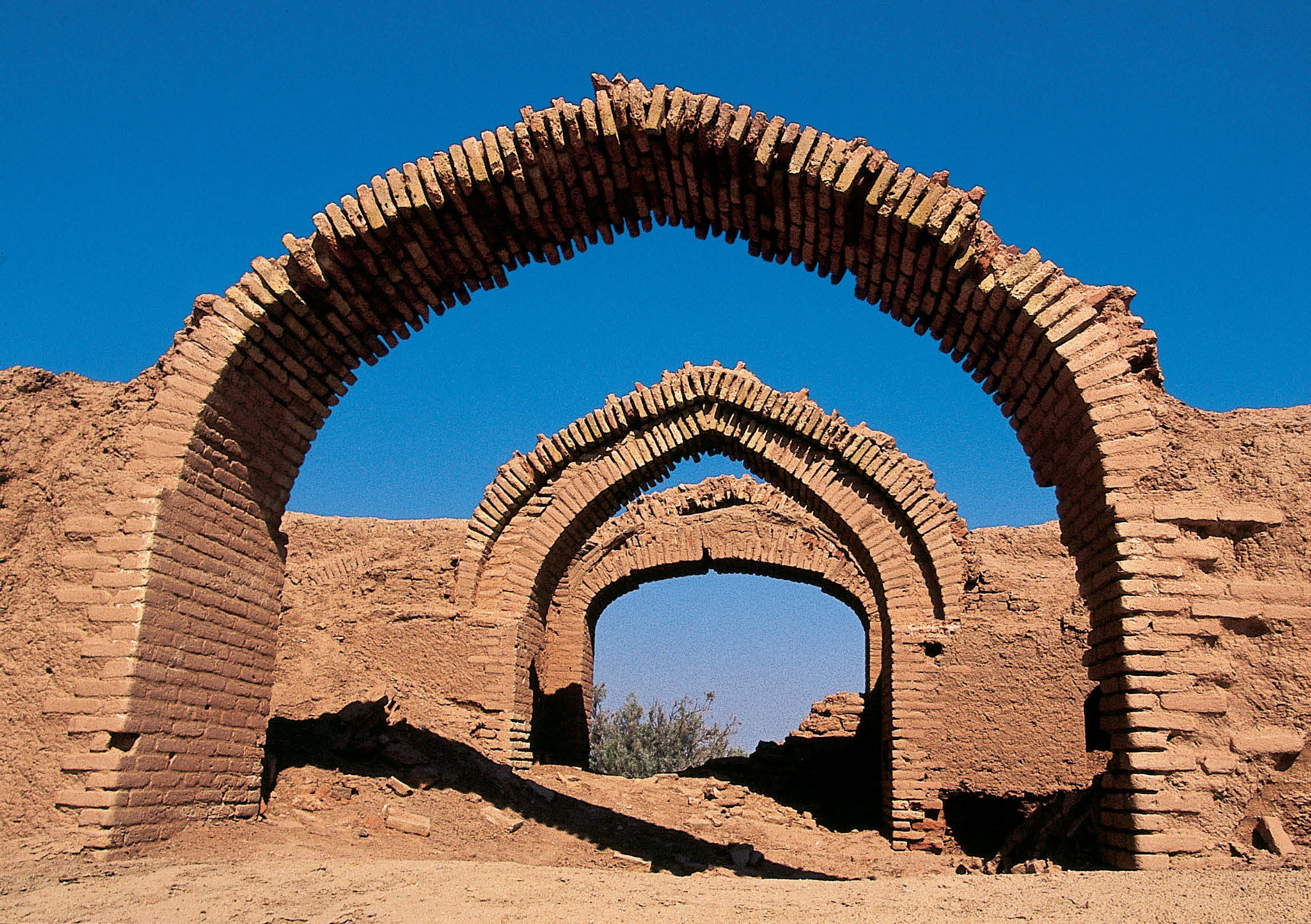
the Church as a possible counterweight to the Zoroastrian clergy, this disheartening spectacle must have stopped him from doing so. marriage of blood relatives and polygamy, which were found among Christians, as well. If these rules were disregarded, denial of a church burial was threatened. ‘They shall receive the burial of an ass, like the animals they resembled in life.’105 As soon as Mar Aba returned to the capital, he founded a theological university there.
教会作为可能制衡琐罗亚斯德教神职人员的一股力量,这一令人沮丧的景象必定使他未能这样做。血亲婚姻和一夫多妻制,这些在基督徒中同样存在。如果无视这些规定,就会受到拒绝给予教会葬礼的威胁。“他们必像驴一样被埋葬,如同他们在世时所像的牲畜一般。”105 马尔阿巴 (Mar Aba) 一回到都城,就在那里创办了一所神学大学。
In 539 the bishops ended the schism. They deposed Elisha and elected the metropolitan designate of Beit Lapat, Paul I, who enjoyed the friendship of Shah Chosrau I (ruled 531–579); but he died after only two months in office. The next election, of Mar Aba I (in office 540–552), was unanimous and fortunate, although, as a Zoroastrian apostate like Babowei before him, he was in danger of being condemned. Aba was an extraordinarily learned man, who had made a pilgrimage to Jerusalem, Alexandria, Corinth, Athens and Constantinople and then taught at the School in Nisibis and translated Greek texts into Syriac. His new task was threefold: he had to end the schism, raise the level of theological education and re-establish the flagging monastic discipline. In this last project, Abraham of Kashkar (491–586), founder of the ‘Great Monastery’ on Mount Izla, stood energetically by his side.
539年,主教们结束了分裂。他们废黜了以利沙 (Elisha),并选举贝特·拉帕特 (Beit Lapat) 的都主教人选保罗一世 (Paul I),他得到沙阿·霍斯劳一世 (Shah Chosrau I,在位 531–579 年) 的友谊;但他上任仅两个月后便去世了。接下来的选举——马尔·阿巴一世 (Mar Aba I,在位 540–552 年) 的选举——一致通过且十分幸运,尽管像他之前的巴博维 (Babowei) 一样,他作为一名琐罗亚斯德教叛教者,有被定罪的危险。阿巴 (Aba) 是一位极为博学的人,他曾到耶路撒冷 (Jerusalem)、亚历山大里亚 (Alexandria)、科林斯 (Corinth)、雅典 (Athens) 和君士坦丁堡 (Constantinople) 朝圣,随后在尼西比斯 (Nisibis) 的学校任教,并将希腊文文本翻译成叙利亚语 (Syriac)。他的新任务有三方面:结束分裂、提高神学教育水平,并重振日渐衰落的修道纪律。在最后这项事业中,伊兹拉山 (Mount Izla) 上“大修道院” (Great Monastery) 的创始人卡什卡尔的亚伯拉罕 (Abraham of Kashkar,491–586) 大力支持他。
Mar Aba’s work was further hindered by renewed war with Byzantium, during which the Sassanians plundered Antioch in 540 and deported over a hundred thousand prisoners of war into the empire. Every war with Byzantium increased the old suspicions of their own Christian population. Around 542 the Mobedan Mobed took advantage of the opportunity and charged the patriarch with apostasy, the forbidden conversion of Zoroastrians and the condemnation of marriage between blood relatives, as well as attempting to undermine civil justice with his own rulings.106 The Zoroastrian inquisition sentenced him to death, but the shah reduced his punishment to exile in Azerbaijan, since he feared open revolt by the Christians. For a total of seven years, the catholicos had to lead his Church from prison or exile.
马尔阿巴 (Mar Aba) 的工作因与拜占庭 (Byzantium) 重启战事而进一步受阻;在此期间,萨珊人 (Sassanians) 于 540 年劫掠了安条克 (Antioch),并将十万余名战俘遣送至萨珊帝国境内。每一次与拜占庭的战争,都加深了他们对本国基督徒臣民的旧有猜疑。约 542 年,穆贝丹·穆贝德 (Mobedan Mobed) 趁机指控这位宗主教叛教、非法使琐罗亚斯德教徒 (Zoroastrians) 改宗以及谴责血亲之间的婚姻,还指控他试图以自己的裁决破坏民事司法。106 琐罗亚斯德教的宗教法庭判处他死刑,但沙阿 (shah) 将他的刑罚减为流放阿塞拜疆 (Azerbaijan),因为他担心基督徒公开叛乱。在总共七年里,这位大公宗主教 (catholicos) 不得不在监狱或流放中领导他的教会。
The newly elected patriarch went to work immediately, mucking out the Augean stables of the Church. Introducing his visitation trip, during which he sought to visit all metropolitans and dioceses with duplicate hierarchies, he asserted, ‘The patriarchal schism [is] condemned before God and absurd before humanity, like a woman with two husbands or a body with two heads.’103 He straightened out the Church according to the following criteria: ‘If there is in a diocese a bishop who was consecrated before the schism, he will remain in office. If there are two more recent bishops, the more virtuous one will be confirmed, and the other will serve as a priest. If both are equally virtuous, the younger will become the successor of the elder, who will be confirmed. But if both are unworthy, they were both be deposed and a new bishop consecrated.’104 He then updated the rule for election to episcopal office of 410 and forbade the
新当选的牧首立即着手工作,清理教会这座奥吉亚斯牛圈。他启动巡视行程,其间力图巡视所有都主教以及存在双重教阶的教区,并断言:“牧首分裂在上帝面前受谴责,在世人面前荒谬可笑,就像一个妇人有两个丈夫,或一个身体有两个头。”103 他按以下标准整顿教会:“如果某教区有一位在分裂前祝圣的主教,他将留任。如果有两位较晚近的主教,则更贤德的那位将获确认,另一位将担任司铎。如果两人同样贤德,较年轻者将成为较年长者的继任者,而较年长者将获确认。但如果两人都不配,则两人都将被废黜,并祝圣一位新主教。”104 随后,他修订了410年主教职选举规则,并禁止了……
In 551 the patriarch and with him all the faithful found themselves in immense danger. The son of Chosrau and a Christian concubine, named Nushizad, decided to convert to Christianity and was subsequently placed under house arrest. While the shah was waging war against Byzantium in the north-east, Nushizad raised the banner of rebellion against his father, seized power and declared himself the new shah in Khuzistan, where he had the support of many Christians. The Christians were threatened by a massacre even more severe than that of Shapur II or Yazdgerd II, as the Zoroastrian clergy accused not just the patriarch but all Christians of treason. Chosrau first ordered that the patriarch be blinded and then killed, but he succeeded in proving his innocence. The shah then instructed him to use his authority to forbid the Christians
551年,宗主教以及所有与他在一起的信众都身陷巨大的危险之中。霍斯劳 (Chosrau) 与一位基督徒妃嫔所生之子,名叫努希扎德 (Nushizad),决定皈依基督教,随后被软禁。当沙阿 (shah) 在东北部对拜占庭 (Byzantium) 发动战争时,努希扎德 (Nushizad) 揭起反抗其父的叛旗,夺取权力,并在胡齐斯坦 (Khuzistan) 宣布自己为新沙阿 (shah),在那里他得到了许多基督徒的支持。基督徒受到比沙普尔二世 (Shapur II) 或伊嗣俟二世 (Yazdgerd II) 时期更为严酷的屠杀威胁,因为琐罗亚斯德教 (Zoroastrian) 教士指控不仅宗主教,而且所有基督徒都犯有叛国罪。霍斯劳 (Chosrau) 起初下令将宗主教弄瞎,然后处死,但宗主教成功证明了自己的清白。沙阿 (shah) 随后指示他运用自己的权威,禁止基督徒
of Khuzistan from supporting the rebellion. Mar Aba excommunicated the Christian ringleaders and forbade Christians from taking part in any revolt, so that the conspiracy collapsed.107 The patriarch thus spared the Christians the bitterest cup of their history. Exhausted by his difficult life, Mar Aba died in the capital a few weeks after his return from Khuzistan. strict discipline, elected instead another, weaker Gregory, Gregory of Prat. Only in 628 with Ishoyahb II (in office 628–646) did a patriarch endowed with the skills of a statesman ascend to the see of Seleucia-Ctesiphon. Seen from a distance, Ishoyahb II preserved the integrity of the Church in the turbulent period of the five-year-long civil war from 628 to 633 and the subsequent Arab conquest. However, the Church of the East missed the opportunity to use its numerical strength – at the time of the Arab invasion, almost half the imperial population was Christian – to become the state religion. The history of the Middle East would have taken a different course had a united Christian,
胡齐斯坦 (Khuzistan) 的(基督徒)不参与支持叛乱。马尔阿巴 (Mar Aba) 将基督教首领们开除教籍,并禁止基督徒参与任何叛乱,于是阴谋瓦解。107 这位宗主教因此使基督徒免于饮下其历史上最苦涩的一杯。因艰难的生活而精疲力竭,马尔阿巴 (Mar Aba) 从胡齐斯坦 (Khuzistan) 返回后几周,便在首都去世。严格的纪律,反而另选了一位更软弱的格列高利,即普拉特的格列高利 (Gregory of Prat)。直到628年,随着伊绍雅布二世 (Ishoyahb II)(在位628–646年)的出现,一位具备政治家才能的宗主教才登上了塞琉西亚-泰西封 (Seleucia-Ctesiphon) 的宗座。从远处看,伊绍雅布二世 (Ishoyahb II) 在628至633年长达五年的内战以及随后的阿拉伯征服的动荡时期,维护了教会的完整。然而,东方教会 (Ch. of E.) 错失了利用其人数优势——在阿拉伯入侵之时,帝国人口中几乎有一半是基督徒——成为国教的机会。如果有一个统一的基督教,中东的历史将会走上不同的道路。
The fortified oasis city of Bam in the heart of the Lut Desert belonged to the diocese of Kerman, which existed until the thirteenth century. An earthquake destroyed Bam on 26 December 2003. (Photograph from November 2001.)
位于卢特沙漠 (Lut Desert) 腹地的设防绿洲城市巴姆 (Bam) 隶属于克尔曼 (Kerman) 教区,该教区存续至13世纪。2003年12月26日,一场地震摧毁了巴姆 (Bam)。(照片摄于2001年11月。)
Unfortunately, Mar Aba was an exception as a patriarch, and he was succeeded by mediocre to incompetent patriarchs. To blame for this were, in part, the patriarchs, who nominated their favourites, and also the bishops themselves, who in the case of Metropolitan Gregory of Nisibis, nominated by Chosrau II and well known for his
遗憾的是,作为宗主教,玛尔阿巴 (Mar Aba) 是一个例外,继任他的却是平庸乃至无能的宗主教们。对此应负部分责任的是宗主教们,他们提名了自己的亲信,以及主教们本身;就尼西比斯都主教格里高利 (Metropolitan Gregory of Nisibis) 而言,他由霍斯劳二世 (Chosrau II) 提名,并因其……而闻名
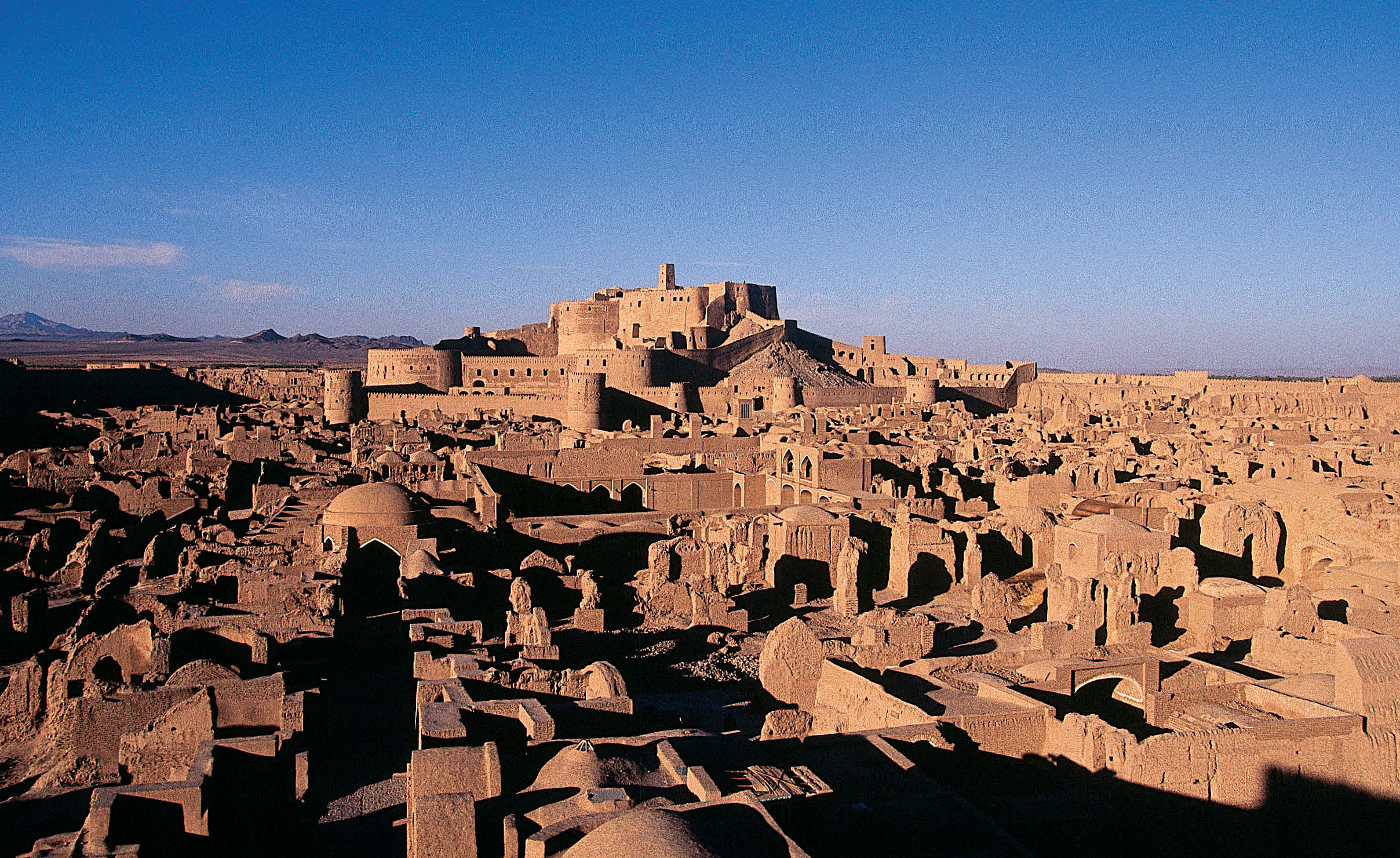
Byzantine–Sassanian front opposed the attacking Arabs. But both the Byzantines and the Sassanians oppressed their minorities, so the Miaphysites of Syria and Egypt, as well as the Christians of Iran, greeted the Arabs as liberators.
拜占庭—萨珊前线抵御了来犯的阿拉伯人。但拜占庭人和萨珊人都压迫各自的少数群体,因此叙利亚 (Syria) 和埃及 (Egypt) 的合性论者 (Miaphysites),以及伊朗 (Iran) 的基督徒,都把阿拉伯人当作解放者来迎接。
Chosrau I named as Mar Aba’s successor his personal physician Joseph (in office 552–567), who revealed himself as a greedy tyrant and had rebellious bishops arrested on the spot. Although an episcopal conference deposed him in 567, Joseph held onto his office for another three years, thanks to royal support. Only a parable first told by the physician Moses of Nisibis enabled the shah to change his mind. ‘A generous king once gave a poor man an elephant. Arriving at home, the man noticed that the door was too small for the elephant and, unless he tore down the wall, the house was also too small for the animal. And, incidentally, he would be unable to feed it. The poor man returned to the king and implored him to take back the elephant. The king agreed and took it back.’ Chosrau understood the suggestion and asked Moses what he wanted from him. ‘We are poor and would be very grateful to the king if he would take back his elephant.’ The shah agreed to Joseph’s removal, whereupon the bishops chose Ezekiel (in office 570–582) as their head.108 In order to prove his loyalty to the king, Ezekiel accompanied him in 576 on his renewed campaign against Byzantium, during which the fortified border city of Dara was conquered and the nearby Qartmin Monastery in Tur Abdin went up in flames.109 other minorities.’110 When upon Ezekiel’s death the bishops could not decide between the two candidates, the scholar Job and Bishop Ishoyahb of Arzun, the shah chose Ishoyahb I (in office 582–596), since Ishoyahb had regularly informed him about Byzantine troop movements from his border city of Arzoun.111
霍斯劳一世 (Chosrau I) 任命自己的御医约瑟 (Joseph) 为马尔·阿巴 (Mar Aba) 的继任者(任职 552–567 年)。此人暴露出自己是个贪婪的暴君,并当场逮捕了反叛的主教。尽管 567 年一次主教会议废黜了他,但多亏王室支持,约瑟又继续任职三年。只有尼西比斯的医生摩西 (Moses of Nisibis) 最初讲述的一则寓言,才使沙阿 (shah) 改变了主意。“一位慷慨的国王曾送给一个穷人一头大象。回到家时,那人发现门对大象来说太小了,而且除非他拆掉墙,房子对这只动物来说也太小了。此外,他也无法喂养它。穷人回到国王那里,恳求国王收回大象。国王同意了,把大象收了回去。”霍斯劳明白了这个暗示,问摩西想从他那里得到什么。“我们很穷,如果国王愿意收回他的大象,我们将非常感激。”沙阿同意罢免约瑟,于是主教们选择以西结 (Ezekiel)(任职 570–582 年)作为他们的首领。108 为了证明自己对国王的忠诚,以西结于 576 年陪同他再次征讨拜占庭 (Byzantium);在此期间,设防的边境城市达拉 (Dara) 被攻占,附近图尔阿布丁 (Tur Abdin) 的卡尔特明修道院 (Qartmin Monastery) 也被焚毁。109 其他少数群体。’110 以西结死后,主教们无法在两位候选人——学者约伯 (Job) 和阿尔尊的主教伊绍雅布 (Ishoyahb of Arzun)——之间做出决定,沙阿选择了伊绍雅布一世 (Ishoyahb I)(任职 582–596 年),因为伊绍雅布曾定期从自己的边境城市阿尔尊 (Arzoun) 向他通报拜占庭军队的动向。111
Statue carved from stone of possibly Shah Chosrau II (ruled 590–628), at Taq-e Bostan, Iran. This last important pre-Islamic ruler of Iran pursued an ambivalent policy with regard to the Church of the East. Caught between pressure from the Zoroastrian clergy and the religious conversion of his Christian favourite wife Shirin, he wavered between a Nestorian-friendly and an anti-Christian policy. There is sufficient room for speculation that a Christian-friendly policy on the part of Chosrau might have motivated the Christian population a few years later to mount an active resistance to the Muslim conquerors.
可能是沙阿·霍斯劳二世 (Shah Chosrau II) 的石雕雕像,位于伊朗 (Iran) 的塔克·博斯坦 (Taq-e Bostan)。这位伊朗最后一位重要的前伊斯兰时期统治者,对东方教会 (Church of the East) 奉行一种矛盾的政策。他夹在琐罗亚斯德教祭司的压力与其基督徒宠妃希琳 (Shirin) 的宗教皈依之间,在亲聂斯脱利派与反基督教政策之间摇摆不定。有充分的猜测空间认为,霍斯劳 (Chosrau) 若采取亲基督教政策,可能促使基督徒民众在数年后对穆斯林征服者发起积极抵抗。
Unfortunately, this just and tolerant ruler suffered several defeats by the Western Turks and the Byzantines, which led to a palace revolt. With the approval of his son Chosrau II (ruled 590–628), Hormizd was deposed, blinded and executed.112 Almost forty years later the patricide Chosrau II suffered the same fate at the hands of his son Shiroi. At the same time, the army mutinied under General Vahram Chobin (ruled 590–591), who declared himself the new shah.113 No escape route was open to Chosrau, save that to the arch-enemy, Byzantium. According to the chronicle of the Muslim theologian and historian at-Tabari (839–923), a Syrian stylite prophesied to the royal refugee the successful reconquest of his empire and its fall to the Arabs, who would
不幸的是,这位公正而宽容的统治者数次败于西突厥人 (Western Turks) 和拜占庭人 (Byzantines),这导致了一场宫廷叛乱。经其子库思老二世 (Chosrau II,在位590–628年) 同意,霍尔米兹德 (Hormizd) 被废黜、刺瞎并处死。112 将近四十年后,弑父者库思老二世 (Chosrau II) 也在其子希罗伊 (Shiroi) 手中遭遇了同样的命运。与此同时,军队在将军瓦赫拉姆·乔宾 (Vahram Chobin,在位590–591年) 的率领下哗变,他自立为新沙阿 (shah)。113 库思老无路可逃,唯有投奔宿敌拜占庭 (Byzantium)。据穆斯林神学家兼历史学家塔巴里 (at-Tabari,839–923) 的编年史记载,一位叙利亚柱修士 (Syrian stylite) 向这位王室流亡者预言,他将成功收复其帝国,而帝国将落入阿拉伯人 (Arabs) 之手,后者将会……
Chosrau was succeeded by Shah Hormizd IV (ruled 579–590), who was very kindly disposed towards the Christians. When the leading Mobeds protested his balanced policy towards religious minorities, the shah replied with an analogy: ‘As our royal throne has four legs and cannot stand on only the front two without also supporting itself on the two in the rear, so also must our religion rest not only on the Zoroastrians but also on the Christians, Jews and
霍斯劳 (Chosrau) 之后由沙阿霍尔米兹德四世 (Shah Hormizd IV) 继位(在位 579–590 年),他对基督徒非常友善。当为首的穆贝德们 (Mobeds) 抗议他对宗教少数群体采取的平衡政策时,这位沙阿用一个类比回应道:“正如我们的王座有四条腿,不能只靠前面两条腿站立,而不靠后面两条腿支撑,同样,我们的宗教也不能只依靠琐罗亚斯德教徒,还必须依靠基督徒、犹太人以及”
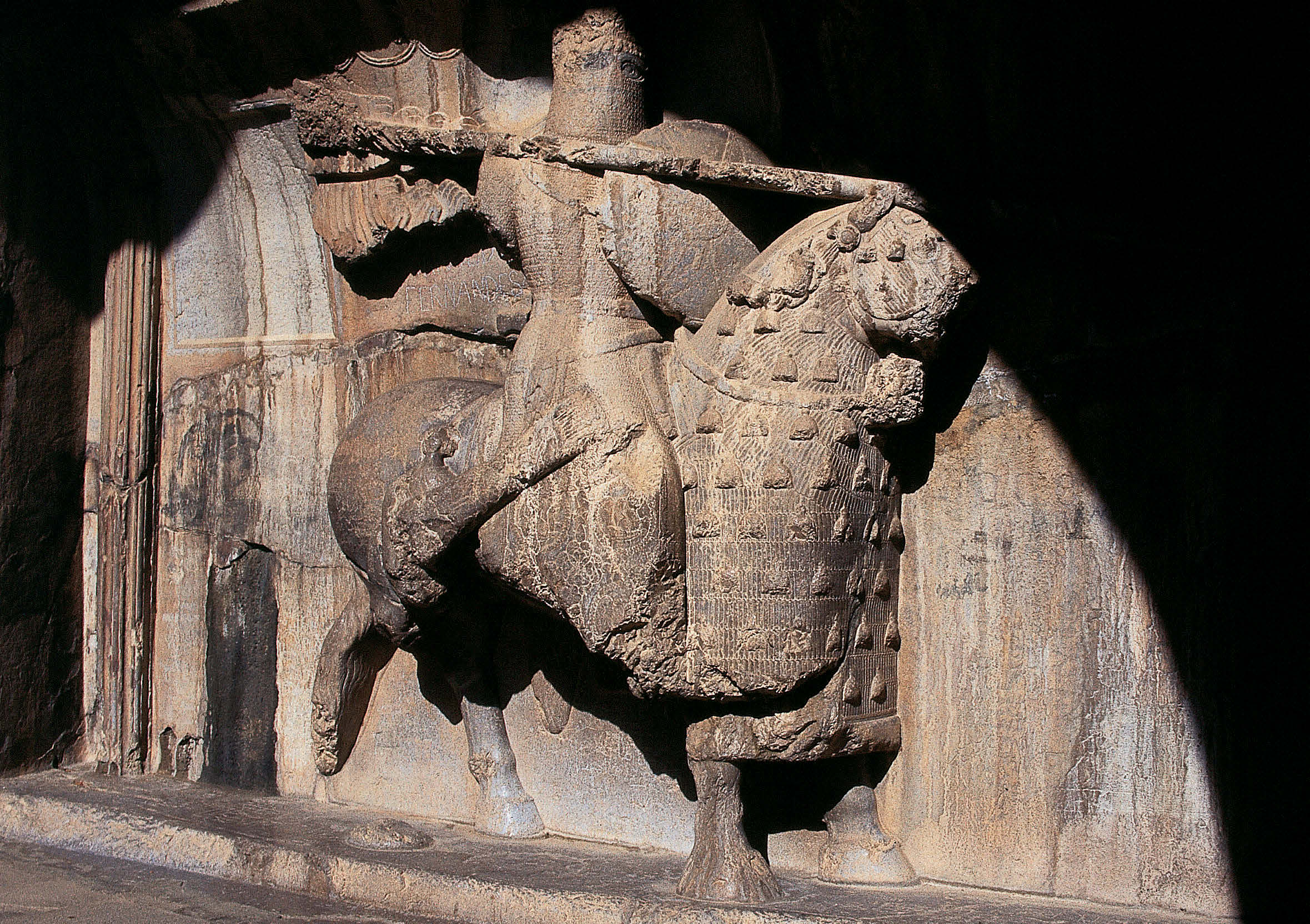
possess it until ‘the day of resurrection’.114 In fact, Emperor Maurice of Byzantium (ruled 582–602) received him benevolently, allegedly gave him Maria, one of his daughters, as a wife, and in 591, with a Byzantine-Armenian army, reconquered the Sassanian Empire for his son-in-law.115
占有它,直到“复活之日”。114 事实上,拜占庭皇帝莫里斯 (Maurice)(在位 582–602 年)仁慈地接待了他,据称将自己的一个女儿玛丽亚 (Maria) 许配给他为妻,并于 591 年率领一支拜占庭-亚美尼亚联军,为其女婿重新征服了萨珊帝国 (Sassanian Empire)。115
Shirin and the influential physician Gabriel became Miaphysites and harmed the Church of the East however they could, and Chosrau made a mortal enemy of the powerful, majority Christian Arab tribes of the kingdom of the Lakhmids by having their Christian king, No’man III (ruled 583–602), poisoned.
希琳 (Shirin) 和颇具影响力的医师加百列 (Gabriel) 成为合性论者 (Miaphysites),并竭力损害东方教会 (Ch. of E.);霍斯劳 (Chosrau) 还命人毒死拉赫姆王国 (Lakhmids) 强大的、以基督徒为主的阿拉伯部落的基督教国王努曼三世 (No’man III)(在位 583–602 年),从而使这些部落成为其不共戴天的敌人。
In 506 Emperor Anastasius I had the city of Dara in southern Tur Abdin, Turkey, built up into one of the strongest border fortresses of the
506年,皇帝阿纳斯塔修斯一世 (Anastasius I) 将土耳其图尔阿布丁 (Tur Abdin) 南部的达拉 (Dara) 城扩建为最坚固的边境堡垒之一。
Byzantine Empire. After the
拜占庭帝国 (Byzantine Empire)。在……之后
Sassanians were defeated before Dara in 530, 540 and 544, Chosrau I succeeded in conquering it in 573. The border city changed hands in 586, 604 and 628, before falling to the Arabs in 639. In 942 and 958 the Byzantines plundered it without being able to hold onto it.
萨珊波斯人 (Sassanians) 于530年、540年和544年在达拉 (Dara) 城下战败,霍斯劳一世 (Chosrau I) 则于573年成功将其征服。这座边境城市在586年、604年和628年几度易手,最终于639年落入阿拉伯人 (Arabs) 之手。942年和958年,拜占庭人 (Byzantines) 洗劫了该城,却未能将其守住。
The next decade was for the Christians of Iran a brief golden age, as peace and friendship reigned between the two empires. The young shah, influenced by his two Christian wives, Maria and Shirin, had the churches rebuilt and even gave the Nestorian Shirin one or two monasteries. Again the horizon appeared full of promise for the Christians, as Chosrau II actively promoted the Church of the East, and the Nestorians could hope that he would become a second Constantine and profess Christianity. A military alliance between Byzantium and the possibly also Christian Iran could have mounted serious resistance to the Arab onslaught. But events unfolded quite differently. The murder of Emperor Maurice in 602 ended the Byzantine– Sassanian friendship and began a 25-year war;
接下来的十年对伊朗 (Iran) 的基督徒而言是一段短暂的黄金时代,因为两大帝国之间和平与友谊盛行。年轻的沙阿 (shah) 受其两位基督徒妻子玛丽亚 (Maria) 和希琳 (Shirin) 的影响,下令重建教堂,甚至将一两座修道院赐给聂斯托利派的希琳 (Shirin)。基督徒的前景再次显得充满希望,因为霍斯劳二世 (Chosrau II) 积极扶持东方教会 (Ch. of E.),聂斯托利派 (Nestorians) 可以希望他会成为第二个君士坦丁 (Constantine) 并公开信奉基督教。拜占庭 (Byzantium) 与可能同样已基督教化的伊朗 (Iran) 若结成军事同盟,本可对阿拉伯人的猛攻形成有力抵抗。但事态的发展截然不同。602年,莫里斯皇帝 (Emperor Maurice) 遇刺,终结了拜占庭—萨珊 (Byzantine–Sassanian) 的友谊,并开启了一场长达25年的战争;
Patriarch Ishoyahb I had long since fallen out of favour with the shah, since he had not supported him during the power struggle with the usurper Vahram Chobin but had instead remained neutral. The catholicos went into exile in the kingdom of the Lakhmids, a vassal state of Iran, where he died in 596. The king’s sister, Hind the Younger, buried him in a monastery she had founded.116
宗主教伊绍雅布一世 (Ishoyahb I) 早已失宠于沙阿 (shah),因为他在与篡位者瓦赫拉姆·乔宾 (Vahram Chobin) 的权力斗争中未支持沙阿,而是保持中立。这位大公宗主教 (catholicos) 流亡到伊朗的附庸国拉赫米德王国 (Lakhmids),并于596年在那里去世。国王的妹妹小欣德 (Hind the Younger) 将他安葬在她所创建的一座修道院中。116
The Lakhmids, who originated in Yemen, began to create a kingdom in the third century CE with its capital at al-Hira, which lay a few kilometres south of modern Kufa. Al-Hira’s wealth was based on its position as a crossroads, since caravan routes led out from there to the south to Mecca and Yathrib (later Medina)
起源于也门 (Yemen) 的拉赫米德人 (Lakhmids) 于公元3世纪开始建立王国,定都于希拉 (al-Hira),该城位于现代库法 (Kufa) 以南数公里处。希拉 (al-Hira) 的财富建立在其作为交通枢纽的地位之上,因为商队路线从那里向南通往麦加 (Mecca) 和雅斯里布 (Yathrib)(后来的麦地那 (Medina))。
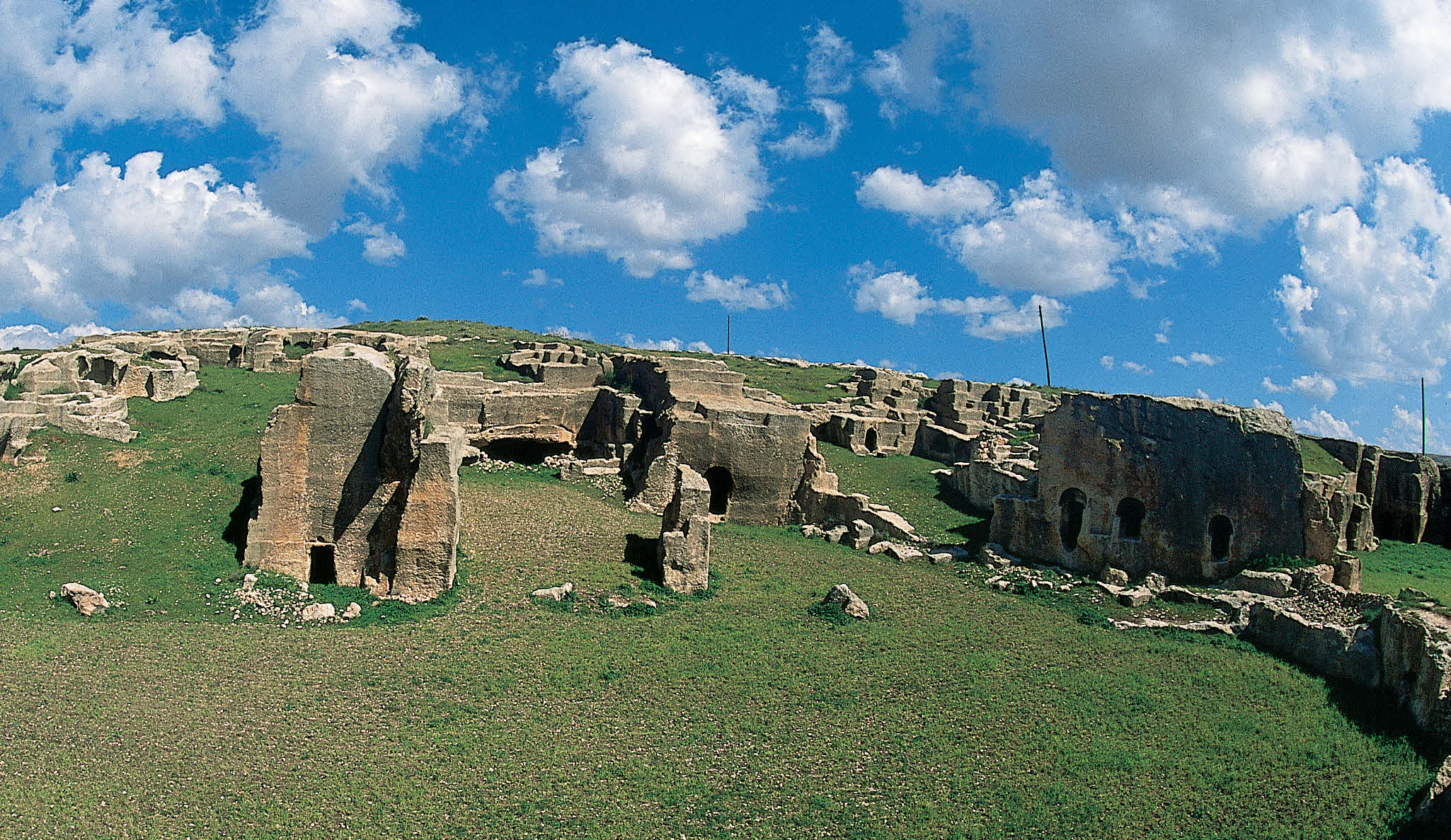
and to Najran and Yemen. Presumably the Christianization of al-Hira was a result of the persecutions of Shapur II, when Christians fled to the tolerant Lakhmids. The first monastery of al-Hira was founded around 370/380 by Mar Odisho. A legend has grown up around the selection of its location. When Mar Odisho drove out a demon while on an island in the Persian Gulf, the demon asked him where he should go. The saint ordered him to pick up a stone and carry it into the desert. The demon obeyed, placed the stone near the city of al-Hira, and returned to the saint. But Mar Odisho had seen in a dream a monastery in the place where the demon had put the stone. He decided to go to al-Hira and build a monastery there. However, he commanded the demon to stay on the island, where he remains today.117 The East Syrian Christian community of al-Hira grew quickly, and there is evidence of a Bishop Osea before 410. The city and its environs contained numerous churches and monasteries, to which were added monastic cells in the nearby mountains.118 The 1931 excavations carried out by Talbot Rice brought to light two sixth-century churches, whose doorways were decorated with stucco rosettes and plant motifs and whose walls were painted in colours. Motifs included a variety of crosses, as well as an ‘orante’, indicating that Nestorian churches used figurative works of art.119 al-Aqdam. She had this dedication inscribed on the monastery’s wall in the Arabic language and script: ‘This church was built by Hind, mother of King Amr and servant of Christ. May the God for whom she built this church forgive her sins and have mercy on her son.’ King Amr later converted back to paganism.121 When one considers that Arabic is for Muslims the language of the holy Koran, one cannot miss the irony that one of the oldest documents written in Arabic is a Christian inscription on a Nestorian monastery!122
以及到奈季兰 (Najran) 和也门 (Yemen)。据推测,希拉 (al-Hira) 的基督教化是沙普尔二世 (Shapur II) 迫害的结果,当时基督徒逃往宽容的拉赫姆人 (Lakhmids) 那里。希拉 (al-Hira) 的第一座修道院由马尔·奥迪绍 (Mar Odisho) 约于370/380年创建。围绕其选址,产生了一个传说。当马尔·奥迪绍 (Mar Odisho) 在波斯湾 (Persian Gulf) 的一座岛上驱出一个魔鬼时,魔鬼问他该往哪里去。这位圣人命令他捡起一块石头,把它带到沙漠里去。魔鬼听从了,把石头放在希拉 (al-Hira) 城附近,然后回到圣人那里。但马尔·奥迪绍 (Mar Odisho) 曾在梦中看见,魔鬼放石头的地方有一座修道院。他决定前往希拉 (al-Hira),在那里建造一座修道院。然而,他命令魔鬼留在岛上,至今仍在那里。117 希拉 (al-Hira) 的东叙利亚基督教社群 (East Syrian Christian community) 迅速发展,并有证据表明410年之前已有一位主教奥塞亚 (Bishop Osea)。该城及其周边地区有许多教堂和修道院,附近的山中又增添了修道小室。118 塔尔博特·赖斯 (Talbot Rice) 于1931年进行的发掘,使两座六世纪教堂重见天日;这两座教堂的门道装饰有灰泥玫瑰饰和植物纹样,墙壁则施以彩色绘画。纹样包括各种十字架,以及一个“祈祷像” (orante),表明聂斯托利派教堂 (Nestorian churches) 使用了具象艺术作品。119 阿格达姆 (al-Aqdam)。她让人用阿拉伯语和阿拉伯字母将这段题献铭刻在修道院的墙上:“这座教堂由欣德 (Hind) 建造,她是阿姆尔国王 (King Amr) 的母亲、基督的仆人。愿她为之建造这座教堂的上帝赦免她的罪,并怜悯她的儿子。”阿姆尔国王 (King Amr) 后来重新改信异教。121 当人们想到阿拉伯语对穆斯林而言是神圣《古兰经》的语言时,就不能不注意到其中的讽刺:最古老的阿拉伯语文献之一,竟是聂斯托利派修道院上的一则基督教铭文!122
Around 593 or 594 King No’man III professed Nestorian Christianity and was baptized by Bishop Shimun. His sister, Hind the Younger, was also a Christian and founded the monastery of Deir al-Lajja.123 Presumably Shah Chosrau II regarded the conversion of the powerful king No’man to Christianity as a danger. The Lakhmid also insulted Chosrau when he refused to give him his daughter’s hand with these words: ‘I will not give my daughter to a man who marries like the animals [with blood relations and polygamously].’124 The shah then had his vassal poisoned and No’man’s sons killed. He divided the kingdom into provinces. As soon became clear, the destruction of the Lakhmid kingdom was a serious strategic mistake, for there emerged on the south-western flank of Mesopotamia a power vacuum, which the Arabs were able to enter unopposed from 634 onward. Moreover, the feared light cavalry of the Lakhmid Arabs welcomed their brothers from central Arabia and strengthened their positions. Interestingly, Emperor Maurice had anticipated Chosrau’s error when, around 585, he destroyed the powerful vassal state of the Miaphysite Arab Ghassanids and divided it into 15 small principalities. Beginning in 634 the Arabs entered this breach unhindered, as well.125 Both the Sassanians and the Byzantines destroyed the only forces that could have stopped the Muslim tribes from the Hijaz. The city of al-Hira also rapidly declined in importance, when the Arabs began construction of the neighbouring
约593或594年,国王努曼三世 (King No’man III) 公开信奉聂斯托利派基督教 (Nestorian Christianity),并由主教希蒙 (Shimun) 施洗。他的妹妹小欣德 (Hind the Younger) 也是基督徒,并创建了代尔·拉贾 (Deir al-Lajja) 修道院。123 据推测,沙阿霍斯劳二世 (Shah Chosrau II) 将强大的国王努曼 (No’man) 皈依基督教视为一种危险。这位拉赫米德人 (Lakhmid) 在拒绝将女儿许配给霍斯劳 (Chosrau) 时,还用以下的话侮辱了他:“我不会把女儿嫁给一个像动物一样婚配的人 [与血亲通婚并实行一夫多妻]。”124 随后,沙阿 (shah) 命人毒死了他的附庸,并杀死了努曼 (No’man) 的儿子们。他将王国划分为若干行省。很快便显而易见,拉赫米德王国 (Lakhmid kingdom) 的毁灭是一个严重的战略错误,因为在美索不达米亚 (Mesopotamia) 的西南侧翼出现了一个权力真空,阿拉伯人 (Arabs) 得以从634年起不受阻碍地进入其中。此外,令人畏惧的拉赫米德阿拉伯人 (Lakhmid Arabs) 轻骑兵欢迎来自阿拉伯中部 (central Arabia) 的兄弟,并加强了他们的阵地。有趣的是,莫里斯皇帝 (Emperor Maurice) 早已预见到霍斯劳 (Chosrau) 的错误:约585年,他摧毁了一性论派阿拉伯加萨尼人 (Miaphysite Arab Ghassanids) 强大的附庸国,并将其分为15个小公国。从634年开始,阿拉伯人 (Arabs) 也同样不受阻碍地进入了这个缺口。125 萨珊人 (Sassanians) 和拜占庭人 (Byzantines) 都摧毁了唯一能够阻止来自希贾兹 (Hijaz) 的穆斯林部落的力量。希拉 (al-Hira) 城的重要性也迅速下降,当时阿拉伯人 (Arabs) 开始建造邻近的
The majority Nestorian Arabs of the Lakhmids, together with the likewise Nestorian Banu Taghlib, formed a buffer state to Byzantium in the south- west Sassanian Empire. On the Syrian side of the desert, however, lived the Miaphysite Ghassanids, whose king was a vassal of the Byzantine emperor.120 While the Lakhmids were mainly Nestorian and also included a few Miaphysites, their rulers remained, until the last significant king, pagan. The royal wives were different. The wife of Mundir III (ruled 506–554) and mother of his successor Amr (ruled 554–569), Hind the Elder, was a devout Christian, who after 554 had a monastery built which bore her name, Deir Hind
拉赫米德王朝 (Lakhmids) 中占多数的聂斯托利派 (Nestorian) 阿拉伯人,与同样信奉聂斯托利派的巴努·泰格利卜 (Banu Taghlib) 一起,在萨珊帝国 (Sassanian Empire) 西南部形成了一个面向拜占庭 (Byzantium) 的缓冲国。然而,在沙漠的叙利亚一侧,居住着一性论派的加萨尼人 (Miaphysite Ghassanids),其国王是拜占庭皇帝 (Byzantine emperor) 的附庸。120 尽管拉赫米德人 (Lakhmids) 主要信奉聂斯托利派,也包括少数一性论者 (Miaphysites),但其统治者直到最后一位重要国王为止,仍为异教徒。王室妻子们则不同。蒙迪尔三世 (Mundir III)(在位 506–554 年)的妻子、其继任者阿姆尔 (Amr)(在位 554–569 年)的母亲,长者欣德 (Hind the Elder),是一位虔诚的基督徒;554 年后,她让人修建了一座以她名字命名的修道院,即欣德修道院 (Deir Hind)。
city of Kufa around 636/638. won one victory after another, conquering the region of Tur Abdin around 605, Edessa in 607 or 609, Antioch in 611, Damascus in 613 and Jerusalem in 614, with Egypt falling in 619. It appeared as if Chosrau might achieve the glory and success of his Achaemenian forefathers.
库法城 (Kufa) 约在636/638年。接连赢得一个又一个胜利,约于605年征服图尔阿卜丁 (Tur Abdin) 地区,607或609年征服埃德萨 (Edessa),611年征服安条克 (Antioch),613年征服大马士革 (Damascus),614年征服耶路撒冷 (Jerusalem),619年埃及陷落。看来霍斯劳 (Chosrau) 似乎可能取得其阿契美尼德 (Achaemenian) 先祖的荣耀与成功。
Patriarch Ishoyahb I was followed by the ascetic Bishop Sabrisho I (in office 596–604), who was said to have encouraged King Chosrau II in a vision to go to battle against his rebellious uncle Bistam and prophesied his victory. According to Tabari, however, the Syrian stylite, whom the fleeing shah encountered in 590, had already foretold that his uncle would rise up against him.126 After the victorious battle, Chosrau decided, against the recommendation of the episcopal conference, to name as the new patriarch the bishop who had supported him. ‘We appoint for you [Bishop Sabrisho], whom you need and to whom we give authority over you.’ The assembled bishops could do nothing but burst into cheers.127 But the ascetic Sabrisho was insufficiently flexible to survive in the jungle of palace intrigue. As a consequence of his unwillingness to compromise regarding the powerful physician Gabriel of Singar, he forfeited the favour of the Nestorian concubine Shirin and thus also that of the king. Even on his death- bed, he refused to lift the excommunication of Gabriel.
宗主教伊绍雅布一世 (Ishoyahb I) 之后继任的是苦修者主教萨布里绍一世 (Sabrisho I)(在任596–604年),据说他曾在异象中鼓励国王霍斯劳二世 (Chosrau II) 出兵讨伐反叛的叔父比斯塔姆 (Bistam),并预言了他的胜利。然而,据塔巴里 (Tabari) 记载,逃亡中的沙阿 (shah) 于590年遇到的那位叙利亚柱修士早已预言,他的叔父会起兵反抗他。126 在这场获胜的战役之后,霍斯劳不顾主教会议的建议,决定任命那位支持他的主教为新任宗主教。“我们为你任命[主教萨布里绍],他是你所需要的,我们也将管辖你的权柄授予他。”聚集的主教们别无他法,只能爆发出欢呼。127 但苦修者萨布里绍不够圆通,无法在宫廷阴谋的丛林中生存。由于他不愿在有权势的医生辛加尔的加百列 (Gabriel of Singar) 一事上妥协,他失去了聂斯托利派妃子希琳 (Shirin) 的宠信,也因此失去了国王的宠信。甚至临终之际,他也拒绝解除对加百列的绝罚。
Tur Abdin, the ‘Mountain of the Servants [of God]’, served as the ‘Athos of the East’, since it numbered, in its heyday, about seventy mona- steries. When the city of Nisibis, which lay to the south of Tur Abdin, fell to the Sassanians in 363, the mountain region remained in Byzantine hands and was fortified accordingly. It jutted like a Byzantine peninsula into the Sassanian sea. At the start of the seventh century a significant minority of the monasteries were under East Syrian-Nestorian leadership; the majority belonged to the Melkite imperial Church, and the Miaphysite Jacobites also slowly gained a foothold. Since the bishops and abbots of the Byzantine imperial Church were considered suspect by the Persian conquerors, they were deposed in favour of Nestorian bishops. The same happened in Edessa. But, because the populace and the monks rejected these new prelates, the Sassanians replaced them with Miaphysite dignitaries, since the Jacobite Church also had no connection with Byzantium.129 In this way, the twenty-year occupation of Tur Abdin by the Sassanians decidedly promoted the expansion of the Miaphysite Church there. Sometimes, however, the association of a monastery with a particular Church was unclear.130 Until the late Middle Ages, Tur Abdin, under Arab control since 639, remained a preferred meeting point between the two wings of Syrian monasticism, the Jacobite and Nestorian monks. The last East Syrian monks finally left the south of Tur Abdin after 1838.
图尔阿布丁 (Tur Abdin),即“上帝众仆人之山” (Mountain of the Servants [of God]),曾充当“东方阿索斯” (Athos of the East),因为在其鼎盛时期,它拥有约七十座修道院。当位于图尔阿布丁南部的尼西比斯 (Nisibis) 城于363年落入萨珊人 (Sassanians) 手中时,该山区仍留在拜占庭 (Byzantine) 手中,并相应地设防。它像一座拜占庭半岛一样伸入萨珊王朝的汪洋之中。七世纪初,有相当数量但尚属少数的修道院处于东叙利亚-聂斯托利派 (East Syrian-Nestorian) 领导之下;大多数属于麦尔基特派帝国教会 (Melkite imperial Church),而一性论派雅各派 (Miaphysite Jacobites) 也逐渐站稳脚跟。由于拜占庭帝国教会的主教和修院院长被波斯征服者视为可疑,他们被废黜,由聂斯托利派主教 (Nestorian bishops) 取而代之。埃德萨 (Edessa) 也发生了同样的事。但是,由于民众和修士拒绝这些新教长,萨珊人又用一性论派高级教士 (Miaphysite dignitaries) 取代了他们,因为雅各派教会 (Jacobite Church) 同样与拜占庭没有联系。129 就这样,萨珊人对图尔阿布丁长达二十年的占领,决定性地促进了当地一性论派教会 (Miaphysite Church) 的扩展。然而,有时某座修道院与某一特定教会的归属关系并不明确。130 直到中世纪晚期,自639年起处于阿拉伯控制之下的图尔阿布丁,仍是叙利亚修道制度两个分支——雅各派修士与聂斯托利派修士 (Jacobite and Nestorian monks)——首选的会合点。最后一批东叙利亚修士 (East Syrian monks) 在1838年之后终于离开了图尔阿布丁南部。
Astonishingly, Chosrau named as Sabrisho’s successor Gregory, the metropolitan of Nisibis, who was renowned for his rigorous discipline. But the majority of bishops feared him, and they elected in his place the favourite of Shirin, Gregory of Prat (in office 605–608). The tricked shah confirmed the election, but with this threat: ‘Patriarch he is, and patriarch shall he be – but I will never allow another election.’128 Chosrau kept his word, and upon the death of the unworthy and greedy Patriarch Gregory he seized his possessions and forbade the election of a successor. Without the interim leadership of Babai, the Church of the East would probably have collapsed.
令人惊讶的是,霍斯劳 (Chosrau) 任命尼西比斯 (Nisibis) 都主教格列高利 (Gregory) 为萨布里绍 (Sabrisho) 的继任者,此人以其严苛的纪律而闻名。但大多数主教都畏惧他,于是他们改选希琳 (Shirin) 的宠臣、普拉特的格列高利 (Gregory of Prat) 代替他(在位 605–608 年)。受骗的沙阿 (shah) 批准了这次选举,但附带了这样的威胁:“他既是宗主教,就让他继续做宗主教——但我绝不允许再举行另一次选举。”128 霍斯劳 (Chosrau) 信守诺言;在不称职且贪婪的宗主教格列高利 (Gregory) 死后,他没收了其财产,并禁止选举继任者。若无巴巴伊 (Babai) 的临时领导,东方教会 (Church of the East) 很可能已经崩溃。
The murder of Chosrau’s Byzantine father- in-law Maurice in 602 offered the Sassanian ruler the opportunity to begin a new war against Byzantium. At first the Sassanian troops rapidly
602年,霍斯劳 (Chosrau) 的拜占庭岳父莫里斯 (Maurice) 遇刺,这为萨珊 (Sassanian) 统治者提供了对拜占庭 (Byzantium) 发动新战争的机会。起初,萨珊军队迅速
In Jerusalem the Sassanians killed about 90,000 Christians and stole the so-called True Cross, on which Jesus had been crucified and which Helena, mother of Emperor Constantine,
在耶路撒冷 (Jerusalem),萨珊人 (Sassanians) 杀害了约九万名基督徒,并盗走了所谓的真十字架 (True Cross);耶稣 (Jesus) 曾被钉死其上,而皇帝君士坦丁 (Emperor Constantine) 的母亲海伦娜 (Helena),
‘discovered’ in 326.131 The Sassanians allegedly found Jews to be willing helpers, who ransomed the Christians imprisoned by the Persians and presented them with two alternatives: renounce Christ or be killed. At the same time, they are said to have systematically destroyed the churches.132 For his part, Chosrau gave the cross to his beloved wife Shirin, who had it taken to the palace of Ganzak in western Azerbaijan.133 Chosrau’s armies immediately proceeded farther into Asia Minor and advanced as far as the Bosporus; it seemed as though the shah would finally conquer Byzantium.
“发现”于326年。131 据称,萨珊人 (Sassanians) 发现犹太人 (Jews) 是心甘情愿的帮手,他们为被波斯人 (Persians) 囚禁的基督徒 (Christians) 支付赎金,并给他们两个选择:放弃基督 (Christ),否则被杀。与此同时,据说他们还系统地摧毁了教堂。132 至于霍斯劳 (Chosrau),他将十字架赠予爱妻希琳 (Shirin),希琳命人将其送到阿塞拜疆 (Azerbaijan) 西部的甘扎克 (Ganzak) 宫殿。133 霍斯劳的军队随即继续深入小亚细亚 (Asia Minor),一直推进到博斯普鲁斯 (Bosporus);看来这位沙阿 (shah) 终将征服拜占庭 (Byzantium)。
A certainly unintended consequence of the Sassanian conquest of the Byzantine Middle East was the fact that the Christians suddenly made up half the population not just within Mesopotamia but within the whole empire, since the peoples of Syria, Asia Minor, Palestine and southern Egypt were all Christian – majority Jacobite and minority Melkite. Presumably it was this complex situation that motivated Chosrau to pursue a more or less pragmatic, balanced policy towards the Nestorians and Jacobites. The shah was undoubtedly aware that none of the Christian Roman and later Byzantine emperors had succeeded in imposing a uniform Christian faith – how could he, a ‘pagan’ ruler, succeed? If he had decided on a Sassanian imperial Church, this would have led to unrest and circumstances resembling civil war, as had happened in the Byzantine Empire in the fifth and sixth centuries.
萨珊王朝 (Sassanian) 对拜占庭中东 (Byzantine Middle East) 的征服,有一个肯定并非有意的后果:基督徒突然之间不仅构成了美索不达米亚 (Mesopotamia) 境内、而且构成了整个帝国人口的一半,因为叙利亚 (Syria)、小亚细亚 (Asia Minor)、巴勒斯坦 (Palestine) 和埃及南部 (southern Egypt) 的各族群全都是基督徒——其中雅各派 (Jacobite) 占多数,麦尔基派 (Melkite) 占少数。想必正是这种复杂局势促使霍斯劳 (Chosrau) 对聂斯托利派 (Nestorians) 和雅各派 (Jacobites) 采取一种多少务实、平衡的政策。这位沙阿 (shah) 无疑清楚,信奉基督教的罗马 (Roman) 皇帝以及后来的拜占庭 (Byzantine) 皇帝,没有一个成功强加一种统一的基督教信仰——他一个“异教”统治者,又怎么可能成功?倘若他决定建立一个萨珊帝国教会,那就会导致动荡和类似内战的局面,正如五世纪和六世纪拜占庭帝国所发生的那样。
The Byzantine emperor Heraclius (ruled 610–641) would not be put off; he made an attack from the rear on the Persians who were besieging Byzantium and entered Armenia, Azerbaijan and northern Mesopotamia in 624, returning at the end of 627 with massive spoils. Then a palace revolt broke out in Ctesiphon, organized by Crown Prince Shiroi and a few powerful Nestorian families. The driving force on the Nestorian side was Shamta, for Chosrau II had had his father, the master of the imperial
拜占庭皇帝希拉克略 (Heraclius)(在位 610–641 年)不肯罢休;他从后方袭击了正在围攻拜占庭 (Byzantium) 的波斯人 (Persians),并于 624 年进入亚美尼亚 (Armenia)、阿塞拜疆 (Azerbaijan) 和美索不达米亚北部 (northern Mesopotamia),在 627 年底带着大量战利品返回。随后,泰西封 (Ctesiphon) 爆发了一场宫廷叛乱,由皇储希罗伊 (Shiroi) 和少数有权势的聂斯托利派 (Nestorian) 家族组织。聂斯托利派一方的推动力量是沙姆塔 (Shamta),因为霍斯劳二世 (Chosrau II) 曾让他的父亲,即帝国[?]的主人……
(Above) The strongly fortified Syrian Orthodox Church of Mor Hadbeshabo in the village of Ainwardo, Tur Abdin, was besieged by Turkish-Kurdish military units in 1915 and attacked by Kurdish terrorists in 1995. Even today bullets remain in the walls. Tur Abdin was for centuries a meeting point for the Church of the East, the Syrian Orthodox and the Byzantine imperial Church.
位于图尔阿布丁 (Tur Abdin) 艾因瓦尔多 (Ainwardo) 村、防御坚固的叙利亚正统教会 (Syrian Orthodox Church) 的莫尔·哈德贝沙博教堂 (Church of Mor Hadbeshabo),于1915年被土耳其-库尔德军事部队围困,并于1995年遭到库尔德恐怖分子袭击。直至今日,墙壁上仍嵌有子弹。数个世纪以来,图尔阿布丁 (Tur Abdin) 一直是东方教会 (Ch. of E.)、叙利亚正统教会 (Syrian Orthodox) 和拜占庭帝国教会 (Byzantine imperial Church) 的交汇点。
(Left) A silver-covered Gospel book in the Syrian Orthodox Church of the Forty Martyrs in Mardin, Tur Abdin.
(左)位于图尔阿布丁 (Tur Abdin) 马尔丁 (Mardin) 的叙利亚正教会四十殉道者教堂 (Syrian Orthodox Church of the Forty Martyrs) 内的一部银质封面福音书。
(Opposite bottom) The Feast of the Discovery of the Cross, which the Church of the East celebrates on 13 September. From a Nestorian Peshitta Gospel book, written in Estrangela, from the thirteenth century. This illustrated manuscript from northern Mesopotamia or Tur Abdin proves that in the thirteenth century the Church of the East was not yet aniconic.26 The upper picture shows the vision of Constantine, and the lower the search for the True Cross.
(对页底部)东方教会 (Ch. of E.) 于9月13日庆祝的寻获十字架节 (The Feast of the Discovery of the Cross)。出自一部13世纪、以埃斯特兰格拉体 (Estrangela) 书写的聂斯托利派 (Nestorian) 别西大译本 (Peshitta) 福音书。这部来自美索不达米亚 (Mesopotamia) 北部或图尔阿布丁 (Tur Abdin) 的插图抄本证明,在13世纪,东方教会 (Ch. of E.) 尚未采取反圣像立场。26 上图展示君士坦丁 (Constantine) 的异象,下图则展示寻找真十字架 (True Cross) 的场景。
(State Library of Berlin, Prussian cultural property; Sachau 304, parchment manuscript 195 Bl., Folio 162.)
(柏林国家图书馆 (State Library of Berlin),普鲁士文化财产 (Prussian cultural property);Sachau 304,羊皮纸抄本 195 Bl.,第162对开页。)
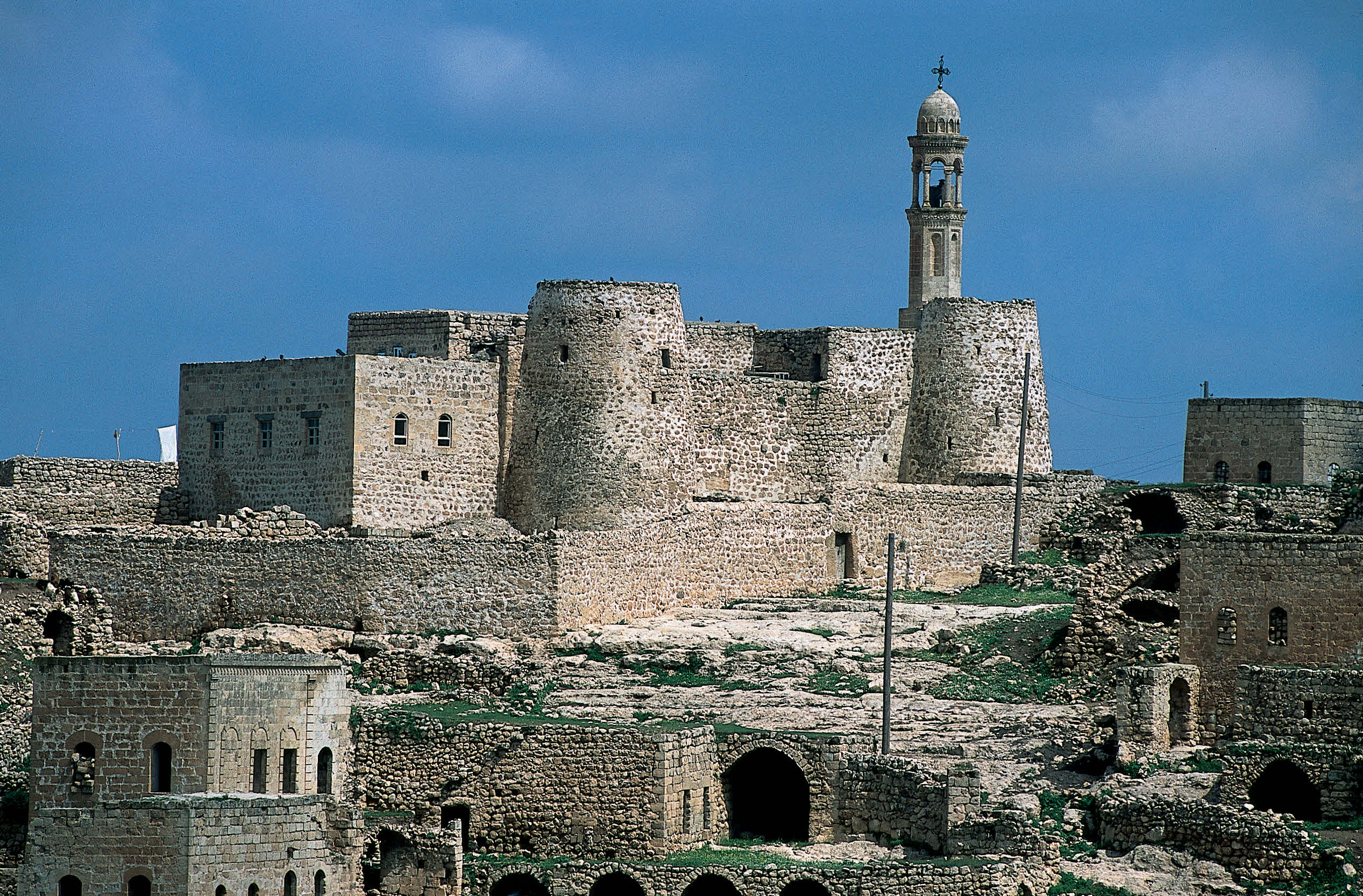
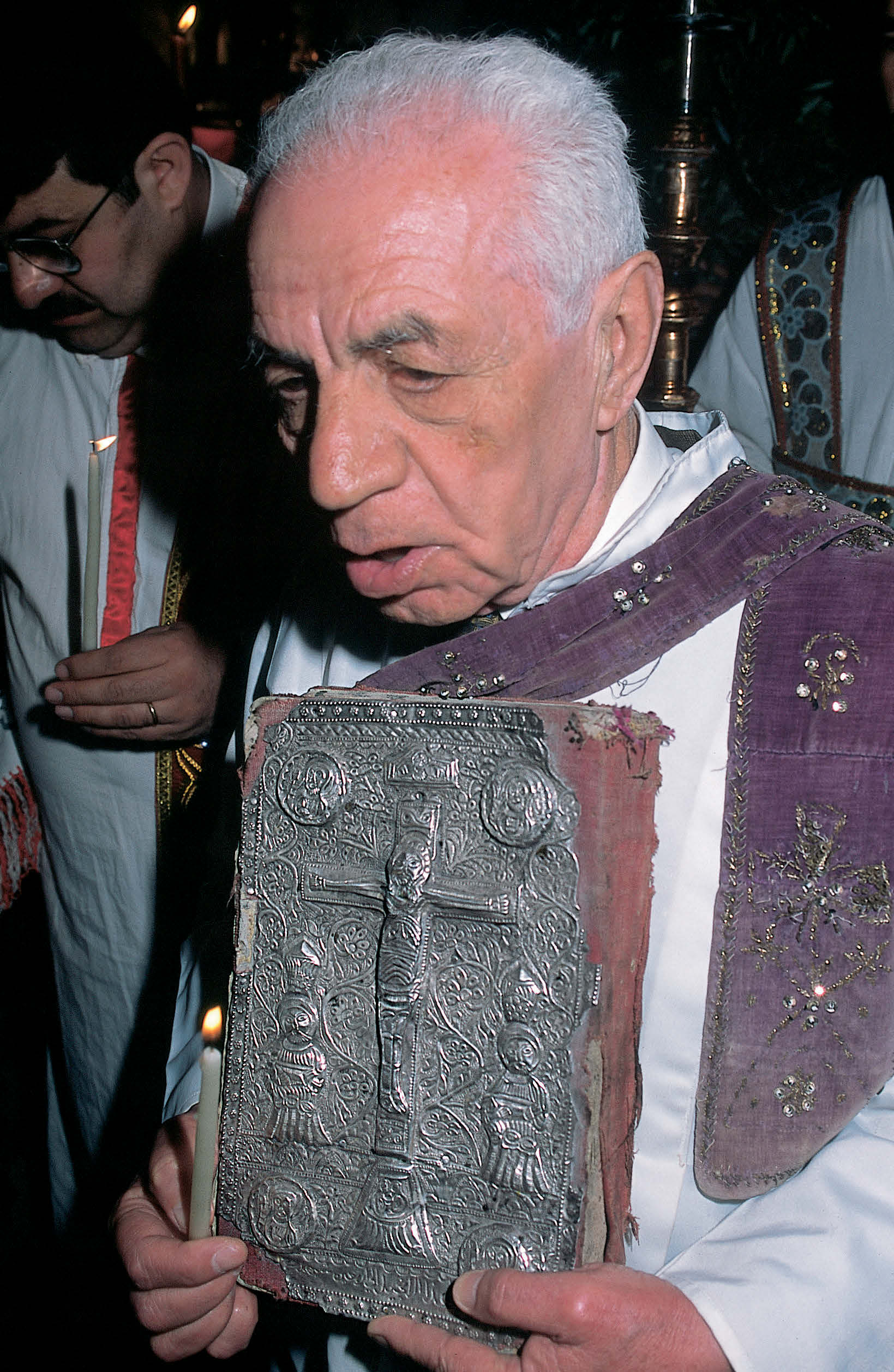
The Monastery of Gabriel, which was originally called Qartmin, is the see of the Syrian Orthodox archbishop Timothy Samuel Atkas. The monastery was founded by the two hermits Samuel (†406) and Simeon (†433) before 396/397, perhaps as early as around 350.27 In 397 Emperor Arcadius supported the first renovation, after which Emperor Theodosius II (ruled 408–450) made a generous donation to the monastery after Simeon cured him of an eye disease. In the eighth century the monastery was suspected of
加百列修道院 (Monastery of Gabriel),原称卡尔特明 (Qartmin),是叙利亚正教会 (Syrian Orthodox) 大主教提摩太·塞缪尔·阿特卡斯 (Timothy Samuel Atkas) 的主教座。该修道院由两位隐修士撒母耳 (Samuel)(†406)和西缅 (Simeon)(†433)在396/397年之前创建,或许早至约350年。27 397年,阿卡狄乌斯皇帝 (Emperor Arcadius) 支持了第一次修缮;此后,狄奥多西二世皇帝 (Emperor Theodosius II,在位408–450年) 在西缅治愈其眼疾后,向该修道院慷慨捐赠。八世纪时,该修道院被怀疑……
Nestorian sympathies. Over the course of its more than 1600-year history it was attacked several times, including, for instance, in 830 and 1140 by Kurds, in 1260 by Mongols, in 1395 by Tamerlane, and in 1490, 1915 and 1926 again by Kurds. In 1970 it was plundered by Kurdish bandits. treasury Yazdin, murdered in order to confiscate his great wealth. Shamta and Shiroi – who had allegedly secretly converted to Christianity134 – had Chosrau and his 16 other sons murdered in 628; Shiroi took the throne under the name Kavad II. If Shamta had hoped that the patricide Shiroi would show appreciation for his leading role in the plot against the deposed shah, he was bitterly disappointed. Shiroi ordered that Shamta’s right hand, which had struck down his father, Chosrau II, be cut off, and he then had him crucified in the capital in front of the Beit Narkos Church.135 Kavad II died after a few months of rule. Since he had, by murdering his brothers, eliminated all possible male successors to the throne, the country fell into civil war. Within the space of just four years, until the accession of Yazdgerd III (632–651), there were ten different rulers, including two queens and a usurping general.
聂斯托利派同情。在其1600多年的历史中,它曾多次遭到攻击,例如,830年和1140年遭库尔德人 (Kurds) 攻击,1260年遭蒙古人 (Mongols) 攻击,1395年遭帖木儿 (Tamerlane) 攻击,1490年、1915年和1926年又遭库尔德人攻击。1970年,它遭到库尔德匪徒劫掠。司库亚兹丁 (Yazdin) 被杀,目的是没收其巨额财富。沙姆塔 (Shamta) 和希罗伊 (Shiroi)——据称他们已秘密皈依基督教134——于628年命人谋杀了霍斯劳 (Chosrau) 及其另外16个儿子;希罗伊以卡瓦德二世 (Kavad II) 之名登上王位。如果沙姆塔 (Shamta) 曾希望弑父者希罗伊 (Shiroi) 会感激他在推翻被废黜沙阿 (shah) 的阴谋中所起的主导作用,那他则大失所望。希罗伊 (Shiroi) 下令砍下沙姆塔 (Shamta) 的右手——正是这只手击倒了他的父亲霍斯劳二世 (Chosrau II)——随后,他命人在首都贝特纳尔科斯教堂 (Beit Narkos Church) 前将沙姆塔钉死在十字架上。135 卡瓦德二世 (Kavad II) 在位仅数月便去世。由于他通过谋杀自己的兄弟,除掉了所有可能继承王位的男性继承人,国家陷入了内战。在短短四年内,直到伊嗣俟三世 (Yazdgerd III, 632–651) 即位之前,先后有十位不同的统治者,其中包括两位女王和一位篡位的将军。
Immediately after he took the throne, Kavad II demanded that the Nestorians name a new patriarch. Since Babai the Great, who had served as interim leader of the Church of the East for twenty years, refused official appointment, the election went to Ishoyahb II of Gedala (628–646). A legend told by Bishop Thomas of Marga, however, suggests that Babai later regretted his refusal of the election. After he returned to his monastic cell on Mount Izla, an angel of God appeared to him, riding a white horse and bearing a flaming sword. He said to Babai, ‘Since you have excused yourself from the office of patriarch, and another stands therein, grant me permission to follow him. I’m an angel commanded by God, the Lord of all, to minister unto the patriarchal throne. As long as you were the vicar of the catholicos, from the first day even until now, I never departed from your side; but now it is necessary for me to cleave to him that has received this office.’ Babai sighed and replied, ‘If I had known that you were with me, I would have accepted this great work. But now go in
卡瓦德二世 (Kavad II) 一登基,就要求聂斯托利派 (Nestorians) 任命一位新宗主教。由于已担任东方教会 (Ch. of E.) 临时领袖二十年的大巴巴伊 (Babai the Great) 拒绝正式任命,选举便归于格达拉的伊绍亚布二世 (Ishoyahb II of Gedala)(628–646)。然而,马尔加的主教托马斯 (Bishop Thomas of Marga) 讲述的一则传说表明,巴巴伊后来后悔自己拒绝了这次选举。他回到伊兹拉山 (Mount Izla) 上的修道小室后,上帝的一位天使向他显现,骑着白马,手持火焰之剑。他对巴巴伊说:“既然你已推辞宗主教之职,另有一人担任此职,请允许我去跟随他。我是奉万物之主上帝之命,侍奉宗主教宝座的天使。只要你是大公宗主 (Cath.) 的代理人,从第一天直到如今,我从未离开你身边;但现在我必须依附于那领受了这职分的人。”巴巴伊叹了口气,回答说:“如果我知道你与我同在,我就会接受这项伟大的工作。但现在你进去吧
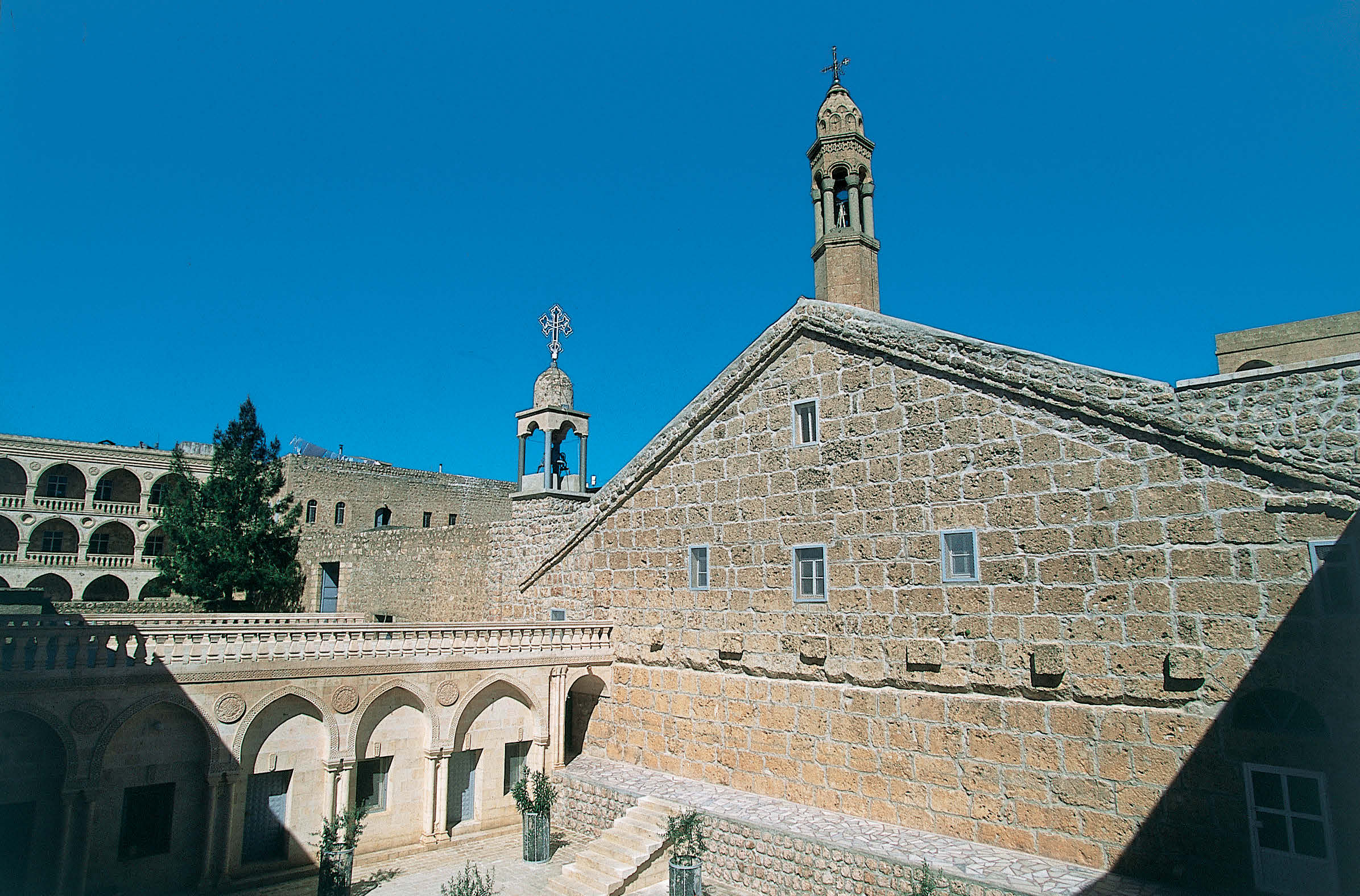
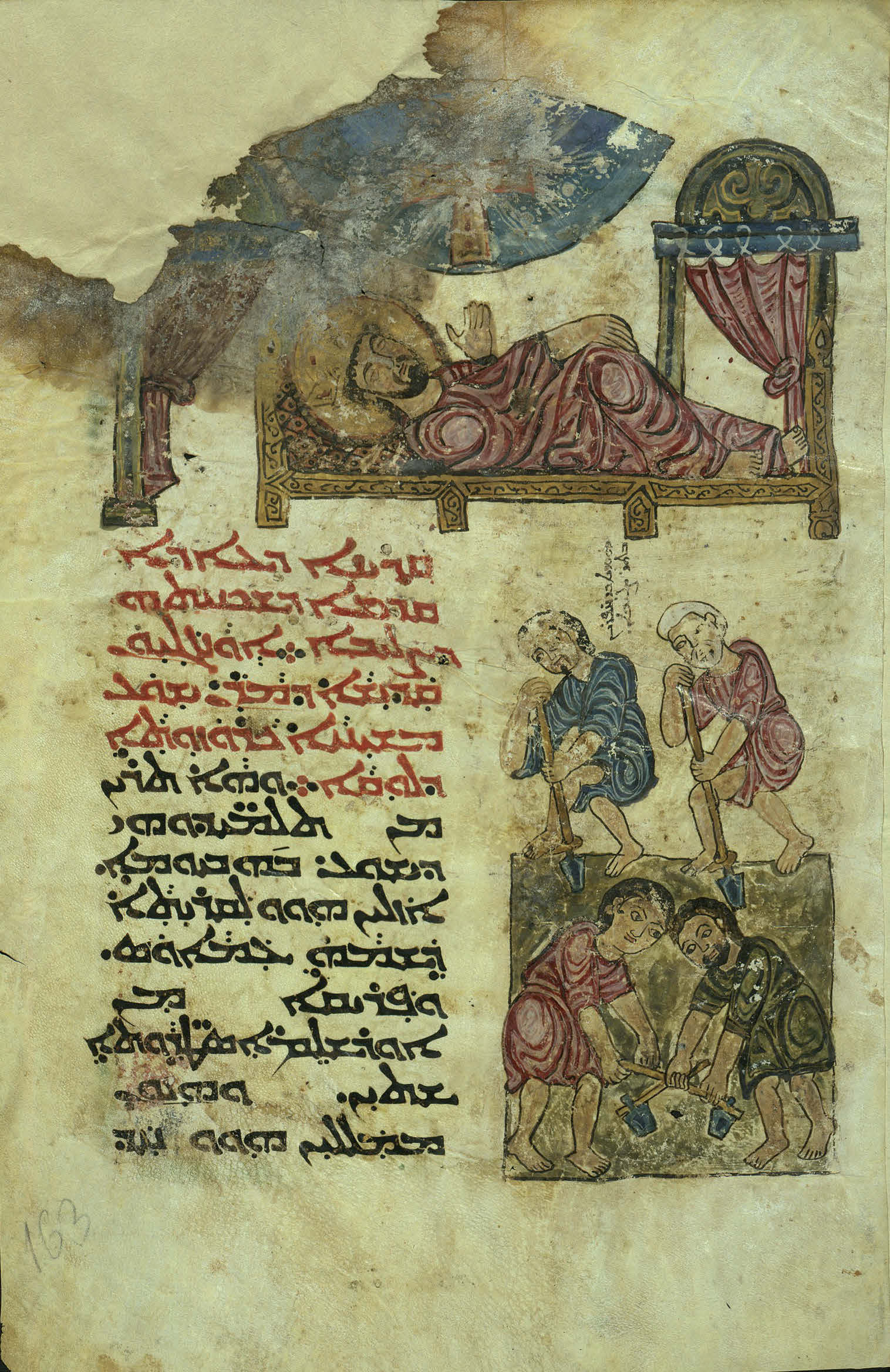
The Zoroastrian shrine and
琐罗亚斯德教神庙和
Sassanian palace of Ganzak, also called Takht-e Suleiman. A tradition states that Chosrau II gave the True Cross, which had been taken from Jerusalem in 614, to his wife Shirin, who kept it in the palace of Ganzak.28 The city of Ganzak was from 486 at the latest the see of a Nestorian bishop.29 The Sassanian palace was restored and enlarged six centuries later by the Mongol Il-Khan Abaqa (ruled 1265–1282). peace and pray for me.’136
萨珊王朝的甘扎克宫殿 (Sassanian palace of Ganzak),又称塔赫特-苏莱曼 (Takht-e Suleiman)。有传说称,霍斯劳二世 (Chosrau II) 将614年从耶路撒冷 (Jerusalem) 夺来的真十字架 (True Cross) 送给了他的妻子希琳 (Shirin),希琳将其保存在甘扎克宫殿中。28 甘扎克城最迟自486年起就是一个聂斯托利派主教 (Nestorian bishop) 的教座。29 六百年后,蒙古伊儿汗阿八哈 (Abaqa,在位1265–1282年) 修复并扩建了这座萨珊王朝宫殿。平安,并为我祈祷。’136
Eucharist according to the East Syrian rite, with the participation of the emperor and the Byzantine bishops. The only drop of bitterness was the conversion of his bishop Sahdona to the Byzantine, Chalcedonian Church.138 Upon Ishoyahb’s return to the capital, he was accused of breaking with orthodox belief because of his ecumenical worship with the Byzantine bishops and the emperor. But the patriarch was an adroit diplomat, who refuted the hateful attacks with modesty and kindness.139
按东叙利亚礼仪 (East Syrian rite) 举行的圣体圣事,皇帝和拜占庭主教们参与其中。唯一的一丝苦涩,是他的主教萨多纳 (Sahdona) 皈依了拜占庭的迦克墩教会 (Byzantine, Chalcedonian Church)。138 伊绍雅布 (Ishyahb) 返回首都后,因与拜占庭主教们和皇帝共同举行合一性的礼拜,被指控背离正统信仰。但这位宗主教是一位机敏的外交家,他以谦逊和仁慈驳斥了那些恶意的攻击。139
The election of Ishoyahb II was a stroke of luck not only for the Church of the East but also for the whole country. First he reorganized the theological schools, in order to better prepare the clergy for debates with the expanding Miaphysite presence. In 630 Queen Boran (630–631), a daughter of Chosrau II, asked him to lead a peace delegation to the Byzantine emperor, in order to secure the desperately needed peace. She also asked him to return the True Cross, as a sign of goodwill.137 The high- ranking delegation consisted of the patriarch, three metropolitans and other bishops; they met Emperor Heraclius in Aleppo. The patriarch was successful and established a long-lasting peace. At the same time, he celebrated the
伊绍雅布二世 (Ishoyahb II) 的当选不仅是东方教会 (Ch. of E.) 的幸事,也是整个国家的幸事。他首先重组了神学学校,以便更好地让神职人员为与不断扩张的合性论派 (Miaphysite) 势力进行辩论做好准备。630年,霍斯劳二世 (Chosrau II) 的女儿博兰女王 (Queen Boran,630–631年在位) 请求他率领一个和平使团前往拜占庭皇帝处,以确保获得亟需的和平。她还请求他归还真十字架 (True Cross),作为善意的表示。137 这个高级别使团由宗主教、三位都主教和其他主教组成;他们在阿勒颇 (Aleppo) 会见了希拉克略皇帝 (Emperor Heraclius)。这位宗主教取得了成功,并缔结了持久的和平。与此同时,他庆祝了
No sooner had the patriarch given his country peace with Byzantium than internal power struggles broke out again, and Queen Boran, beloved by the people, was murdered by an army general. After further tumult the last Sassanian, Yazdgerd III, took the throne. But the empire
宗主教刚为自己的国家与拜占庭 (Byzantium) 带来和平,内部权力斗争就再次爆发,而深受人民爱戴的博兰女王 (Boran) 被一名军队将领谋杀。经过进一步的动乱,萨珊王朝 (Sassanian) 的末代君主伊嗣俟三世 (Yazdgerd III) 登上了王位。但帝国
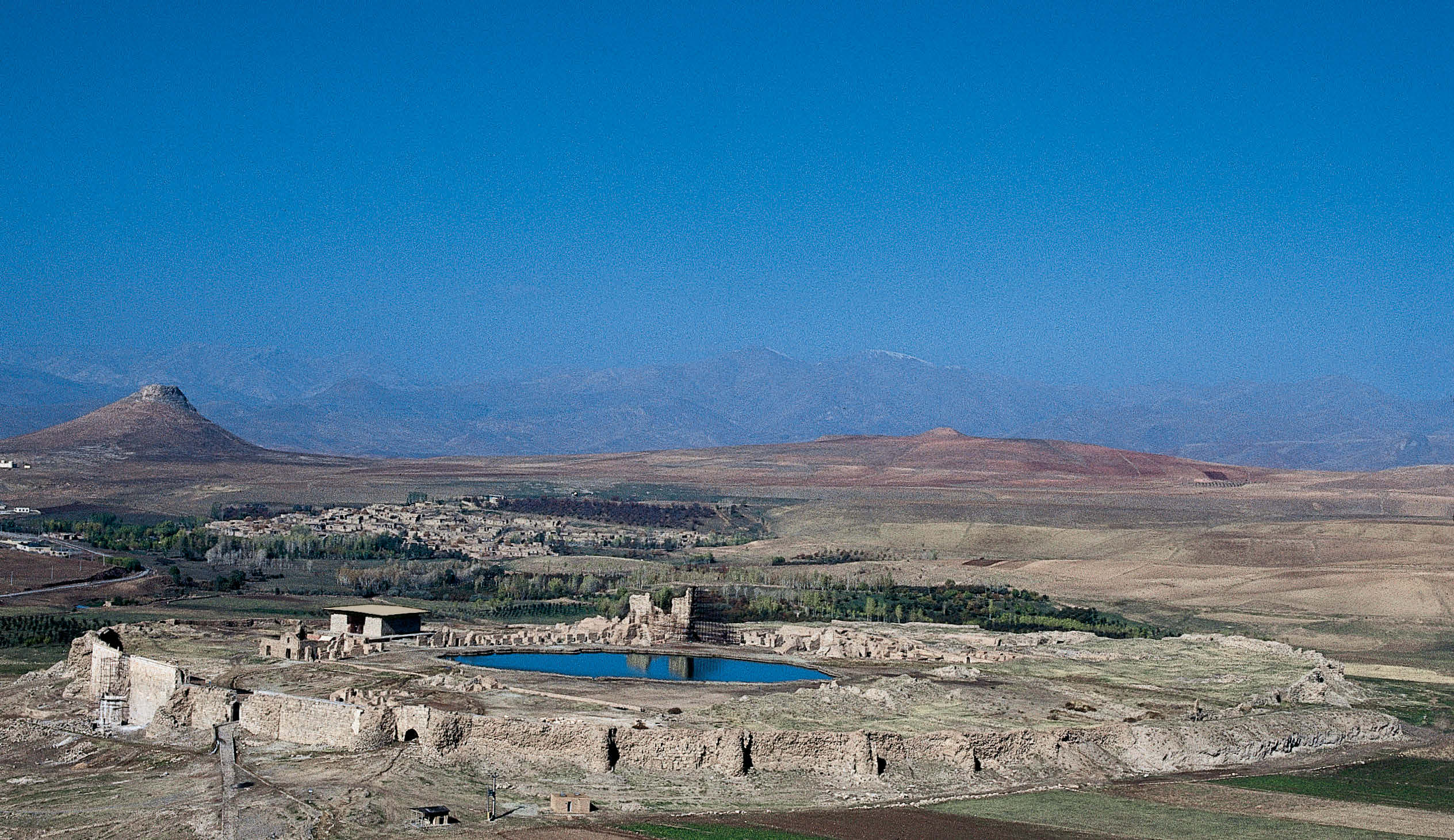
Around 630 the Nestorian monk Hormizd founded the Monastery of Rabban Hormizd, north-east of Alqosh, northern Iraq. From 1504 to 1804 this leading monastery of the Church of the East was, with interruptions and alternately with neighbouring Alqosh, the see of the patriarchs from the Abuna family.
约630年,聂斯脱利派修士霍尔米兹德 (Hormizd) 在伊拉克北部阿尔科什 (Alqosh) 东北创建了拉班·霍尔米兹德修道院 (Monastery of Rabban Hormizd)。从1504年到1804年,这座东方教会 (Ch. of E.) 的首要修道院曾时断时续,并与邻近的阿尔科什 (Alqosh) 交替,作为来自阿布纳家族 (Abuna family) 的历任宗主教的教座。
It is home to the graves of nine patriarchs. The monastery was plundered countless times by the Kurds, which led to the loss of the large collection of manuscripts in 1850. Today it belongs to the
这里是九位宗主教墓地的所在地。该修道院曾无数次遭到库尔德人 (Kurds) 的劫掠,致使大量手稿收藏于1850年散失。如今它属于
Chaldean Church.30 In summer 2014, Kurdish peshmerga and local fighters successfully defended Alqosh and the monastery against the ‘Islamic State’. had been so weakened by the two-decade-long war with Byzantium and the subsequent civil war that it could not resist the onslaught of the Arabs. They first defeated the likewise war- weary Byzantium in 636 at the River Yarmuk and conquered Palestine and Syria, after which they destroyed the Sassanian army a few months later at al-Hira and desecrated the churches and monasteries.140 In 637 the capital Seleucia- Ctesiphon fell to the Arabs, who largely plundered it. Patriarch Ishoyahb, however, had earlier retreated to Kirkuk. The further defeat of 642 at Nehavand in the province of Hamedan broke the final Sassanian resistance. Yazdgerd fled to Merv, where he was murdered in 651 and buried by a Nestorian bishop.141 Yazdgerd’s son, Piroz II (†679), fled to China, where he received an honorary post in the office in the imperial administration of the Tang Dynasty (618–907) in 661 and was granted permission in 677 to build a second Nestorian monastery in the imperial capital of Chang’an. His son Narses, who took the name Piroz III, later tried in vain to persuade the Chinese emperor to reconquer Iran. He died in 707 in exile in China.142 It is one of the many ironies of history that the last of the Sassanian shahs, who had persecuted the Christians all too often, owed his final resting place to a bishop, and that his son founded a Nestorian monastery while in exile!
迦勒底教会 (Chaldean Church)。30 2014年夏,库尔德“自由斗士” (Kurdish peshmerga) 和当地战士成功保卫了阿尔科什 (Alqosh) 和该修道院,抵御了“伊斯兰国” (‘Islamic State’)。它因与拜占庭 (Byzantium) 长达二十年的战争以及随后的内战而被削弱得如此严重,以至于无法抵抗阿拉伯人 (Arabs) 的猛攻。他们先于636年在雅尔穆克河 (River Yarmuk) 击败了同样厌战的拜占庭 (Byzantium),征服了巴勒斯坦 (Palestine) 和叙利亚 (Syria);几个月后,他们又在希拉 (al-Hira) 摧毁了萨珊军队 (Sassanian army),并亵渎了教堂和修道院。140 637年,首都塞琉西亚-泰西封 (Seleucia-Ctesiphon) 落入阿拉伯人 (Arabs) 之手,他们对其大肆劫掠。然而,宗主教伊绍雅布 (Patriarch Ishoyahb) 此前已撤退到基尔库克 (Kirkuk)。642年在哈马丹 (Hamedan) 省纳哈万德 (Nehavand) 的进一步失败,粉碎了萨珊王朝最后的抵抗。伊嗣俟 (Yazdgerd) 逃往梅尔夫 (Merv),于651年在那里被杀,并由一位聂斯托利派主教 (Nestorian bishop) 安葬。141 伊嗣俟之子皮鲁兹二世 (Piroz II, †679) 逃往中国 (China),并于661年在唐朝 (Tang Dynasty, 618–907) 的帝国行政机构中获得了一个荣誉职位,又在677年获准在帝国首都长安 (Chang’an) 建立第二座聂斯托利派修道院 (Nestorian monastery)。他的儿子纳尔塞斯 (Narses) 取名皮鲁兹三世 (Piroz III),后来曾试图说服中国皇帝 (Chinese emperor) 重新征服伊朗 (Iran),但未能成功。他于707年在中国流亡期间去世。142 历史的诸多讽刺之一便是:萨珊诸王 (Sassanian shahs) 中的最后一位曾屡屡迫害基督徒 (Christians),其最终安息之地却要归功于一位主教 (bishop);而他的儿子在流亡期间竟建立了一座聂斯托利派修道院 (Nestorian monastery)!
Catholicos Ishoyahb II also made himself commendable to the Church and Christians in two further regards. First, he imparted new momentum to the mission to the East and
大公宗主伊肖亚布二世 (Catholicos Ishoyahb II) 在另外两个方面也使自己为教会和基督徒所称道。首先,他为向东方传教的事业注入了新的动力,并
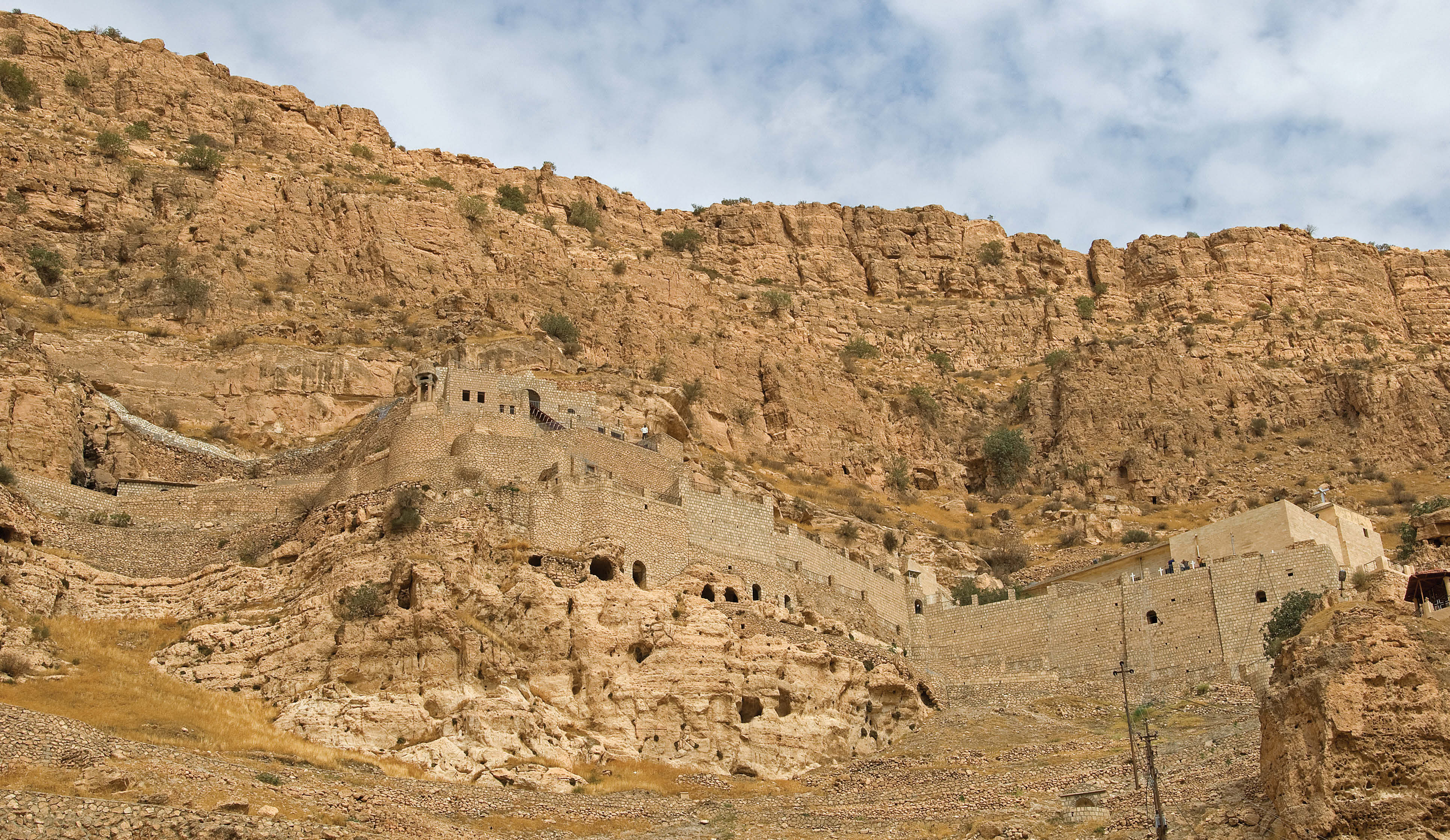
commissioned a missionary delegation to the Chinese imperial court, which reached its destination of Chang’an in 635 and was received there with great honour by Emperor Taizong. Second, the Chronicle of Seert attributes to him the initiative to quickly establish relations with prophet Mohammed and the second caliph, Omar (ruled 634–644), and to give them monetary gifts, in order to set up a peaceful arrangement with the anticipated conquerors.143 Even if the wording of the so-called Edict of Tolerance of Omar given to Christians is apocryphal, there is little doubt that during these turbulent times the patriarch placed a protective hand over the Christians of Iran. In Ishoyahb’s day, approximately half of the collapsing Sassanian Empire was Christian, of whom about 75 per cent were Nestorians, 20 per cent Miaphysites and 5 per cent Melkites. The hierarchy of the Church of the East at that time included a patriarch, nine archbishops and 96 bishops – that is, a total of 106 bishops. independence of a sort often unknown by the Roman-Byzantine Church. The former, over the course of its early history, repeatedly had to make serious compromises with the political leadership, which damaged the Church’s own credibility. Among these compromises were not only all the creeds imposed upon it by the Byzantine emperor out of political considerations but also the betrayal of the pacifistic vision of Christ. As long as the Christians in the Roman Empire were tolerated or persecuted, they maintained the ban on killing. Christian faith and military service were really incompatible, even if officers converted to Christianity relatively often. Jesus tolerated the profession of soldier, with strict limitations, but certainly not the active waging of war.144 But, just a year after the conversion of Constantine, official Christianity made a radical about-face: in 314 the episcopal synod of Arles broke with pacifism and threatened those who refused military service with excommunication.145 Compared with such humiliations, the ethical compromises the Church of the East had to make, such as relaxation of the requirement of celibacy, were
他派遣一支传教使团前往中国朝廷;使团于635年抵达目的地长安,受到太宗皇帝(Emperor Taizong)的隆重接待。其次,《塞尔特编年史》(Chronicle of Seert)把迅速与先知穆罕默德(Mohammed)及第二任哈里发欧麦尔(Omar,在位634—644年)建立关系,并赠送钱财以便同预期中的征服者达成和平安排的举措,归功于他。143尽管所谓欧麦尔给予基督徒的《宽容敕令》(Edict of Tolerance)措辞可能是伪作,但在动荡时期,这位宗主教确实庇护了伊朗基督徒,这一点几乎毋庸置疑。伊绍亚布(Ishoyahb)在位时,正在崩溃的萨珊帝国约有一半人口信奉基督教;其中约75%是聂斯托利派,20%是合性论者,5%是麦基顿派。当时东方教会的教阶体系包括一位宗主教、九位总主教和96位主教,总计106位主教。这种自主性在罗马—拜占庭教会(Roman-Byzantine Church)中往往难以见到。前者在早期历史中屡屡不得不向政治领袖作重大妥协,损害了教会自身的公信力。这些妥协不仅包括拜占庭皇帝出于政治考量强加给教会的所有信经,也包括背弃基督的和平主义理想。罗马帝国的基督徒无论受到宽容还是迫害,都坚持禁止杀人。基督信仰与服兵役确实不相容,即使军官皈依基督教的情况相当常见。耶稣允许人以士兵为业,但有严格限制;他绝不允许主动发动战争。144然而,君士坦丁皈依后仅一年,官方基督教便彻底转向:314年,阿尔勒主教会议(episcopal synod of Arles)背弃和平主义,并威胁将拒绝服兵役者逐出教会。145与这种屈辱相比,东方教会不得不作出的伦理妥协——例如放宽独身要求——则……
Although the Church of the East never achieved the status of a state Church and was subjected to arbitrary persecutions by the civil authorities, it was also able to preserve an ethical
尽管东方教会 (Ch. of E.) 从未获得国教地位,并遭受世俗当局的任意迫害,但它也能够保存一种伦理
Bishops of the Church of the East in the vault of the patriarchs in the Monastery of Rabban Hormizd. From left to right, Bishop Mar
东方教会 (Ch. of E.) 的主教们,位于拉班·霍尔米兹德修道院 (Monastery of Rabban Hormizd) 的宗主教墓室中。从左至右,主教马尔 (Mar)
Emmanuel, Canada; Metropolitan Mar Giwargis Sliwa, Iraq;
伊曼纽尔 (Emmanuel),加拿大 (Canada);都主教 (Metropolitan) 马尔·吉瓦吉斯·斯利瓦 (Mar Giwargis Sliwa),伊拉克 (Iraq);
Metropolitan Mar Narsai de Baz, Lebanon; Bishop Mar Ishaq Khamis, Dehuk and Russia; Patriarch Mar Dinkha IV; Bishop Mar Aprem Nathaniel, Syria; Bishop Mar Yosip Sargis, Baghdad. October 2000.
都主教马尔·纳尔赛·德巴兹 (Metropolitan Mar Narsai de Baz),黎巴嫩 (Lebanon);主教马尔·伊沙克·哈米斯 (Bishop Mar Ishaq Khamis),杜胡克 (Dehuk) 与俄罗斯 (Russia);宗主教马尔·丁卡四世 (Patriarch Mar Dinkha IV);主教马尔·阿普雷姆·纳撒尼尔 (Bishop Mar Aprem Nathaniel),叙利亚 (Syria);主教马尔·约西普·萨尔吉斯 (Bishop Mar Yosip Sargis),巴格达 (Baghdad)。2000年10月。
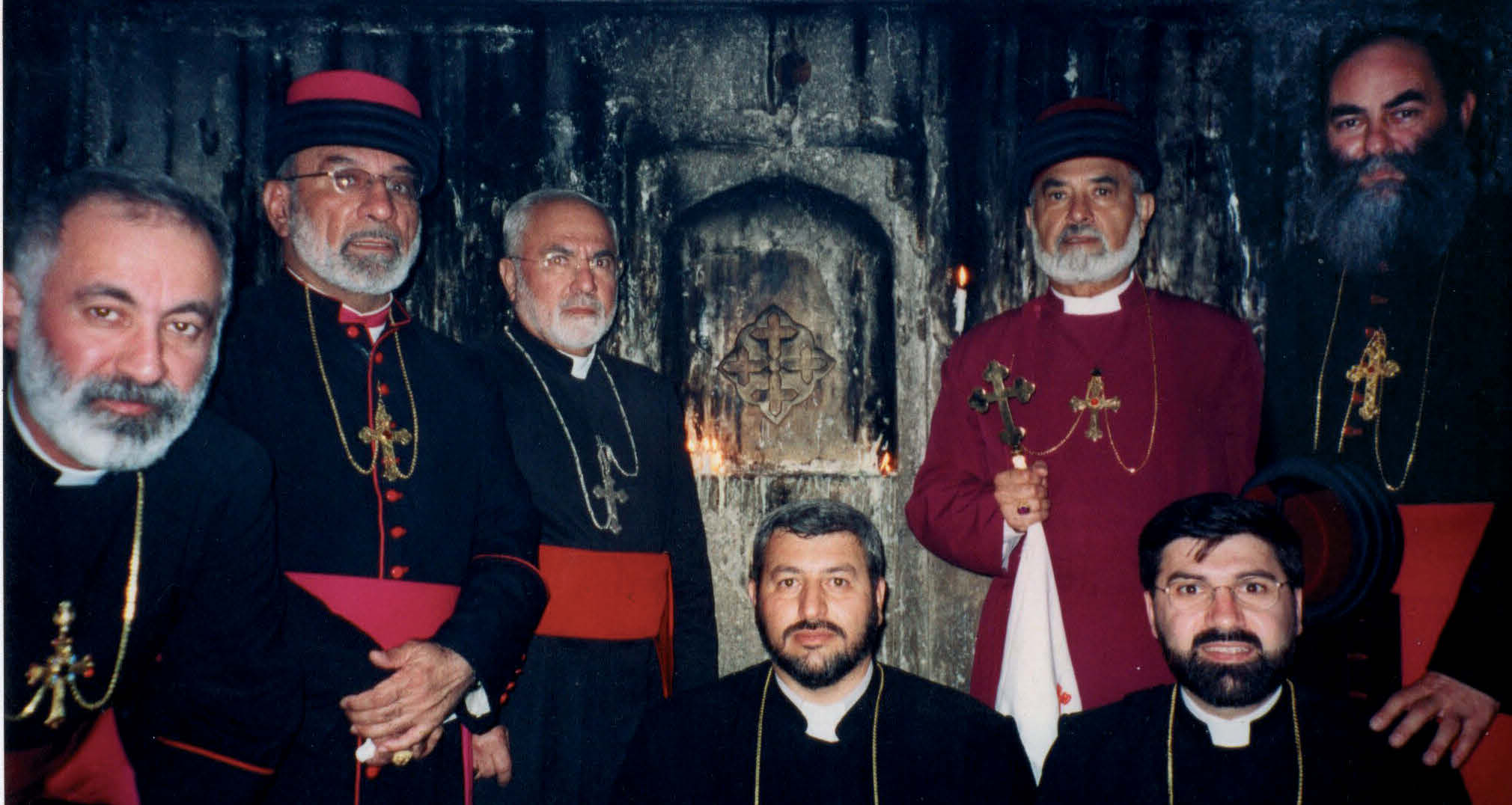
An East Syrian from northern Iraq, living in Khabur, north-eastern
一位来自伊拉克北部的东叙利亚人 (East Syrian),居住在哈布尔 (Khabur),位于东北部
Syria, whose family fled from Hakkari to northern Iraq in 1915. insignificant.
西里亚 (Syria),其家人于1915年从哈卡里 (Hakkari) 逃往伊拉克北部 (northern Iraq)。微不足道。
The emergence of the Syrian Orthodox, Jacobite Church
叙利亚正统教会(即雅各派教会,Syrian Orthodox, Jacobite Church)的兴起
As has already been discussed, Emperor Justin’s re-established ecumene with Rome in 519 and the new Chalcedonian creed of Justinian of 536 pushed the Miaphysite movement into opposition to the imperial Church. In 519 its leading exponent, Patriarch Severus of Antioch (†538), had to flee to Alexandria, and its bishops were gradually deposed. Thus no other choice remained for the Miaphysites but to establish a hierarchy independent from the state, so beginning around 530 Severus authorized Bishop John of Tella to ordain deacons, priests and bishops. Seven years later John of Tella also fell victim to the state-led persecution.
正如已经讨论过的,查士丁皇帝 (Justin) 于519年与罗马重新恢复的普世教会共融,以及查士丁尼 (Justinian) 于536年颁布的新的迦克墩信条,将合性论派 (Miaphysite) 运动推向与帝国教会的对立。519年,该运动的主要代表人物安条克宗主教塞维鲁 (Severus of Antioch, †538) 不得不逃往亚历山大里亚 (Alexandria),其主教们也逐渐被废黜。因此,合性论派别无选择,只能建立独立于国家的教阶体制;于是大约从530年起,塞维鲁授权泰拉主教约翰 (John of Tella) 按立执事、司铎和主教。七年后,泰拉的约翰也沦为这场国家主导的迫害的牺牲品。
Interestingly, it was Empress Theodora (co- reigned 527–548), of all people, who threw a lifeline to the Miaphysites being persecuted by her husband. In 542 the powerful vassal king Harith ibn Jabdah from the Ghassanid tribe, who ruled over East Syria and represented a strategically important buffer state to the Sassanians, requested two bishops-at-large for his people. Empress Theodora arranged for the Miaphysite patriarch Theodosius of Alexandria, who was living in exile, to appoint two missionary bishops granted with special privileges of consecration. These were Theodore the Arab, who worked in the region under Ghassanid authority, and Jacob, called Baradaeus (505–578), who laboured both west and east of the Euphrates with unflagging enthusiasm and mostly in secret to build up a Miaphysite Church organization, which is also called ‘Jacobite’ after his name.146 Although Emperor Justinian ordered his arrest, he was able to elude official capture during his continual travels by disguising himself as a beggar, monk or even soldier. According to Miaphysite sources, he is said to have consecrated or ordained two patriarchs, 27 bishops and thousands of priests. However, the unity of the Miaphysites collapsed in 575 with a dispute between the patriarchs of Antioch and Alexandria, which finally led to the establishment of two independent Miaphysite Churches, the Coptic of Egypt and the Syrian Orthodox.147 Since the Miaphysite position proceeds from the belief that the incarnation of Christ occurred out of two natures into a single nature, the polemical demarcation of Jacob from the East Syrians is clear: ‘The holy, omnipotent, and immortal God was crucified and died for us.
有趣的是,偏偏是狄奥多拉皇后 (Empress Theodora,共治 527–548 年) 向她丈夫正在迫害的一性论者 (Miaphysites) 伸出了援手。542年,来自加萨尼部落 (Ghassanid tribe) 的强大附庸国王哈里斯·伊本·贾卜达 (Harith ibn Jabdah)——他统治着叙利亚东部,并代表着对萨珊人 (Sassanians) 具有战略重要性的缓冲国——为其人民请求两位无固定教区的主教 (bishops-at-large)。狄奥多拉皇后安排流亡中的一性论宗主教、亚历山大的狄奥多西 (Theodosius of Alexandria) 任命两位享有特别祝圣权的传教主教。这两位分别是阿拉伯人狄奥多雷 (Theodore the Arab),他在加萨尼管辖的地区工作;以及被称为巴拉达乌斯的雅各 (Jacob, called Baradaeus, 505–578),他以不懈的热情,且大多秘密地在幼发拉底河 (Euphrates) 东西两岸辛勤工作,以建立一性论教会组织,该组织也因他的名字而被称为“雅各派” (Jacobite)。146 尽管查士丁尼皇帝 (Emperor Justinian) 下令逮捕他,但他在不断旅行期间通过将自己伪装成乞丐、修士甚至士兵,得以躲过官方的抓捕。据一性论派文献,据说他祝圣或按立了两位宗主教、27位主教和数千名司铎。然而,一性论者的统一在575年因安条克 (Antioch) 与亚历山大 (Alexandria) 两位宗主教之间的争端而瓦解,最终导致两个独立的一性论教会——埃及的科普特教会 (Coptic of Egypt) 和叙利亚正统教会 (Syrian Orthodox)——的建立。147 由于一性论立场源于这样一种信念:基督的道成肉身是由二性成为一性,因此雅各与东叙利亚人 (East Syrians) 之间的论战性界限便十分清楚:“神圣、全能、不朽的上帝为我们被钉十字架并受死。”
the hand of the Byzantines!’149 The Syrian Orthodox patriarch resided from 1166 to 1923, with some interruptions, in the Deir az-Zafaran monastery near Mardin, then in Homs, Syria, and since 1959 in Damascus.
拜占庭人之手!149 叙利亚正教宗主教在1166年至1923年间(其间曾数度迁离)驻于马尔丁(Mardin)附近的德尔扎法兰(Deir az-Zafaran)修道院,后来迁至叙利亚霍姆斯(Homs),自1959年起则驻于大马士革(Damascus)。
In the Sassanian Empire the Jacobite Church met with bitter opposition from the Church of the East, but, on the other hand, was welcomed by the hundreds of thousands of prisoners of war who had been deported from Syria by both Chosraus between 540 and 614. In addition, beginning around 605 the Jacobites enjoyed the protection of the powerful court physician Gabriel of Singar and Queen Shirin. In the years 558/559 Jacob Baradaeus came to the Sassanian Empire, where he consecrated Ahudemmeh (c.530–575) as bishop and metropolitan of Takrit. On the occasion of the election of Bishop Maruta, the Syrian Orthodox metropolitan residing in Takrit received the title of Maphrian of the East. The maphrian was named by the patriarch; he had authority over all the dioceses of Mesopotamia and Asia, reaching as far as Central Asia and Afghanistan.150 Until 1156 the Jacobite maphrian resided primarily in Takrit, birthplace of Salah al-Din (Saladin) and Saddam Hussein, but later also in Mosul or in the Monastery of Mar Mattai. The most famous maphrian was Bar Hebraeus (1226–1286), who worked throughout his life to overcome the mistrust that had grown up between the two Syrian sister Churches and wrote a world- renowned chronography of the world and the Eastern Churches. He found his final resting place in the Monastery of Mar Mattai, 35 kilometres east of Mosul.
在萨珊帝国(Sassanian Empire),雅各派教会遭到东方教会的强烈反对;另一方面,数十万名战俘却接纳了雅各派教会。这些战俘在540年至614年间被2位楚斯劳王(Chosraus)从叙利亚(Syria)驱逐出来。此外,从约605年起,雅各派教会受到权势显赫的宫廷医师辛加尔的加百列(Gabriel of Singar)和王后使琳(Shirin)庇护。558/559年,雅各布·巴拉德乌斯(Jacob Baradaeus)来到萨珊帝国,在那里祝圣阿胡德梅(Ahudemmeh,约530—575年)为塔克里特(Takrit)主教兼都主教。叙利亚正教都主教马鲁塔(Maruta)驻于塔克里特;在马鲁塔主教当选之际,他获得了“东方马弗里安”头衔。马弗里安由宗主教任命,统辖美索不达米亚(Mesopotamia)和亚洲(Asia)所有教区,势力范围远及中亚(Central Asia)和阿富汗(Afghanistan)。150 直到1156年,雅各派马弗里安主要驻于塔克里特——萨拉赫丁(Salah al-Din,萨拉丁〔Saladin〕)和萨达姆·侯赛因(Saddam Hussein)的出生地——但后来也驻于摩苏尔(Mosul)或马尔·马太(Mar Mattai)修道院。最著名的马弗里安是巴尔·希伯来乌斯(Bar Hebraeus,1226—1286年);他毕生致力于消除2座叙利亚姊妹教会之间逐渐形成的不信任,并撰写了享誉世界的世界编年史和东方教会史。他最终安葬于马尔·马太修道院,该修道院位于摩苏尔以东35公里处。
We do not believe, as do the Nestorians, these man-worshippers (sic), that a mortal man died for us.’148
“我们不相信聂斯托利派那些崇拜人的人(原文如此)所信的:一个必死的人替我们死了。”148
On account of persecution from the state, the Syrian Orthodox Church in Syria had to operate underground for a time. It developed primarily in the monasteries and in rural areas; for security reasons, its patriarchs often had to change their residences. These emergency circumstances help explain why the majority of Syrians welcomed first the Sassanian and then the Arab armies as liberators. In the words of a prayer from shortly after 630, ‘God, You see the malice of the Byzantines, who everywhere they rule cruelly plunder our churches and monasteries and mercilessly condemn us, lead the sons of Ishmael [the Arabs] to us from the south to free us from
由于国家迫害,叙利亚的叙利亚正教会曾一度不得不转入地下。它主要在修道院和乡村地区发展;出于安全考虑,其宗主教常常不得不更换驻地。这些紧急处境有助于解释为何大多数叙利亚人先后将萨珊(Sassanian)军队和阿拉伯(Arab)军队视为解放者,并予以欢迎。一篇约写于630年之后不久的祷文如此说:“上帝啊,你看见拜占庭人(Byzantines)的恶行:他们无论统治何处,都残酷掠夺我们的教堂和修道院,无情地定我们的罪;求你从南方领以实玛利(Ishmael)的子孙[阿拉伯人]来到我们这里,救我们脱离
According to tradition, at the time of the heretical, then Arian, emperor Valens (ruled 364–378), a few ascetics fled Amida, today’s Diyarbakir, for northern Mesopotamia and there founded the monastery at Mattai. The monastery, which originally belonged to the Church of the East, came under Miaphysitic influence as early
据传说,在被视为异端、即阿里乌派(Arian)的皇帝瓦伦斯(Valens,在位364—378年)统治期间,几位苦修者逃离阿米达(Amida,今迪亚巴克尔〔Diyarbakir〕),前往美索不达米亚北部,并在那里创建了马太(Mattai)修道院。该修道院原属东方教会,后来受到合性论派影响,其时间甚至早在
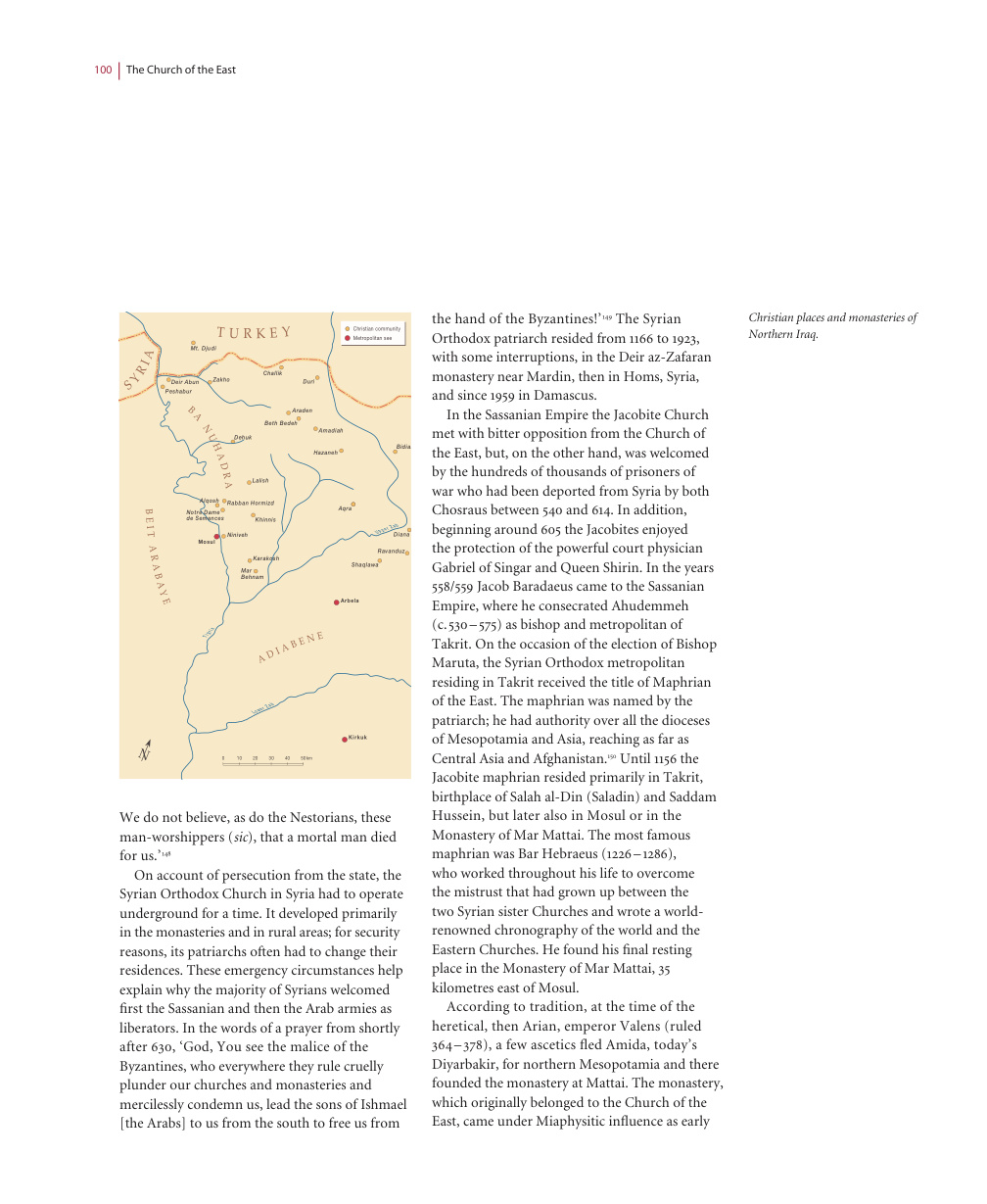
The Monastery of Mar Mattai, founded around 370, originally belonged to the Church of the East and is located 35 kilometres east of Mosul in northern Iraq. As early as around 484 the monastery converted to the Syrian Orthodox Church, and was then won back by the Church of the East, but it developed beginning in 540 into a stronghold of the Jacobites. It was entirely restored in 1795 and 1845. The monastery forms its own diocese of the Syrian Orthodox Church. Since June 2014 the monastery shelters Christian refugees from Mosul fleeing the ‘Islamic State’ IS and is protected by fighters from the Assyrian organisation Dwekh Nawsha and by Kurdish peshmerga. light of this miracle, the brother and sister were baptized. The enraged king then had both his children beheaded, whereupon, overcome with regret, he likewise converted.152 as circa 484 and around 540 became a bastion of the Jacobites.151 Closely allied with the Monastery of Mar Mattai is the Monastery of Mar Behnam, which stands a few kilometres south-east of Mosul on the road to Kirkuk. The first chapel was founded towards the end of the fourth century, presumably by monks of Mar Mattai, to honour the siblings Behnam and Sara, executed during the persecutions of Christians by Shapur II. In the corresponding legend, the event is moved back about a whole millennium. Mar Mattai, founder of the monastery of the same name, is said to have appeared in a dream to the son of the Assyrian King Sannacherib (ruled 705–681BCE), Behnam. Afterwards the prince, together with his sister Sara, who suffered from leprosy, went to the saint, who cured her of her affliction. In
马尔·马泰修道院 (Monastery of Mar Mattai) 建于约370年,最初属于东方教会 (Church of the East),位于伊拉克 (Iraq) 北部摩苏尔 (Mosul) 以东35公里处。早在约484年,该修道院便改宗叙利亚正统教会 (Syrian Orthodox Church),随后又被东方教会 (Church of the East) 夺回,但从540年起逐渐发展为雅各派 (Jacobites) 的据点。它于1795年和1845年得到全面修复。该修道院构成叙利亚正统教会 (Syrian Orthodox Church) 的一个独立教区。自2014年6月起,该修道院收容从摩苏尔 (Mosul) 逃离‘伊斯兰国’ (IS) 的基督徒难民,并受到来自亚述人组织德韦赫·纳夫沙 (Dwekh Nawsha) 的战士以及库尔德自由斗士 (peshmerga) 的保护。鉴于这一奇迹,兄妹二人受了洗。震怒的国王随即下令将他的两个孩子斩首;于是,他悔恨交加,也皈依了。152 早在约484年,并在约540年成为雅各派的堡垒。151 与马尔·马泰修道院 (Monastery of Mar Mattai) 关系密切的是马尔·贝赫南修道院 (Monastery of Mar Behnam),它位于摩苏尔 (Mosul) 东南数公里处,在通往基尔库克 (Kirkuk) 的路上。第一座小教堂建于四世纪末,据推测由马尔·马泰 (Mar Mattai) 的修士所建,以纪念在沙普尔二世 (Shapur II) 迫害基督徒期间被处死的兄妹贝赫南 (Behnam) 和萨拉 (Sara)。在相应的传说中,这一事件被上推了大约整整一千年。据说,同名修道院的创立者马尔·马泰 (Mar Mattai) 曾出现在亚述王辛那赫里布 (Sannacherib)(公元前705—前681年在位)之子贝赫南 (Behnam) 的梦中。此后,这位王子带着患有麻风病的妹妹萨拉 (Sara) 前往这位圣人处,圣人治好了她的病。在
This legend provided the foundation for the development of the martyr’s tomb – originally Nestorian, from 540 Jacobite – into a pilgrimage destination for miracle cures, to which both Christians and Muslims came. To the latter, the monastery of Mar Behnam is known as al-Khidr, the ‘place of the power to make green’ – that is, of hope. The pilgrimage site grew in importance as Mar Behnam became associated with St George, who was very popular in the East.153 The two saints are depicted symmetrically on the lintels of the shrine; George is defeating the dragon and Behnam the devil. Thanks to these attributes of
这一传说为殉道者之墓的发展奠定了基础——该墓最初为聂斯托利派 (Nestorian),自540年起为雅各派 (Jacobite)——使其成为寻求奇迹治愈的朝圣地,基督徒和穆斯林都前来此地。对后者而言,马尔贝赫南修道院 (monastery of Mar Behnam) 被称为赫迪尔 (al-Khidr),即“使变绿的力量之地”——也就是希望之地。随着马尔贝赫南与在东方极受欢迎的圣乔治 (St George) 联系在一起,该朝圣地的重要性日益增长。153 两位圣徒被对称地描绘在圣龛的门楣上;乔治 (George) 正在击败恶龙,贝赫南 (Behnam) 则击败魔鬼。多亏了这些……的属性
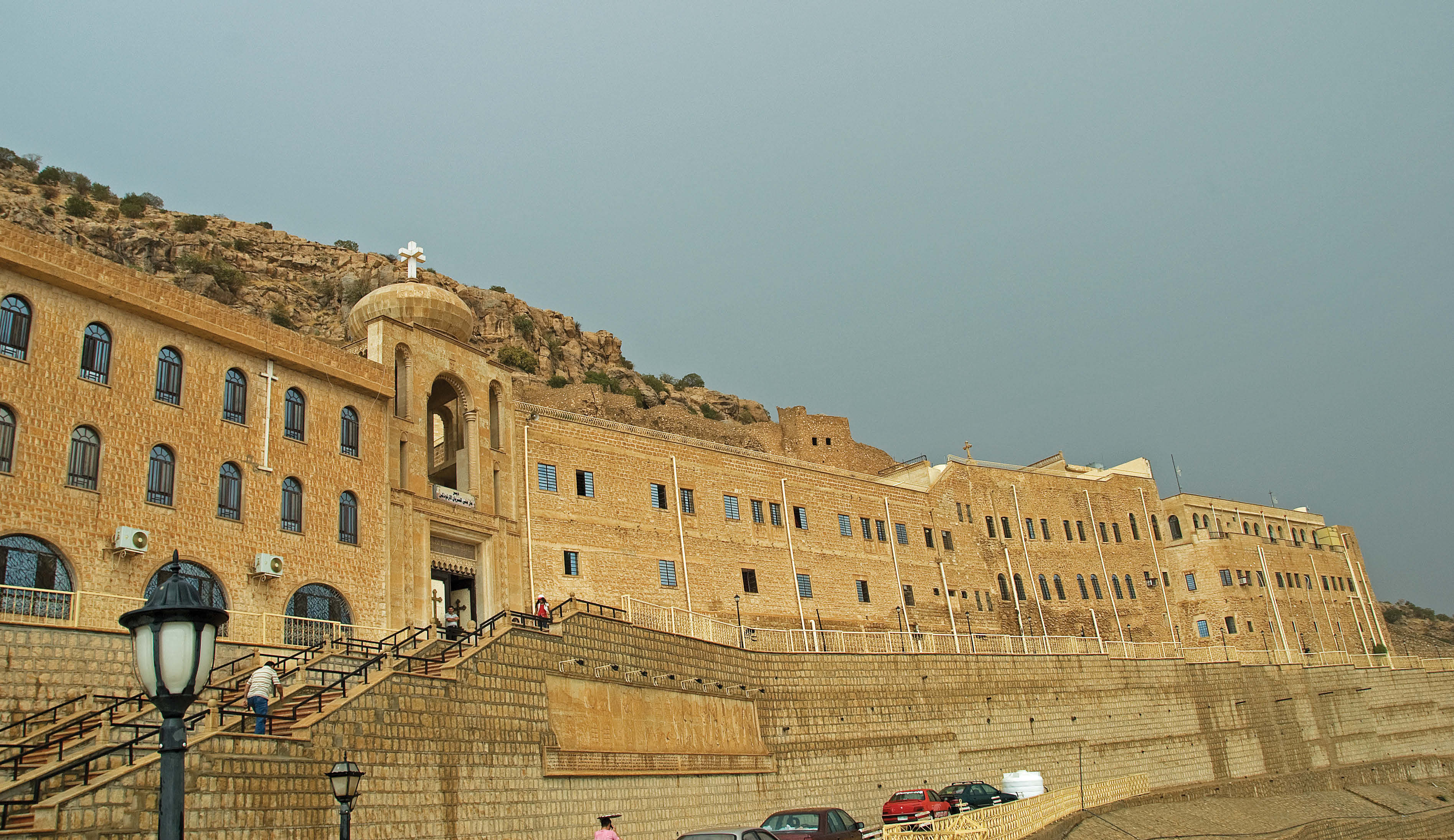
(Top) The Monastery of St Ananias – also called, on account of the colour of its walls, Deir az-Zafaran, the Yellow Monastery – lies a few kilometres east of Mardin, on the western border of Tur Abdin. The monastery, dating from the fifth century, was rebuilt by Bishop Ananias shortly after 793 and served from 1166 to 1923, with brief interruptions, as the residence of the Syrian Orthodox patriarchs.
(顶部)圣阿纳尼亚修道院 (Monastery of St Ananias) ——因其墙垣的颜色,也被称为代尔扎法兰 (Deir az-Zafaran),即黄色修道院 (the Yellow Monastery)——位于马尔丁 (Mardin) 以东数公里处,地处图尔阿布丁 (Tur Abdin) 的西缘。该修道院始建于五世纪,由阿纳尼亚主教 (Bishop Ananias) 于793年后不久重建,并从1166年至1923年(其间有短暂中断)作为叙利亚正教会牧首 (Syrian Orthodox patriarchs) 的驻地。
(Bottom) The Monastery of Mar Behnam, located near Mosul, was first founded as a memorial to the sibling martyrs Behnam and Sara in the second half of the fourth century, perhaps by monks of Mar Mattai. It was thus originally a martyrion, which was expanded into a larger church in 1164. Its expansion into an actual monastery followed between 1248 and 1295.31 Also found in the monastery is the only inscription in the Turkish language and Uigur script in Mesopotamia: ‘May the peace of Khidr [the healer] Elias, the friend of God, come to the khan, his barons and his wife, and remain with them.’ The khan referred to is Il-Khan Baidu (ruled 1295), who regretted the plundering of the monastery and returned its stolen treasures, plus a personal donation.32 The monastery, which today belongs to the Syrian Catholic Church, was rebuilt in 1901 and restored in the 1990s. After having expelled the monks, the ‘Islamic State’ IS blew up the tomb of Behnam and Sara in March 2015 with explosives.
(底部)位于摩苏尔 (Mosul) 附近的马尔贝赫南修道院 (Monastery of Mar Behnam),最初于四世纪下半叶作为对殉道兄妹贝赫南 (Behnam) 和萨拉 (Sara) 的纪念而建立,或许是由马尔马泰 (Mar Mattai) 的修士所建。因此,它最初是一座殉道者纪念堂 (martyrion),1164年扩建为一座更大的教堂。其后在1248年至1295年间,它又扩建为一座真正的修道院。31 修道院内还发现美索不达米亚 (Mesopotamia) 唯一一方以突厥语 (Turkish) 和回鹘文 (Uigur script) 写成的铭文:“愿希德尔(Khidr)[医治者]伊利亚(Elias)——真主之友——的平安降临于可汗、他的贵族们和他的妻子,并与他们同在。”这里所说的可汗是伊儿汗拜都 (Il-Khan Baidu)(1295年在位),他后悔劫掠了该修道院,归还了被盗的珍宝,并额外个人捐赠。32 该修道院如今属于叙利亚公教会 (Syrian Catholic Church),于1901年重建,并于20世纪90年代修复。在驱逐修士之后,“伊斯兰国” (IS) 于2015年3月用炸药炸毁了贝赫南 (Behnam) 和萨拉 (Sara) 的陵墓。
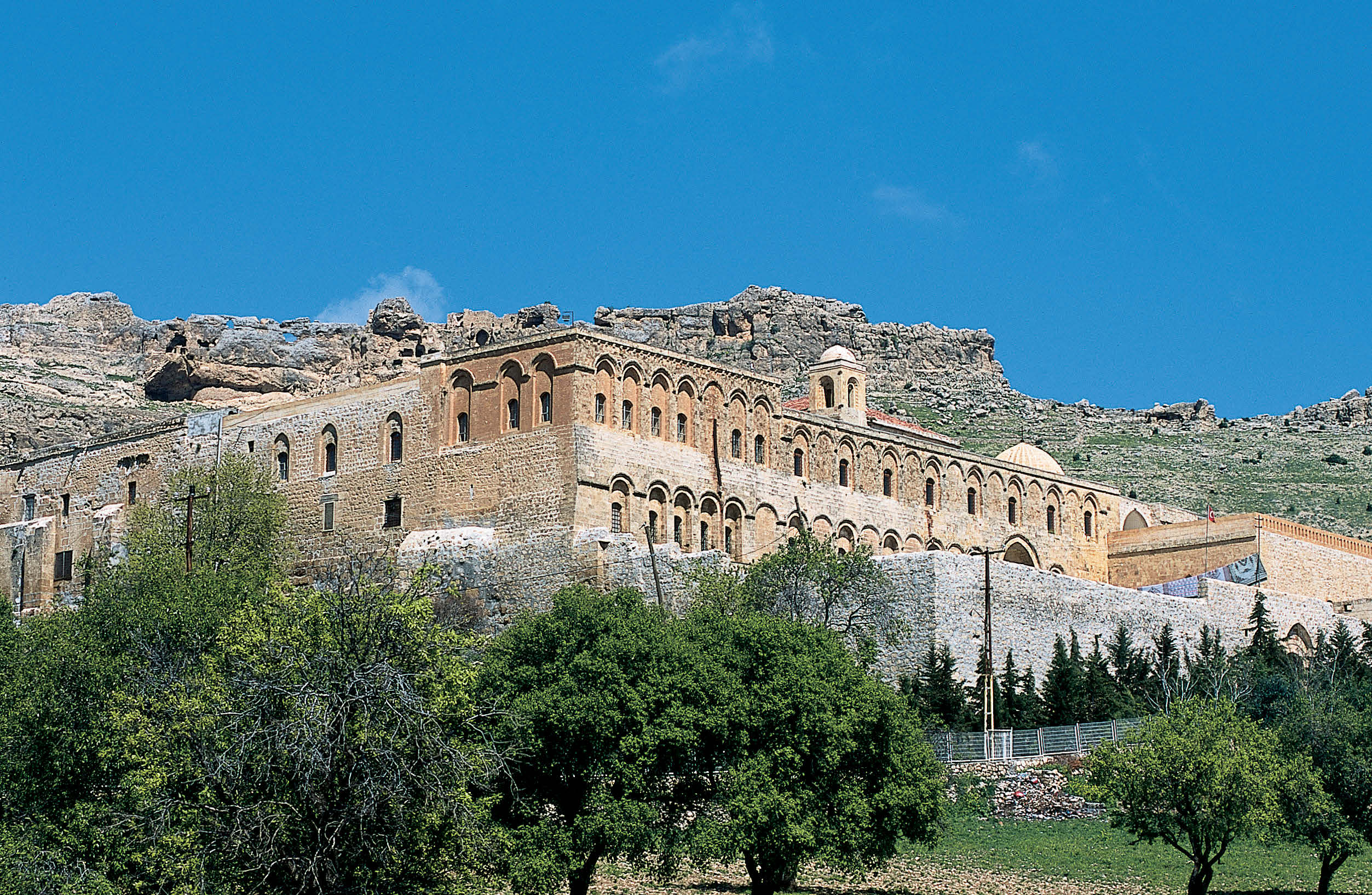
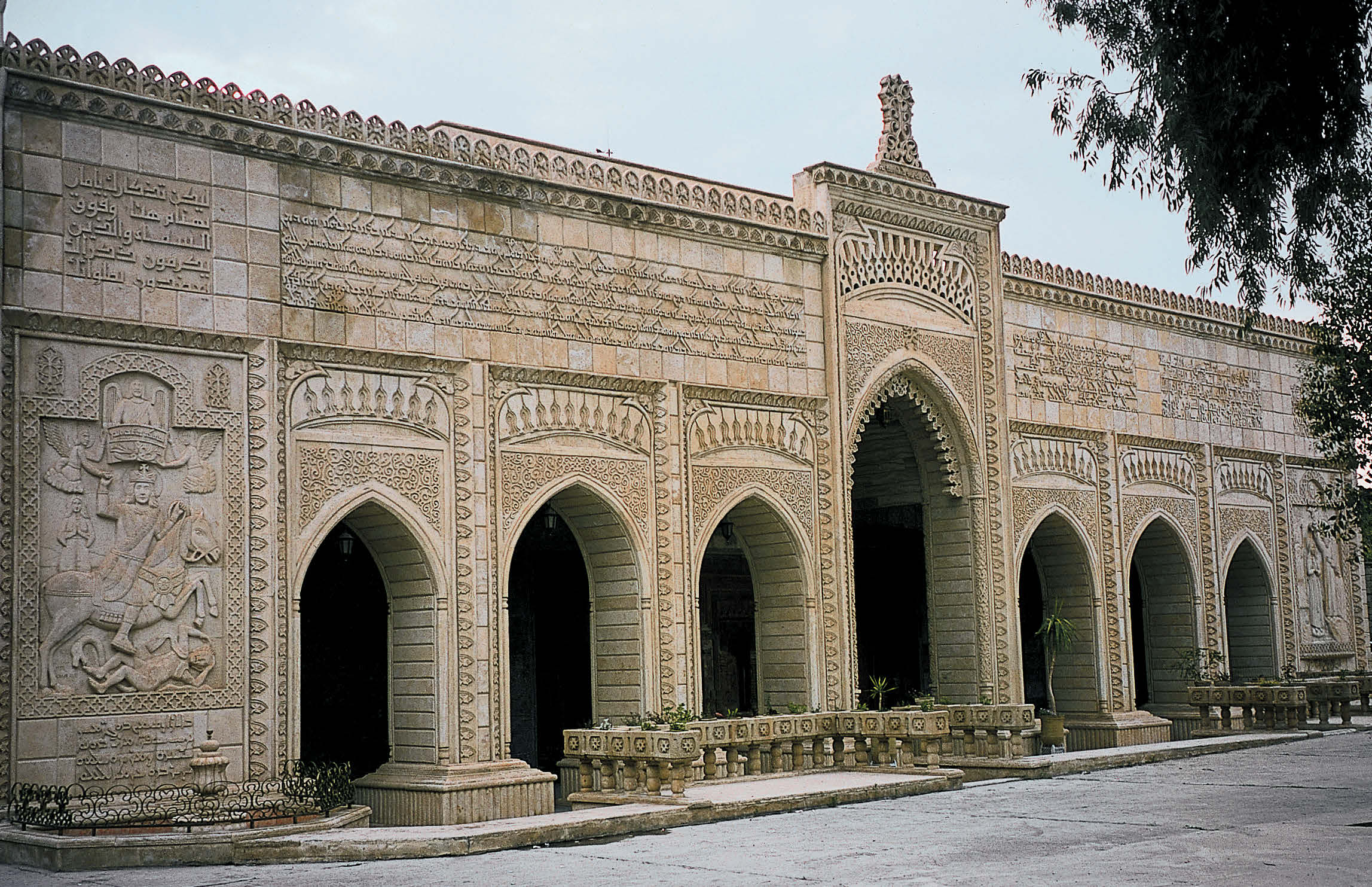
(Top) The Nestorian double church dedicated to St Sergius and St Bacchus stands in the village of Bos Vatch, eight kilometres south- west of the city of Urmiah in the province of Azerbaijan, Iran. The region of Urmiah remains to this day a stronghold of the Church of the East, where over 100 East Syrian and Chaldean churches and chapels are found. Many of them have been closed for security reasons due to widespread vandalism and are opened only once a year on the feast day of their patron saint. The ram on the right side of the picture was sacrificed on the occasion of a funeral, and its blood was used to make crosses on the lintel above the entrance door on the left of the church.
(上)供奉圣塞尔吉乌斯 (St Sergius) 和圣巴克斯 (St Bacchus) 的聂斯托利派 (Nestorian) 双联教堂,坐落于伊朗 (Iran) 阿塞拜疆省 (Azerbaijan) 乌尔米耶市 (Urmiah) 西南八公里处的博斯瓦奇村 (Bos Vatch)。乌尔米耶 (Urmiah) 地区至今仍是东方教会 (Ch. of E.) 的据点,那里有超过100座东叙利亚和迦勒底教会及小教堂。由于破坏行为猖獗,其中许多出于安全原因已关闭,每年仅在其主保圣人瞻礼日开放一次。照片右侧的公羊在一次葬礼上被献祭,其血被用来在教堂左侧入口门上方的门楣上画十字架。
(Bottom) Lintel over the burial chamber of Mar Behnam in the monastery of the same name. On the left St Behnam defeats the devil, and on the right St George slays the dragon. The association of Behnam with St George contributed considerably to the popularity of the pilgrimage site.
(底部)同名修道院中圣贝赫南 (Mar Behnam) 墓室上方的门楣。左侧,圣贝赫南 (St Behnam) 战胜魔鬼;右侧,圣乔治 (St George) 斩杀恶龙。贝赫南 (Behnam) 与圣乔治 (St George) 的关联,极大地提升了该朝圣地的知名度。
The Patriarchate of Seleucia-Ctesiphon | 103
塞琉西亚-泰西封宗主教区 (Seleucia-Ctesiphon) | 103
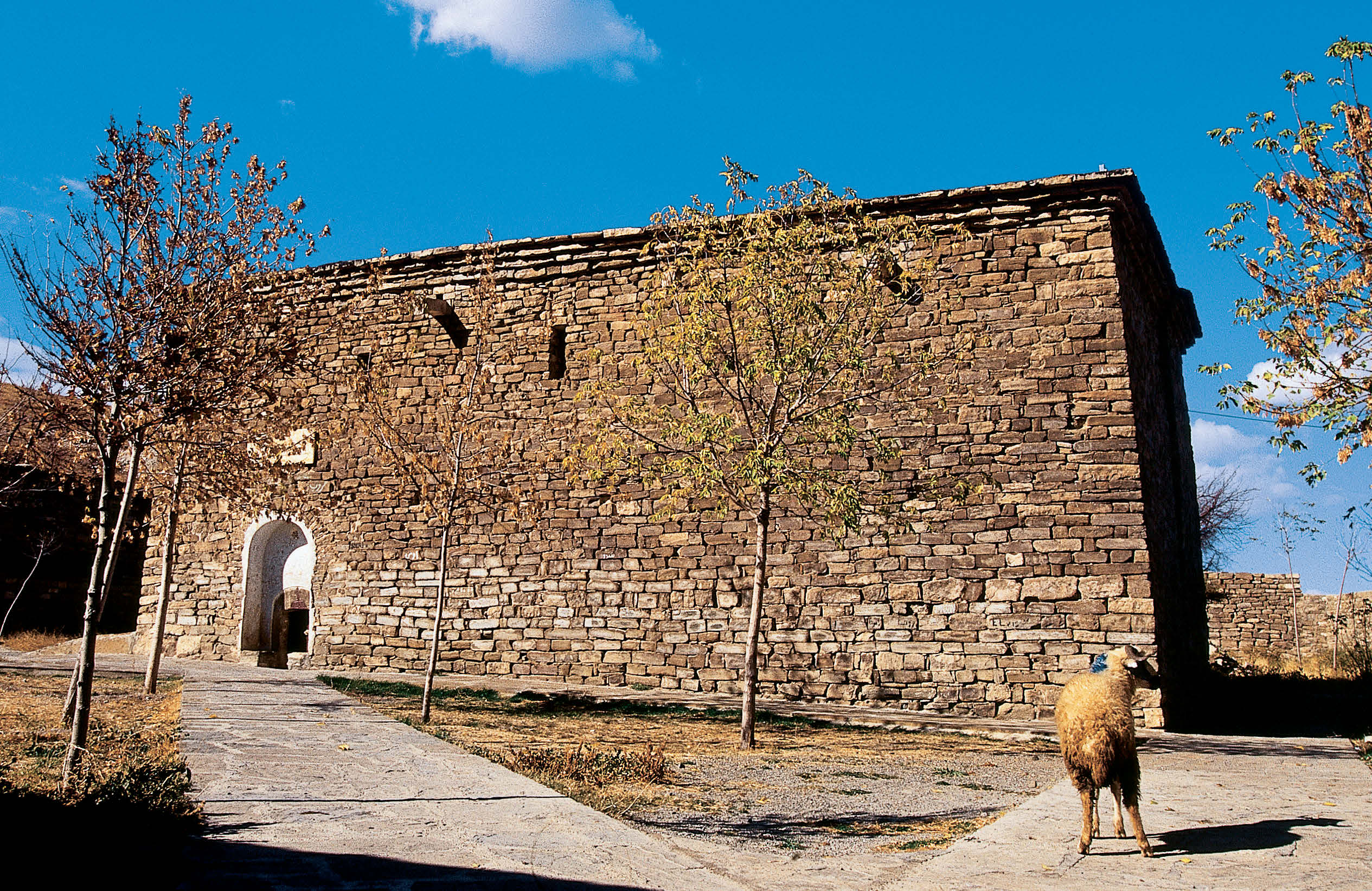
healing and victory over evil, the martyr’s tomb became a favoured site for incubation. As has been observed by the author in several East and West Syrian churches, there is in the martyrium or crypt a chain fastened to the wall, to which mentally ill people or epileptics are chained and left alone in the dark for the night. The next morning, on account of the healing powers of the saint’s tomb or the relics in the walls or perhaps from shock, the afflicted individuals are again healthy. This method of healing is said to be equally effective for Christians and Muslims.154
由于具有治愈和战胜邪恶的效力,殉道者的坟墓成为备受青睐的求梦疗法 (incubation) 场所。正如作者在若干东叙利亚和西叙利亚教会中所观察到的,在殉道者纪念堂 (martyrium) 或地下墓室 (crypt) 中,墙上系有一条锁链,精神病人或癫痫患者被锁在其上,独自留在黑暗中过夜。次日清晨,由于圣人坟墓或墙壁中圣髑的治愈力量,或者也许是由于惊吓,这些受折磨的人又恢复健康。据说这种治疗方法对基督徒和穆斯林同样有效。154