鲍默《东方教会:亚述基督教图史》第七章:伊斯兰统治下的基督徒(中英文对照版)
阿甲按:本连载以克里斯托夫·鲍默(Christoph Baumer)2016年英文新版为底本,采用人工智能辅助中译,以中英文对照形式供研读参考。译文及原文提取仍有待校订,人名、地名、专业术语和个别断句未必准确,欢迎读者与专家指正。
本章导读
本章追溯阿拉伯半岛及波斯湾地区的基督教传统,讨论伊斯兰兴起后东方教会所处的政治社会环境,以及基督徒在知识传播、教会生活与文化交流中的活动。
凡例
- 翻译自:Christoph Baumer, The Church of the East: An Illustrated History of Assyrian Christianity, new edition, translated by Miranda G. Henry (London and New York: I.B.Tauris, 2016),第七章,原书第 137–168 页。
- 本连载保留英文原文、图版与原书页码,采用双语对照形式,便于参阅和引用。原作页码与 PDF 文件的物理页序不同,本文标示原书页码。
- 中文初稿由 DeepSeek 辅助生成,部分缺译和遗漏段落使用 GPT-6-luna 补译;本次整理不等同于完成学术校订。原文中的个别断句、图注拼接和脚注提取仍需对照原书核查。
- 人名、地名、书名与叙利亚语专业术语的译法仅供参考,相关条目可参阅《高尔吉亚叙利亚遗产百科辞典》。
- 引用建议:克里斯托夫·鲍默,《东方教会:亚述基督教图史》第七章“伊斯兰统治下的基督徒”,袁永甲整理(人工智能辅助中译,待校订),教父原文中译计划,2026年10月12日,本文网址,并注明原书页码及访问日期。
第七章:伊斯兰统治下的基督徒
Christians under Islamic Rule VII
伊斯兰统治下的基督徒 7
Christians in the Persian Gulf region and in Arabia
波斯湾地区与阿拉伯的基督徒
work in Arabia began on the northern coast along the Persian Gulf. Presumably it was first ascetic hermits of the Church of the East who advanced from Basra into Arabia in the fourth century. The first known name is Mar Odisho, who, at the same time as the founding of the monastery of al-Hira towards the end of the fourth century, established a hermitage on the island of Bahrain or the island of Failaka. In
阿拉伯(Arabia)的传教工作始于波斯湾(Persian Gulf)沿岸北部。据推测,最早进入阿拉伯(Arabia)的可能是东方教会的苦修隐士;他们于4世纪从巴士拉(Basra)前往阿拉伯。最早见于记载的人名是马尔·奥迪绍(Mar Odisho)。大约在4世纪末阿尔希拉(al-Hira)修道院创建的同时,他在巴林岛(Bahrain)或法伊拉卡岛(Failaka)建立了一处隐修所。在
Even the earliest Christian sources refer to missionary activity in Arabia. While the Acts of the Apostles (2:11) report that at the Pentecost event the apostles also spoke in Arabic, Church historians such as Eusebius, Rufinus and Theodoret attribute the first missionary work in southern Arabia to the apostle Bartholomew.1 Given that until the fifth/sixth centuries most Church historians frequently confused the Arabian Peninsula with India or Ethiopia, their statements ought to be accepted only cautiously. Despite this uncertainty, the Christian mission to the Arab region may be divided into three geographic areas: first, in the north, the coastal region of the Persian Gulf; second, the interior region, including the important area of Yemen and the oasis of Najran in the south of today’s Saudi Arabia; and, third, the island of Socotra in the Indian Ocean to the south of Yemen. It is one of the fascinating aspects of Oriental Christianity that about 200 years before Mohammed it was able to gain a foothold in the future cradle of Islam and there compete with Judaism. In Arabia today, aside from a few dozen Yemeni Jews, there are no longer Jewish or Christian natives.
最早的基督教文献也提到了在阿拉伯(Arabia)的传教活动。《使徒行传》(Acts of the Apostles)(2:11)记载,五旬节时使徒们也说了阿拉伯语(Arabic);而优西比乌(Eusebius)、鲁菲努斯(Rufinus)和狄奥多雷(Theodoret)等教会史家则把阿拉伯南部最早的传教工作归于使徒巴多罗买(Bartholomew)。1 鉴于直到5/6世纪,许多教会史家仍经常把阿拉伯半岛(Arabian Peninsula)与印度或埃塞俄比亚混为一谈,他们的说法应当谨慎看待。尽管存在这种不确定性,面向阿拉伯地区的基督教传教工作仍可划分为3个地理区域:第1是北部的波斯湾沿岸地区;第2是内陆地区,包括也门(Yemen)这一重要区域,以及今沙特阿拉伯(Saudi Arabia)南部的奈季兰(Najran)绿洲;第3则是也门以南、印度洋上的索科特拉岛(Socotra)。东方基督教令人着迷之处之一,在于它早在穆罕默德(Mohammed)之前约200年,就已在后来成为伊斯兰教摇篮的地区站稳脚跟,并在那里与犹太教竞争。如今的阿拉伯(Arabia),除了几十名也门犹太人之外,已没有本土犹太人或基督徒。
As the legend of the founding of the first monastery of al-Hira suggests,2 the missionary
正如阿尔希拉(al-Hira)第一座修道院的创建传说所示,2 传教
750 0 150 300 450 600 km
750 0 150 300 450 600 公里
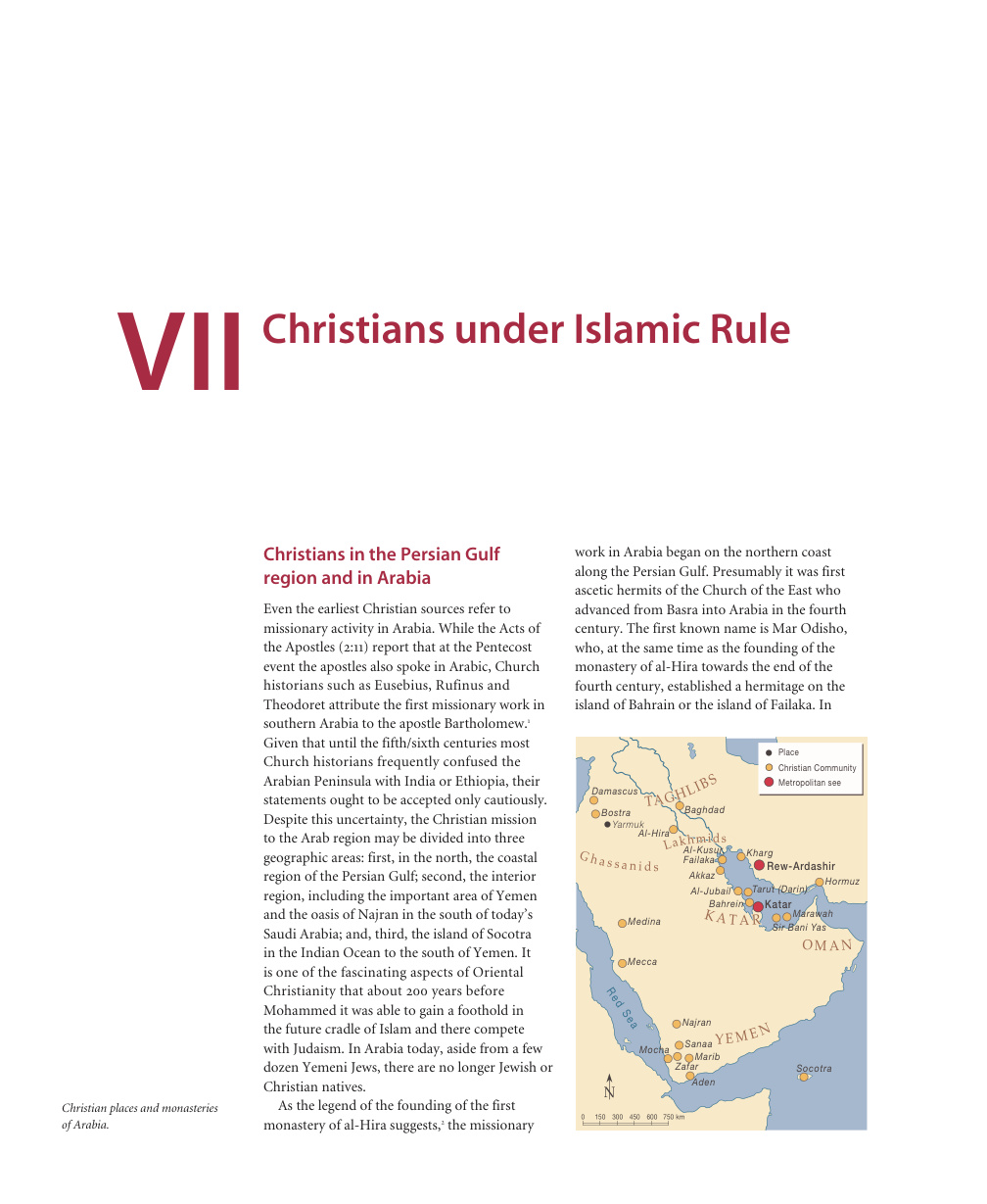
recent decades, archaeologists have uncovered the ruins of several Nestorian monasteries. Among them on the Persian coast of the gulf are the monastery on the island of Kharg, and on the opposite, Arabian, side the following structures: the monastery of al-Kusur on the Kuwaiti island of Failaka; the Church of Akkaz on the Kuwaiti mainland; a church, several hermitages and cemeteries near al-Jubail and Thaj in modern Saudi Arabia; the monastery on the island of Tarut (Darin) in front of the eastern Saudi coast; the monastery on the peninsula of Qatar; the monastery of Marawah on an island belonging to the emirate of Abu Dhabi; and the great monastery and church of al-Khor on the neighbouring island of Sir Bani Yas. Here the triple-naved church, like the similar churches of Marawah, Kharg and al-Kusur, was decorated with numerous Maltese crosses made of stucco. These monasteries and churches flourished between the fifth/sixth centuries and the seventh/ eighth centuries; a few were abandoned, and others, like al-Kusur, were destroyed and used as living quarters. It seems that many Christians were active in trading with pearls, since shah Chosrau I asked Patriarch Ezekiel I (in office 570–582) to investigate the pearl business along the north Arabian Coast. Only the monastery of Kharg was still in operation in the eleventh century.3 Although ecclesiastical documents refer to bishops in Bahrain and Oman, to date hardly any corresponding archaeological discoveries have been made. linked the incense-producing province of Dhofar with Rome and Iran. However, by the start of the Common Era they had already lost the monopoly on maritime trade with India and the East African coast, when Rome learned the secret of the monsoon winds.
近几十年来,考古学家已发现了若干聂斯托利派 (Nestorian) 修道院的遗址。其中,在波斯湾的波斯沿岸有哈尔克岛 (Kharg) 上的修道院;而在对岸的阿拉伯 (Arabian) 一侧,则有下列建筑:科威特 (Kuwaiti) 的费拉卡岛 (Failaka) 上的库苏尔 (al-Kusur) 修道院;科威特本土 (Kuwaiti mainland) 上的阿卡兹教堂 (Church of Akkaz);现代沙特阿拉伯 (Saudi Arabia) 的朱拜勒 (al-Jubail) 和塔吉 (Thaj) 附近的一座教堂、若干隐修院和墓地;沙特阿拉伯东部海岸对面的塔鲁特岛 (Tarut, Darin) 上的修道院;卡塔尔半岛 (Qatar) 上的修道院;属于阿布扎比酋长国 (Abu Dhabi) 的一座岛上的马拉瓦 (Marawah) 修道院;以及邻近的锡尔巴尼亚斯岛 (Sir Bani Yas) 上的豪尔 (al-Khor) 大修道院和教堂。这里的这座三廊式教堂,与马拉瓦 (Marawah)、哈尔克 (Kharg) 和库苏尔 (al-Kusur) 的类似教堂一样,装饰着许多用灰泥制成的马耳他十字 (Maltese crosses)。这些修道院和教堂在5/6世纪至7/8世纪之间繁荣兴盛;少数被废弃,另一些,如库苏尔 (al-Kusur),则被毁并改作居住场所。看来,许多基督徒积极从事珍珠贸易,因为沙阿 (shah) 霍斯劳一世 (Chosrau I) 曾要求牧首 (Patriarch) 以西结一世 (Ezekiel I)(在任 570–582 年)调查北阿拉伯海岸 (north Arabian Coast) 的珍珠生意。只有哈尔克 (Kharg) 的修道院在11世纪时仍在运作。3 尽管教会文献提到巴林 (Bahrain) 和阿曼 (Oman) 的主教,但迄今为止几乎没有相应的考古发现。将盛产乳香的佐法尔 (Dhofar) 省与罗马 (Rome) 和伊朗 (Iran) 连接起来。然而,到公元纪元 (Common Era) 之初,当罗马 (Rome) 得知季风 (monsoon winds) 的秘密时,他们已失去了对与印度 (India) 和东非海岸 (East African coast) 海上贸易的垄断。
In southern Arabia, until the fourth century CE, a triad of gods enjoyed the greatest veneration: the masculine god of the moon, Almaqah; the feminine goddess of the sun, Dhât-Himyam; and their son Athar, the morning star. Late in the third century a turn towards monotheism began in Marib, as expressed in its earliest stage in the numerous stone inscriptions, written in the Sabaean-Himyaritic script, which call exclusively upon the god Almaqah.4 In the second stage, after 384, the god called upon remained nameless and was called simply al-Rahmanan, the Merciful.5 The corresponding Arabic word is al-Rahman
在阿拉伯南部,直到公元四世纪,三位神祇享有最崇高的崇拜:男性月神阿尔玛卡 (Almaqah);女性太阳女神达特-希米亚姆 (Dhât-Himyam);以及他们的儿子、晨星阿塔尔 (Athar)。三世纪晚期,马里卜 (Marib) 开始出现向一神教的转向,其最早阶段体现为大量用萨巴-希米亚尔文字 (Sabaean-Himyaritic script) 写成的石刻铭文,这些铭文只呼求阿尔玛卡 (Almaqah) 神。4 在第二阶段,即384年之后,所呼求的神仍无名,仅被称为“仁慈者” (al-Rahmanan)。5 对应的阿拉伯语词是“拉赫曼” (al-Rahman)。
(
(
) and is in the Koran the first attribute of God. The abandonment of the traditional southern Arabian polytheism in favour of a neutral – that is, neither Jewish nor Christian – monotheism, can be explained in part by the political situation. When the Himyarite Empire united all southern Arabia under its rule towards the end of the third century, the need arose for a religion to transcend the tribal structure. While the traditional deities of southern Arabia were connected to individual tribes, monotheism created the possibility of a generally accessible point of contact between people and the only god, beyond tribal affiliations. Insofar as monotheism is, by definition, both personally accessible and universally valid, it has great unitive power as a state religion. At that time, other rulers undertook similar measures: Shapur II declared Zoroastrianism the state religion, and Aurelian (ruled 270–275) tried unsuccessfully to elevate the sun god Sol Invictus to universal deity. Constantine then succeeded in his choice of Christianity. The Himyarite kings did not choose Christianity because it would have placed them,
)并且在《古兰经》(Koran) 中,它是真主的第一个属性。放弃传统的南阿拉伯 (southern Arabia) 多神教,转而接受一种中立的——即既非犹太教也非基督教的——一神教,可以部分地由政治局势来解释。当希木叶尔帝国 (Himyarite Empire) 在3世纪末前后将整个南阿拉伯统一于其统治之下时,便产生了一种超越部落结构的宗教需要。南阿拉伯的传统神祇与各个部落相联系,而一神教则创造了这样一种可能性:在部落归属之外,为人与唯一神之间提供一个普遍可及的接触点。就定义而言,一神教既对个人可及,又具有普遍有效性,因此作为国教具有强大的统一力量。当时,其他统治者也曾采取类似措施:沙普尔二世 (Shapur II) 宣布琐罗亚斯德教 (Zoroastrianism) 为国教,奥勒良 (Aurelian)(在位270—275年)曾试图将无敌太阳神 (Sol Invictus) 提升为普遍神,但未成功。随后,君士坦丁 (Constantine) 在选择基督教方面取得了成功。希木叶尔诸王 (Himyarite kings) 没有选择基督教,因为那会使他们,
Christian communities existed in several places within the Arabian Peninsula, with those of Najran, Mecca and Yemen ranking as the most significant. From 295CE the Himyarite dynasty ruled what is today Yemen, which they governed either from the capital of their homeland Zafar, south of Sana’a, or from the capital of the defeated Sabaeans, Marib, which lay east of Sana’a. Their wealth was based on their control of the incense trade route, which
基督教社群存在于阿拉伯半岛 (Arabian Peninsula) 的若干地方,其中奈季兰 (Najran)、麦加 (Mecca) 和也门 (Yemen) 的社群最为重要。自公元295年起,希木叶尔王朝 (Himyarite dynasty) 统治着今也门地区;他们或从位于萨那 (Sana’a) 以南的故土都城扎法尔 (Zafar) 实施统治,或从位于萨那以东、被击败的萨巴人 (Sabaeans) 的都城马里卜 (Marib) 实施统治。他们的财富建立在对乳香贸易路线 (incense trade route) 的控制之上,而这条路线
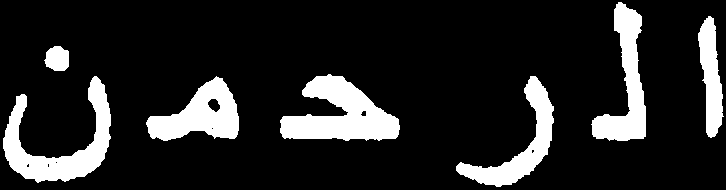
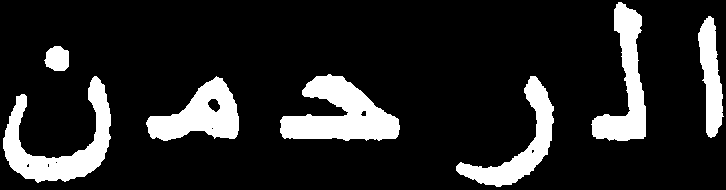
of God in pre-Islamic stone inscriptions in southern Arabia. A Sabaean-Himyarite inscription from Marib, dating to 499 or 505CE, reports that a house was built with the help of Rahmanan (rhmnn), the compassionate (mthrmn), with Rahmanan being the name of God and the description compassionate his attribute.7 This double characterization of God corresponds precisely to the one that opens the first sura of the Koran: In the name of God, the merciful (al-Rahman, like Ethiopia, under the influence of Rome, but opted instead for a neutral monotheism, and later Judaism.
阿拉伯南部前伊斯兰时期石碑铭文中的神。来自马里卜 (Marib) 的一则萨巴-希米亚尔 (Sabaean-Himyarite) 铭文,定年为公元499年或505年,记载说,有一座房屋是在拉赫曼南 (Rahmanan, rhmnn) 的帮助下建成的,他是仁慈者 (mthrmn),其中拉赫曼南是神的名字,而“仁慈者”这一描述则是他的属性。7 这种对神的双重刻画,与《古兰经》(Koran) 第一苏拉 (sura) 开篇的那一表述完全对应:奉神之名,仁慈者 (al-Rahman,像埃塞俄比亚 (Ethiopia) 一样,处于罗马 (Rome) 的影响之下,但转而选择了一种中立的一神论,以及后来的犹太教。
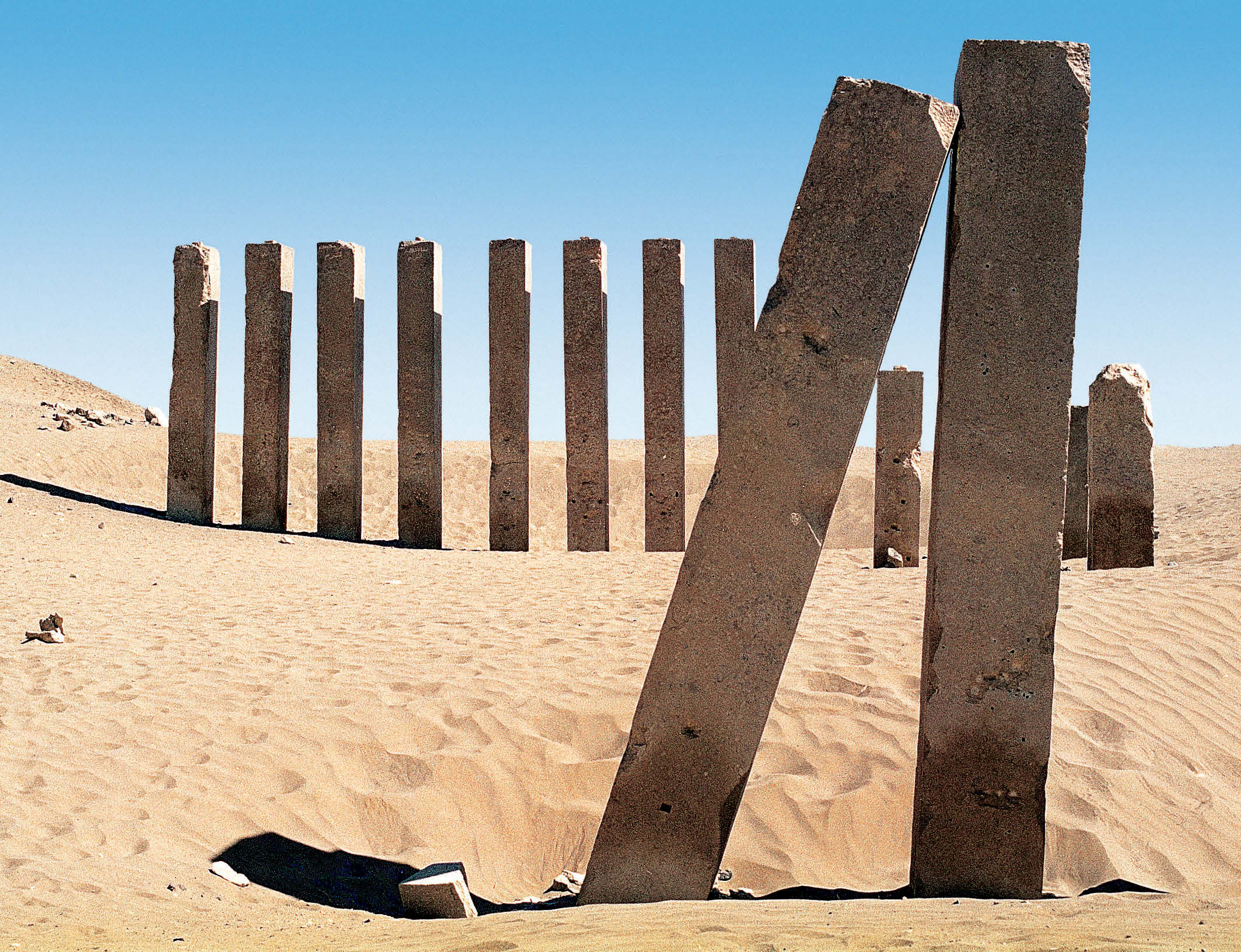
The Awwam Temple, which has existed since around the sixth century BCE and is today called Mahram Bilqis, in Marib, Yemen. The stone inscriptions from the late third century CE found in the gallery of columns no longer invoke the usual divine triad of moon, sun and Venus but exclusively the god Almaqah, which indicates monotheistic tendencies. Photo: 1980.
阿瓦姆神庙 (Awwam Temple) 约自公元前六世纪起便已存在,今称马赫拉姆·比尔基斯 (Mahram Bilqis),位于也门 (Yemen) 马里卜 (Marib)。发现于柱廊的公元三世纪晚期石刻铭文不再祈求通常的月神、太阳神和维纳斯 (Venus) 三神组合,而只祈求阿尔马卡神 (Almaqah),这表明存在一神教倾向。照片:1980年。
A similar, if less clear and later, development emerged in Mecca, the eventual birthplace of the prophet Mohammed, where al-Lah, whose name means the God, was worshipped as the highest god. Al-Lah’s three daughters – the goddesses Manat, time; al-Lat, the sun; and al-Uzza, the morning star – were very popular, as well. The special status of al-Lah is also made evident by the fact that there was no figure of him in the Ka’aba, although it contained 360 idols. This development recalls the proto- monotheism around the god Marilaha that earlier predominated in the region of Edessa.6
一种类似的发展——尽管不那么清晰且出现较晚——出现在麦加 (Mecca),即先知穆罕默德 (Mohammed) 最终出生的地方。在那里,安拉 (al-Lah)——其名意为“神”——被奉为最高神。安拉 (al-Lah) 的三个女儿——女神马纳特 (Manat),即时间;阿拉特 (al-Lat),即太阳;以及乌扎 (al-Uzza),即晨星——也同样非常受欢迎。安拉 (al-Lah) 的特殊地位还体现在:克尔白 (Ka’aba) 中虽供奉着360尊偶像,却没有他的造像。这一发展令人联想到早先曾在埃德萨 (Edessa) 地区占主导地位的、围绕神马里拉哈 (Marilaha) 的原初一神教。6
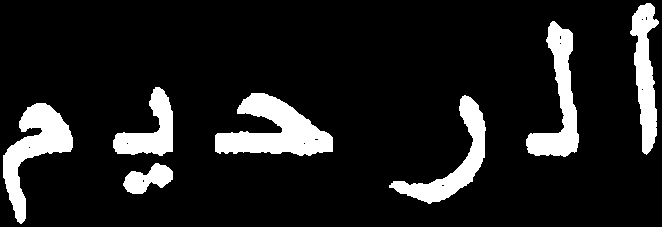
), the compassionate (al-Rahim,
), 至慈的 (al-Rahim,
). Thus, Mohammed did not invent the opening formula for each sura but used expressions familiar at that time. In it he united the god al-Lah, widely regarded in the central Arabian Hejaz as the highest god, with Rahmanan, worshipped as the
)。因此,穆罕默德 (Mohammed) 并未发明每章的开端套语,而是使用了当时人们熟悉的表达。在其中,他将神安拉 (al-Lah) 与拉赫曼 (Rahmanan) 结合起来,前者在阿拉伯中部的汉志 (Hejaz) 地区被广泛视为至高神,后者则被崇拜为
We can also find the second Islamic attribute
我们还可以发现第二个伊斯兰属性。
only god in southern Arabia, with the latter transformed into the first attribute of al-Lah. But the word ‘rahmanan’ is the southern Arabian equivalent of the Aramaic ‘rahmana’, which we find in both the Jerusalem and Babylonian versions of the Jewish Talmud and in East Syrian writings such as those of Ephrem.8 Both terms are still used today in both West Syrian and East Syrian literature.
南阿拉伯 (southern Arabia) 的唯一神,后者转变为安拉 (al-Lah) 的第一属性。但“拉赫曼南 (rahmanan)”一词是阿拉米语 (Aramaic)“拉赫马纳 (rahmana)”的南阿拉伯语对应词,我们在犹太教《塔木德》(Talmud) 的耶路撒冷版和巴比伦版中,以及诸如厄弗冷 (Ephrem).8 的东叙利亚著作中都能找到该词。这两个术语至今仍用于西叙利亚和东叙利亚文献中。
Christianity merely as a matter of form, is disputed; in any case, this first missionary effort in southern Arabia produced little lasting success. Malkîkarib’s son and successor, Abukarib Asad (ruled c.385–420), converted to Judaism after visiting the central Arabian oasis city of Yathrib, later called Medina. Yathrib had been founded by Jewish settlers in the pre-Christian period, and its population swelled considerably after Emperor Hadrian’s defeat of the second Jewish revolt in 135. Although non-Jewish Arabs also lived in the oasis, Yathrib, which was home to several synagogues, could be considered a Jewish city. After his return to Yemen, King Abukarib ordered the first persecution of Christians. The extent to which the rapid expansion of the Mosaic religion in Himyar pressured and stifled Christianity is evident from King Sharabhi al-Yukkûf’s conversion to Judaism around 470, after which he had the Christian missionary Azqir, who had come from Najran, executed because he ‘was spreading a new religion’.10 It appears that Judaism was the leading religion of Himyar from c.400 to 525. On account of the supremacy of Judaism and the fact that monotheistic inscriptions dating from before the end of the Himyar dynasty in 525 do not mention the Trinity, we conclude that they were of Jewish inspiration.
基督教 (Christianity) 是否仅流于形式,尚有争议;无论如何,这次在阿拉伯半岛南部的首次传教努力几乎没有产生持久的成果。马尔基卡里布 (Malkîkarib) 之子兼继任者阿布卡里布·阿萨德 (Abukarib Asad)(约385—420年在位)在访问阿拉伯中部绿洲城市叶斯里布 (Yathrib)(后称麦地那 (Medina))之后皈依了犹太教 (Judaism)。叶斯里布由犹太定居者在基督教时代之前建立,135年哈德良皇帝 (Hadrian) 击败第二次犹太起义 (second Jewish revolt) 后,其人口大幅激增。尽管绿洲中也生活着非犹太阿拉伯人,但叶斯里布拥有若干犹太会堂,可被视为一座犹太城市。返回也门 (Yemen) 后,阿布卡里布国王 (King Abukarib) 下令对基督徒进行首次迫害。从沙拉比·阿尔-尤库夫国王 (King Sharabhi al-Yukkûf) 约470年皈依犹太教一事即可看出,摩西宗教 (Mosaic religion) 在希木叶尔 (Himyar) 的迅速扩张在多大程度上对基督教施加压力并加以扼杀;此后,他处死了来自纳季兰 (Najran) 的基督教传教士阿兹基尔 (Azqir),因为后者“在传播一种新宗教”。10 看来,约400年至525年间,犹太教是希木叶尔的主要宗教。由于犹太教的主导地位,以及可追溯至525年希木叶尔王朝终结之前的一神教铭文 (monotheistic inscriptions) 未提及三位一体 (Trinity) 这一事实,我们推断这些铭文受到犹太教启发。
At that time, both Judaism and Christianity were present in southern Arabia. The first documented Christian missionary activity in southern Arabia goes back to Emperor Constantius II (ruled 337–361), who had the deacon Theophilos, who had been born on the island of Socotra, consecrated as bishop, and sent sometime before 356 as an official envoy to southern Arabia and India. The purpose of the mission was mainly of an economic and political nature, as Theophilos was to establish friendly relations with the states bordering the Indian Ocean, in order to counter Shapur II’s policy of expansion and secure the profitable maritime trade with India. This mission was very important for Byzantium because the kingdom of al-Hira, which was a vassal of the Sassanians and bordered on Arabia, controlled the Hejaz to the borders of the Himyarite realm. At the same time, Theophilos, who followed the theology of Arius, was supposed to strengthen diplomatic ties with the ruler of Himyar by having him convert to Christianity and to have churches built for the local Byzantine trading settlements.
当时,南阿拉伯 (southern Arabia) 同时存在犹太教 (Judaism) 与基督教 (Christianity)。南阿拉伯 (southern Arabia) 最早有文献记载的基督教传教活动可追溯至君士坦提乌斯二世皇帝 (Emperor Constantius II,在位 337–361 年);他任命出生于索科特拉岛 (Socotra) 的执事狄奥菲洛斯 (Theophilos) 为主教 (bishop),并于 356 年前的某个时候将其作为正式使节派往南阿拉伯 (southern Arabia) 和印度 (India)。此次传教使命主要具有经济和政治性质,因为狄奥菲洛斯 (Theophilos) 的任务是与印度洋 (Indian Ocean) 沿岸诸国建立友好关系,以对抗沙普尔二世 (Shapur II) 的扩张政策,并确保与印度 (India) 之间有利可图的海上贸易。这一使命对拜占庭 (Byzantium) 极为重要,因为萨珊王朝 (Sassanians) 的附庸、与阿拉伯 (Arabia) 接壤的希拉王国 (al-Hira) 控制着汉志 (Hejaz),直至希木叶尔王国 (Himyarite realm) 的边界。与此同时,信奉阿里乌斯 (Arius) 神学的狄奥菲洛斯 (Theophilos) 还应通过让希木叶尔 (Himyar) 统治者皈依基督教,并为其当地的拜占庭 (Byzantine) 贸易据点修建教堂,来加强与希木叶尔 (Himyar) 统治者的外交联系。
In the oasis city of Najran, by contrast, a flourishing Christian community emerged in the fifth century. Although Tabari attributed the undated conversion of the Arabs of Najran, who allegedly worshipped a sacred tree, to the Syrian Fimiun (Euphemion),11 the Chronicle of Seert is more informative. It reports that, at the time of the Sassanian shah Yazdgerd I (ruled 399–420), a merchant from Najran named Hannan, returning from a business trip to Constantinople, stopped in al-Hira and there learned of East Syrian Christianity. Upon his return to Najran he baptized his family and many other occupants of his house, and even made a missionary journey
相比之下,在绿洲城市奈季兰 (Najran),一个繁荣的基督教社群于五世纪兴起。尽管塔巴里 (Tabari) 将奈季兰阿拉伯人——据称他们崇拜一棵圣树——那未注明日期的皈依归因于叙利亚的菲米翁 (Fimiun/Euphemion)11,但《塞尔特编年史》(Chronicle of Seert) 提供了更多信息。它记载道,在萨珊王朝沙阿伊嗣俟一世 (Yazdgerd I)(在位 399–420 年)时期,一位名叫哈南 (Hannan) 的奈季兰商人从君士坦丁堡 (Constantinople) 经商归来,途中在希拉 (al-Hira) 停留,并在那里得知了东叙利亚基督教 (East Syrian Christianity)。回到奈季兰后,他为自己的家人和家中许多其他成员施洗,甚至进行了一次传教之旅
It is unclear whether Theophilos ever reached India, but he did meet the Himyarite king Tha’rân Yuhanim and his co-regent and son, Malkîkarib. Despite the opposition of the many Jews who lived at court, he received permission to build three churches in the capital city of Zafar, in Sana’a, and in Aden or Hormuz.9 However, they were used only by Christian merchants. Whether the bishop actually succeeded in converting the Himyarite king or whether the king accepted
尚不清楚狄奥菲洛斯 (Theophilos) 是否曾到达印度,但他确实会见了希木叶尔 (Himyarite) 国王塔兰·尤哈尼姆 (Tha’rân Yuhanim) 及其共治者兼儿子马尔基卡里布 (Malkîkarib)。尽管宫廷中许多犹太人反对,他仍获准在首都扎法尔 (Zafar)、萨那 (Sana’a) 以及亚丁 (Aden) 或霍尔木兹 (Hormuz) 建造三座教堂。9 然而,这些教堂只供基督徒商人使用。这位主教是否真的成功使希木叶尔国王皈依,抑或国王是否接受了
to Himyar.12 Although the first Christian community of Najran was most likely Nestorian, Justin’s persecution of Miaphysites beginning in 519 resulted in a significant movement of refugees to Najran. Najran became a Christian city of Arabia with several magnificent churches. same time, he had the Byzantine traders, who travelled from Himyar to Ethiopia, plundered and murdered, provoking the first military intervention by the Christian Ethiopians. Although the king had to leave Zafar, he mounted a successful counter-attack in the cold of winter. He returned to his capital, burned the church in which the Christians were imprisoned, and likewise destroyed the Church of Mocha on the Red Sea.
前往希木叶尔 (Himyar)。12 尽管奈季兰 (Najran) 的第一个基督教社群很可能属于聂斯托利派 (Nestorian),但查士丁 (Justin) 自519年起对一性论派 (Miaphysites) 的迫害,导致大量难民迁往奈季兰。奈季兰成为阿拉伯 (Arabia) 的一座基督教城市,拥有数座宏伟的教堂。与此同时,他让那些从希木叶尔 (Himyar) 前往埃塞俄比亚 (Ethiopia) 的拜占庭 (Byzantine) 商人遭到劫掠和杀害,从而引发了基督教埃塞俄比亚人 (Christian Ethiopians) 的首次军事干预。尽管国王不得不离开扎法尔 (Zafar),但他在寒冬时节发动了一次成功的反击。他返回首都,烧毁了基督徒被囚禁于其中的教堂,并同样摧毁了红海 (Red Sea) 之滨的摩卡教堂 (Church of Mocha)。
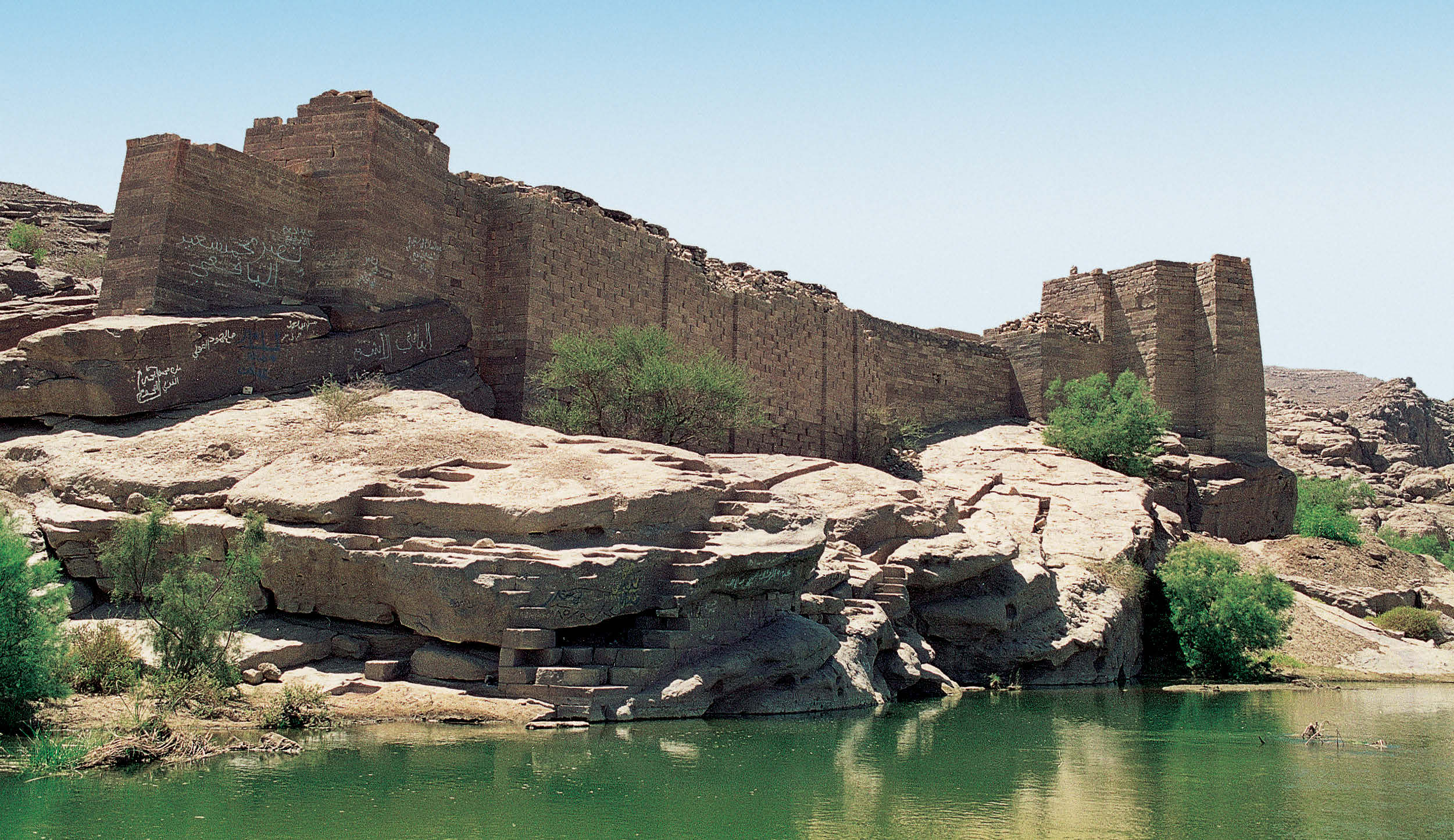
Southern sluice of the coffer-dam of Marib, built in the sixth century BCE. An inscription on a stele from 542CE reports in the name of the Trinity about the repair of the coffer-dam and the construction or renovation of a church.38 Photo: 1993.
马里卜 (Marib) 围堰的南闸,建于公元前六世纪。一块公元542年的石碑铭文以三位一体的名义记载了该围堰的修缮以及一座教堂的建造或翻修。38 照片:1993年。
In 521, in the person of the Jew Yusuf as’ar Yath’ar (called Masruq in Syriac and Dhu-Nuwas in Arabic, meaning the curly-haired one) the royal throne of the Himyars was occupied by a man who wanted the kingdom of Israel to rise again in Arabia. The conflict between the two monotheistic religions was foreordained when Dhu-Nuwas led the rapidly erupting conflict as a religious war. At the beginning of 522 he attacked the Christians of his realm, to which Najran belonged as a semi-autonomous region. At the
521年,希木叶尔人 (Himyars) 的王位由犹太人优素福·阿萨尔·亚萨尔 (Yusuf as’ar Yath’ar)(叙利亚语称马斯鲁克 (Masruq),阿拉伯语称祖·努瓦斯 (Dhu-Nuwas),意为“卷发者”)占据;此人想让以色列王国在阿拉伯重新崛起。当祖·努瓦斯 (Dhu-Nuwas) 以宗教战争的方式领导这场迅速爆发的冲突时,两大一神教之间的冲突便已注定。522年初,他攻击了自己王国境内的基督徒;奈季兰 (Najran) 作为一个半自治地区隶属于该王国。在
He then led his army northwards and laid siege to Christian Najran in 523 or 524. Although he granted the Christians safe passage after their capitulation, Dhu-Nuwas instigated a terrible bloodbath. He ordered all the clergy, nuns and monks to be burned alive in the cathedral; the leading citizens and merchants, as well as their
随后,他率军北进,于523或524年围攻基督教城市奈季兰 (Najran)。尽管在对方投降后,他准许基督徒安全通行,但杜·努瓦斯 (Dhu-Nuwas) 却发动了一场骇人听闻的血腥屠杀。他下令将所有神职人员、修女和修士在大教堂中活活烧死;显贵市民和商人,以及他们的
families, were beheaded. That the king acted so cruelly out of religious motives is evident from the fact that he promised the Christians their lives if they would accept his religion: ‘Now you [the wives of the beheaded civic leaders] have seen how your husbands were killed because they said that Christ is God and the Son of God. Deny Christ and the cross! Become Jews like us.’13 As another of Dhu-Nuwas’s state ments makes clear, he persecuted primarily the Miaphysites because they believed in the single divine nature of Christ: ‘Are you somehow clev erer than these Greeks who live among you and call themselves Nestorians?’14 But the Christians remained steadfast, and some 4700 martyrs met with death; 1300 children were sold as slaves.15 Immediately after the massacre, Dhu-Nuwas addressed two letters to the Persian shah and the king of Hira, Mundir III, in which he demanded that they follow his example and destroy the Christians. But Mundir, whose wife was Nesto rian, did not consider this and, in fact, informed a Byzantine delegation staying at his court about the incident. construction or renewal of the Church of Marib but also about the complete repair of the dam, which presumably had been severely damaged by an earthquake. It begins with an appeal to the Trinity: ‘Through the power, the glory and the grace of the merciful [al-Rahmanan], his Messiah and the Holy Spirit.’17 But 30 years later the dam finally collapsed; the once fertile region of Marib lost its lifeline and became a barren desert.18 The final destruction of the dam of Marib must have made a significant impression on the people, since one or two generations later the Koran referred to it in words similar to those describing the great flood: ‘But they [the inhabitants of Marib] turned away; then we sent a raging flood against them’ (34:16).
[这些人的]家人也遭到斩首。国王如此残酷地行事出于宗教动机,这一点显而易见:他曾答应基督徒,只要他们接受他的宗教,便可保住性命:‘如今你们[被斩首的城中领袖的妻子们]已经看见,你们的丈夫因为说基督是上帝、是上帝之子而被杀。否认基督和十字架吧!像我们一样做犹太人。’13 从杜·努瓦斯(Dhu-Nuwas)的另一番话可以看出,他主要迫害合性论者,因为他们相信基督只有一种神性本性:‘你们难道比生活在你们中间、自称聂斯托利派的这些希腊人更聪明吗?’14 但基督徒坚守信仰,约有 4700 名殉道者丧生;1300 名儿童被卖为奴。15 大屠杀刚结束,杜·努瓦斯便给波斯沙阿和希拉国王蒙迪尔三世(Mundir III)写了两封信,要求他们效法自己,毁灭基督徒。但蒙迪尔的妻子是聂斯托利派,他没有照办,反而将此事告知当时驻扎在其宫廷的一支拜占庭使团。关于马里卜(Marib)教堂的建造或修缮,也提及水坝的全面修复;该水坝据推测曾在地震中严重受损。铭文以对三位一体的祈求开篇:‘借慈悯者[al-Rahmanan]、其弥赛亚和圣灵的力量、荣耀与恩典。’17 但 30 年后,水坝终于坍塌;曾经富饶的马里卜地区失去了赖以维生的水源,变成荒漠。18 马里卜水坝最终毁坏,想必给当地人留下了深刻印象,因为一两代人之后,《古兰经》以近似描述大洪水的措辞提到此事:‘然而他们[马里卜居民]背离了,于是我使汹涌的洪水冲向他们。’(34:16)
Abraha used his authority to promote Christianity in southern Arabia and had many churches built or rebuilt. The most magnificent church was the Cathedral of Sana’a, which was adorned with murals and mosaics.19 The Muslim historian Tabari reported that in building the cathedral Abraha wanted to supplant the central Arabian trading centre of Mecca as a pilgrimage site, as the Ka’ba was, even in the pre-Islamic period, the most important religious focal point of Arabia. Now the Bedouins were supposed to make an annual pilgrimage to Sana’a rather than Mecca. But the Quraysh, the ruling tribe in Mecca, murdered Abraha’s envoys and engaged a Bedouin to desecrate the cathedral of Sana’a. He is said to have smeared the altar and the cross with faeces in the middle of the night.20 Abraha swore revenge and decided to destroy the Ka’ba. Although Abraha’s army, which had war elephants at its disposal, was far superior to Mecca’s, and on the march to Mecca – around 55221 – it won the first skirmish, it met with an ambush in a narrow valley shortly before reaching its goal and was destroyed. Interestingly, the heroic leader of the Meccans, Sheik Abd al-Muttalib, was none other than Mohammed’s grandfather, with whom the future prophet lived until he was
阿卜拉哈 (Abraha) 利用其权威在阿拉伯南部推广基督教,并兴建或重建了许多教堂。其中最宏伟的是萨那大教堂 (Cathedral of Sana’a),饰有壁画和马赛克镶嵌画。19 穆斯林历史学家塔巴里 (Tabari) 记载,阿卜拉哈在建造这座大教堂时,意图取代阿拉伯中部的贸易中心麦加 (Mecca) 作为朝觐地,因为即便在前伊斯兰时期,克尔白 (Ka’ba) 也是阿拉伯最重要的宗教焦点。当时,贝都因人 (Bedouins) 本应每年前往萨那 (Sana’a) 朝觐,而不是去麦加。但麦加的统治部落古莱什 (Quraysh) 杀害了阿卜拉哈的使者,并雇了一名贝都因人去亵渎萨那大教堂。据说此人在半夜将粪便涂抹在祭坛和十字架上。20 阿卜拉哈发誓复仇,并决定摧毁克尔白。尽管阿卜拉哈的军队拥有战象,远胜于麦加,而且在向麦加进军途中——约552年21——赢得了首场小规模战斗,但它在抵达目标前不久于一个狭窄山谷中遭到伏击并被歼灭。有趣的是,麦加人的英雄领袖谢赫阿卜杜勒·穆塔里布 (Sheik Abd al-Muttalib) 不是别人,正是穆罕默德 (Mohammed) 的祖父;未来的先知曾与他一起生活,直到他……
Christianity becomes the state religion in southern Arabia
基督教成为南阿拉伯 (southern Arabia) 的国教
But Dhu-Nuwas underestimated the Miaphysite negus of Ethiopia, who burned to avenge the massacre of his garrison of Zafar and his Christian brothers in Najran. Around 525 he landed on the west coast of Yemen with a powerful army, killed Dhu-Nuwas, and imposed Christianity on many Jews,16 after which he placed in power a Himyarite viceroy. After a few years of turmoil, the Miaphysite Ethiopian Abraha seized power around 533, which made Christianity the state religion of southern Arabia for 40 years. The final repair of the great dam of Marib, constructed in the sixth century BCE, took place during Abraha’s reign. A stele dated to the year 542 reports not only about the
但杜·努瓦斯 (Dhu-Nuwas) 低估了埃塞俄比亚 (Ethiopia) 的合性论派国王 (negus),后者怒火中烧,誓要为扎法尔 (Zafar) 驻军遭到的屠杀以及他在纳季兰 (Najran) 的基督徒弟兄们复仇。约525年,他率领一支强大的军队在也门 (Yemen) 西海岸登陆,杀死了杜·努瓦斯 (Dhu-Nuwas),并强迫许多犹太人改信基督教,16 随后他扶植了一位希木叶尔 (Himyarite) 总督掌权。经过数年动乱之后,合性论派的埃塞俄比亚人阿布拉哈 (Abraha) 于约533年夺取政权,这使基督教成为阿拉伯南部 (southern Arabia) 的国教长达40年。建于公元前六世纪的马里卜 (Marib) 大坝的最后一次修缮发生在阿布拉哈 (Abraha) 统治期间。一块年代为公元542年的石碑不仅记载了
eight years old. One can speculate that family pride in the destruction of the Christian army inspired Mohammed, when he felt the call to lead the Arabs away from polytheism, to choose not Christian monotheism but, rather, worship of the highest god of the Ka’aba, al-Lah. Certainly, the national desire to free Arabia from the foreign rule of Ethiopia and Iran constituted a further motivation for the revelation of a new religion. the Arabian realm. It stood under the authority of the metropolitan see of Rew Ardashir.27 On account of its geographical isolation, Christianity held its own for centuries after the conquests of Islam. Marco Polo, who visited the island on his return journey around 1293/1294, reported, ‘The people [of the island] are all baptized, they have an archbishop. The archbishop has nothing to do with the pope in Rome, but is subject to the great archbishop of Baghdad.’28 In the sixteenth century Christianity became blended with Islam and a moon cult; it died out in the early twentieth century. Earlier, around 1800, fanatical Wahabis, the Muslim state sect of Saudi Arabia, had landed on the island and destroyed all the Christian houses of worship.29 Archaeological ruins of a church recall the one-time presence of Nestorian Christians.30
八岁。人们可以推测,家族因基督教军队被摧毁而产生的自豪感,促使穆罕默德 (Mohammed) 在感到蒙召要带领阿拉伯人脱离多神教时,没有选择基督教的独一神论,而是选择崇拜克尔白 (Ka’aba) 的最高神安拉 (al-Lāh)。当然,将阿拉伯 (Arabia) 从埃塞俄比亚 (Ethiopia) 和伊朗 (Iran) 的外来统治下解放出来的民族愿望,构成了新宗教启示的进一步动机。阿拉伯地区。它隶属于雷夫阿尔达希尔 (Rew Ardashir) 都主教区。27 由于其地理上的孤立,基督教在伊斯兰征服之后的数百年间仍得以存续。马可·波罗 (Marco Polo) 在约1293/1294年返程途中访问了该岛,他报告说:“[岛上] 的居民全都受洗,他们有一位大主教。这位大主教与罗马 (Rome) 的教皇毫无关系,而是臣属于巴格达 (Baghdad) 的大主教。”28 16世纪,基督教与伊斯兰教及一种月亮崇拜相融合;它在20世纪初消亡。更早,约1800年,狂热的瓦哈比派 (Wahabis),即沙特阿拉伯 (Saudi Arabia) 的穆斯林国教教派,曾登陆该岛并摧毁了所有基督教礼拜场所。29 一座教堂的考古遗迹令人回想起聂斯托利派基督徒 (Nestorian Christians) 曾经的存在。30
The defeated king Abraha was followed by two of his sons; but around 570 Jewish descendants of Dhu-Nuwas dared to mount an uprising and asked the Sassanian king Chosrau I for military aid. An Iranian army landed in Aden and conquered the weakened Christians. However, instead of allowing the revival of the ancient kingdom of Himyar, the Sassanians made Yemen an Iranian province, where they remained until their expulsion by the Arabs of Mohammed around 630. Presumably the Church of the East used this new conquest to strengthen its presence in southern Arabia. Known by name is the prominent central Arabian tribe of Kinda, which was in part Nestorian.22 There were also a few Christians among the Quraysh, the leading tribe of Mecca. The most famous of these was the scholar and fortune-teller Waraqa ibn Naufal, who was related to Mohammed as the cousin of the prophet’s first wife, Khadija.23 Apparently at that time there was said to be a picture of Mary with Jesus on the wall of the Ka’aba.24 For its part, Abraha’s renowned cathedral of Sana’a remained standing until about 770, when the Arab administrators of Yemen ordered its destruction. Its capitals, decorated with Greek crosses, were reused in the construction of the great mosque.25 The last Nestorian bishop of Yemen with his see in Sana’a, Thomas al-Margarri, served until 850; the Christians there were mentioned for the final time in 911.26
被击败的国王阿卜拉哈 (Abraha) 之后由他的两个儿子继位;但约570年,杜·努瓦斯 (Dhu-Nuwas) 的犹太后裔胆敢发动起义,并向萨珊国王霍斯劳一世 (Chosrau I) 请求军事援助。一支伊朗军队在亚丁 (Aden) 登陆,征服了已被削弱的基督徒。然而,萨珊人并未允许古老的希木叶尔 (Himyar) 王国复兴,而是将也门 (Yemen) 变为伊朗的一个行省;他们一直留在那里,直到约630年被穆罕默德 (Mohammed) 的阿拉伯人驱逐。据推测,东方教会 (Ch. of E.) 利用这次新的征服加强了其在阿拉伯南部的存在。其中有名可考的是阿拉伯中部显赫的金达 (Kinda) 部落,该部落部分属于聂斯脱利派 (Nestorian)。22在麦加 (Mecca) 的首要部落古莱什 (Quraysh) 中,也有少数基督徒。其中最著名的是学者和占卜者瓦拉卡·伊本·瑙法尔 (Waraqa ibn Naufal),他与穆罕默德 (Mohammed) 有亲缘关系,是先知的第一位妻子赫蒂彻 (Khadija) 的堂兄弟。23显然,当时据说克尔白 (Ka’aba) 的墙上有一幅马利亚 (Mary) 与耶稣 (Jesus) 的画像。24就阿卜拉哈 (Abraha) 著名的萨那 (Sana’a) 大教堂而言,它一直矗立到约770年,当时也门 (Yemen) 的阿拉伯行政官员下令将其拆毁。其柱头饰有希腊十字,被重新用于大清真寺的建造。25也门 (Yemen) 最后一位聂斯脱利派 (Nestorian) 主教托马斯·阿尔-马尔加里 (Thomas al-Margarri),其主教座设在萨那 (Sana’a),任职至850年;那里的基督徒最后一次被提及是在911年。26
In light of the impressive spread of Christianity in Arabia, it is surprising that there are hardly any hints of a pre-Islamic translation of Holy Scripture into Arabic. The oldest fragments, from the eighth and ninth centuries, come from Palestine and the Sinai.31 First the Nestorian philosopher Hunayn Ibn Ishaq (808–873) translated the Septuagint,32 approximately contemporary are the earliest translations of the Peshitta and the letters of Paul.33 We can only speculate about the reasons for these relatively late translations. Was only Syriac used as a liturgical language at that time? Were most Arab Christians, because of their nomadic lifestyle, illiterate? This reason may have applied in the northern Arabian region and in Yemen, but hardly in Najran. Or have older translations simply vanished without a trace?
鉴于基督教在阿拉伯 (Arabia) 令人瞩目的传播,令人惊讶的是,几乎没有任何迹象表明前伊斯兰时期曾将《圣经》(Holy Scripture) 翻译成阿拉伯语 (Arabic)。最古老的残篇来自八世纪和九世纪,出自巴勒斯坦 (Palestine) 和西奈 (Sinai)。31 首先,聂斯脱利派 (Nestorian) 哲学家侯奈因·伊本·伊斯哈格 (Hunayn Ibn Ishaq, 808–873) 翻译了《七十士译本》(Septuagint),32 而《别西大译本》(Peshitta) 和《保罗书信》(letters of Paul) 的最早译本也大致属于同一时期。33 对于这些相对较晚的译本出现的原因,我们只能进行推测。当时是否只使用叙利亚语 (Syriac) 作为礼仪语言?大多数阿拉伯基督徒是否因其游牧生活方式而是文盲?这一原因可能适用于阿拉伯北部地区和也门 (Yemen),但在奈季兰 (Najran) 则几乎不适用。抑或更古老的译本只是消失得无影无踪?
The loss of the Arabian dioceses
阿拉伯教区的丧失
On account of Islam’s link with the burgeoning Arab nationalism there arose deep in the desert of Arabia a whirlwind of such power that, in a matter of decades, it destroyed the Sassanian
由于伊斯兰教 (Islam) 与方兴未艾的阿拉伯民族主义 (Arab nationalism) 之间的联系,在阿拉伯 (Arabia) 沙漠深处兴起了一股威力如此巨大的旋风,以致在数十年间,它摧毁了萨珊 (Sassanian)
As the traveller to India Cosmas Indicopleustes noted around 525, the diocese on the island of Socotra was the third Nestorian stronghold in
正如前往印度 (India) 的旅行者科斯马斯·印第科普莱斯特斯 (Cosmas Indicopleustes) 在约525年所指出的,索科特拉岛 (Socotra) 上的教区是第三个聂斯托利派 (Nestorian) 据点,位于
Empire, conquered more than half of the Byzantine Empire and for the first time not only stopped the spread of Christianity but, over time, forced it out of its own birthplace. From the perspective of the early twenty-first century, the Islamic conquest meant the beginning of the decline of Syrian Oriental Christianity, as both the Syrian Orthodox Church and the Church of the East are threatened with extinction in their lands of birth.
帝国征服了拜占庭帝国 (Byzantine Empire) 一半以上的领土,并首次不仅阻止了基督教的传播,而且随着时间推移,迫使基督教离开其诞生地。从21世纪初的视角来看,伊斯兰征服意味着叙利亚东方基督教 (Syrian Oriental Christianity) 衰落的开始,因为叙利亚正教会 (Syrian Orthodox Church) 和东方教会 (Ch. of E.) 都在其诞生地面临灭绝的威胁。
There he organized his followers into a socio- religious community under his leadership. This concept of a faith community gathered around a single god, without ties to any tribe, enabled Mohammed to overcome the intra-Arab contra- dictions between settled peoples and nomads, as well as between tribes. In the following years Mohammed extended his power over all of Yathrib, neither shying away from attacking trade caravans from Mecca nor tolerating opposition from other religions. He expelled the Jewish tribe of Banu Qaynuqa from their own city, and he had the leaders of the likewise Jewish Qurayzah executed. Shortly after his death, central Arabia was purged of Jews and Christians. In contrast to Jesus, Zarathustra and Mani, Mohammed was not only the founder of a religion; he was also simultaneously a warrior and a successful statesman. It was precisely this combination of various roles that made Islam suspect to Jews and Christians, since a religious message should succeed on the strength of its truth and with words, not with the sword. In this spirit, a Jew of Palestine stated around 636, ‘Mohammed is a false prophet. Do prophets appear armed from head to toe?’34 In 691 the Nestorian patriarch Henanisho I (in office 685–701) responded similarly when Caliph Abd al-Malik asked him what he thought of Islam. The fearless patriarch answered, ‘It is a power that was established by the sword and not a faith confirmed by divine miracles, like Christianity and like the old law of Moses.’ At first the caliph wanted to cut out the tongue of the courageous patriarch, but then he pardoned Henanisho, on the condition that he never again appear before him.35
他在那里将自己的追随者组织成一个由他领导的社会宗教共同体。这种围绕独一神、不受任何部落纽带约束的信仰共同体观念,使穆罕默德 (Mohammed) 得以克服阿拉伯人内部定居民族与游牧民之间以及部落之间的矛盾。在随后几年里,穆罕默德将其权力扩展至整个雅斯里布 (Yathrib),他既不回避袭击来自麦加 (Mecca) 的贸易商队,也不容忍其他宗教的反对。他将犹太部落巴努·盖努卡 (Banu Qaynuqa) 逐出他们自己的城市,并下令处死同样信奉犹太教的古莱扎 (Qurayzah) 部落首领。他死后不久,阿拉伯中部便清除了犹太人和基督徒。与耶稣 (Jesus)、琐罗亚斯德 (Zarathustra) 和摩尼 (Mani) 不同,穆罕默德不仅是宗教的创立者,同时也是一位战士和成功的政治家。正是这种多重角色的结合,使伊斯兰教 (Islam) 在犹太人和基督徒眼中显得可疑,因为宗教信息应当凭借其真理的力量、以言辞而非刀剑取胜。本着这种精神,一位巴勒斯坦 (Palestine) 的犹太人在约636年说道:“穆罕默德是假先知。先知会全副武装地出现吗?”34 691年,当哈里发阿卜杜勒·马利克 (Abd al-Malik) 询问聂斯托利派宗主教 (Nestorian patriarch) 亨纳尼绍一世 (Henanisho I,在位685–701年) 对伊斯兰教有何看法时,他也作出了类似的回应。这位无所畏惧的宗主教答道:“它是一种靠刀剑建立起来的权力,而不是像基督教 (Christianity) 和摩西 (Moses) 的旧律法那样由神圣奇迹所确证的信仰。”起初,哈里发想割掉这位勇敢宗主教的舌头,但随后赦免了亨纳尼绍,条件是他永远不得再出现在自己面前。35
The proclamation of the prophet Mohammed (570–632) occurred not in a purely ‘pagan’ environment, since all Arabian cities possessed Jewish and Christian communities of varying size. In addition to the adherents of these two monotheistic religions, there were in Mecca also independent monotheists, called Hanife, who had rejected the worship of the numerous tribal deities and acknowledged only al-Lah as the true God, but were nevertheless neither Christians nor Jews. Mohammed, who was familiar with both religions, latched on to this point. First, he elevated the highest god of Mecca, al-Lah, to the only God, Allah, who tolerated no other gods. Then, following the prophets who preceded him, Abraham, Moses and Jesus, he emphasized that he taught no new religion but, rather, was re-establishing the aniconic worship of the God of Abraham in its original purity. Since God is neither visible nor imaginable, he should not be worshipped with sacrifices and idols but instead with prayer and the proclaiming of his message. Mohammed wanted to cleanse the Ka’aba – whose founding he attributed to Abraham, father of the forefather of all Arabs, Ishmael – of its 360 idols and consecrate it to Allah alone. In this regard, Mohammed was of a similar spirit to Jesus when he purified the Temple (Matt 21:12ff.). Since the Ka’aba was simultaneously a religious and an economic centre, the authorities of Mecca feared that Mohammed’s radical initiative could lessen its attractiveness and undermine its role as a trading hub. In 622 Mohammed fled to Jewish Yathrib.
先知穆罕默德 (Mohammed, 570–632) 的宣示并非发生在纯粹的“异教”环境中,因为所有阿拉伯城市都有规模不等的犹太教和基督教社群。除了这两种一神教信仰的信徒之外,麦加 (Mecca) 还有独立的一神论者,称为哈尼夫 (Hanife);他们拒绝崇拜众多部落神祇,只承认安拉 (al-Lah) 为真神,但他们既不是基督徒也不是犹太人。穆罕默德 (Mohammed) 熟悉这两种宗教,便抓住了这一点。首先,他将麦加 (Mecca) 的最高神安拉 (al-Lah) 提升为唯一的神安拉 (Allah),后者不容忍任何其他神祇。随后,他追随先于他的诸先知——亚伯拉罕 (Abraham)、摩西 (Moses) 和耶稣 (Jesus)——强调自己并未传授新宗教,而是在重新确立对亚伯拉罕 (Abraham) 之神的无偶像崇拜,恢复其原初的纯洁性。既然神既不可见也无法想象,就不应以献祭和偶像来崇拜他,而应以祈祷和宣讲他的信息来崇拜他。穆罕默德 (Mohammed) 想要清除克尔白 (Ka’aba) 中的 360 尊偶像,并将其专献给安拉 (Allah);他将克尔白 (Ka’aba) 的创建归功于亚伯拉罕 (Abraham),即所有阿拉伯人的祖先以实玛利 (Ishmael) 的父亲。在这一点上,穆罕默德 (Mohammed) 与净化圣殿时的耶稣 (Jesus) 精神相似(《马太福音》21:12及以下;Matt 21:12ff.)。由于克尔白 (Ka’aba) 同时是宗教和经济中心,麦加 (Mecca) 当局担心穆罕默德 (Mohammed) 的激进举措会降低其吸引力,并削弱其作为贸易枢纽的作用。622 年,穆罕默德 (Mohammed) 逃往犹太人的雅斯里布 (Yathrib)。
Although Mohammed proclaimed a universal religion, he remained trapped in the funda- mentals of Hebraic thought. Allah, like the God of Moses, is a righteous, punitive God, who shows mercy only to repentant sinners. Most of the suras expand on the Old Testament idea that God warns his people against disobedience and
尽管穆罕默德 (Mohammed) 宣扬一种普世宗教,他仍受困于希伯来思想的基本原理之中。安拉 (Allah) 像摩西 (Moses) 的上帝一样,是一位公义、惩罚性的上帝,只对悔改的罪人施怜悯。大多数苏拉 (suras) 进一步阐发了旧约 (Old Testament) 的观念,即上帝警告他的子民不要悖逆,并
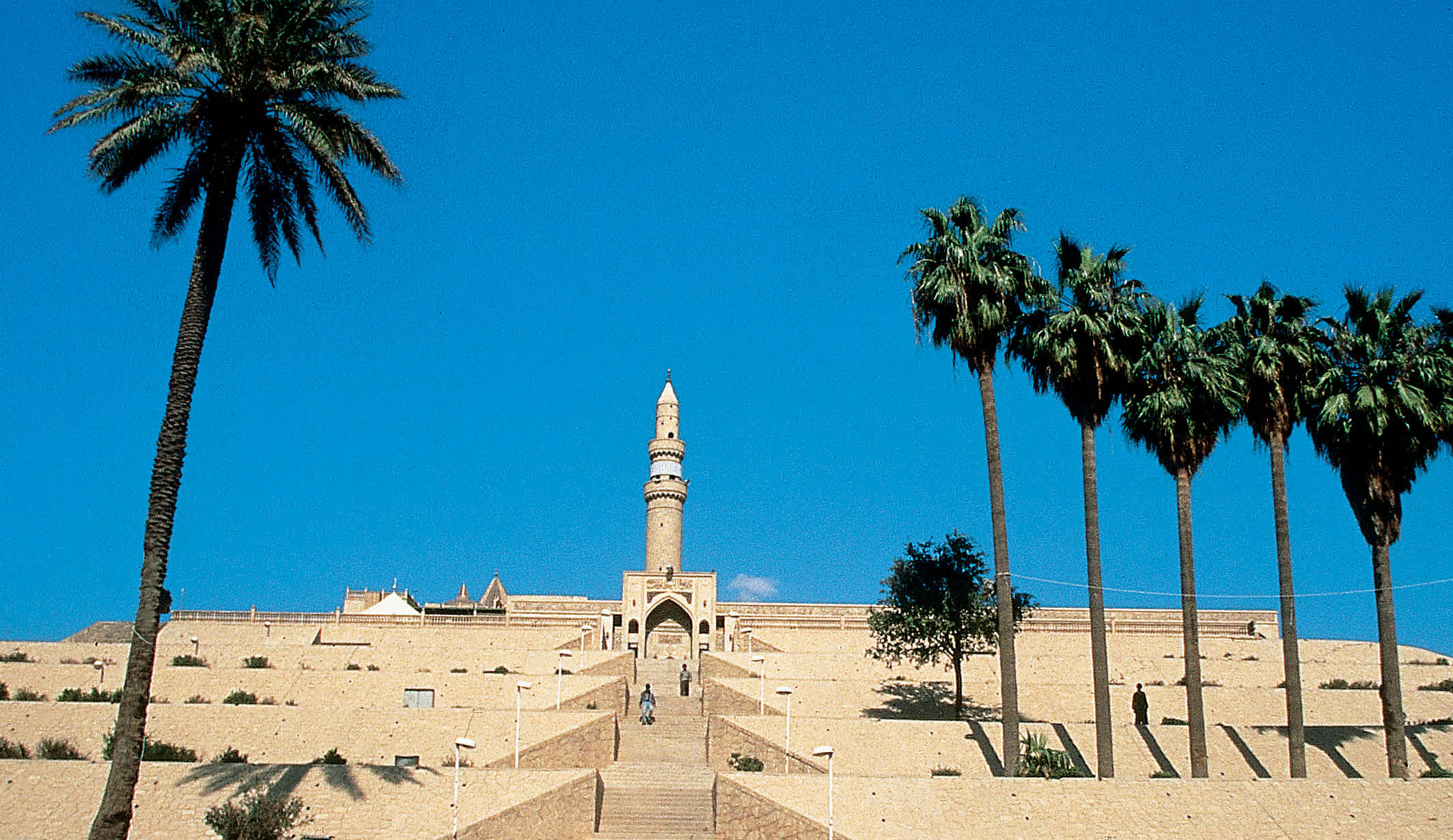
The Mosque of Nabi Yunus, which is oriented towards the east, in Mosul, northern Iraq (where the grave of the prophet Jonah is said to be found), was built over the grave of the Nestorian patriarch Henanisho I (in office 685–701). The Christian monastery, founded at the end of the fourth century, was converted into a mosque in the tenth century. In 1349 there was discovered the allegedly uncorrupted body of the patriarch, who had died more than six centuries earlier, which was identified with the prophet Jonah, associated with Nineveh/Mosul.39 The ‘Islamic State’ destroyed the mosque and the tomb on 24 July 2014 with explosives. threatens them with severe punishment. At the same time, divine goodwill correlates with the material success of the faithful – likewise an Old Testament principle, which the spirit of the New Testament diametrically opposes. Besides the refusal of the Arab Jews to recognize Mohammed as prophet, it can presumably also be attributed to the internal resemblance of Islam to the Hebraic religion that the Koran is generally more hostile towards Jews than towards Christians. ‘Among all people, the Jews and the idol worshippers [are] the worst foes of the faithful. And those who say: “We are Christians” are most well disposed towards the faithful’ (5:85). Another sura, however, condemns Christians and Jews with equal severity because they did not believe Mohammed’s revelation: ‘When a book from Allah [the Koran] came to them [Christians and Jews], they rejected it. Allah’s curse be upon the infidels!’ (2:89).
位于伊拉克(Iraq)北部摩苏尔(Mosul)、朝东的尼比·尤努斯(Nabi Yunus)清真寺(据说先知约拿(Jonah)的坟墓就在此处),建在聂斯托利派宗主教亨纳尼绍一世(Henanisho I)(在位685—701)的墓上。该基督教修道院创建于4世纪末,10世纪时改建为清真寺。1349年,人们发现了这位宗主教据称未腐的遗体;他逝世已逾6个世纪,而遗体被认作先知约拿——与尼尼微(Nineveh)/摩苏尔相关的人物。39 “伊斯兰国”于2014年7月24日用炸药摧毁了清真寺及墓葬。并以严厉惩罚相威胁。与此同时,上帝的恩宠与信徒在物质上的成功相对应——这同样是旧约原则,而新约精神则与之截然相反。除阿拉伯犹太人拒绝承认穆罕默德为先知之外,伊斯兰教在内部与希伯来宗教相似,或许也可以解释《古兰经》通常为何对犹太人比对基督徒更为敌视。“在所有人当中,犹太人和拜偶像者[是]信士最凶恶的敌人;而那些说‘我们是基督徒’的人,对信士最为友善。”(5:85)然而,另一章因基督徒和犹太人不相信穆罕默德的启示而同样严厉地谴责他们:“当一部来自安拉的经典[《古兰经》]降临他们[基督徒和犹太人]时,他们拒绝接受它。愿安拉诅咒不信者!”(2:89)。
In 630 Mohammed occupied Mecca without a struggle, and there he received many delegations from Arab, including Christian, tribes, who recognized his rule. His successor Abu Bakr (ruled 632–634) explicitly declared Mohammed the final prophet of God, and determined that leaving the Muslim community represented treason against God and that apostasy, as had already been ordered by the Koran, must be punished by death.36 On this point Islam resembled Zoroastrianism. Islamic tolerance limited itself – and still limits itself today in such countries as Iran and Saudi Arabia – to granting Jews and Christians the options of
630年,穆罕默德 (Mohammed) 未遇抵抗便占领了麦加 (Mecca),并在那里接待了许多来自阿拉伯部落的代表团,其中包括基督教部落,他们承认了他的统治。他的继任者阿布·伯克尔 (Abu Bakr)(在位632–634年)明确宣布穆罕默德是真主 (God) 的最后一位先知,并认定,脱离穆斯林共同体即构成对真主的背叛,而叛教——正如《古兰经》 (Koran) 已经规定的那样——必须处以死刑。36 在这一点上,伊斯兰教与琐罗亚斯德教 (Zoroastrianism) 相似。伊斯兰教的宽容仅限于——在今天诸如伊朗 (Iran) 和沙特阿拉伯 (Saudi Arabia) 这样的国家仍然仅限于——给予犹太人和基督徒以下选择:
practising the religion in which they were born or becoming Muslims. Anyone who leaves Islam deserves death.
信奉他们与生俱来的宗教,或成为穆斯林。任何脱离伊斯兰教的人都应处死。
Among the Christians who rendered homage to Mohammed were not only the Nestorian patriarch Ishoyahb II but also the Christians of Najran, who sent a delegation to Mecca in 631. They subjugated themselves and offered to provide troops in the event of war. Mohammed accepted the subjugation; he imposed two payments of tribute upon them and obliged them to provide military aid. In return he guaranteed the Christians personal security and freedom of worship, as well as protection of the clergy, churches and Church holdings.37 Other Christian tribes, however, such as the Abd al-Qaïs, converted to Islam.38
在向穆罕默德 (Mohammed) 表示臣服的基督徒中,不仅有聂斯托利派牧首伊绍雅布二世 (Ishoyahb II),还有纳季兰 (Najran) 的基督徒;后者于631年派遣了一个代表团前往麦加 (Mecca)。他们归顺臣服,并提出在发生战争时提供军队。穆罕默德接受了他们的臣服;他向他们征收两笔贡赋,并责成他们提供军事援助。作为回报,他保证这些基督徒的人身安全与信仰自由,并保护神职人员、教堂和教会财产。37 然而,其他一些基督教部落,例如阿卜杜勒·盖斯 (Abd al-Qaïs),则皈依了伊斯兰教。38
But the prophet tolerated only Christians and Jews, who belonged to the Peoples of the Book – that is, they relied on a revelation of God made through prophets. After the conquest of Iran, the Zoroastrians were likewise considered a People of the Book, for practical reasons.39 Regarding other religious communities, however, Mohammed was unyielding, and for them there was but one choice: Islam or death. As Allah had revealed to his prophet around 630, ‘And when the forbidden months [a four-month transitional period] are over, then kill the idol worshippers, wherever you meet them. But if they repent and pray and pay the zakat [the tax incumbent on all Muslims], then the way is open to them.’ 40 The first victims of the merciless policy were the Arab polytheists, and later the Buddhists of central Asia and, at times, the Manichaeans.
但这位先知只容忍基督徒和犹太人,他们属于有经人 (Peoples of the Book)——也就是说,他们倚靠上帝通过众先知所赐的启示。在征服伊朗之后,出于实际原因,琐罗亚斯德教徒 (Zoroastrians) 同样被视为有经人 (People of the Book)。39 然而,对于其他宗教群体,穆罕默德 (Mohammed) 毫不妥协,对他们而言只有一个选择:皈依伊斯兰教,否则死亡。正如安拉 (Allah) 大约在630年向他的先知所启示的那样:“当禁月 [为期四个月的过渡期] 过去后,你们无论在哪里遇见偶像崇拜者,就杀死他们。但如果他们悔改、礼拜并缴纳天课 (zakat) [所有穆斯林都须缴纳的税],那么道路就为他们敞开。” 40 这项无情政策的最早受害者是阿拉伯多神教徒 (Arab polytheists),后来是中亚的佛教徒,有时还有摩尼教徒 (Manichaeans)。
Muslims. Three years later, Caliph Omar (ruled 634–644) put Mohammed’s wish into action and revoked the pact of Mohammed with the Christians of Najran, whom he had deported mostly to al-Hira, as well as to Syria and Basra. They were, however, permitted to maintain their religion. Towards the end of the eighth century the Miaphysites who had settled in al-Hira were converted by Patriarch Timothy I to the Church of the East, while those in Basra soon converted to Islam, in order to avoid the special tax imposed on Christians.42 After less than a century by Muslim reckoning – that is, beginning in the year 622CE – Arabia had been practically purged of Christians and Jews; small Christian communities continued to exist until the tenth century only along the northern border and in Yemen. When the Arabs advanced to the north as of 632, Syrian and Iraqi Arab Christians also came under great pressure to accept Islam; the remaining Christians were left undisturbed for the moment. A famous exception was the powerful Nestorian tribe of the Arab Taghlib, who refused to betray their faith and were
穆斯林。三年后,哈里发欧麦尔 (Omar)(在位 634–644 年)将穆罕默德 (Mohammed) 的愿望付诸行动,废除了穆罕默德 (Mohammed) 与纳季兰 (Najran) 基督徒订立的盟约;他曾将其中大多数人放逐到希拉 (al-Hira),以及叙利亚 (Syria) 和巴士拉 (Basra)。不过,他们获准维持自己的宗教。8世纪末,定居于希拉 (al-Hira) 的米亚弗西派 (Miaphysites) 由牧首提摩太一世 (Patriarch Timothy I) 改宗加入东方教会 (Church of the East),而巴士拉 (Basra) 的那些人则很快改宗伊斯兰教 (Islam),以逃避向基督徒征收的特别税。42 按穆斯林纪年,不到一个世纪之后——即自公元 622 年起——阿拉伯半岛 (Arabia) 已几乎清除了基督徒和犹太人;直到10世纪,小规模的基督徒社群仅沿北部边界和也门 (Yemen) 继续存在。当阿拉伯人 (Arabs) 自 632 年起向北推进时,叙利亚和伊拉克的阿拉伯基督徒也面临接受伊斯兰教 (Islam) 的巨大压力;余下的基督徒暂时未受干扰。一个著名的例外是阿拉伯台格利卜 (Taghlib) 人中强大的聂斯托利派 (Nestorian) 部落,他们拒绝背弃自己的信仰,并遭到
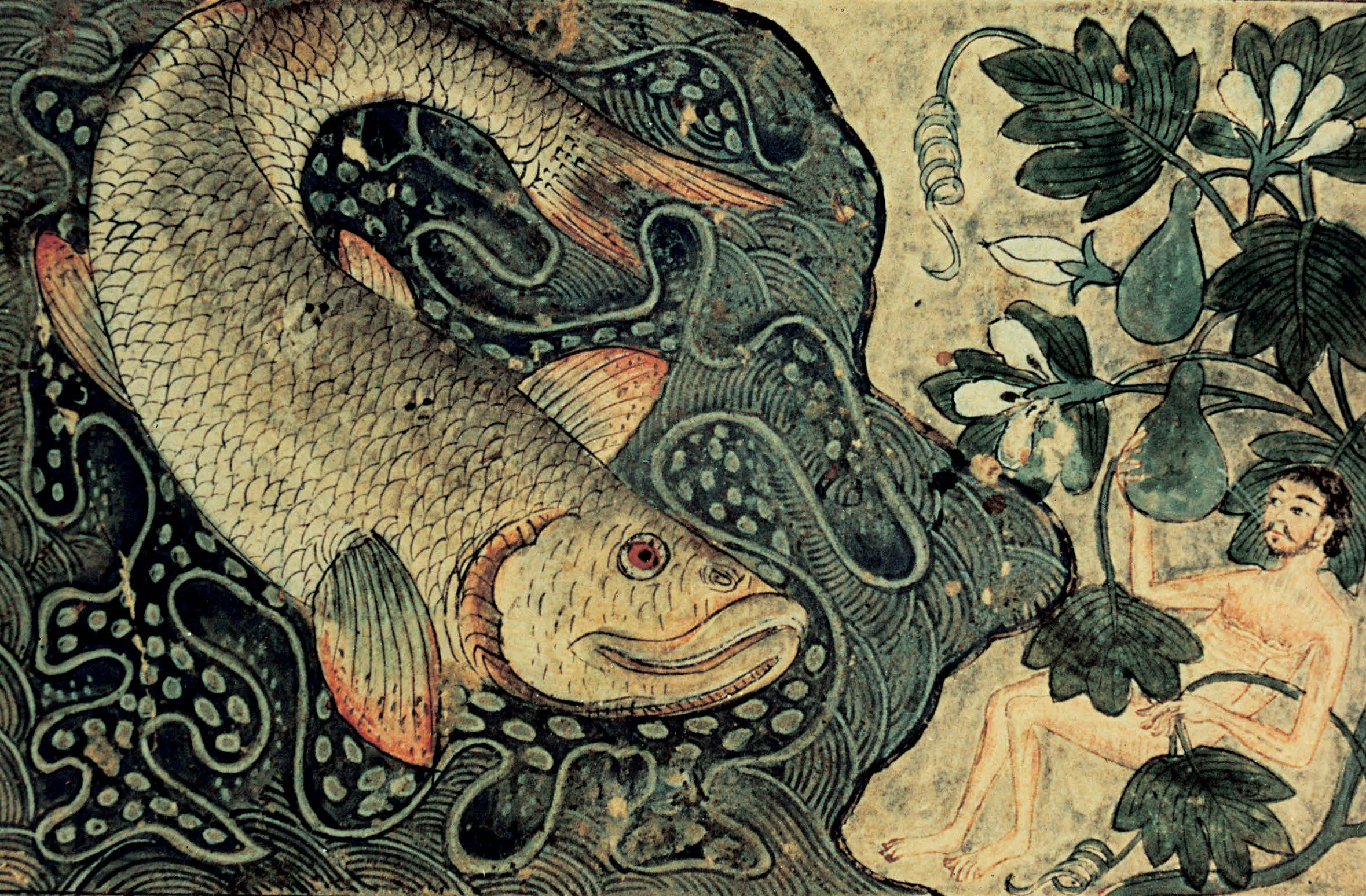
Jonah is the prophet of Nineveh, which lies in the north-west of the city of Mosul, Iraq. The Bible recounts that God ordered Jonah to travel to Nineveh and threaten the inhabitants with divine judgement. When Jonah fled from God by sea, his ship got into distress, whereupon the crew threw him into the water. However, God sent a whale that swallowed him and spat him up onto the land three days later. Jonah now obeyed and went to Nineveh, where the people repented of their sins and were thus spared by God. Since the Koran adopted this story, it is understandable that both Christians and Muslims honour Jonah.40 (From the manuscript History of the World by Rashid ad-Din, in Tabriz, north- western Iran, written in 1306/1307. Edinburgh University Library. Or Ms 20f 23v.)
约拿 (Jonah) 是尼尼微 (Nineveh) 的先知,尼尼微位于伊拉克 (Iraq) 摩苏尔 (Mosul) 城的西北部。《圣经》(Bible) 记载,上帝命令约拿去尼尼微,以神圣的审判威胁那里的居民。当约拿从海上逃离上帝时,他的船遭遇危难,于是船员将他抛入水中。然而,上帝差遣一条鲸鱼将他吞下,三天后把他吐到陆地上。约拿这才顺从,前往尼尼微,那里的人悔改了自己的罪,因此得到上帝的宽恕。由于《古兰经》(Koran) 采纳了这个故事,所以基督徒和穆斯林都尊崇约拿,这是可以理解的。40(出自拉施德丁 (Rashid ad-Din) 的手稿《世界史》(History of the World),于伊朗 (Iran) 西北部的大不里士 (Tabriz) 写成,时间为1306/1307年。爱丁堡大学图书馆 (Edinburgh University Library)。Or Ms 20f 23v.)
The prophet himself ended this initial tolerance towards Christians, however, when, on his deathbed in 632, he recommended that Islam be used specifically for the building up of the Arab nation and that ‘all the infidels be driven from the Arabian Peninsula’.41 Islam was to become the national religion of all Arabs, and Arabia a cosmic mosque, open only to
然而,先知本人在632年临终之际终结了对基督徒的这种最初宽容,他建议将伊斯兰教专门用于阿拉伯民族的建设,并建议“将所有异教徒逐出阿拉伯半岛”。41 伊斯兰教将成为所有阿拉伯人的民族宗教,而阿拉伯半岛则成为一座宇宙清真寺,只对……开放
with the highest authority to their rights. A few of the agreements favourable to the Christians are obvious forgeries, of which the Nestorians, most deeply affected by Islam, were masters. Although sometimes these agreements were not forcefully applied or were made more stringent, their basic structure remained consistent. They defined the status of a church, its rights and duties, and the official limitations upon it. even prepared to pay twice the normal tax on Christians. Several Taghlib leaders paid for their steadfastness with death. [^43]
以最高权威确认其权利。少数有利于基督徒的协议显然是伪造的,而受伊斯兰教 (Islam) 影响最深的聂斯托利派 (Nestorians) 正是此类伪造的能手。尽管有时这些协议并未得到强制执行,或被制定得更为严苛,但其基本结构始终一致。它们界定了一个教会的地位、其权利与义务,以及官方对其施加的限制。他们甚至准备缴纳针对基督徒的常规税额的两倍。数位塔格里布 (Taghlib) 领袖为他们的坚贞付出了生命的代价。43
Between tolerance and oppression – Christians as second-class citizens
在宽容与压迫之间——作为二等公民的基督徒
The Arabs made up a small minority in the conquered regions and at first withdrew to military encampments. Upon the death of the fourth caliph, Ali (ruled 656–661), General Mu’awiya I (ruled 661–680) seized power, founded the Umayyad dynasty and moved the Islamic capital from Medina to Damascus in the heart of a purely Christian land. For practical and financial reasons, the Umayyads refrained from violently converting non-Arab Christians to Islam. In regions that had previously belonged to Byzantium they often left the Christian administration in office under their command, and in the former Sassanian Empire oppor- tunities for Christians, especially Nestorians, arose in civil government, which had earlier been closed to them. The Miaphysites also benefited from the change in power, since it freed them from the persecutions of the Byzantine authorities.
阿拉伯人在被征服地区只占少数,起初还退居军事营地。第四任哈里发阿里 (Ali,在位 656–661 年) 去世后,将军穆阿维叶一世 (Mu’awiya I,在位 661–680 年) 夺取政权,建立伍麦叶王朝 (Umayyad dynasty),并将伊斯兰政权的首都从麦地那 (Medina) 迁至大马士革 (Damascus),后者位于一片纯基督教土地的腹地。出于实际和财政原因,伍麦叶王朝避免以暴力手段使非阿拉伯基督徒皈依伊斯兰教。在先前属于拜占庭 (Byzantium) 的地区,他们往往让基督教行政官员在其统辖下继续任职;而在前萨珊帝国 (Sassanian Empire) 境内,基督徒——尤其是聂斯托利派 (Nestorians)——在民政政府中获得了机会,而这些机会此前对他们一直是关闭的。合性论派 (Miaphysites) 也从这次权力更迭中受益,因为这使他们摆脱了拜占庭当局的迫害。
The prerequisite for these pacts was the organization of the Church of the East, dating from the Sassanian period, into a millet. This political structure was defined by neither territorial nor linguistic criteria but rather by a common creed. Since in the Islamic state the civil law follows immediately from the religious commandments, it cannot apply in its entirety to those of other faiths. Thus, a millet functions like a theocracy: all the faithful are under the
这些协定的前提是,东方教会 (Ch. of E.) 被组织成一个米勒特 (millet),这一做法可追溯至萨珊时期 (Sassanian period)。这一政治结构既不以领土为标准,也不以语言为标准,而是以共同信条来界定。由于在伊斯兰国家中,民法直接源自宗教诫命,因此它不能完全适用于其他信仰者。于是,米勒特 (millet) 的运作方式类似神权政体:所有信徒都处于
On both sides of the Euphrates, Christians either accepted the Arabs with neutral goodwill or celebrated them as liberators from the Byzantine or Sassanian yoke. As most of the cities surrendered without opposition, religious authorities, such as patriarchs and bishops, negotiated treaties with the Arabs regulating their status. They were all similar and subsumed under the title the Covenant of Omar. Others were said to be traceable to Caliph Ali, highly esteemed by the Shi’ites, or even to the prophet himself. Although the documents extant today date back to a later period, they reflect well the Arab strategy of the time towards their subjects of other religions. Even today, Church commun- ities treasure such documents, since they attest
在幼发拉底河 (Euphrates) 两岸,基督徒要么以中立的善意接纳阿拉伯人 (Arabs),要么将他们视为摆脱拜占庭 (Byzantine) 或萨珊 (Sassanian) 枷锁的解放者。由于大多数城市未遇抵抗便投降,宗教权威,如宗主教和主教,与阿拉伯人谈判条约,以规定其地位。这些条约全都相似,并被归入《欧麦尔盟约》(Covenant of Omar) 这一名目之下。另一些则据说可追溯至受什叶派 (Shi’ites) 高度尊崇的哈里发阿里 (Caliph Ali),甚至可追溯至先知本人。尽管今日存世的这些文献可追溯至较晚时期,它们仍很好地反映了当时阿拉伯人对其其他宗教臣民的策略。即使在今天,教会团体仍珍视此类文献,因为它们证明
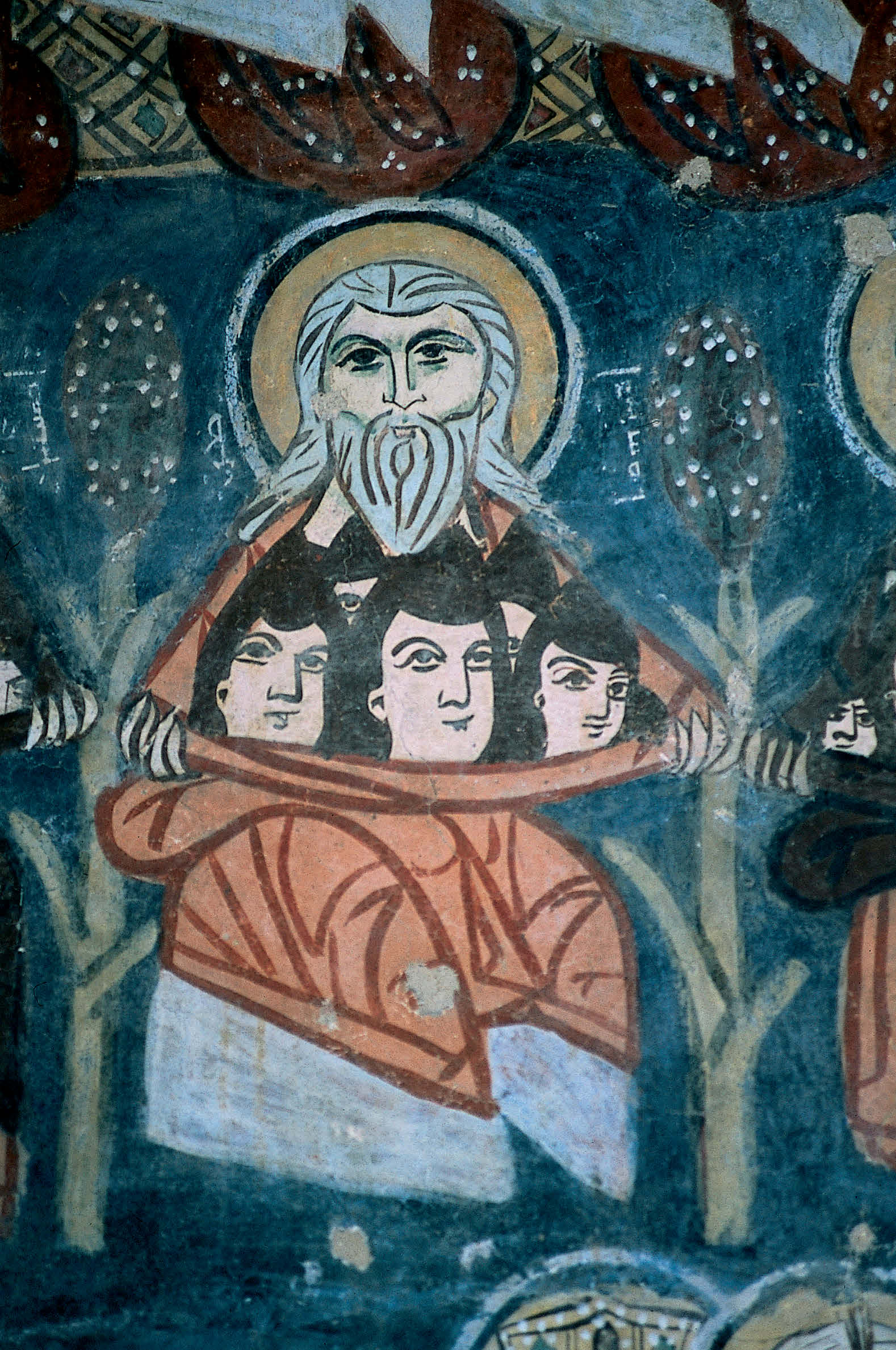
Bosom of Abraham. Mural in the Monastery of Mar Musa, Syria, twelfth century. The three figures to the front in the bosom of Abraham may also be understood as symbols of the three related religions of Judaism, Christianity and Islam.
亚伯拉罕的怀抱 (Bosom of Abraham)。叙利亚 (Syria) 马尔穆萨修道院 (Monastery of Mar Musa) 的十二世纪壁画。位于亚伯拉罕怀抱前方的三个人物,也可被理解为犹太教 (Judaism)、基督教 (Christianity) 和伊斯兰教 (Islam) 这三种相关宗教的象征。
jurisdiction of their patriarch, who collects taxes from the civic leaders and bankers of his community on behalf of the Islamic authorities. Since this small, privileged class managed immense sums of money during the first two centuries of Abbasid rule, many opportunities arose for personal enrichment, including, for instance, the leasing of taxes or the sale of high religious offices – i.e. simony. and did not call Mary God-bearer. Second, the Church of the East had for centuries been hierarchically independent of the arch-enemy Byzantium. For this reason, Patriarch Timothy maintained authority over all Christians living within the Abbasid caliphate, which Caliph al-Kaim confirmed for Patriarch Abdisho II (ruled 1074–1090).46 The disadvantage of this far-reaching official authorization was that each patriarchal election required the confirmation of the caliph. The Nestorian patriarch was, on the one hand, the theocratic head of all Christians of the caliphate, which extended from Cairo to Samarqand, and thus one of the most powerful vassals. On the other hand, he was in the end a public servant, whom the caliph could depose.
其宗主教的管辖权,他代表伊斯兰当局向其社群的市民领袖和银行家征税。由于这个规模小而享有特权的阶层在阿拔斯王朝 (Abbasid) 统治的最初两个世纪中经手了巨额钱财,许多个人敛财的机会随之出现,例如包税或出售高级教职——即买卖圣职 (simony)。并且不称马利亚 (Mary) 为上帝之母 (God-bearer)。其次,东方教会 (Ch. of E.) 数个世纪以来在教阶上独立于宿敌拜占庭 (Byzantium)。因此,宗主教提摩太 (Patriarch Timothy) 对生活在阿拔斯哈里发国 (Abbasid caliphate) 境内的所有基督徒保有权威;哈里发卡伊姆 (al-Kaim) 为宗主教阿卜迪绍二世 (Patriarch Abdisho II,在位 1074–1090 年) 确认了这一点。46 这种影响深远的官方授权的不利之处在于,每次宗主教选举都需要哈里发的确认。聂斯托利派宗主教 (Nestorian patriarch) 一方面是哈里发国所有基督徒的神权首脑,而该哈里发国从开罗 (Cairo) 延伸至撒马尔罕 (Samarqand),因此他也是最有权势的封臣之一。另一方面,他终究是一名公职人员,哈里发可以将其罢免。
In this ecclesiastical state, the Nestorian patriarch enjoyed wide-ranging authority until the eleventh/twelfth centuries, as he personally ruled on juridical conflicts within his community and could leave the civil authorities to carry out his judgements.44 Only juristic matters that also concerned Muslims automatically came before a Muslim court, where the testimony of a Christian carried less weight than that of a Muslim, while the punishment of Christians was harsher. In the case of murder, the degree of punishment hinged on the religious affiliation of both perpetrator and victim. If a Muslim killed a Christian, the blood money was only half that paid for a Muslim victim. But, if a Christian killed a Muslim, a death sentence necessarily awaited him. On the other hand, the patriarch was legally responsible for both the good conduct and loyalty of his co-religionists, as well as the demanded volume of taxes. And so the Nestorians constituted a numerically strong but politically weak vassal state.
在这个教会国家中,聂斯托利派牧首直到十一/十二世纪仍享有广泛的权威,因为他亲自裁决其社群内部的司法冲突,并可将判决交由世俗当局执行。44 只有同时涉及穆斯林的司法事务才会自动提交穆斯林法庭审理;在穆斯林法庭上,基督徒的证词效力低于穆斯林的证词,而对基督徒的惩罚也更为严厉。在谋杀案件中,惩罚的轻重取决于凶手和受害者双方的宗教归属。如果穆斯林杀死基督徒,所付血金仅为杀死穆斯林受害者时的一半。但如果基督徒杀死穆斯林,则必然面临死刑。另一方面,牧首在法律上既要为其同教信徒的良好品行和忠诚负责,也要为所要求的税额负责。因此,聂斯托利派信徒构成了一个人数众多但在政治上弱小的附庸国。
The authorization by Caliph Muktafi II (ruled 1136–1160) of Patriarch Abdisho III (in office 1138–1148), dating from 1138, reads: ‘The charter of the highest imamate of Islam is hereby granted to you to be the Catholicos of the Nestorian Christians inhabiting the City of Peace [Baghdad] and all the lands of the countries of Islam. You are empowered to act as their head and the head also of the Greeks [Byzantines], Jacobites and Melkites. If any of the above- mentioned clerics [from the Churches named] treads in the path of revolt against your orders or refuses to accept your decisions, he will be prosecuted and punished. Your life and property, as well as that of your people, will be protected, likewise your churches and monasteries. We will be satisfied with your payment of the capitation tax. Be worthy of all these favours and set up prayers and invocations for the Commander of the Faithful.’47 Finally, only the Nestorian patriarch enjoyed the privilege of permission to live in the capital.
哈里发穆克塔菲二世 (Caliph Muktafi II,1136–1160年在位) 授予宗主教阿布迪绍三世 (Patriarch Abdisho III,1138–1148年在任) 的授权书,日期为1138年,内容如下: “兹将伊斯兰最高伊玛目职位 (imamate) 的敕书授予你,使你成为居住在和平之城[巴格达] (City of Peace [Baghdad]) 以及伊斯兰诸国所有土地上的聂斯托利派基督徒 (Nestorian Christians) 的大公宗主教 (Catholicos)。你有权作为他们的首领,也作为希腊人[拜占庭人] (Greeks [Byzantines])、雅各派 (Jacobites) 和梅尔基特派 (Melkites) 的首领。如果上述教士[来自所提及的诸教会]中有人走上违抗你命令的反叛之路,或拒绝接受你的裁决,他将被追究并受到惩罚。你的生命和财产,以及你的人民的生命和财产,将受到保护,你的教堂和修道院也同样如此。我们将以你缴纳人头税 (capitation tax) 为满足。愿你配得上所有这些恩惠,并为信士的长官 (Commander of the Faithful) 献上祈祷和祈求。”47 最后,只有聂斯托利派宗主教 (Nestorian patriarch) 享有获准居住在首都的特权。
The overthrow of the Umayyad dynasty (661–750) by the Abbasids (750–1258) benefited the Nestorians because the new ruler transferred the seat of government of the Islamic empire from Damascus to Iraq, and in 762 founded the new capital of Baghdad to the north of Seleucia-Ctesiphon on the site of a Nestorian village.45 The Church of the East had two other advantages over other Churches as well. First, of all the Christologies, the Nestorian most closely resembled the Islamic interpretation of Jesus, since it emphasized Christ’s humanity
倭马亚王朝 (Umayyad dynasty)(661–750)被阿拔斯王朝 (Abbasids)(750–1258)推翻,使聂斯托利派 (Nestorians) 受益,因为新统治者将伊斯兰帝国的政府所在地从大马士革 (Damascus) 迁至伊拉克 (Iraq),并于762年在塞琉西亚-泰西封 (Seleucia-Ctesiphon) 以北一个聂斯托利派村庄的旧址上建立了新首都巴格达 (Baghdad)。45 东方教会 (Ch. of E.) 还比其他教会多两个优势。首先,在所有基督论 (Christologies) 中,聂斯托利派的观点与伊斯兰教对耶稣的诠释最为接近,因为它强调基督的人性
The civil regulation of the status of Christians and Jews was laid out in principle in the Koran in sura 9:29, upon which also rests the Islamic justification for war: ‘Fight against those of the Peoples of the Book who do not believe in Allah
基督徒和犹太人身份的民事规定,原则上已在《古兰经》(Koran) 第9章第29节 (sura 9:29) 中阐明;伊斯兰教为战争所作的辩护也以此为依据:“你们要与有经人 (Peoples of the Book) 中不信安拉 (Allah) 的人作战”。
Serjilla, one of the 300 Dead Cities of northern Syria. The Arab conquest led to the sudden breakdown of trade with Byzantium, the economic collapse of the rich agrarian region and emigration from rural areas. and the Last Judgement, and do not regard as impermissible that which Allah and his prophet have declared impermissible, and do not follow the true creed until they pay tribute of their own free will and acknowledge their subjugation.’ This revelation of Allah divides the world into the so-called Dar al-Islam, the abode of peace, and the Dar al-Harb, the abode of war. In the former region, Islam rules, but in the latter, war, since Islam has not yet been accepted there. Non-Islamic states and societies are fundamentally aims of war, which will be fought as long as they must, until their inhabitants either convert to Islam or subjugate themselves and pay tribute to the Islamic community. From an economic perspective, the demand for the payment of tribute was the motivating force behind Allah’s call for war (Sura 2:216). As soon as Christians, Jews or Zoroastrians were willing to surrender and pay tribute, the war ended, and the relevant civil rights came into effect. the security of their persons, houses and fields, as well as their movable property. They could practise their religion within their community (but not publicly), baptize their own children, marry and bury according to their customs, bequeath their property and keep most of their churches. They were released from military service and thus excluded from the then lucrative service in the officer corps. For this protection, Christians had to pay a special poll tax, depending upon their profession, and a property tax.48 To these were added a tribute in kind from the harvest, as well as additional taxes for the benefit of the Muslim community and support of the tax collectors.49 In rural areas, zimmi who owed taxes but were unable to pay had their children taken and sold as slaves.50 The higher the tax burden became, the greater was the financial incentive to convert to Islam. In order to forestall the danger of a large fall in tax revenues, Iraq’s Umayyad governor al-Hajjaj (in office 694–714) waived the property tax only for Arab Muslims and not for converts or their descendants.51 Thus
塞尔吉拉(Serjilla),叙利亚(Syria)北部300座“死城”之一。阿拉伯人的征服导致与拜占庭(Byzantium)贸易骤然中断、富庶农业地区经济崩溃,以及农村人口外迁。并信奉末日审判;凡真主及其使者宣布为非法的事物,他们不可视为合法;除非他们自愿缴纳贡税并承认自己受制,否则不可遵循正信。”真主(Allah)的这一启示将世界划分为所谓的达尔·伊斯兰(Dar al-Islam,和平之地)和达尔·哈布(Dar al-Harb,战争之地)。前者由伊斯兰教统治,后者则处于战争状态,因为那里尚未接受伊斯兰教。非伊斯兰国家和社会从根本上说都是战争目标;战争将持续进行,直到当地居民改宗伊斯兰教,或臣服并向伊斯兰社群缴纳贡税。从经济角度看,要求缴纳贡税是促使真主号召战争的动力(《古兰经》(Qur’an)章2:216)。基督徒、犹太人或琐罗亚斯德教徒一旦愿意投降并缴纳贡税,战争便告结束,相应的公民权利也随之生效。他们人身、房屋、田地以及动产的安全。他们可以在自己的社群内(但不得公开)奉行宗教,为自己的孩子施洗,依照本族习俗结婚和安葬,继承财产,并保有大多数教堂。他们免服兵役,因此也被排除在当时利润丰厚的军官团服役之外。作为这类保护的代价,基督徒必须缴纳特别人头税,税额依职业而异,还须缴纳财产税。48 此外还要缴纳以农产品实物计征的贡赋,以及供穆斯林社群使用和支付税吏的其他税款。49 在农村,欠税而无力缴纳的齐米(zimmi)会被夺去子女并卖为奴隶。50 税负越重,改宗伊斯兰教的经济诱因便越大。为避免税收收入大幅下降,伊拉克(Iraq)的倭马亚(Umayyad)总督哈贾吉(al-Hajjaj,任职694—714年)只免除阿拉伯穆斯林的财产税,不免除改宗者及其后代的财产税。51 因此
Christians had the social rank of protected clients, called zimmi, and the state guaranteed
基督徒拥有被称为齐米(zimmi)的受保护民这一社会等级,国家保障
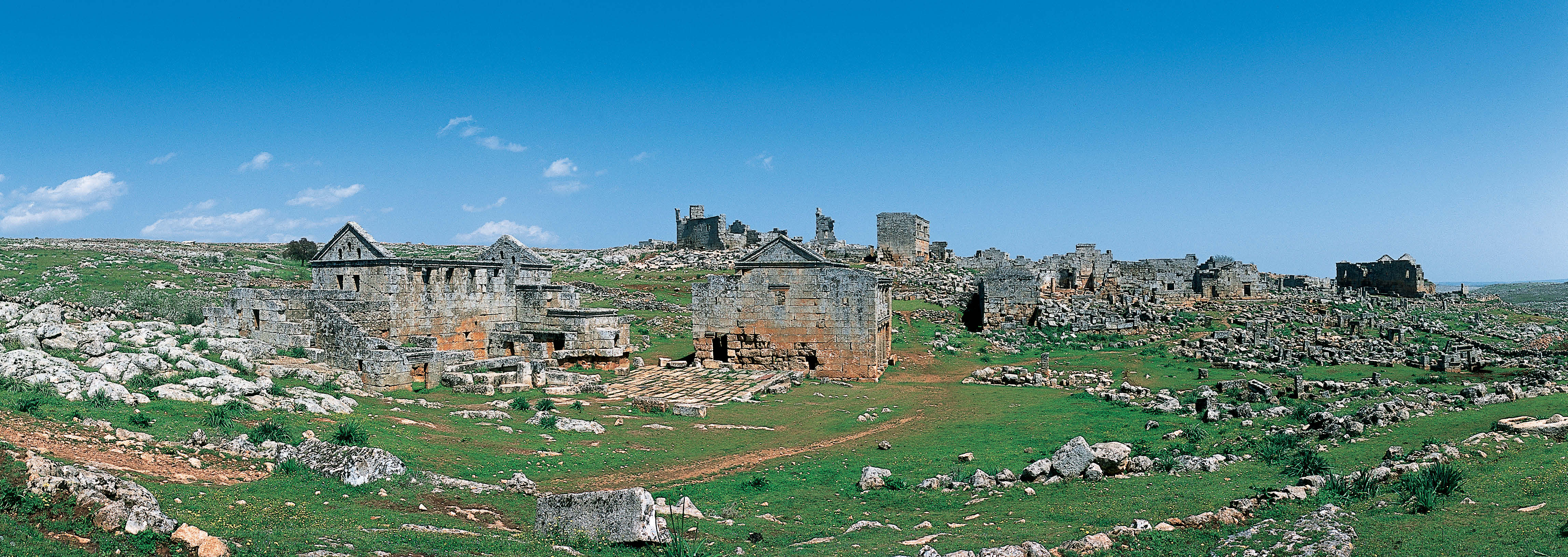
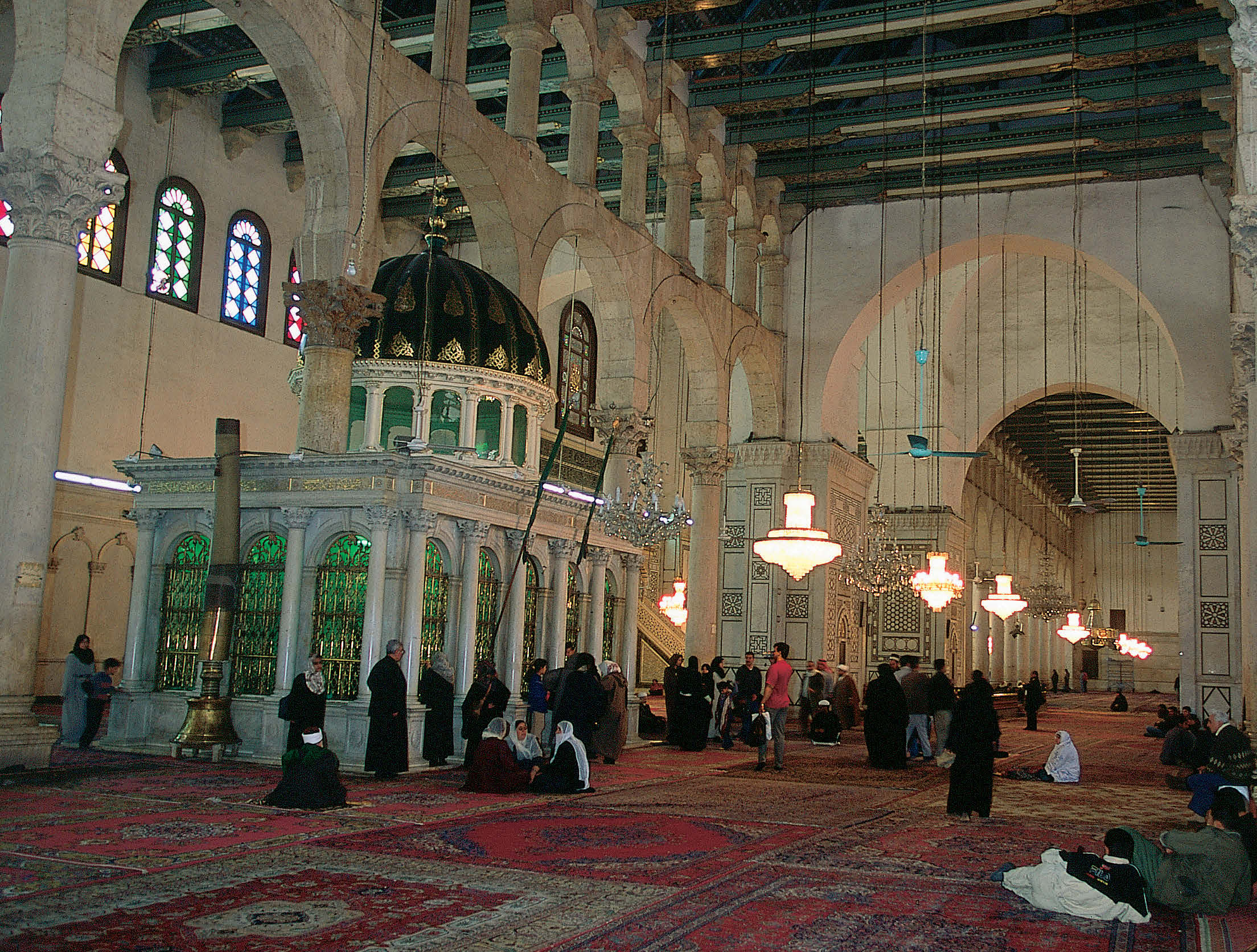
Mausoleum of John the Baptist in the Umayyad mosque of Damascus, Syria. Originally there stood here a Roman temple dedicated to Jupiter, which Emperor Theodosius I (ruled 379–395) had converted into the Church of St John at the end of the fourth century. This was changed into a mosque in 705–725 and rebuilt from the ground up in 1893 after a fire. According to popular Islamic religious, eschatological ideas, the victorious Jesus will appear at the Last Judgement on the eastern minaret, the Jesus Minaret, of the Umayyad mosque and kill the Antichrist.41 there emerged a society made up of three classes: Muslims of Arab descent; non-Arab Muslims, called mawali; and non-Arab Peoples of the Book. It was discrim-ination against the mawali that triggered the Abbasid revolution in 750 and transformed the Arab empire into an Islamic empire. desertification of entire provinces. In the case of Syria and Palestine the once flourishing trade with the Christian states of the Mediterranean also came to a standstill, depriving the cities of their economic base. And so agricultural regions in Syria, Palestine and Iraq became pastureland, and the famous ‘Dead Cities’ appeared in northern Syria, where sheep and goats graze among the ruins and churches are used as stables.
叙利亚 (Syria) 大马士革 (Damascus) 的倭马亚清真寺 (Umayyad Mosque) 中的施洗约翰陵墓 (Mausoleum of John the Baptist)。这里原有一座供奉朱庇特 (Jupiter) 的罗马神庙,皇帝狄奥多西一世 (Theodosius I,在位 379–395 年) 在四世纪末将其改建为圣约翰教堂 (Church of St John)。该建筑于 705–725 年间被改为清真寺,并在 1893 年火灾后彻底重建。根据流行的伊斯兰宗教末世论观念,得胜的耶稣 (Jesus) 将在末日审判 (Last Judgement) 时出现在倭马亚清真寺 (Umayyad Mosque) 东侧的宣礼塔,即耶稣宣礼塔 (Jesus Minaret),并杀死敌基督 (Antichrist)。41 由此出现了一个由三个阶层组成的社会:阿拉伯裔穆斯林;被称为马瓦里 (mawali) 的非阿拉伯穆斯林;以及非阿拉伯有经人 (Peoples of the Book)。正是对马瓦里 (mawali) 的歧视引发了 750 年的阿拔斯革命 (Abbasid revolution),并将阿拉伯帝国转变为伊斯兰帝国。整个行省的荒漠化。就叙利亚 (Syria) 和巴勒斯坦 (Palestine) 而言,与地中海 (Mediterranean) 地区的基督教国家一度繁荣的贸易也陷入停滞,使这些城市失去了经济基础。于是,叙利亚 (Syria)、巴勒斯坦 (Palestine) 和伊拉克 (Iraq) 的农业地区变成了牧场,著名的“死城” (Dead Cities) 出现在叙利亚北部,那里绵羊和山羊在废墟间吃草,教堂被用作牲口棚。
In certain parts of the Dar al-Islam, the combination of a weak central authority and a careless exploitation of the non-Muslim, rural population by arbitrary taxation and bands of nomadic robbers led to an irreversible collapse of rural agrarian regions. The impoverished and highly indebted farmers abandoned their fields and olive groves, which the Bedouins who took them over left fallow, leading to the decline of agriculture, to depopulation and, finally, to the
在伊斯兰世界 (Dar al-Islam) 的某些地区,中央权威薄弱,加之通过任意征税和游牧劫掠团伙对非穆斯林农村人口的肆意盘剥,共同导致了农村农业地区不可逆转的崩溃。贫困且负债累累的农民抛弃了他们的田地和橄榄园,而接管这些土地的贝都因人 (Bedouins) 任其荒芜,导致农业衰落、人口减少,并最终导致……
Along with the basic fiscal regulations, there were a series of restrictions, concerning public life in particular. First, numerous cathedrals and churches were converted into mosques, as the basic structure of the great mosques of Damascus, Aleppo, Diyarbakir and Mosul attests, or new mosques were built from the materials of destroyed churches. Second, the conversion of
除基本财政法规外,还有一系列限制,尤其涉及公共生活。首先,许多主教座堂和教堂被改建为清真寺,正如大马士革 (Damascus)、阿勒颇 (Aleppo)、迪亚巴克尔 (Diyarbakir) 和摩苏尔 (Mosul) 的大清真寺的基本结构所证明的那样;或者用被毁教堂的材料建造新的清真寺。其次,……的改建
Muslims was strictly forbidden, likewise apostasy from Islam. Still today, in some Islamic countries such acts are considered capital crimes, punish- able by death. Additionally, no Christian man was permitted to marry a Muslim woman; the reverse case was allowed, as long as the children were Muslim. No Christian could be prevented by his or her relatives from converting to Islam. on the Christians, the situation eased for the Christians until the third Abbasid caliph, al-Mahdi (ruled 775–785), who placed new emphasis on the discriminatory measures following a few military defeats by Byzantium. Then in 850 Caliph Mutawakkil (ruled 847–861) intensified them still further, not least in order to break the increasing social influence of the Nestorians. Christians now had to wear yellow coats and mark their head coverings with two special buttons. Women also had to conceal their faces with yellow veils. They were not permitted in the market on Friday, and their children were not allowed to learn Arabic in school. All Christian and Jewish civil servants, even if they were merely scribes, had to accept Islam, or they would be released. Furthermore, ‘wooden figures depicting the devil had to be placed on the doors of their houses’. Finally, Christians had to make the graves of their dead level with the ground.55 In light of the rules governing the clothing of Christians in public, one cannot escape the conclusion that the tragic Jewish star did not originate in Europe but, rather, in the Islamic caliphate of the Abbasids.56 Mutawakkil’s regulations brought an end to the first period of flourishing for the Church of the East, which lasted from c.780 to 847. Although these measures were not always and everywhere enforced to the same degree, there is no doubt that the Christians lived in a social ghetto. With the exception of doctors, scholars and translators, the Nestorians were excluded from political, military and socially relevant life. It is worth considering that some of these discriminatory policies against those of other religions remain in effect even in the twenty-first century in a few Middle Eastern countries.
穆斯林改宗被严格禁止,叛离伊斯兰教同样如此。时至今日,在一些伊斯兰国家,此类行为仍被视为死罪,可判处死刑。此外,基督教男子不得娶穆斯林女子;反之则允许,只要子女为穆斯林。任何基督徒的亲属都不得阻止其改宗伊斯兰教。对基督徒而言,情况有所缓和,直到第三位阿拔斯哈里发马赫迪 (al-Mahdi)(775–785年在位)在拜占庭 (Byzantium) 使其遭受几次军事失败后,重新强调这些歧视性措施。随后在850年,哈里发穆塔瓦基勒 (Mutawakkil)(847–861年在位)进一步强化了这些措施,尤其是为了打破聂斯托利派 (Nestorians) 日益增长的社会影响。基督徒现在必须穿黄色外袍,并在头巾上以两个特殊纽扣作为标记。妇女还必须用黄色面纱遮住面部。他们不得在星期五进入市场,其子女也不得在学校学习阿拉伯语。所有基督徒和犹太教公职人员,即使只是抄写员,也必须接受伊斯兰教,否则将被解职。此外,“必须在其房屋门上放置描绘魔鬼的木制像”。最后,基督徒必须将其死者的坟墓与地面齐平。55 鉴于规范基督徒在公共场合着装的规定,人们无法回避这样一个结论:那个悲剧性的犹太星并非起源于欧洲,而是起源于阿拔斯王朝 (Abbasids) 的伊斯兰哈里发国。56 穆塔瓦基勒 (Mutawakkil) 的规定终结了东方教会 (Ch. of E.) 的第一个繁荣期,这一时期大约从780年持续到847年。尽管这些措施并非始终、也并非在所有地方都以同等程度执行,但毫无疑问,基督徒生活在一个社会隔都中。除医生、学者和翻译者外,聂斯托利派 (Nestorians) 被排除在政治、军事和社会相关生活之外。值得考虑的是,其中一些针对其他宗教信徒的歧视性政策,甚至在二十一世纪仍于少数中东国家继续生效。
The following types of conduct were also forbidden or imposed upon Christians. Every Muslim is to be granted three days’ shelter and care in the churches (!) free of charge. No new churches, monasteries or hermitages may be built, and their renovation or repair is also forbidden.52 Processions outside the church and the public display of the cross, images and figures are forbidden, likewise the reading of the Koran. Every act of worship, including funerals, must be quiet, and the simandron may only be struck quietly within the church. Christians may not gather in a quarter inhabited by Muslims, and when encountering a Muslim in the street must stop respectfully. No Christian house may be taller than neighbouring Muslim houses. Christians may not carry swords or ride horses, but only asses and mules; the use of saddles is either generally forbidden or permitted only in the case of wooden saddles. They may not walk down the middle of the street but only to the sides. It is forbidden for Christians to give their children typically Muslim names and sometimes even to use the Arabic script.53 It is forbidden for Christians to clothe themselves like Muslims; they must wear a distinguishing belt and shave the front portion of their heads. Clothing worn in public must be marked front and back with a yellow piece of cloth. Anyone who disregards these laws will be killed or his family will be sold into slavery or he will become a Muslim.54
以下类型的行为也被禁止或强加于基督徒。每位穆斯林都可在教堂(!)获得三天的免费收容与照料。不得建造新的教堂、修道院或隐修院,其翻新或修缮也被禁止。52 禁止在教堂外举行游行,禁止公开展示十字架、圣像和雕像,同样禁止诵读《古兰经》(Koran)。一切礼拜活动,包括葬礼,都必须安静进行;木制响板 (simandron) 只能在教堂内轻声敲击。基督徒不得在穆斯林居住的街区聚集;在街上遇到穆斯林时,必须恭敬地停下。基督徒的房屋不得高于邻近穆斯林的房屋。基督徒不得佩剑或骑马,只能骑驴和骡子;鞍具的使用要么普遍被禁止,要么仅允许使用木制鞍具。他们不得走在街道中央,只能靠边走。禁止基督徒给子女取典型的穆斯林名字,有时甚至禁止使用阿拉伯字母。53 禁止基督徒穿着像穆斯林;他们必须佩戴一条具有区分作用的腰带,并剃去头前部的头发。在公共场合穿着的衣服必须在前身和后身用一块黄色布片作为标记。任何无视这些法律的人将被处死,或其家人将被卖为奴隶,或他本人将改宗成为穆斯林。54
In a certain sense, the Arab conquest of the Middle East gave the Church of the East an advantage, since it paved the way for Nestorian monks and missionaries to return to the former Byzantine regions west of the Euphrates.
在某种意义上,阿拉伯人对中东的征服给东方教会 (Ch. of E.) 带来了优势,因为它为聂斯托利派修士和传教士重返幼发拉底河 (Euphrates) 以西的前拜占庭地区铺平了道路。
After the Umayyad governor al-Hajjaj (in office 694–714) and Caliph Omar II (ruled 717–720) first fully imposed these discriminatory measures and increased the financial pressure
在伍麦叶总督哈查吉 (al-Hajjaj)(任期 694–714 年)和哈里发欧麦尔二世 (Omar II)(在位 717–720 年)首次全面推行这些歧视性措施并加大财政压力之后
Nestorian dioceses were established in Damascus, Aleppo, Edessa, Mopsuestia, Tarsus, Melitane, Jerusalem, Cairo and Alexandria, and on Cyprus; Damascus, Jerusalem, Cairo and Alexandria were later elevated to metropolitan sees. Nestorian monks could now visit the Coptic monks of Egypt without hindrance and found several monasteries in Palestine.57 Under the Fatimid Shi’ite caliph al-Aziz (ruled 975–996), who ruled over Palestine, Egypt and North Africa, a Nestorian served as vizier, who in this capacity administered the entire realm. His name, Isa Ibn-Nastur, means literally ‘Jesus, son of Nestorius’.58 The caliph’s death brought to an end a two-decade period of great tolerance, which had enabled the Nestorians to build numerous new churches. Like the Nestorian catholicoi, Isa Ibn-Nastur also emphasized the great distance of the Church of the East from the Roman-Byzantine Church and suggested its purported closeness to Islam.59 Al-Aziz’s son and successor, al-Hakim (ruled 996–1021), however, distinguished himself through unbounded fanaticism. He had Isa Ibn-Nastur murdered in 1002 and mercilessly persecuted the Christians. Both the twelfth-century Nestorian historian Mari ibn Suleiman and Bar Hebraeus reported, ‘The Christians of Egypt and Syria [Palestine] were persecuted; they had to wear a wooden cross of five pounds weight around their necks, and a large number became Muslims.’60 When al-Hakim declared himself the incarnation of God, he was murdered. Both the Sunnis and the Shi’ites consider him a deranged blasphemer; the Druzes, however, who live in Lebanon and Syria, regard him as their ‘hidden’ imam. destroyed, the Nestorians suffered no further out-and-out persecutions, ‘merely’ social discrimination. There were hardly any official efforts to force conversion. While the Umayyad Empire was characterized by the Arabs and an Arab spirit, the early Abbasids were much more internationally oriented, which benefited educated Christians. Individual doctors, scholars, poets, translators and merchants even achieved great respect and wealth. On the other hand, the Church was, as before, strictly forbidden from undertaking missionary efforts among adherents of the state religion. The potential for growth in the Abbasid Empire was much smaller than under the Sassanians, since there were no longer any polytheists to convert. Additionally, the Sassanians had on occasion tacitly tolerated the conversion to Christianity of simple people such as farmers and artisans, while the Islamic authorities consistently punished every instance of apostasy. This strict forbidding of missionary activity was not the least motivation for the Nestorians to send missionaries to the Far East.
聂斯托利派 (Nestorian) 教区曾设立于大马士革 (Damascus)、阿勒颇 (Aleppo)、埃德萨 (Edessa)、摩普苏埃斯蒂亚 (Mopsuestia)、塔尔苏斯 (Tarsus)、梅利特内 (Melitane)、耶路撒冷 (Jerusalem)、开罗 (Cairo) 和亚历山大里亚 (Alexandria),以及塞浦路斯 (Cyprus);大马士革、耶路撒冷、开罗和亚历山大里亚后来被升格为都主教教座 (metropolitan sees)。聂斯托利派修士如今可以不受阻碍地探访埃及 (Egypt) 的科普特修士 (Coptic monks),并在巴勒斯坦 (Palestine) 建立了几座修道院。57 在法蒂玛王朝 (Fatimid) 什叶派 (Shi’ite) 哈里发阿齐兹 (al-Aziz,在位 975–996 年) 统治下,他统治着巴勒斯坦、埃及和北非 (North Africa),一名聂斯托利派信徒担任维齐尔 (vizier),并以此身份管理整个王国。他的名字伊萨·伊本-纳斯图尔 (Isa Ibn-Nastur) 字面意思为“耶稣,聂斯托利之子”。58 哈里发之死结束了长达二十年的高度宽容时期,这一时期曾使聂斯托利派得以建造众多新教堂。与聂斯托利派大公宗主 (Nestorian catholicoi) 一样,伊萨·伊本-纳斯图尔也强调东方教会 (Ch. of E.) 与罗马-拜占庭教会 (Roman-Byzantine Church) 之间的巨大距离,并暗示其与伊斯兰教据称的亲近性。59 然而,阿齐兹之子及其继任者哈基姆 (al-Hakim,在位 996–1021 年) 却以无节制的狂热而闻名。他于 1002 年派人谋杀了伊萨·伊本-纳斯图尔,并残酷迫害基督徒。十二世纪聂斯托利派历史学家马利·伊本·苏莱曼 (Mari ibn Suleiman) 和巴·希伯来乌斯 (Bar Hebraeus) 都记载:“埃及和叙利亚 (Syria) [巴勒斯坦] 的基督徒遭到迫害;他们不得不在脖子上佩戴一个重五磅的木十字架,许多人变成了穆斯林。”60 当哈基姆宣称自己是神的化身时,他被谋杀了。逊尼派 (Sunnis) 和什叶派 (Shi’ites) 都认为他是一个精神错乱的亵渎者;然而,居住在黎巴嫩 (Lebanon) 和叙利亚的德鲁兹派 (Druzes) 则将他视为他们“隐藏的”伊玛目 (imam)。被摧毁后,聂斯托利派不再遭受进一步的彻底迫害,“仅仅”是社会歧视。几乎没有官方的强制改宗努力。伍麦叶帝国 (Umayyad Empire) 以阿拉伯人和阿拉伯精神为特征,而早期阿拔斯王朝 (Abbasids) 则更具国际取向,这使受过教育的基督徒受益。个别医生、学者、诗人、译者和商人甚至获得了极大的尊重和财富。另一方面,教会一如既往地被严格禁止在国家宗教的信徒中开展传教活动。阿拔斯帝国中的增长潜力远小于萨珊王朝 (Sassanians) 时期,因为不再有任何多神教徒可供皈依。此外,萨珊王朝有时默许农民和工匠等普通人皈依基督教,而伊斯兰当局则一贯惩罚每一次叛教行为。这种对传教活动的严格禁止,也是促使聂斯托利派派遣传教士前往远东的重要动机之一。
The long-term prospects of the Nestorians, however, were gloomy, for four reasons. First, financial and social incentives tempted Christians to convert to Islam. Second, conversion to Islam, which shared the Hebraic heritage with Christianity and acknowledged Jesus as a prophet, was infinitely easier than the earlier conversion to Zoroastrianism. One also ought not overlook the fact that, upon the initial confrontation with Islam, not a few Christians questioned whether it represented another heretical Christian (or Jewish) sect or if Mohammed might not really be the promised paraclete.61 Only the consistent rejection of the Eucharist, the cross and religious images convinced them otherwise. Third, Islam is a down-to-earth religion with a simple, compre- hensible creed. It has no hard-to-grasp concepts but, rather, limits itself to placing achievable demands for conduct on its adherents. Fourth,
然而,聂斯托利派 (Nestorians) 的长期前景却十分黯淡,原因有四。第一,经济和社会方面的诱因诱使基督徒改信伊斯兰教 (Islam)。第二,改信伊斯兰教要比早先改信琐罗亚斯德教 (Zoroastrianism) 容易得多,因为伊斯兰教与基督教共享希伯来传统,并承认耶稣 (Jesus) 为先知。人们也不应忽视这样一个事实:在最初与伊斯兰教接触时,不少基督徒曾质疑,它究竟代表另一个基督教(或犹太教)异端教派,还是穆罕默德 (Mohammed) 或许真的就是那位应许的保惠师 (paraclete)。61 唯有对圣体圣事 (Eucharist)、十字架和宗教图像的一贯拒斥,才使他们确信并非如此。第三,伊斯兰教是一种务实的宗教,其信条简单明了、易于理解。它没有难以把握的概念,而是只限于对其信徒提出可践行的行为要求。第四,
Over the short and middle term, the shift in power from the Sassanians to the Muslims had a positive effect on the Church of the East. Although under the Christian-hater al-Hajjaj and under the caliphs Umar II, al-Mansur, al-Mahdi and Harun al-Rashid isolated incidents of interference occurred and some churches were
在短期和中期内,权力从萨珊王朝 (Sassanians) 向穆斯林 (Muslims) 的转移对东方教会 (Ch. of E.) 产生了积极影响。尽管在仇视基督徒的哈贾吉 (al-Hajjaj) 治下,以及在哈里发欧麦尔二世 (Umar II)、曼苏尔 (al-Mansur)、马赫迪 (al-Mahdi) 和哈伦·拉希德 (Harun al-Rashid) 治下,发生过零星的干涉事件,一些教堂被
the churches remained at the mercy of the ruler of the moment, and the Christians helpless against the greedy tax collectors.
教会仍任由当时的统治者摆布,而基督徒面对贪婪的税吏则束手无策。
Zakha (in office 714–728).64 During this time, Arabic replaced Syriac as the vernacular language of the Nestorians of Mesopotamia; under Patriarch Elias I (in office 1028–1049) Arabic also became the legal language for Christians, although Syriac remained the liturgical language.65
扎卡 (Zakha)(在任 714–728)。64 在此期间,阿拉伯语取代叙利亚语,成为美索不达米亚聂斯托利派 (Nestorians) 的日常语言;在宗主教伊利亚一世 (Elias I)(在任 1028–1049)任内,阿拉伯语也成为基督徒的法律语言,尽管叙利亚语仍是礼仪语言。65
The heyday of the Church of the East under Patriarch Timothy I
东方教会 (Ch. of E.) 在宗主教提摩太一世 (Timothy I) 治下的鼎盛时期
With Timothy I (780–823), a personality extraordinary in many regards assumed the patriarchal throne. He guided the Church under five caliphs for more than four decades; not only was he an important writer, corresponding extensively with his bishops, but he was also distinguished by great missionary zeal and displayed remarkable diplomatic abilities in dealing with the civil authorities. Under his leadership, the Church of the East achieved a brilliant highpoint at a time when Christians presumably constituted about 40 per cent of the Mesopotamian population. At first, his initial year in office did not bode well, as he won the patriarchal election thanks to intrigue and trickery. On the eve of the election he showed the electors bulging sacks of money and suggested that they would be richly rewarded for his election. However, after his successful election, the money bags were revealed to be full of stones, and Timothy rebuked the electors: ‘The priesthood is not to be sold for money.’66 Then one of the losing candidates, Metropolitan Joseph of Merv, slandered the patriarch before Caliph al-Mahdi, accusing him of being a sympathizer with Byzantium. But al-Mahdi did not act on the slander, whereupon the disappointed metropolitan converted to Islam.67 When in 781 the highest-ranking metropolitan of the Church, Ephrem of Gondeshapur, who likewise had campaigned for the patriarchal office, went into schism with other bishops, the powerful Nestorian personal physician of Caliph Isa al- Quraisch reconciled the two prelates.68
提摩太一世 (Timothy I, 780–823) 登上了宗主教宝座;他是一位在许多方面都非同寻常的人物。他在五位哈里发治下领导教会四十余年;他不仅是一位重要作家,与主教们有大量通信,而且以极大的传教热忱著称,并在与世俗当局打交道时展现出非凡的外交才能。在他的领导下,东方教会 (Ch. of E.) 达到了辉煌的顶峰,当时基督徒据推测约占美索不达米亚 (Mesopotamia) 人口的40%。起初,他上任的第一年并不顺利,因为他凭借阴谋和欺诈赢得了宗主教选举。在选举前夕,他向选举人展示了鼓鼓囊囊的钱袋,并暗示若他当选,他们将获得丰厚回报。然而,在他成功当选后,那些钱袋被发现装满了石头,提摩太 (Timothy) 斥责选举人说:“司祭职不可用金钱买卖。”66 随后,落选候选人之一、梅尔夫 (Merv) 都主教约瑟夫 (Joseph) 在哈里发马赫迪 (al-Mahdi) 面前诽谤宗主教,指控他同情拜占庭 (Byzantium)。但马赫迪 (al-Mahdi) 并未就这一诽谤采取行动,于是失望的都主教皈依了伊斯兰教。67 781年,当教会中地位最高的都主教、贡德沙普尔的厄弗冷 (Ephrem of Gondeshapur)——他也曾角逐宗主教职位——与其他主教一同陷入分裂时,哈里发伊萨·库赖什 (Isa al-Quraisch) 手下有权势的聂斯脱里派 (Nestorian) 私人医生使这两位高级教士和解。68
The process of changing power from the Sassanians to the Arabs lasted for more than a century and brought difficulties to the Church of the East. Seleucia-Ctesiphon fell in 637, but the province of Fars not until 649, which caused the patriarch, which lived in modern Iraq, to lose contact with and control over the dioceses of southern Iran, who traditionally sought independence. In fact, after the re-establishment of imperial unity, the metropolitan of Rew Ardashir, Shimun and his 18 bishops refused to recognize the authority of Patriarch Ishoyahb III (in office 650–660). They argued that Rew Ardashir had received the Good News from the apostle Thomas, while Seleucia-Ctesiphon had received it ‘only’ from the student of his student Addai. Thus, the metropolitan of Rew Ardashir could never be subject to the bishop of Seleucia- Ctesiphon.62 But Ishoyahb enjoyed the support of the Arabs; the catholicos removed India from the metropolitanate of Fars and forced the rebellious bishops to surrender. When separatist stirrings began in Qatar as well, he deposed the bishops and mobilized the lower clergy and monks.63 Thus did the patriarch succeed in preserving the unity of the Church.
从萨珊人 (Sassanians) 到阿拉伯人 (Arabs) 的权力转移过程持续了一个多世纪,给东方教会 (Ch. of E.) 带来了困难。塞琉西亚-泰西封 (Seleucia-Ctesiphon) 于 637 年陷落,但法尔斯 (Fars) 省直到 649 年才陷落,这导致居住在现代伊拉克的宗主教失去了与伊朗南部各教区的联系,也失去了对它们的控制;这些教区传统上寻求独立。事实上,在帝国统一重新确立之后,雷夫阿尔达希尔的都主教西缅 (Shimun) 及其 18 位主教拒绝承认宗主教伊绍雅布三世 (Ishoyahb III,在位 650–660 年) 的权威。他们辩称,雷夫阿尔达希尔 (Rew Ardashir) 是从使徒多马 (Thomas) 那里领受了福音,而塞琉西亚-泰西封则“仅仅”从多马学生的学生阿代 (Addai) 那里领受了福音。因此,雷夫阿尔达希尔的都主教绝不可能隶属于塞琉西亚-泰西封的主教。62 但伊绍雅布 (Ishoyahb) 得到了阿拉伯人的支持;这位大公宗主 (Cath.) 将印度 (India) 从法尔斯都主教区中剥离,并迫使叛乱的主教们投降。当卡塔尔 (Qatar) 也出现分离主义骚动时,他废黜了这些主教,并动员了下层神职人员和修士。63 就这样,宗主教成功维护了教会的统一。
The Church had to withstand another test when in 692/693 the intriguer John the Leper succeeded, against the will of the bishops, in having himself appointed patriarch, in place of the disgraced Henanisho I, by the Muslim governor of Kufa. After John’s death around 693, Henanisho’s authority was limited to the northern archdioceses; the patriarchal see remained vacant until the election of Saliba-
教会不得不经受又一次考验:692/693年,阴谋家麻风病人约翰 (John the Leper) 违背主教们的意愿,成功让库法 (Kufa) 的穆斯林总督任命自己为宗主教,取代了失势的亨纳尼绍一世 (Henanisho I)。约翰约于693年去世后,亨纳尼绍的权威仅限于北方各总教区;宗主教座一直空缺,直到萨利巴 (Saliba-) 当选。
That the new catholicos was a personage as winning as he was persuasive was made evident in his second year in office, when he not only
新任大公宗主 (catholicos) 是一位既迷人又有说服力的人物,这一点在他任职的第二年就显而易见了,当时他不仅
persuaded the initially anti-Christian caliph al- Mahdi to have the destroyed churches rebuilt but also engaged in many theological disputations with him. At one such discussion, the caliph asked the patriarch a delicate question, what he thought of Mohammed. Timothy’s reply, flexible in form but unyielding in content, was, ‘Mohammed is worthy of all praise, by all reasonable people. He taught the doctrine of the unity of God and thus walked in the path of the prophets. All prophets separated men from idolatry and polytheism and attached them to God and his cult, so it is obvious that Mohammed walked in the path of the prophets.’69 Although Timothy praised the work of Mohammed, he was on his guard about describing him as prophet – Mohammed was not the paraclete, he merely trod the path of the prophets. When the caliph demanded that he recite the Islam statement of faith, ‘there is no god but God’, the catholicos stated more precisely, ‘I stand by these words and will die with them. I believe in one God in three and three in One, but not in three separate deities, but rather [in the principle] of God, his Word and his Spirit.’70 and the forgiveness of sins, which most closely resemble the actions of God. However, the benevolence shown towards the patriarch did not keep Harun from ordering the destruction of all churches in the region bordering Byzantium in 807 and reinstituting the discriminatory sumptuary laws. A minority of the destroyed churches were rebuilt in the following years.
说服了起初反基督教的哈里发马赫迪 (al-Mahdi) 重建被毁的教堂,而且还与他进行过许多神学辩论。在一次这样的讨论中,哈里发问这位宗主教一个敏感的问题:他如何看待穆罕默德 (Mohammed)。提摩太 (Timothy) 的回答在形式上灵活,在内容上却毫不妥协,他说:“穆罕默德配得所有明理之人的一切赞美。他教导上帝独一性的教义,因而行走在众先知的道路上。所有先知都使人与偶像崇拜和多神教分离,并使他们归附上帝及其敬拜,因此,穆罕默德显然行走在众先知的道路上。”69 尽管提摩太称赞穆罕默德的工作,他却谨慎避免称他为先知——穆罕默德不是保惠师 (Paraclete),他只是行走在众先知的道路上。当哈里发要求他背诵伊斯兰教信仰告白“万物非主,唯有真主”时,大公宗主教 (catholicos) 更精确地表述道:“我坚持这些话,并将至死坚守。我相信一上帝在三位中,三位在一上帝中,但不是相信三个分离的神,而是[相信]上帝、他的道和他的灵这一原则。”70 以及罪的赦免,这些最接近上帝的作为。然而,对宗主教所表现的善意并未阻止哈伦 (Harun) 于807年下令摧毁与拜占庭 (Byzantium) 接壤地区的所有教堂,并重新施行歧视性的禁奢法。被毁教堂中的少数在随后几年得以重建。
God moves a mountain for the Christians of Baghdad. The caliph gave the Christians an ultimatum: either move a mountain or accept Islam or be tortured to death. In this regard he appealed to the Gospel of Matthew: ‘If you have faith the size of a mustard seed, you will say to this mountain, “Move from here to there, and it will move”’ (Mt 17:20). God raised the prayer of the frightened Christians, and many Muslims are said to have converted to Christianity. (Illustrated manuscript of Marco Polo’s Book of the Wonders of the World from 1412. Bibliothèque Nationale de France, Paris. Ms. fr. 2810, fol. 10v. RCC 18391.)
上帝为巴格达 (Baghdad) 的基督徒移开了一座山。哈里发 (caliph) 向基督徒发出最后通牒:要么移山,要么接受伊斯兰教,要么被折磨至死。为此,他援引《马太福音》(Gospel of Matthew) 说:“你们若有信心,像一粒芥菜种,就是对这座山说:‘从这边移到那边’,它也必移开。” (Mt 17:20) 上帝垂听了受惊基督徒的祷告,据说许多穆斯林因此皈依了基督教。(1412年马可·波罗 (Marco Polo)《世界奇迹之书》(Book of the Wonders of the World) 的插图抄本。法国国家图书馆 (Bibliothèque Nationale de France),巴黎 (Paris)。Ms. fr. 2810, fol. 10v. RCC 18391。)
Caliph Harun al-Rashid posed a still more difficult question: ‘Father of the Christians, tell me in a few words, which religion is, in God’s judgement, the true one?’ If the patriarch named Christianity as the religion most pleasing to God, he would insult Islam; but if he named Islam, he would be an apostate. His diplomatic answer was, ‘That religion that accords with its principles and laws to the actions of God with regard to his creation.’ The caliph admitted defeat and remarked after the discussion ended, ‘By God, he replied in a complete and unim- peachable fashion. He considered his own religion and the principles of his Gospels: love your enemies as you love yourself.’71 The patriarch’s words perfectly summarized the argument of the Nestorian apologists for proof of Christianity’s superiority: only Christianity taught generosity
哈里发哈伦·拉希德 (Harun al-Rashid) 提出了一个更加棘手的问题:“基督徒之父,请用几句话告诉我,在上帝眼中,哪一种宗教才是真正的宗教?”如果宗主教把基督教说成最令上帝喜悦的宗教,他就会侮辱伊斯兰教;但如果他说是伊斯兰教,他就会成为叛教者。他以外交辞令答道:“那种宗教,其原则和律法与上帝对其受造物的作为相一致。”哈里发承认自己败下阵来,并在讨论结束后说道:“以真主之名,他的回答既完整又无可指摘。他考虑了自己的宗教及其福音书的原则:爱你的仇敌如同爱你自己。”71 宗主教的话完美地概括了聂斯托利派 (Nestorian) 护教者为证明基督教优越性而提出的论据:只有基督教教导慷慨
Under Caliph al-Ma’mun (ruled 813–833), who entrusted the leadership of his new state library to the Nestorian Yuhanna Ibn Massawah, the Church of the East also enjoyed great respect. However, its status remained dependent on the personal views of the caliph then in power, as was made painfully evident under Caliph al-Mutawwakil (ruled 847–861). Earlier, in 837, Caliph al-Mu’tasim (ruled 833–842) built the new capital of Samarra almost 100 kilometres north of Baghdad, since his Turkish mercenaries had outraged the capital’s citizens with their violent behaviour. The chosen location was densely populated by Nestorians and contained eight monasteries.72 First, the caliph bought the monastery of Deir Adi, which he converted into a treasury. The other monasteries and
在哈里发马蒙 (al-Ma’mun)(在位813–833年)治下,他将新的国家图书馆的领导权托付给聂斯脱利派的约翰·伊本·马萨瓦 (Yuhanna Ibn Massawah),东方教会 (Ch. of E.) 也享有极大的尊崇。然而,其地位仍取决于当时掌权的哈里发的个人看法,这一点在哈里发穆塔瓦基勒 (al-Mutawwakil)(在位847–861年)治下表现得令人痛心。早先,在837年,哈里发穆塔西姆 (al-Mu’tasim)(在位833–842年)在巴格达 (Baghdad) 以北近100公里处建造了新都萨马拉 (Samarra),因为他的突厥雇佣兵以其暴力行为激怒了首都的市民。所选地点聂斯脱利派信徒密集,并包含八座修道院。72 首先,哈里发买下了代尔阿迪修道院 (Deir Adi),将其改造成国库。其他修道院和
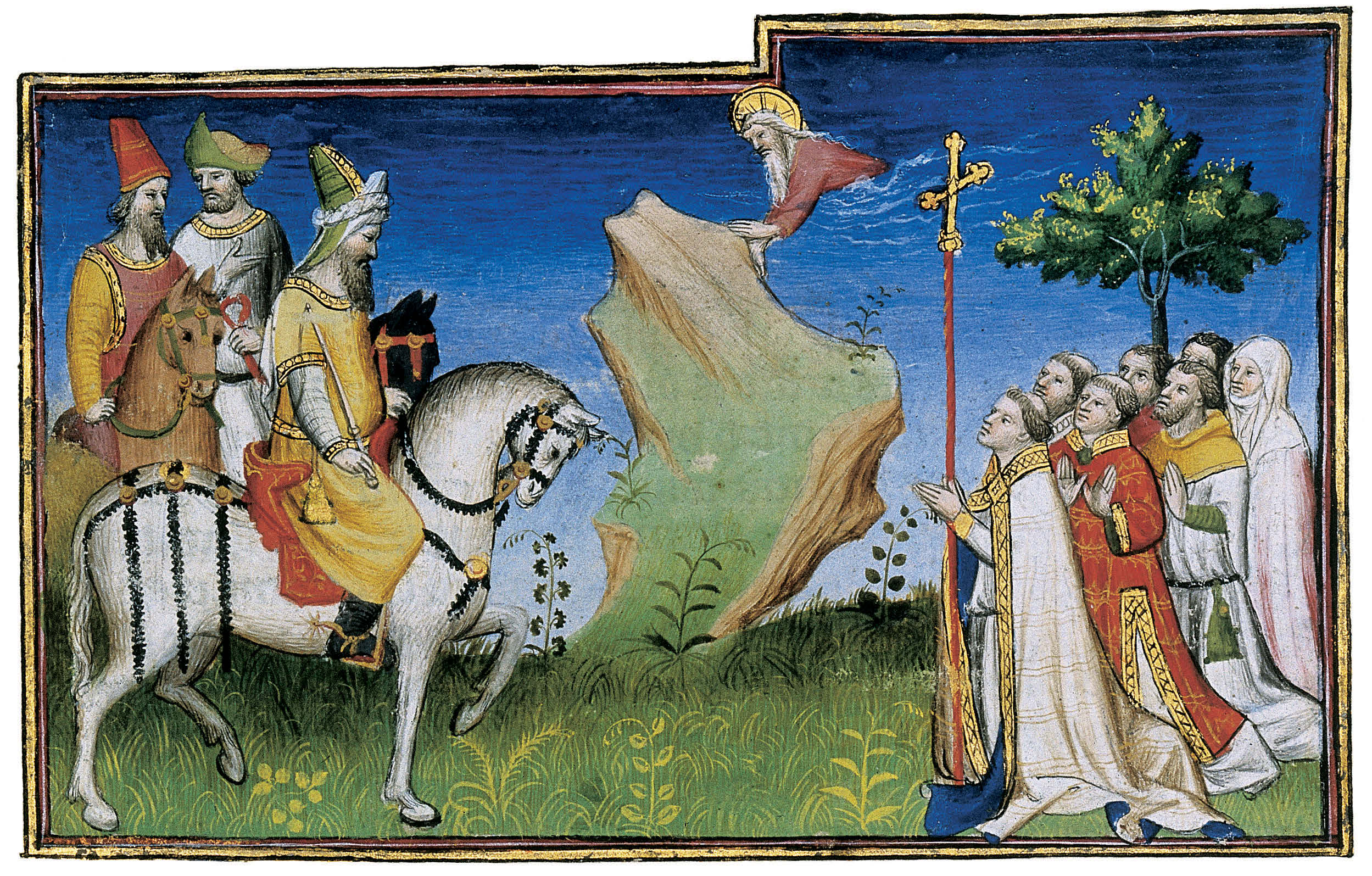
the Nestorian population had to give way to successive building projects. the edges of the empire, such as Egypt, Yemen and Tunisia in the west and Khorassan (eastern Iran) in the east, declared their independence, reducing Abbasid state authority to the region of Mesopotamia.
聂斯脱利派 (Nestorian) 居民不得不让位于接连不断的建筑工程。帝国边缘地区,如西部的埃及 (Egypt)、也门 (Yemen) 和突尼斯 (Tunisia),以及东部的呼罗珊 (Khorassan)(伊朗东部),宣布独立,使阿拔斯王朝 (Abbasid) 的国家权威缩减至美索不达米亚 (Mesopotamia) 地区。
But the new capital brought good fortune to neither the caliph nor the patriarch, who relocated there, for the Turkish mercenaries, who had become very powerful, forced Caliph al-Mu’tamid (ruled 870–892) to abandon Samarra in 889 and retreat to Baghdad. [^73] Among the Nestorians, three elderly patriarchs held office within a period of just twelve years. The consequent power vacuum was filled by influential Nestorian physicians, who repre- sented the Church at the theological debates, which were as popular as ever, and effectively led the Church. Thus was repeated the unfortunate development, familiar from the late Sassanian period, in which the patriarchs and their election became playthings of the powerful doctors. Catholicos Theodosius (in office 853–858) was such an example. First, he owed his nomination to the powerful and immeasurably wealthy doctor Bochtisho. But then Bochtisho’s opponents slandered the physician before Caliph al- Mutawwakil, who confiscated his property and imprisoned the hapless patriarch for three years. Mutawwakil’s intensification of discriminatory policies and the removal from office of Christian civil servants also took place during this period.
但这座新首都既未给哈里发带来好运,也未给迁往那里的宗主教带来好运,因为已变得十分强大的突厥雇佣兵迫使哈里发穆塔米德 (al-Mu’tamid)(在位870–892年)于889年放弃萨马拉 (Samarra),撤退至巴格达 (Baghdad)。73 在聂斯脱利派 (Nestorians) 中,三位年迈的宗主教在短短十二年内相继任职。由此产生的权力真空,由有影响力的聂斯脱利派医生填补;这些医生在依旧盛行的神学辩论中代表教会,并实际上领导着教会。于是,萨珊王朝 (Sassanian) 晚期已为人熟知的不幸发展再次重演:宗主教及其选举成为有权势医生的玩物。大公宗主教 (Catholicos) 狄奥多西 (Theodosius)(在位853–858年)就是这样一个例子。起初,他的任命要归功于有权势且富甲一方的医生巴赫提舒 (Bochtisho)。但随后,巴赫提舒 (Bochtisho) 的对手在哈里发穆塔瓦基勒 (al-Mutawwakil) 面前诋毁这位医生,后者没收了他的财产,并将这位不幸的宗主教监禁了三年。穆塔瓦基勒 (Mutawwakil) 加强歧视性政策,以及解除基督徒文官职务,也发生在此期间。
Under Patriarch Enos I (in office 877–884) the Nestorians benefited from the ‘discovery’ in the state university of the treaty concluded between Mohammed and the delegation from Najran. The vizier Saad ibn-Makhlad, a convert to Islam, was very well disposed towards his former Nestorian brothers in the faith, and put this tolerant policy into effect. [^74] But the revaluation of the Nestorian zimmi raised the ire of the Muslim rabble of Baghdad, who plundered the patriarchal see in 885 and 886. Such anti-Christian unrest arose again in 999, 1021, 1054 and 1055.
在宗主教以挪士一世 (Enos I) 任内(877–884年在位),聂斯托利派信徒 (Nestorians) 因在国立大学中“发现”了穆罕默德 (Mohammed) 与纳季兰 (Najran) 代表团所缔结的条约而受益。维齐尔 (vizier) 萨阿德·伊本·马赫拉德 (Saad ibn-Makhlad) 是皈依伊斯兰教者,对他昔日在信仰中的聂斯托利派弟兄颇有好感,并实施了这一宽容政策。74 但是,对聂斯托利派齐米 (Nestorian zimmi) 的重新评估激起了巴格达 (Baghdad) 穆斯林暴民的愤怒,他们于885年和886年洗劫了宗主教教座 (patriarchal see)。此类反基督教骚乱在999年、1021年、1054年和1055年再度发生。
In 945 Caliph al-Mustakfi (ruled 945–46) made a desperate attempt to break the power of the Turkish mercenaries and handed over power to the northern Iranian family of the
945年,哈里发穆斯塔克菲 (al-Mustakfi)(在位945–46年)孤注一掷,试图打破突厥雇佣兵的势力,并将权力移交给伊朗北部的……家族
In the maelstrom of politics
在政治的漩涡中
The subsequent centuries witnessed a slow decline of both the Church of the East and the Abbasid caliphate. In the Church, politics and simony in the appointment to high ecclesiastical office played a growing role, while the increasingly arrogant Turkish mercenaries reduced the caliph to a political marionette. Simultaneously, the political unity of the empire collapsed. First, in the interior, the slave revolt of the Zang, which lasted from 869 to 883, shook the foundations of the state, and then several regions lying on
随后的几个世纪见证了东方教会 (Ch. of E.) 与阿拔斯哈里发国 (Abbasid caliphate) 的缓慢衰落。在教会中,高级教职任命中的政治权术与买卖圣职 (simony) 发挥着越来越大的作用,而日益骄横的突厥雇佣兵则使哈里发 (caliph) 沦为政治傀儡。与此同时,帝国的政治统一也崩溃了。首先,在内地,从869年持续到883年的赞吉 (Zang) 奴隶起义动摇了国家根基;随后,位于……的几个地区
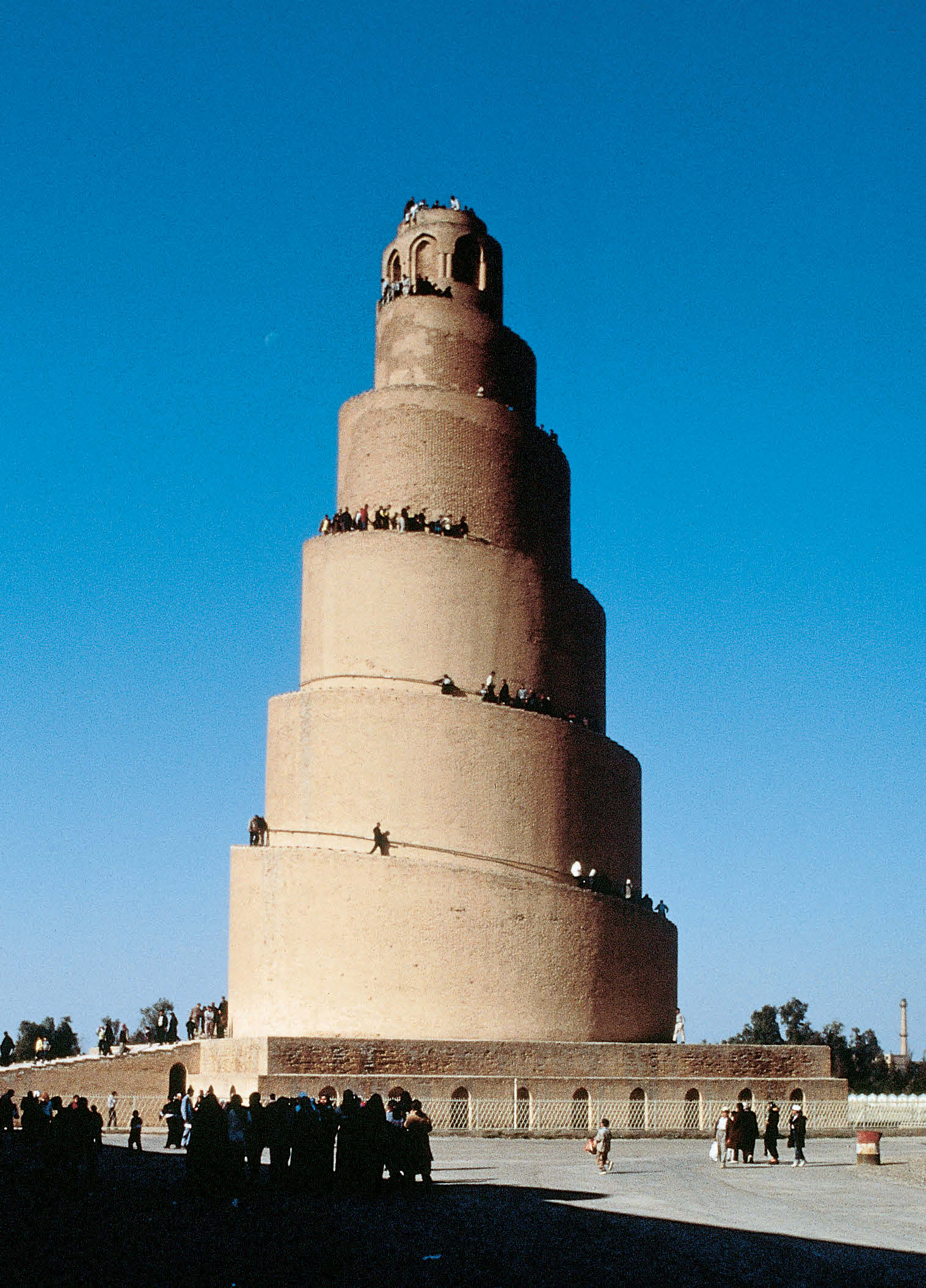
The minaret, modelled after an Assyrian ziggurat, of the Great Mosque of Samarra, Iraq, near which existed eight Nestorian monasteries.
伊拉克 (Iraq) 萨迈拉大清真寺 (Great Mosque of Samarra) 的宣礼塔仿照亚述 (Assyrian) 塔庙 (ziggurat) 而建,其附近曾有八座聂斯托利派 (Nestorian) 修道院。
Buyids. But, by doing so, al-Mustakfi simply traded one evil for another, as the new rulers had him blinded and replaced with one of their own followers. From then on, the caliphate symbolized only the spiritual leadership of the faithful. The period of the Buyids (ruled 945–1055) witnessed the triumph of the Shi’ite branch of the faith, which recognized as rulers only descendants of Mohammed or his son-in-law Ali. Shi’ite dynasties of various types ruled in Egypt, Yemen, Khorassan and northern Mesopotamia, and the Buyids were also Shi’ites. The first 60 years of Buyid rule were quite peaceful for the Nestorians, not least because Emir Adud (ruled 949–983) named the Nestorian Nasr ibn-Harum as his vizier.75 As history has always shown, orderly political circumstances granted the Christians relative security; in the case of power struggles and unrest, they were in danger of becoming scapegoats or targets for the wrath of the people.
白益王朝 (Buyids)。但如此一来,穆斯塔克菲 (al-Mustakfi) 不过是以一种祸患换取了另一种祸患,因为新的统治者弄瞎了他,并以他们自己的一名追随者取代了他。从那时起,哈里发国仅象征着信士的精神领导权。白益王朝 (Buyids) 时期(统治于 945–1055 年)见证了该信仰什叶派的胜利,该派只承认穆罕默德 (Mohammed) 或其女婿阿里 (Ali) 的后裔为统治者。各类什叶派王朝统治着埃及 (Egypt)、也门 (Yemen)、呼罗珊 (Khorassan) 和美索不达米亚北部 (northern Mesopotamia),白益王朝也属什叶派。白益王朝统治的最初 60 年对聂斯托利派 (Nestorians) 而言相当和平,尤其是因为埃米尔阿杜德 (Emir Adud)(在位 949–983)任命聂斯托利派的纳斯尔·伊本·哈鲁姆 (Nasr ibn-Harum) 为他的维齐尔 (vizier)。75 正如历史一贯表明的那样,有序的政治环境使基督徒获得了相对的安全;而一旦发生权力斗争和动荡,他们就有沦为替罪羊或民众怒火目标之虞。
In Mesopotamia, however, the Nestorian community slowly diminished – not as the result of brutal persecutions but rather on account of financial burdens, the extortion of protection money, social barriers, juridical discrimination and the enslavement of those unable to pay taxes. The centre of Nestorian life shifted from Baghdad to the northern regions of Mosul and Kurdistan. Therefore, it is not surprising that the Nestorians, like the Jacobites and Melkites, greeted the Mongol khan Hülägü – whose mother Sorqaqtani-Beki and chief wife Dokuz Khatun were both Nestorians – as a liberator. For the first time in its 1000-year history, the Church of the East met with the realistic prospect of being granted status equal to the state religion or itself becoming the state religion.
然而,在美索不达米亚 (Mesopotamia),聂斯托利派 (Nestorian) 社群逐渐萎缩——并非源于残酷迫害,而是由于财政负担、保护费勒索、社会壁垒、司法歧视,以及对无力纳税者的奴役。聂斯托利派生活的中心从巴格达 (Baghdad) 转移至摩苏尔 (Mosul) 和库尔德斯坦 (Kurdistan) 的北部地区。因此,聂斯托利派与雅各派 (Jacobites) 和麦尔基派 (Melkites) 一样,将蒙古可汗旭烈兀 (Hülägü) 视为解放者,这并不令人意外——其母唆鲁禾帖尼别吉 (Sorqaqtani-Beki) 和正妻脱古思可敦 (Dokuz Khatun) 均为聂斯托利派信徒。在其一千年历史中,东方教会 (Church of the East) 首次遇到了切实的前景:获得与国教同等的地位,或自身成为国教。
The preservation of ancient heritage
古代遗产的保存
In the mid-eleventh century Turks again entered Mesopotamia, but this time not as mercenaries but as an entire people. It was the Central Asian Seljuks, whose first leader may have been Christian or Jewish,76 who conquered Baghdad in 1055 and dealt a crushing blow to Byzantium at Manzikert in 1071. Some of the conquerors settled in the vanquished Byzantine region, and the population of Asia Minor changed from purely Christian to purely Muslim. Except for in Istanbul and, to a small degree, Tur Abdin, Christians do not live in Turkey today. The Crusades (1097–1291) also began at this time and profited at first from the rapid splintering of the Seljuk Empire into smaller principalities. For geographical reasons, the Church of the East was barely affected by this. The Crusaders treated the few Nestorians living in the area under their control as heretics, like the Syrian Orthodox, Armenians and Maronites, who ought to be won for the Latin Church. Only the Maronites recognized the authority of Rome, around 1215, and remain united with it.
11世纪中叶,突厥人 (Turks) 再次进入美索不达米亚 (Mesopotamia),但这一次不是作为雇佣兵,而是作为整个民族。他们是中亚的塞尔柱人 (Seljuks),其首位领袖可能是基督徒或犹太人,76,他们于1055年征服巴格达 (Baghdad),并于1071年在曼齐刻尔特 (Manzikert) 给拜占庭 (Byzantium) 以毁灭性打击。一些征服者定居于被征服的拜占庭地区,小亚细亚 (Asia Minor) 的人口也从纯基督徒变为纯穆斯林。除了伊斯坦布尔 (Istanbul) 以及程度较轻的图尔阿布丁 (Tur Abdin) 之外,今天土耳其已无基督徒居住。十字军东征 (Crusades) (1097–1291) 也始于此时,并起初因塞尔柱帝国 (Seljuk Empire) 迅速分裂为诸多小公国而获益。由于地理原因,东方教会 (Church of the East) 几乎未受此影响。十字军将控制区内少数聂斯脱利派信徒 (Nestorians) 视为异端,如同对待叙利亚正教会 (Syrian Orthodox)、亚美尼亚人 (Armenians) 和马龙派 (Maronites) 一样,认为他们应被争取归入拉丁教会 (Latin Church)。只有马龙派约在1215年承认罗马 (Rome) 的权威,并至今与其保持合一。
The eighth and ninth centuries were not only a golden age for the Church of the East but also the developmental period of a new Arab- Iranian culture. The Baghdad of that time was the crucible in which the philosophical and intellectual heritage of Iran, Greece, Syria and India were brought together under the guidance of a cosmopolitan Islam to create a new cultural synthesis. At a time when Europe threatened to sink into barbarism, this new Islamic culture gathered and preserved the treasures of antiquity and then in the twelfth century gave them back to the school of Toledo. Without the curiosity of the youthful Islamic spirit, whose intellectual passion was comparable to that of the European Renaissance, the West would never – or at least only later, when Greek scholars went to Italy after the fall of Byzantium – have found the way to its own forgotten roots. Because Arabic scholars and scientists themselves had no access to the ancient writings and did not know Greek,
八世纪和九世纪不仅是东方教会 (Ch. of E.) 的黄金时代,也是一个新的阿拉伯-伊朗文化的发展时期。当时的巴格达 (Baghdad) 是一个熔炉,在一种世界性伊斯兰教的引导下,伊朗 (Iran)、希腊 (Greece)、叙利亚 (Syria) 和印度 (India) 的哲学与思想遗产在此汇聚,创造出一种新的文化综合。当欧洲 (Europe) 面临陷入野蛮状态的危险时,这种新的伊斯兰文化收集并保存了古代珍宝,随后在十二世纪将它们归还给托莱多 (Toledo) 的学校。如果没有年轻的伊斯兰精神的好奇心——其知识热情堪比欧洲文艺复兴——西方 (West) 就永远不会——或者至少只有在后来,即拜占庭 (Byzantium) 陷落后希腊学者前往意大利 (Italy) 之时——找到通往自身被遗忘根源的道路。因为阿拉伯学者和科学家自己无法接触古代著作,也不懂希腊语,
they were dependent on the mediation of the Nestorians and Jacobites. In contrast to the Latins, who ignored Greek scholarship, the Syrians devoted themselves to it with a passion, beginning in the sixth century, and translated the Greek texts into Syriac.
他们依赖聂斯脱利派 (Nestorians) 和雅各派 (Jacobites) 的中介。与忽视希腊学术的拉丁人 (Latins) 不同,叙利亚人 (Syrians) 自六世纪起便满怀热情地投身于希腊学术,并将希腊文本翻译成叙利亚语 (Syriac)。
The translation of the Septuagint into Arabic by Hunayn Ibn Ishaq (808–873) also took place during this period. Since the founding and financing of a hospital was considered by both Christians and Muslims to be pleasing to God, Baghdad, which had more than a million inhabitants, contained several hospitals, which were often led by Nestorians; in the tenth century every major city of the empire had a hospital. Not only were general practitioners active in these hospitals but also specialists such as surgeons, orthopedists, opthalmologists, dentists, pharmacists and psychiatrists.79
侯奈因·伊本·伊斯哈格 (Hunayn Ibn Ishaq, 808–873) 将《七十士译本》(Septuagint) 译成阿拉伯语的工作也发生在这一时期。由于基督徒和穆斯林都认为创办和资助医院是取悦上帝之事,拥有超过一百万居民的巴格达 (Baghdad) 设有多所医院,这些医院常常由聂斯脱利派 (Nestorians) 管理;到十世纪,帝国每座主要城市都有一所医院。在这些医院中执业的不仅有全科医生,还有外科医生、骨科医生、眼科医生、牙医、药剂师和精神科医生等专科医生。79
The golden age of the translators coincided with the flourishing of the Nestorian School of Gondeshapur, which Chosrau had elevated to state university.77 The relocation of the imperial capital from Damascus to Baghdad gave a tremendous boost to Nestorian scholarship for two reasons: First, since Gondeshapur was the leading centre of medical teaching in the empire, the caliphs looked to it for their personal physicians. Second, caliphs such as Harun al-Rashid and al-Ma’mun were true cultural patrons and systematically imported Greek manuscripts from Byzantium. The most important lay subjects were Greek and Indian medicine and astronomy, Greek philosophy, mathematics, finance and civil administration. In 832 the University of Baghdad, called the House of Knowledge, supplanted Gondeshapur. According to the ideal of the Greek physician Galen, which held that ‘the good doctor is a good philosopher’,78 the best-known scholars were simultaneously physicians, philosophers and translators. In this way, the Nestorians, together with a few Jacobites, held a quasi-monopoly over this field of study until the tenth century. Even after the appearance of Arab scholars, the Nestorians maintained a leading role until the Mongol conquest of Baghdad.
翻译者的黄金时代恰逢贡德沙普尔的聂斯托利派学校 (Nestorian School of Gondeshapur) 的兴盛,霍斯劳 (Chosrau) 曾将其升格为国立大学。77 帝国首都从大马士革 (Damascus) 迁至巴格达 (Baghdad),极大地推动了聂斯托利派学术,原因有二:首先,由于贡德沙普尔 (Gondeshapur) 是帝国领先的医学教学中心,哈里发们从那里物色自己的私人医生。其次,哈伦·拉希德 (Harun al-Rashid) 和马蒙 (al-Ma’mun) 等哈里发是真正的文化赞助人,并系统地从拜占庭 (Byzantium) 输入希腊手稿。最重要的世俗学科是希腊和印度的医学与天文学、希腊哲学、数学、财政与民政管理。832年,被称为“知识宫” (House of Knowledge) 的巴格达大学 (University of Baghdad) 取代了贡德沙普尔 (Gondeshapur)。按照希腊医生盖伦 (Galen) 的理想,即“好医生即是好哲学家”78,最著名的学者同时是医生、哲学家和翻译者。就这样,聂斯托利派信徒 (Nestorians) 与少数雅各派信徒 (Jacobites) 一起,直到十世纪都近乎垄断了这一研究领域。即便在阿拉伯学者 (Arab scholars) 出现之后,聂斯托利派信徒 (Nestorians) 仍保持主导地位,直到蒙古人征服巴格达 (Baghdad)。
Individual Nestorian families built true dynasties of doctors, including the Bochtisho, who looked after the health of the caliphs and princes for eight generations. Thanks to their personal closeness to the caliphs, the Bochtisho not only amassed a great fortune but also exercised significant influence over their masters, which they used to the benefit of the Nestorian community. First, in 765 the physician Giwargis Bochtisho, who worked in Gondeshapur, was called to Baghdad, where he cured Caliph al- Mansur. When al-Mansur wanted to give him three young female slaves, he refused to accept them, since Christianity prescribed monogamy. Al-Mansur subsequently appointed the trust- worthy Giwargis to look after his harem. Giwargis’s son Bochtisho and his son Gabriel followed him as palace physicians, with Gabriel becoming a close confidant of Harun al-Rashid. When the caliph announced at an audience held upon his return from a pilgrimage to Mecca that he had prayed to Allah for the protection of his doctor, the Muslim ministers present were angered because Gabriel was not a Muslim. Harun replied, ‘The welfare of the Muslims depends on me and my body and this depends on Gabriel, so their well-being depends on his art and life.’80 That the Nestorian doctors even functioned as pastors for the caliphs is shown by the example of the physician Salmawayh ibn
一些聂斯托利派 (Nestorian) 家族建立起了名副其实的医生王朝,其中包括布赫提舒家族 (Bochtisho),该家族连续八代照料哈里发和王公们的健康。由于他们与哈里发们私交甚密,布赫提舒家族 (Bochtisho) 不仅积聚了巨额财富,还对其主上施加了重大影响,并利用这种影响为聂斯托利派 (Nestorian) 群体谋利。首先,765年,在贡德沙普尔 (Gondeshapur) 行医的医生吉瓦吉斯·布赫提舒 (Giwargis Bochtisho) 被召至巴格达 (Baghdad),在那里治好了哈里发曼苏尔 (Caliph al-Mansur)。当曼苏尔 (al-Mansur) 想赐给他三名年轻女奴时,他拒绝接受,因为基督教规定一夫一妻制。曼苏尔 (al-Mansur) 随后任命值得信赖的吉瓦吉斯 (Giwargis) 照管自己的后宫。吉瓦吉斯 (Giwargis) 的儿子布赫提舒 (Bochtisho) 和布赫提舒的儿子加百列 (Gabriel) 继他之后担任宫廷医生,加百列 (Gabriel) 还成为哈伦·拉希德 (Harun al-Rashid) 的亲密心腹。当哈里发从麦加 (Mecca) 朝觐归来后举行的一次觐见中宣布,他曾向安拉 (Allah) 祈求保护自己的医生时,在场的穆斯林大臣们十分愤怒,因为加百列 (Gabriel) 不是穆斯林。哈伦 (Harun) 回答说:“穆斯林的福祉取决于我和我的身体,而我的身体又取决于加百列 (Gabriel),因此他们的安康取决于他的医术和生命。”80 聂斯托利派 (Nestorian) 医生甚至为哈里发们充当牧师,这一点可由医生萨勒马瓦伊·伊本 (Salmawayh ibn) 的例子表明。
The translations were usually made from Greek into Syriac and then, in a second step, into Arabic, with over 50 Syrian translators active in Baghdad alone at the time of Timothy. Thanks to this effort, which was encouraged by the caliphs, the Arab world had access to the works of the Greek philosophers Plato, Aristotle and Plotinus, the physicians Galen and Hippocrates, and the mathematicians Euclid and Ptolemy.
这些翻译通常先从希腊语译成叙利亚语,然后再在第二步中译成阿拉伯语;在提摩太 (Timothy) 时代,仅巴格达 (Baghdad) 一地就有50多名叙利亚译者活跃。多亏了这项得到哈里发 (caliphs) 鼓励的努力,阿拉伯世界得以接触希腊哲学家柏拉图 (Plato)、亚里士多德 (Aristotle) 和普罗提诺 (Plotinus),医生盖伦 (Galen) 和希波克拉底 (Hippocrates),以及数学家欧几里得 (Euclid) 和托勒密 (Ptolemy) 的著作。
Banan, of whom Caliph al-Mu’tasim said, ‘My doctor Salmawayh is more important to me than the highest judge, for the latter cares only about my property, while the former concerns himself with my soul.’81
巴南 (Banan),哈里发穆阿台绥姆 (Caliph al-Mu’tasim) 曾这样评价他:“我的医生萨勒马维赫 (Salmawayh) 对我来说比最高法官更重要,因为后者只关心我的财产,而前者关心我的灵魂。”81
Arabic vocabulary. Hunayn was also head of the state library and received the title prince of the translators.83
阿拉伯语词汇。侯奈因 (Hunayn) 还担任国家图书馆馆长,并获得“翻译家之王”的称号。83
A famous episode from Hunayn’s life indicates that at that time the Nestorians were certainly familiar with pictorial representations.84 In 854 a few people who were jealous of Hunayn accused him in the presence of the patriarch and the caliph of being, like other Christians, an idol- worshipper, because he had commissioned the icon of the Virgin Mary that was present. As evidence against this claim, they demanded he spat on the icon. Since Hunayn feared that the anti-Christian caliph al-Mutawakkil could accuse the Christians in general of idol worship, he gave in and spit on the icon. But the reaction of the Muslim caliph, whose religion included an absolute prohibition on images of God, was unexpected. He was so upset with this impiety that he threw Hunayn in prison and confiscated both his fortune and his private library. The patriarch excommunicated him on the spot. After six months of Hunayn’s imprisonment the caliph became very ill, whereupon Christ appeared to him at night in a dream and ordered him to pardon Hunayn; he would then cure him. In fact, al-Mutawakkil released him and demanded that his accusers pay Hunayn a large amount in damages, which he himself doubled. He then returned him to his office in all honour and returned to him his fortune and his valuable library.85
侯奈因 (Hunayn) 生平中一个著名事件表明,当时聂斯托利派 (Nestorians) 肯定熟悉图像表现。84 854年,一些嫉妒侯奈因的人在宗主教 (patriarch) 和哈里发 (caliph) 面前控告他,说他像其他基督徒一样是偶像崇拜者,因为他曾委托制作了那幅在场的圣母玛利亚 (Virgin Mary) 圣像。作为反驳这一指控的证据,他们要求他朝那幅圣像吐唾沫。由于侯奈因担心反基督教的哈里发穆塔瓦基勒 (al-Mutawakkil) 会指控全体基督徒偶像崇拜,他让步了,朝圣像吐了唾沫。但这位穆斯林哈里发的反应却出人意料,因为他的宗教绝对禁止神的图像。他对这种不敬行为极为恼怒,于是将侯奈因投入监狱,并没收了他的财产和私人藏书。宗主教当场将他逐出教会。侯奈因入狱六个月后,哈里发病重,于是基督 (Christ) 在夜间梦中向他显现,命令他赦免侯奈因;这样基督就会治愈他。事实上,穆塔瓦基勒释放了他,并要求控告他的人向侯奈因支付一大笔赔偿金,而他本人又将这一数额翻倍。随后,他让侯奈因体面地官复原职,并归还了他的财产和珍贵藏书。85
As the personal physician of Mutawakkil, Gabriel’s son Bochtisho accumulated an unimag- inably large fortune and went about only in a carriage made of ivory. Bochtisho’s pointedly flaunted wealth angered even the caliph. When the doctor was drawn into the intra-Church conflict over Patriarch Theodosius, Mutawakkil was incensed, since he had grown weary of the ongoing arguments between the Nestorian factions. He had the patriarch arrested, expelled the Nestorian clergy from his capital Samarra, destroyed their churches and monasteries, and reinstated and intensified the discriminatory laws. At the same time, the irate caliph confiscated Bochtisho’s fortune and sent him into exile in Bahrein, where Baghdad’s one-time richest private citizen died a beggar in 870.82 Boshtisho’s son Yuhanna cared for Caliph al-Mu’tamid (ruled 870–892) and became upon the caliph’s death the metropolitan of Nisibis. The last physician of the family of Bochtisho, Saïd, died in 1058. Another famous family of doctors were the Massawahs, from whom came Yuhanna (†857), the first head of the state university of Baghdad, whose library held over one million manuscripts.
作为穆塔瓦基勒 (Mutawakkil) 的私人医生,加百列 (Gabriel) 之子博赫蒂舒 (Bochtisho) 积累了难以想象的巨额财富,出行只乘坐象牙制成的马车。博赫蒂舒 (Bochtisho) 刻意炫耀财富,甚至激怒了哈里发。当这位医生被卷入围绕牧首 (Patriarch) 狄奥多西 (Theodosius) 的教会内部冲突时,穆塔瓦基勒 (Mutawakkil) 大为震怒,因为他已厌倦聂斯托利派 (Nestorian) 各派系之间持续不断的争论。他下令逮捕牧首,将聂斯托利派 (Nestorian) 神职人员逐出首都萨迈拉 (Samarra),摧毁他们的教堂和修道院,并恢复且强化了歧视性法律。与此同时,愤怒的哈里发没收了博赫蒂舒 (Bochtisho) 的财产,将他流放至巴林 (Bahrein);这位曾是巴格达最富有的平民于870.82 在那里沦为乞丐而死。博赫蒂舒 (Boshtisho) 之子尤哈纳 (Yuhanna) 照料哈里发穆塔米德 (al-Mu’tamid)(在位870–892),并在哈里发去世后成为尼西比斯 (Nisibis) 的都主教 (metropolitan)。博赫蒂舒 (Bochtisho) 家族的最后一位医生赛义德 (Saïd) 于1058年去世。另一个著名的医生家族是马萨瓦赫家族 (Massawahs),尤哈纳 (Yuhanna, †857) 即出自该家族,他是巴格达国立大学 (state university of Baghdad) 的首任校长,其图书馆藏有超过一百万份手稿。
The best-known and most productive Nestorian scholar was the Arab from al-Hira, Hunayn Ibn Ishaq (808–873). Hunayn was not only leader of Mutawakkil’s court physicians and a leading scholar in the fields of medicine, especially ophthalmology, astronomy, meteorology, zoology, mathematics and philosophy, but also the best translator. In his translation work he proceeded according to modern methods, in that, prior to the translation, he gathered as many different texts as possible, in order to create the ideal starting point. Finally, he contributed to the development of a scientific
最著名、最多产的聂斯托利派 (Nestorian) 学者是来自希拉 (al-Hira) 的阿拉伯人侯奈因·伊本·伊斯哈格 (Hunayn Ibn Ishaq, 808–873)。侯奈因不仅是穆塔瓦基勒 (Mutawakkil) 宫廷医师的首领,也是医学——尤其是眼科学——以及天文学、气象学、动物学、数学和哲学等领域的杰出学者,而且是最优秀的翻译家。在翻译工作中,他遵循现代方法,即在翻译之前尽可能收集各种不同的文本,以创造理想的起点。最后,他为一种科学的……的发展作出了贡献
The extensive work of the Nestorian translators, addressed to a broad public, created an enormous demand for a suitable medium on which to write. This was no longer parchment but paper, which had developed originally in China. Paper was discovered at the time of the early Han Dynasty (202BCE–9CE) and improved by the courtier Cai Lun around 105CE. In the early eighth century it reached the city of Samarqand, which had been conquered by the Arabs.86 From there the art of paper-making reached Baghdad in 793,
聂斯托利派 (Nestorian) 翻译者的大量工作面向广大公众,创造了对合适书写媒介的巨大需求。这不再是羊皮纸,而是纸,纸最初在中国发展起来。纸在汉朝 (Han Dynasty) 早期(公元前202年 (202BCE) – 公元9年 (9CE))被发现,并由宫廷官员蔡伦 (Cai Lun) 在公元105年 (105CE) 左右改进。在八世纪初,它传到了撒马尔罕 (Samarqand) 城,该城已被阿拉伯人 (Arabs) 征服。86 造纸术从那里于793年传到巴格达 (Baghdad),
The Church of the East and Islam and eventually the whole of the Mediterranean region. Beginning in the ninth century the Suq al-Warraqin, the paper-dealers’ market, flourished in Baghdad, where over 100 paper shops offered sheets of paper. There interested people also found book dealers with the latest works, antiquarian book shops and professional copyists.87
东方教会 (Ch. of E.) 与伊斯兰教,并最终乃至整个地中海地区。从九世纪开始,纸商市场苏克·瓦拉钦 (Suq al-Warraqin) 在巴格达 (Baghdad) 繁荣兴盛,那里有100多家纸店出售纸张。在那里,感兴趣的人还能找到拥有最新著作的书商、古旧书店和职业抄写员。87
The young Mohammed is said to have been recognized as prophet first by a Christian monk, long before he himself perceived his task. Both Mohammed’s biographer Ibn Ishaq and the historian Tabari recounted this tradition.89 When Mohammed was nine or twelve years old, his uncle Abu Talib took him along on a trading journey to Syria. The caravan rested in the Byzantine city of Bosra, where the Nestorian monk Nestorius,90 called Bahira by the Arabs, lived in a cell near a large hall church. Bahira saw from his cell how a single isolated cloud accompanied the caravan, casting a shadow only on Mohammed. He then invited the caravan to a meal. The monk questioned the boy and examined his body. When he saw on his back the sign of prophethood he said to Abu Talib, ‘Take your nephew back to his homeland and guard him from the Jews; if they recognize him, they will do evil to him. Great things will come of your nephew.’91 The fact that in the Islamic tradition the Christian monk vouches for the authenticity of Mohammed’s prophecy shows that early Islam sought a close connection with Christianity and, simultaneously, a sharp distinction from the Judaism of the time.
据说,年轻的穆罕默德 (Mohammed) 最早是被一位基督教修士认作先知的,远在他自己意识到自己的使命之前。穆罕默德的传记作者伊本·伊斯哈格 (Ibn Ishaq) 和历史学家塔巴里 (Tabari) 都叙述了这一传统。89 当穆罕默德九岁或十二岁时,他的叔父阿布·塔利卜 (Abu Talib) 带他一起前往叙利亚 (Syria) 进行贸易旅行。商队停歇在拜占庭城市布斯拉 (Bosra),聂斯托利派修士聂斯托利 (Nestorius)90——阿拉伯人称其为巴希拉 (Bahira)——就住在一座大型厅堂式教堂附近的一间小室里。巴希拉从他的小室里看到,一朵孤零零的云伴随着商队,只把阴影投在穆罕默德身上。随后他邀请商队前来用餐。这位修士询问了男孩,并检查了他的身体。当他看到男孩背上的先知印记时,便对阿布·塔利卜说:“把你的侄子带回他的家乡,保护他免受犹太人伤害;如果他们认出他,就会加害于他。你的侄子将会成就大事。”91 在伊斯兰传统中,这位基督教修士为穆罕默德先知身份的真实性作证,这一事实表明,早期伊斯兰教既寻求与基督教建立密切联系,同时又力求与当时的犹太教划清界限。
The works of Greek scholarship translated into Arabic by the Nestorians found their way to the caliphate of Cordoba, founded in 756, to which belonged the Andalusian city of Toledo. After it was conquered by the Christian king Alfons VI of Castile around 1085, Christian, Arab and Jewish scholars there began to work with the Arabic documents and translate them into Latin. Towards the end of the twelfth century the rediscovery of Greek scholarship advanced to Sicily and Constantinople and then in the thirteenth century to Central Europe. The extent to which university activity in Western Europe was limited and censored by the Church is shown by the statutes of the University of Paris, composed in 1215 by Cardinal Robert of Courçon: they forbade students and professors from reading works in metaphysics, physics and all the natural sciences.88 But other, more cosmopolitan spirits, such as Thomas Aquinas (1224–1274), undertook the attempt to reconcile the Christian revelation with the Greek primacy of reason. Later, in the Renaissance, the purely rational approach of the natural sciences broke free of the chains of theology.
由聂斯托利派 (Nestorians) 译成阿拉伯语的希腊学术著作,传入了756年建立的科尔多瓦哈里发国 (Caliphate of Cordoba),安达卢西亚 (Andalusian) 城市托莱多 (Toledo) 即属于该哈里发国。约1085年,托莱多被卡斯蒂利亚的基督教国王阿方索六世 (Alfons VI of Castile) 征服后,当地的基督教、阿拉伯和犹太学者开始研究这些阿拉伯文文献,并将其译成拉丁语 (Latin)。12世纪末,对希腊学术的重新发现推进至西西里 (Sicily) 和君士坦丁堡 (Constantinople),随后在13世纪又推进至中欧 (Central Europe)。1215年由库尔松的罗伯特枢机 (Robert of Courçon) 制定的《巴黎大学章程》 (Statutes of the University of Paris) 表明了教会对西欧 (Western Europe) 大学活动的限制和审查达到何种程度:这些章程禁止学生和教授阅读形而上学、物理学以及所有自然科学的著作。88 但其他更具世界主义精神的人,如托马斯·阿奎那 (Thomas Aquinas, 1224–1274),则试图调和基督教启示与希腊理性至上原则。后来,在文艺复兴 (Renaissance) 时期,自然科学的纯粹理性方法挣脱了神学的枷锁。
It is conceivable that Mohammed, who was active for years as a trader, may have travelled to Syria and become familiar with Christianity there. He must also have been confronted with Christianity in his contacts with Christian Arabs – whether they came from al-Hira, Najran or his own area. It appears that Mohammed was aware of both Tatian’s Diatessaron and the Gospel of Thomas.92 Presumably he was most familiar with Miaphysite Christianity and least so with Nestorianism. Mohammed acknowledged Jesus not only as a prophet, called Naby in Arabic, but also as a messenger of God, as Rassul. God revealed a message to Jesus, but the Jews rejected it and him, and the Christians adulterated this
可以设想,穆罕默德 (Mohammed) 曾多年从事贸易,可能到过叙利亚 (Syria),并在那里接触到基督教。他在与阿拉伯基督徒的接触中,也必定接触过基督教——无论这些基督徒来自希拉 (al-Hira)、奈季兰 (Najran),还是他本人所在的地区。看来,穆罕默德既知道塔提安 (Tatian) 的《四福音合参》(Diatessaron),也知道《多马福音》(Gospel of Thomas)。92 据推测,他最熟悉的是米亚弗西派基督教 (Miaphysite Christianity),最不熟悉的是聂斯托利派 (Nestorianism)。穆罕默德不仅承认耶稣是先知——阿拉伯语称为“纳比”(Naby)——而且承认他是真主的使者,即“拉苏尔”(Rassul)。真主向耶稣启示了信息,但犹太人拒绝了这信息和他,而基督徒则篡改了它。
The contribution of the Nestorian, Jacobite and Melkite translators of Mesopotamia was twofold. First, they built a bridge to the West and renewed Western philosophy and science. Second, they enabled the further development of Islamic scholarship, which led to a synthesis of Muslim thought and Greek science and philosophy, as can be seen in the work of Ibn Sina (980–1037) and Ibn Rushd (1126–1198).
美索不达米亚 (Mesopotamia) 的聂斯托利派 (Nestorian)、雅各派 (Jacobite) 和梅尔基特派 (Melkite) 译者的贡献具有双重意义。首先,他们架起了通往西方的桥梁,并复兴了西方哲学与科学。其次,他们推动了伊斯兰学术的进一步发展,这促成了穆斯林思想与希腊科学和哲学的融合,正如在伊本·西那 (Ibn Sina, 980–1037) 和伊本·鲁世德 (Ibn Rushd, 1126–1198) 的著作中所见。
message into the New Testament (Koran, Sura 2:87ff.). For this reason, there could be for Mohammed no conflict in the content of the Old Testament, the true message of Jesus, and the Koran revealed to him, since God’s revelation is always the same. Mohammed never criticized Jesus, only the Jews who denied him and the Christians who distorted his message. which he understood as a kind of family-like tritheism. ‘O People of the Book [Christians], do not exaggerate in your faith. The messiah, Jesus, son of Mary, was but a messenger of Allah. Do not say, “Three.” Desist. Allah is but One God’ (4:171). The Koran categorically rejects an incarnation of God. In Sura 5, God speaks to his messenger Jesus, ‘And if Allah says: O Jesus, son of Mary, have you said to the people, “Accept me and my mother as two deities beside Allah”? he will answer, “You are holy. I could never say that, for I have no right”’ (5:119). In Islam only the revealed message is important, not the messenger, for he is only the mouthpiece of God, not God. Mohammed’s view of the Trinity as a kind of divine triad shows that the above- mentioned Montanists or ideas from the folk religions of Arab tribes were his source in this regard.93 Like Nestorius, Mohammed rejected the worship of Mary but not her veneration.
信息进入《新约》(New Testament)(《古兰经》(Koran),Sura 2:87ff.)。因此,对穆罕默德 (Mohammed) 而言,《旧约》(Old Testament) 的内容、耶稣 (Jesus) 的真正信息以及向他启示的《古兰经》(Koran) 之间不可能存在冲突,因为神的启示始终如一。穆罕默德 (Mohammed) 从未批评耶稣 (Jesus),只批评那些否认他的犹太人和那些歪曲其信息的基督徒 (Christians)。他将其理解为一种类似家庭的三神论 (tritheism)。“有经人 (People of the Book) [基督徒 (Christians)] 啊,不要在你的信仰中过分。弥赛亚 (Messiah),马利亚 (Mary) 之子耶稣 (Jesus),只是安拉 (Allah) 的使者。不要说‘三’。停止吧。安拉 (Allah) 是独一的神”(4:171)。《古兰经》(Koran) 断然拒绝神成为肉身。在《古兰经》第5章 (Sura 5) 中,神对他的使者耶稣 (Jesus) 说:“如果安拉 (Allah) 说:马利亚 (Mary) 之子耶稣 (Jesus) 啊,你曾对人们说‘把我与我的母亲当作安拉 (Allah) 之外的两个神明’吗?他将回答:‘你是圣洁的。我绝不可能说那样的话,因为我没有权利。’”(5:119)。在伊斯兰教 (Islam) 中,重要的只是所启示的信息,而不是使者,因为他只是神的喉舌,而不是神。穆罕默德 (Mohammed) 将三位一体 (Trinity) 视为一种神圣三神组合,这表明上述孟他努派 (Montanists) 或阿拉伯部落 (Arab tribes) 民间宗教的观念是他在这方面的来源。93 与聂斯托利 (Nestorius) 一样,穆罕默德 (Mohammed) 拒绝崇拜马利亚 (Mary),但不拒绝尊崇她。
The Nestorian monk Nestorius, called Bahira by the Arabs, was the first to recognize that the twelve-year- old Mohammed, whom an angel from heaven is anointing, would be the heralded prophet. Nestorius (Bahira) gestures from the tower window towards Mohammed; his uncle Abu Talib bows before him. From the manuscript History of the World by Rashid ad-Din, in Tabriz, northwestern Iran, written in 1306/1307. (Edinburgh University Library. Or Ms 20f 43v.)
聂斯托利派修士聂斯托利 (Nestorius),阿拉伯人称之为巴赫拉 (Bahira),是第一个认识到十二岁的穆罕默德 (Mohammed)——一位来自天上的天使正为他施行膏抹——将成为那位被预告的先知的人。聂斯托利(巴赫拉)从塔楼窗口朝穆罕默德示意;他的叔父阿布·塔利卜 (Abu Talib) 在他面前躬身。出自拉施德丁 (Rashid ad-Din) 的《世界史》(History of the World) 手稿,该手稿于伊朗西北部的大不里士 (Tabriz) 写成,作于1306/1307年。(爱丁堡大学图书馆 (Edinburgh University Library)。Or Ms 20f 43v.)
For Mohammed, Jesus is not the son of God in an ontological sense but only metaphorically, at best; he is not God but rather God’s servant. ‘All praise is due to Allah, who sent his book down to His servant [Jesus]. And thus are warned all who say, “Allah provided himself with a son’’’ (18:1–4). In another sura, Jesus says of himself, ‘I am a servant of Allah, He gave me the book and made me a prophet’ (19:30). Mohammed’s strict monotheism forced him to deny the divinity of Christ, since otherwise he would have had to have accepted the concept of the Trinity,
对穆罕默德 (Mohammed) 而言,耶稣 (Jesus) 并非本体论意义上的上帝之子,充其量只是隐喻性的;他不是上帝,而是上帝的仆人。“一切赞颂全归安拉 (Allah),他将他的经典降示给他的仆人[耶稣]。凡说‘安拉为自己收养了一个儿子’的人,都由此受到警告”(18:1–4)。在另一章经文中,耶稣谈到自己时说:“我是安拉的仆人,他赐给我经典,并使我成为先知”(19:30)。穆罕默德 (Mohammed) 的严格的一神论迫使他否认基督 (Christ) 的神性,因为否则他就不得不接受三位一体 (Trinity) 的概念,
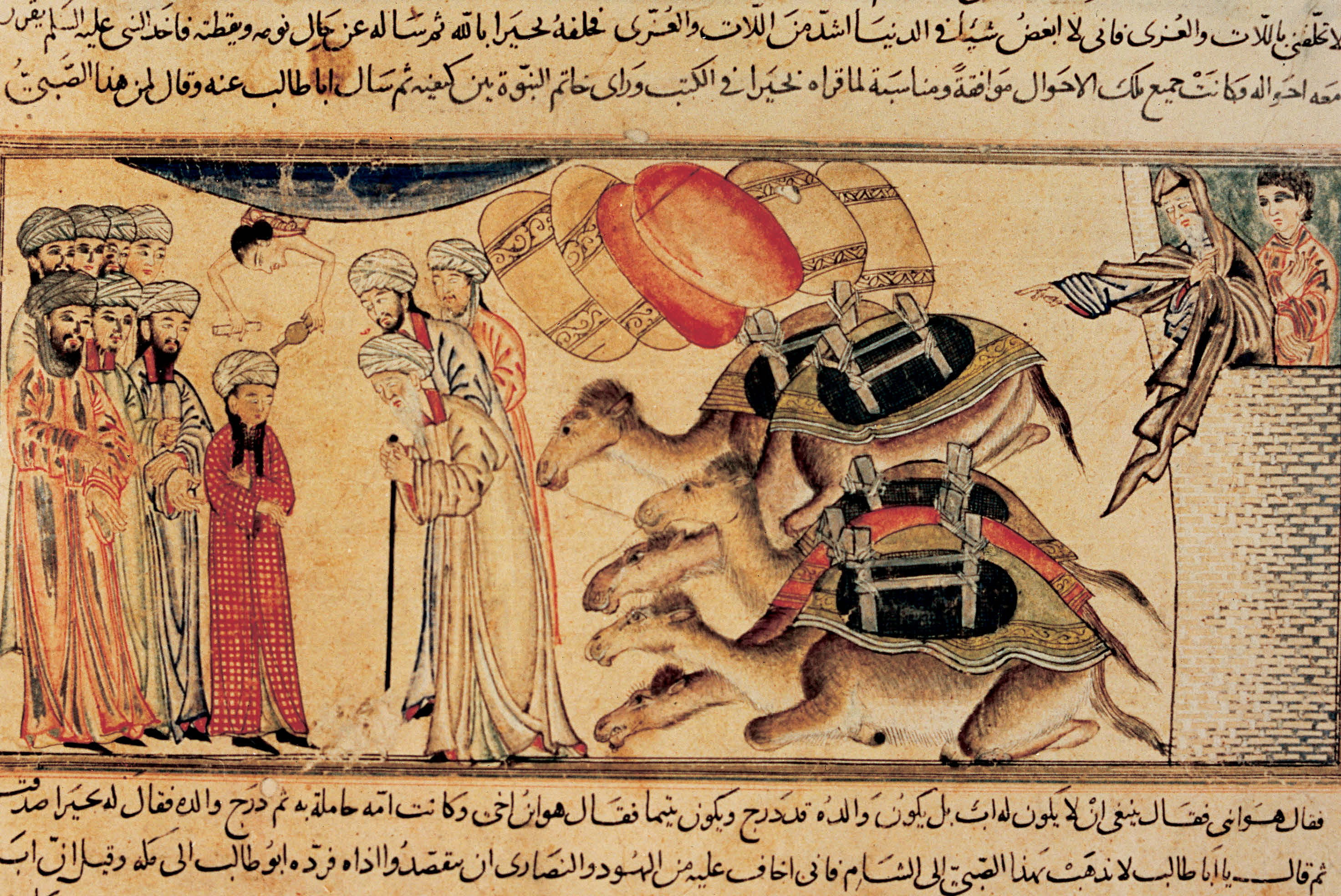
Since Jesus was, in Mohammed’s view, not God, he must be, like Adam, a temporal, mortal man (3:59; 19:33ff). Nevertheless, the prophet rejected the idea of the crucifixion. ‘And on account of their [the Jews’] talk, “We have killed the messiah, Jesus, the son of Mary, the messenger of Allah”; while they neither killed him nor subjected him to death by crucifixion, rather he appeared to them only like [a crucified one]; and those who disagree on this matter are truly in doubt about it; they have no news of it but instead follow mere conjecture, and they have no certainty’ (4:157). Islamic exegetes tried to resolve the question of Jesus’s death: either Jesus was only apparently crucified, or another man was crucified in his place. It was speculated in this regard whether an unwilling person was seized or a Jewish leader or even Judas himself, or whether one of Jesus’s disciples freely volunteered. Tabari supported the second view, according to which God removed Jesus before the crucifixion and granted his appearance to Joshua, a Jew who was present, so that he suffered death on the cross.94 in their everyday lives; heathenism, by contrast, is ignorance, and sin is the conscious refusal to obey God’s message.
在穆罕默德 (Mohammed) 看来,耶稣 (Jesus) 不是上帝,因此他必然像亚当 (Adam) 一样,是一个时间性的、会死的人(3:59;19:33ff)。然而,这位先知否定了钉十字架的观念。“由于他们[犹太人]说:‘我们杀死了弥赛亚 (messiah),马利亚 (Mary) 之子耶稣 (Jesus),安拉 (Allah) 的使者’;其实他们既没有杀死他,也没有将他钉死在十字架上,只是他向他们显现得如同[一个被钉十字架的人];那些对此事有分歧的人,确实对此心存疑虑;他们对此毫无消息,只是追随猜测,他们也没有确信”(4:157)。伊斯兰解经家试图解决耶稣 (Jesus) 之死的问题:要么耶稣 (Jesus) 只是表面上被钉十字架,要么另一个人代替他被钉十字架。在这方面有人推测,被抓住的是一个不情愿的人,还是一位犹太领袖,甚至就是犹大 (Judas) 本人,或者耶稣 (Jesus) 的一个门徒自愿献身。塔巴里 (Tabari) 支持第二种观点,即真主在钉十字架之前将耶稣 (Jesus) 取走,并把他的外貌赐给当时在场的一个犹太人约书亚 (Joshua),使他遭受十字架之死。94 在他们的日常生活中;与之相反,异教是无知,而罪则是有意识地拒绝服从上帝的信息。
And how did the Church of the East react theologically to the Islamic challenge? After the initial uncertainty about whether Islam was simply another Jewish sect, the ideas emerged that either it represented a Christian heresy, or the ‘good’ parts of the Koran were inspired by Christianity. In both cases the monk Bahira, known from the Islamic tradition, was the relevant source. In this spirit, the ninth-century Nestorian apologist Abd al-Masib Ibn Ishaq al-Kindi wrote that the monk Nestorius, alias Bahira, led Mohammed away from polytheism to monotheism and dictated to him a Koran which agreed with the Gospels. During Mohammed’s later stay in Medina, the Jews compelled him to rewrite the Koran.96 The Nestorian Apocalypse of Bahira, likewise from the ninth century, no longer assigns fault for the shortcomings of the Koran to the Jews but instead holds responsible Bahira himself, who humbly regrets his errors: ‘O how wrong I was when I left my cell and came to this barren desert. I have planted bad seeds there, which will remain there until Judgement Day. I elevated vanity to truth, made possible the impossible, and set ravening wolves, vipers and wild animals upon the lambs of Christ. I set a violent and cruel people upon a peaceable people.’97
东方教会 (Ch. of E.) 在神学上如何回应伊斯兰教的挑战?在最初不确定伊斯兰教是否只是另一个犹太教派之后,出现了这样的观念:要么它代表一种基督教异端,要么《古兰经》(Koran) 中“好的”部分受到基督教的启发。在两种情况下,伊斯兰传统中为人所知的修士巴希拉 (Bahira) 都是相关的来源。本着这种精神,九世纪的聂斯托利派 (Nestorian) 护教士阿卜杜勒-马西卜·伊本·伊斯哈格·金迪 (Abd al-Masib Ibn Ishaq al-Kindi) 写道,修士聂斯托利 (Nestorius),又名巴希拉 (Bahira),引导穆罕默德 (Mohammed) 从多神教转向一神教,并向他口授了一部与《福音书》(Gospels) 相一致的《古兰经》。在穆罕默德后来逗留麦地那 (Medina) 期间,犹太人迫使他重写《古兰经》。96 同样出自九世纪的《聂斯托利派巴希拉启示录》(The Nestorian Apocalypse of Bahira) 不再将《古兰经》的缺陷归咎于犹太人,而是认为巴希拉 (Bahira) 本人应负责任,他谦卑地悔恨自己的错误:“唉,我离开我的修道小室,来到这片荒芜的沙漠,是多么错误啊!我在那里播下了坏种子,它们将一直留在那里,直到审判日 (Judgement Day)。我把虚妄提升为真理,使不可能之事成为可能,并把贪婪的狼、毒蛇和野兽置于基督 (Christ) 的羔羊身上。我把一个暴烈而残忍的民族置于一个和平的民族之上。”97
It is clear that Mohammed, with his denial of the crucifixion of Jesus and rejection of the worship of Mary, primarily opposed the Miaphysites. On the other hand, Nestorian theology was relatively close to Islam, insofar as it rejected the Theopaschite death of the divinity of Jesus and the divinization of Mary as Theotokos. In this spirit, the Muslim theologian al-Dimaschqi (1256–1327) stated, ‘What a splendid man is Nestorius, who said, I deny a God who lived in a mother’s womb.’95 Likewise, the Church of the East and the Koran both reject original sin. However, the Koran goes a decisive step farther in this regard, as it also denies the saving work of Christ. From the perspective of the Koran, God redeems humanity by revealing himself in his message and freeing the faithful from ignorance. ‘Salvation’ so understood is knowledge accepted by the people and lived out
显然,穆罕默德 (Mohammed) 否认耶稣 (Jesus) 被钉十字架并拒绝敬拜马利亚 (Mary),主要是反对米亚弗西派 (Miaphysites)。另一方面,聂斯托利派神学 (Nestorian theology) 与伊斯兰教 (Islam) 相对接近,因为它拒绝耶稣神性之死这一上帝受难论 (Theopaschite) 主张,也拒绝将马利亚神化为上帝之母 (Theotokos)。本着这种精神,穆斯林神学家迪马什基 (al-Dimaschqi, 1256–1327) 指出:“聂斯托利 (Nestorius) 是多么出色的人啊,他说:‘我否认一位曾在母腹中生活的上帝。’”95 同样,东方教会 (Ch. of E.) 和《古兰经》 (Koran) 都拒绝原罪。然而,《古兰经》 (Koran) 在这方面迈出了决定性的一步,因为它也否认基督 (Christ) 的救赎工作。从《古兰经》 (Koran) 的角度看,真主 (God) 通过在其启示中显现自身,并使信士摆脱无知来救赎人类。如此理解的“拯救”就是民众所接受并践行出来的知识。
The Nestorian literature of the debate developed on three levels. First, proving the superiority of Christianity, and, second, closely related to the first, identifying the weaknesses of Islam. However, the Nestorian apologists had to avoid attacking Islam head-on or insulting the prophet. Third, they tried to explain ideas incomprehensible to Islam, such as the Trinity and the two-nature doctrine of Christ.98
这场辩论的聂斯托利派 (Nestorian) 文献在三个层面上展开。第一,证明基督教的优越性;第二,与第一点密切相关,指出伊斯兰教的弱点。然而,聂斯托利派 (Nestorian) 护教士必须避免正面攻击伊斯兰教或侮辱先知。第三,他们试图解释伊斯兰教无法理解的观念,例如三位一体和基督的二性论。98
The famous Book of the Tower listed six arguments for the superiority of Christianity.99 First, Christ, unlike Mohammed, had performed
著名的《塔之书》(Book of the Tower) 列出了六条论证,证明基督教 (Christianity) 更为优越。99 第一,与穆罕默德 (Mohammed) 不同,基督 (Christ) 曾行过
miracles and thus presented divine signs to illuminate for the people the way to the Good News. However, since the resurrection of Christ no more miracles occurred. The Nestorian Ammar al-Basri (†845) explained the disappear- ance of miracles by stating that with his gospel Jesus left with the people an eternal miracle, and that it was more commendable for the faithful to live rationally according to the gospel than on the basis of miracles, which appeal only to the physical senses.100
奇迹,并由此呈现神圣的迹象,为人们照亮通往福音的道路。然而,自基督复活以来,不再有奇迹发生。聂斯脱利派的阿马尔·巴士里 (Ammar al-Basri)(†845)对奇迹的消失作出解释,指出耶稣借着他的福音给人们留下了一个永恒的奇迹,并且信徒依照福音理性地生活,要比依据仅诉诸肉体感官的奇迹生活更值得称赞。100
As Hunayn Ibn Ishaq emphasized, Christianity is, fourth, rational and free of contradictions. For, although the apostles were uneducated, Christianity was also accepted by the Greek philosophers – for the Nestorians, like the Arabs, the standard for all scholarship.103 The fifth argument points out that all the prophecies of the Old Testament were fulfilled in Christianity; and the sixth cites the willingness of the martyrs to sacrifice themselves. In this regard, al-Kindi underlined the fact that only defenceless, pacifist witnesses to the faith were true martyrs, not those, like the Islamic warriors, who fell in battle.104
正如侯奈因·伊本·伊斯哈格 (Hunayn Ibn Ishaq) 所强调的,第四,基督教是理性的,并且没有矛盾。因为,尽管使徒们未受过教育,基督教仍为希腊哲学家所接受——对聂斯托利派 (Nestorians) 而言,希腊哲学家正如对阿拉伯人 (Arabs) 一样,是一切学术的标准。103 第五个论证指出,《旧约》(Old Testament) 的所有预言都在基督教中应验了;第六个论证则援引殉道者甘愿自我牺牲的意愿。在这方面,金迪 (al-Kindi) 强调,只有手无寸铁、奉行和平的信仰见证者才是真正的殉道者,而不是像伊斯兰战士那样战死沙场的人。104
Second, Christianity is superior to the other monotheistic religions for ethical reasons, as it is the only religion that teaches those principles that correspond to God’s relationship to his creatures. This argument, used by Patriarch Timothy in his debate with Caliph Harun, is based on the idea of the three divine laws. The present patriarch, Mar Dinkha IV, explains them this way: ‘From Creation to Moses, God gave the law of reason, so that the people of this period were judged according to the unwritten law of their own conscience.’ However, other thinkers, such as al-Kindi, interpreted this law negatively as the law of violence and of the stronger, with Mohammed falling into this category. ‘With Moses the epoch of the second law, of justice, began; the people will be judged on Judgement Day according to the Ten Commandments. The third period, which will last until the Last Judgement, was initiated by Jesus Christ, as he gave the law of grace and forgiveness.’101 Only Christianity teaches the law of grace, while Judaism is founded on the Mosaic Law and Islam, depending on the interpretation, on the first or second law.
第二,从伦理上说,基督教 (Christianity) 优于其他一神教,因为它是唯一教导那些符合上帝与其受造物之关系的原则的宗教。这一论证由宗主教提摩太 (Patriarch Timothy) 在与哈里发哈伦 (Caliph Harun) 的辩论中使用,其基础是三种神圣律法的观念。现任宗主教马尔·丁哈四世 (Mar Dinkha IV) 如此解释它们:“从创世到摩西 (Moses),上帝赐予了理性律法,因此这一时期的人按照自己良知中不成文的律法受审判。”然而,其他思想家,如金迪 (al-Kindi),消极地将这一律法解释为暴力与强者之法,穆罕默德 (Mohammed) 也属于这一范畴。“从摩西开始,第二个律法即正义之法的时代开始了;人们将在审判日 (Judgement Day) 按照十诫 (Ten Commandments) 受审判。第三个时期将持续到最后的审判 (Last Judgement),它由耶稣基督 (Jesus Christ) 开启,因为他赐予了恩典与宽恕的律法。”101 只有基督教教导恩典的律法,而犹太教 (Judaism) 建立在摩西律法 (Mosaic Law) 之上,伊斯兰教 (Islam) 则视解释而定,建立在第一或第二律法之上。
The Nestorian apologists then cited five incorrect reasons why a religion would be chosen by people. Islam was always the primary target in the sights of the fiercest apologists, such as al-Basri and al-Kindi. The first, most important reason concerned violence. As Patriarch Henanisho had earlier explained to Caliph Abd al-Malik, a religion that established itself with the sword cannot be true, since this action entirely ignored the non-violence demanded by God.105 Christianity, however, had triumphed not with the sword but rather against the sword of the Roman and Sassanian persecutions. So it was easy for al-Kindi to demonstrate that Mohammed was victorious in the first place thanks to his bands of robbers and successful military campaigns. The Arabs accepted Islam not on account of its religious message but ‘either out of fear of the sword or out of greed for power and spoils’.106 Allah’s order to the desert Arabs that they participate in the wars of conquest (48:16) corresponds to Sura 4, which unambiguously places warriors above non-combatants: ‘Allah grants a higher rank to those who strive and fight in the cause of Allah with their goods and their blood than to those who sit idle. Allah promises good to all [the faithful] but he elevates those who strive and fight above those who sit idle’ (4:95). The door to paradise was opened to anyone who fell in the religious war:
随后,聂斯托利派护教士列举了人们会选择一种宗教的五种错误理由。伊斯兰教始终是最激烈的护教士——如巴士里 (al-Basri) 和金迪 (al-Kindi)——的首要攻击目标。第一个、也是最重要的理由与暴力有关。正如牧首亨纳尼绍 (Henanisho) 早先向哈里发阿卜杜勒·马利克 (Abd al-Malik) 所解释的那样,一种以剑建立自身的宗教不可能是真实的,因为这一行为完全无视上帝所要求的非暴力。105 然而,基督教并非凭借剑取得胜利,而是抵抗罗马与萨珊 (Sassanian) 迫害之剑而获胜。因此,金迪 (al-Kindi) 很容易证明,穆罕默德 (Mohammed) 最初之所以能取得胜利,靠的是他的匪帮和成功的军事征战。阿拉伯人接受伊斯兰教,并非由于其宗教讯息,而是“要么出于对剑的恐惧,要么出于对权力和战利品的贪婪”。106 安拉 (Allah) 命令沙漠阿拉伯人参与征服战争 (48:16),这与《古兰经》第4章 (Sura 4) 相对应,该章明确将战士置于非战斗人员之上:“安拉 (Allah) 将更高的品级授予那些以财物和鲜血在安拉之道上奋斗和战斗的人,而非那些闲坐不动的人。安拉应许所有[信士]以善报,但他使那些奋斗和战斗的人超越那些闲坐不动的人”(4:95)。乐园之门向任何在宗教战争中阵亡的人敞开:
Third, Christianity is the only universal religion. While Judaism applies only to the Jews and the Koran primarily to the Arabs, the Good News is addressed to all people, regardless of race or nationality. In contrast to early Islam, which forbade the translation of the Koran, the Gospels were translated into many languages.102
第三,基督教是唯一普世性的宗教。犹太教仅适用于犹太人,《古兰经》主要面向阿拉伯人,而福音则面向所有人,不分种族或民族。与早期伊斯兰教禁止翻译《古兰经》不同,福音书被译成多种语言。102
‘And those who are killed on Allah’s path, [He] will lead to paradise’ (47:4ff.). For the Christians, however, the so-called Holy Wars of the expansionist Muslims were nothing more than religiously legitimated Bedouin robber raids, carried out on a large scale.107 many nuances for concrete items such as swords, camels, horses, etc., but few abstract terms. The affected language of the Koran was also far removed from that of Arabic poetry, which was recognized as superior.110
“那些为安拉 (Allah) 之道而被杀的人,[他]将引领他们进入乐园”(47:4及以下)。然而,对基督徒而言,所谓扩张主义穆斯林的圣战 (Holy Wars),不过是在宗教上被合法化、大规模实施的贝都因人 (Bedouin) 劫掠袭击。107 对于剑、骆驼、马等具体事物有许多细微表达,但抽象术语却很少。《古兰经》(Koran) 那种矫饰的语言,也与被公认为更为优越的阿拉伯诗歌语言相去甚远。110
To the Islamic accusation that veneration of the cross was nothing but idol worship, Metropolitan Odisho of Nisibis replied that the sign of the cross is a sacrament; it is the Christian way of opening oneself to divine grace. The cross also showed the direction for prayer, analogous to the Muslim qibla. Al-Basri added that by venerating the cross the believer honoured the Creator, since the crucified one was ‘God’s veil’, with which He revealed himself to us.111 With these words al-Basri continued the traditional idea that Jesus Christ was both the Revealer of the glory of God and his impene- trable veil. Al-Kindi added in this regard that the cross did not represent idol worship, but the pilgrimage to Mecca and its associated rituals did, as they were founded on the cult of the pre-Islamic sun worshippers.112 Al-Basri also defended the sacrament of baptism against the derision of the Muslims. First he referred to the great significance of ritual washing in Islam, and then he defined baptism as the ‘symbolic understanding’ of the resurrection of Christ. ‘We ought to remember that we, too, will rise from the grave, as He arose.’113 Then al-Basri explained the significance of the crucifixion and addressed the Muslims directly: ‘God’s grace and blessing [were revealed] in the crucifixion of Christ. O mortal man, instead of being grateful, you have fallen into unbelief and polemic.’114 The crucifixion served to relieve creatures of the fear of death, or at least ease such fear. For al-Basri, God had intentionally displayed Christ’s death and resurrection openly. In this way, people were to recognize that they would one day be resurrected just as Christ, who shared their nature, had been. In this regard, celebration of the Eucharist served to remind the faithful not only with words but
针对伊斯兰教关于敬礼十字架不过是偶像崇拜的指控,尼西比斯的都主教奥迪绍 (Metropolitan Odisho of Nisibis) 回答说,十字架的记号是一种圣事;它是基督徒向神圣恩典敞开自身的方式。十字架也指示了祈祷的方向,类似于穆斯林的礼拜朝向 (qibla)。巴士里 (al-Basri) 补充说,信徒通过敬礼十字架来尊崇造物主,因为被钉十字架的那一位是“上帝的幔子”,上帝藉此向我们启示了自己。111 通过这些话语,巴士里 (al-Basri) 延续了传统观念,即耶稣基督既是上帝荣耀的启示者,又是他不可穿透的幔子。金迪 (al-Kindi) 就此补充说,十字架并不代表偶像崇拜,但前往麦加 (Mecca) 的朝觐及其相关仪式却代表偶像崇拜,因为它们建立在伊斯兰教以前太阳崇拜者的崇拜之上。112 巴士里 (al-Basri) 还针对穆斯林的讥讽为洗礼圣事辩护。他首先提到伊斯兰教中仪式性洗涤的重要意义,然后他将洗礼定义为对基督复活的“象征性理解”。“我们应当记住,我们也必从坟墓中复活,正如他复活了一样。”113 随后,巴士里 (al-Basri) 解释了十字架受难的意义,并直接对穆斯林说:“上帝的恩典和祝福[已显明]在基督的十字架受难中。哦,必死的人啊,你非但不感恩,反而陷入了不信和争辩。”114 十字架受难的作用是使受造物摆脱对死亡的恐惧,或至少减轻这种恐惧。对巴士里 (al-Basri) 而言,上帝有意公开显明了基督的死亡与复活。这样,人们就能认识到,他们有朝一日也会复活,正如与他们本性相同的基督已经复活一样。在这方面,庆祝圣体圣事 (Eucharist) 的作用不仅是以言语提醒信徒,而且
Al-Kindi and al-Basri cited as the second incorrect reason to accept a religion is an easy morality and the promise of blissful sensual pleasures in paradise. Here the two apologists referred first to Islamic polygamy and the ease of divorcing a wife, while Christianity, by contrast, demanded monogamy and permitted divorce only in exceptional cases. Second, they sneered at the very earthly rewards that pious Muslims expected in paradise, such as beautiful virgins, streams, milk and honey, etc. Mohammed had promised such base sensual pleasures in order to dazzle the uneducated and poor Bedouins. Ibn Sina also had to admit that the pleasures of paradise promised by the prophet were to be understood symbolically, as they would be of a spiritual nature.108 Al-Kindi traced these serious defects of Islam back to the personality of Mohammed: ‘He loved too dearly war, money and women [Mohammed had nine wives and at least six concubines] to be able to claim to be God’s messenger.’ Mohammed was so absorbed in his war-making, his wives and the conflicts among his wives that he had neither the time nor the energy to pray and think about God.109
金迪 (al-Kindi) 和巴士里 (al-Basri) 所引述的接受一种宗教的第二个错误理由,是一种宽松的道德以及在天堂中享受极乐感官快乐的许诺。在此,两位护教者首先提到伊斯兰教的一夫多妻制和休妻的容易,而基督教则相反,要求一夫一妻制,仅在例外情况下才允许离婚。其次,他们讥笑虔诚的穆斯林期待在天堂中获得的那些极其世俗的奖赏,如美丽的处女、溪流、奶与蜜等。穆罕默德 (Mohammed) 曾许诺这种低俗的感官快乐,以迷惑未受教育的贫穷贝都因人 (Bedouins)。伊本·西那 (Ibn Sina) 也不得不承认,先知所许诺的天堂快乐应当作象征性理解,因为它们属于精神性质。108 金迪 (al-Kindi) 将伊斯兰教的这些严重缺陷追溯到穆罕默德的人格:“他过于钟爱战争、金钱和女人 [穆罕默德有九位妻子和至少六名妾侍],以至于无法声称自己是真主的使者。” 穆罕默德如此专注于发动战争、他的妻子们以及她们之间的冲突,以至于既没有时间也没有精力去祈祷和思考真主。109
For al-Basri, precisely one of the chief strengths of Islam, namely its simple dogma, was another reason to doubt its truth. Then al-Basri listed two further incorrect reasons for conversion to Islam: pan-Arab nationalism and the hope for financial or material gain. Finally, al-Kindi directly attacked the Koran: it contained contradictions and was poorly constructed. In fact, the suras are ordered not according to their content or their date of appearance but only on the basis of their length. Additionally, Arabic was unsuited for a religious book, since its vocabulary included
对巴士里 (al-Basri) 而言,伊斯兰教的主要优势之一——即其简单的教义——恰恰是怀疑其真实性的另一个理由。随后,巴士里 (al-Basri) 又列出了另外两个皈依伊斯兰教的错误理由:泛阿拉伯民族主义,以及对经济或物质利益的期望。最后,金迪 (al-Kindi) 直接攻击《古兰经》 (Koran):它包含矛盾,且结构拙劣。事实上,各章 (suras) 的排列并非依据其内容或出现时间,而只是根据其篇幅长短。此外,阿拉伯语不适合作为宗教书籍的语言,因为其词汇包括
also materially of the possibility of resurrection and eternal life.115 their conclusions on these observations, later authors repeated like prayer wheels that the Church of the East had systematically rejected the veneration of images.120 In fact, the modern East Syrian churches offer a spartan atmosphere, with a bare cross the only figurative element in the interior and no pictures to be seen. The only exceptions are found in small mountain chapels in the Iranian province of Azerbaijan, where occasionally a small, modern wall hanging with a depiction of Christ or a saint may be seen. But was it always so?
也在实质上剥夺了复活与永生的可能性。115 后来的作者们像转经轮一样反复念叨他们基于这些观察所得出的结论:东方教会 (Ch. of E.) 曾系统性地拒绝了对圣像的敬礼。120 事实上,现代东叙利亚诸教会呈现出一种简朴清苦的氛围,内部唯一的具象元素是一具光秃的十字架,看不到任何画像。唯一的例外出现在伊朗的阿塞拜疆省 (Azerbaijan) 的山间小礼拜堂中,在那里偶尔可以看到一幅绘有基督 (Christ) 或圣徒形象的现代小壁挂。但情况一直如此吗?
With regard to the question of circumcision, the Nestorians appear to have surrendered to the pressure of their Muslim environment, as Metropolitan Elias of Nisibis (975–1046) boasted that ‘we follow the actions of our Lord and his holy apostles by practicing circumcision’.116 With these words, Elias responded to the claim that the Christians did not follow Jesus, who had been circumcised.
关于割礼问题,聂斯托利派 (Nestorians) 似乎已屈服于其穆斯林环境的压力,正如尼西比斯都主教以利亚 (Elias of Nisibis, 975–1046) 所夸耀的那样:“我们实行割礼,以此效法我们的主及其圣使徒的作为。”116 以利亚用这些话回应了基督徒并不效法曾受割礼的耶稣这一说法。
Since Islam and Christianity represented fundamentally different values in so many cases, although dialogue on topics of religion and religious anthropology were possible, they hardly ever bore fruit on either side. Excepted from this rule is the exchange of ideas, mentioned above, in the realms of philosophy117 and science, a possible inspiration for the Islamic mysticism of al-Hallaj (858–922) and for Sufism, as well as the syncretistic religion of the Nusayri-Alawis. The religion of the Alawis, which spread primarily in Syria and Lebanon, was originally a Shi’ite sect, which adopted many elements of Christianity and Gnosticism in the ninth century.118
由于伊斯兰教 (Islam) 和基督教 (Christianity) 在诸多情形中代表着根本不同的价值观,尽管围绕宗教与宗教人类学议题的对话是可能的,但双方几乎从未取得成果。这一规律的例外是上文提及的在哲学117和科学领域中的思想交流,它可能对哈拉智 (al-Hallaj, 858–922) 的伊斯兰神秘主义、苏非主义 (Sufism),以及努赛里-阿拉维派 (Nusayri-Alawis) 的融合主义宗教产生过启发。阿拉维派 (Alawis) 的宗教主要传播于叙利亚 (Syria) 和黎巴嫩 (Lebanon),最初是一个什叶派 (Shi’ite) 分支,并在九世纪吸收了许多基督教 (Christianity) 和诺斯替主义 (Gnosticism) 的元素。118
Early Christianity, like early Buddhism, was without images; it followed the Mosaic Law: You shall not make for yourself an idol.121 But Judaism included rare exceptions, of which the murals, dating from between 243 and 254CE, of the synagogue of Dura-Europos, which lay on the western bank of the Euphrates, are the most famous.122 The first to produce pictures of Christ was the Gnostic sect of the Carpocratians, but they were deemed heretical.123 Within the orthodox community, pictorial art developed in three stages: First, towards the end of the second century, an allegorical symbolism emerged, in which animals and objects such as the lamb, the dove, the fish, the vine and the anchor referred to symbolically suggested figures. Then the first depictions of people appeared around the mid- third century in the catacombs, where Old and New Testament figures and the Good Shepherd could be seen on the walls. The murals of the Christian chapel of Dura-Europos date from the same period. Here we find mostly New Testament scenes, such as the Good Shepherd, Jesus walking on the water, the healing of the cripple and the raising of Lazarus, as well as Adam and Eve and David and Goliath.124 At the beginning of the fourth century the depiction of Christ, the apostles and the saints began to become more widespread; but it remained controversial. Supporters of images, such as the Cappadocian Fathers, argued that pictures helped educate the
早期基督教与早期佛教一样,都没有图像;它遵循摩西律法 (Mosaic Law):“不可为自己雕刻偶像。”121 但犹太教 (Judaism) 也有少数例外,其中最著名的是位于幼发拉底河 (Euphrates) 西岸的杜拉-欧罗波斯 (Dura-Europos) 会堂的壁画,其年代在公元243年至254年之间。122 最早制作基督 (Christ) 画像的是诺斯替教派 (Gnostic sect) 中的卡波克拉底派 (Carpocratians),但他们被视为异端。123 在正统社群内部,图像艺术的发展经历了三个阶段:首先,在二世纪末,出现了一种寓意象征,其中羔羊、鸽子、鱼、葡萄藤和锚等动物和物件,以象征方式指涉被暗示的人物。随后,三世纪中叶前后,地下墓窟中首次出现了人物描绘,墙上可以看到旧约 (Old Testament) 和新约 (New Testament) 人物以及好牧人 (Good Shepherd)。杜拉-欧罗波斯 (Dura-Europos) 的基督教礼拜堂壁画也属于同一时期。在这里,我们主要看到新约场景,例如好牧人、耶稣 (Jesus) 在水上行走、治愈瘸子、使拉撒路 (Lazarus) 复活,以及亚当 (Adam) 和夏娃 (Eve)、大卫 (David) 和歌利亚 (Goliath)。124 四世纪初,对基督 (Christ)、使徒和圣徒的描绘开始变得更加普遍;但它仍然存在争议。图像的支持者,如卡帕多西亚教父 (Cappadocian Fathers),认为图像有助于教育……
Is the Church of the East aniconic?
东方教会 (Ch. of E.) 是否反圣像?
When in the nineteenth century Anglo-Saxon missionaries reached the Nestorians of Kurdistan, the absence of religious pictures and statues impressed them favourably. In their delight at having discovered unexpected kindred spirits, they labelled the Nestorians Protestants of the Orient. Grant, who arrived in Urmiah in November 1835, opined: ‘Through the whole period of eighteen centuries the Nestorian Christians have remained pure from the defilement of image-worship.’ The Presbyterian Justin Perkins concluded in 1834: ‘Indeed, the Nestorians may, with great propriety, be denominated the Protestants of Asia.’119 Basing
19世纪,当盎格鲁-撒克逊 (Anglo-Saxon) 传教士抵达库尔德斯坦 (Kurdistan) 的聂斯托利派 (Nestorians) 时,宗教画像和雕像的缺失给他们留下了良好印象。他们欣喜于发现了意想不到的志同道合者,便将聂斯托利派称为东方的新教徒 (Protestants of the Orient)。1835年11月抵达乌尔米耶 (Urmiah) 的格兰特 (Grant) 认为:“在整整十八个世纪里,聂斯托利派基督徒始终未受偶像崇拜的玷污。”长老会 (Presbyterian) 的贾斯汀·珀金斯 (Justin Perkins) 在1834年总结道:“的确,聂斯托利派完全可以恰如其分地被称为亚洲的新教徒 (Protestants of Asia)。”119 基于
‘spiritually poor’ and referred to an invisible, spiritual reality. In this way, veneration of images passes on to their spiritual model.125 images. However, it is very doubtful whether the veneration of icons developed with the same magnificence and to the same extent as in the Byzantine Empire. As far as the heartland of the church is concerned, the Acts of the Martyrs mention that ‘the decorated churches’ were destroyed by the persecutions of Vahram V in 422.129 However, the decoration referred to could have consisted of crosses and plant motifs, as was discovered in the ruins of a church in al-Hira. More telling is the discovery made by German archaeologists in 1929 at Seleucia-Ctesiphon. In the remains of a church they found a life-size, painted male stucco figure, broken into several pieces. Unfortunately, the head was missing, so we do not know if the statue represented Christ or a saint.130 In any case, this figure, dating to the late sixth century, proves that the Church of the East placed statues in its churches. A fresco fragment from al-Hira, which may show a praying figure, dates from the same period.131
“灵性贫穷”,并指涉一种不可见的、属灵的现实。这样,对图像的敬礼便上达于其属灵原型。125 图像。然而,圣像敬礼是否以同样的宏伟、并发展到与拜占庭帝国 (Byzantine Empire) 相同的程度,则非常令人怀疑。就教会核心地带而言,《殉道者行传》(Acts of the Martyrs) 提到,“装饰华丽的教堂”在422年瓦赫拉姆五世 (Vahram V) 的迫害中被毁。129 然而,所指的装饰可能由十字架和植物纹样组成,正如在希拉 (al-Hira) 一座教堂废墟中所发现的那样。更能说明问题的是德国考古学家1929年在塞琉西亚-泰西封 (Seleucia-Ctesiphon) 的发现。在一座教堂的遗迹中,他们发现了一尊真人大小的彩绘男性灰泥像,已碎成数块。遗憾的是,头部缺失,因此我们不知道这尊雕像代表的是基督 (Christ) 还是一位圣徒。130 无论如何,这尊可追溯至六世纪晚期的雕像证明,东方教会 (Church of the East) 在其教堂中放置了雕像。来自希拉 (al-Hira) 的一件壁画残片可能描绘了一个祈祷的人物,其年代属于同一时期。131
The first general ban on images, however, was issued not in a Christian but in an Islamic state, when Caliph Yazid II (ruled 720–724) forbade religious images in 721. In this regard, he appealed to a hadith, a traditional saying of Mohammed: ‘On the day of resurrection, Allah will punish most severely the makers of images, by demanding of them, “Bring to life what you have created’’.’126 Whoever takes it upon himself to create life as Allah has will be punished with hell.
然而,第一次对图像的全面禁令并非由基督教国家,而是由伊斯兰国家颁布:哈里发叶齐德二世 (Yazid II)(在位720–724年)于721年禁止宗教图像。就此而言,他援引了一则圣训 (hadith),即穆罕默德 (Mohammed) 的传统言论:“在复活日,安拉 (Allah) 将最严厉地惩罚造像者,要求他们:‘把你们所创造的东西赋予生命吧。’”126 凡擅自像安拉那样创造生命者,都将受到地狱的惩罚。
Only five years later the Byzantine emperor Leo III (ruled 717–741) began to condemn the veneration of icons; in 730 he issued a ban on images. Although the earlier edict of Yazid may have influenced the emperor in his iconoclastic actions, these also arose from intra-Byzantine political motivations. First, he wanted to use the ban on images to weaken the monks, who had become very powerful; and, second, he used his power to support the spread of images of the emperor, in order to demonstrate the authority of the state.127 In the ensuing controversy, the Mandylion, the portrait of Christ painted by the ambassador of King Abgar, served the pro-icon faction as an argument that icons were pleasing to God. Not only had Christ permitted the creation of the painting, but the ailing king had also been cured of leprosy by it. Thus images served as mediators of divine grace.128 The icon controversy ended in 843 with the reinstitution of the veneration of images. From then on sacred images were considered legitimate aids in making the invisible visible.
仅仅五年之后,拜占庭皇帝利奥三世 (Leo III)(在位 717–741 年)便开始谴责对圣像的敬礼;730 年,他颁布了禁止图像的禁令。尽管耶齐德 (Yazid) 早先的敕令可能影响了这位皇帝的破坏圣像行动,但这些行动也源于拜占庭内部的政治动机。首先,他想利用禁止图像来削弱势力已变得非常强大的修士;其次,他利用自己的权力支持皇帝画像的传播,以彰显国家权威。127 在随后的争论中,曼迪利翁 (Mandylion),即由阿布加尔王 (King Abgar) 的使者所绘的基督画像,成为支持圣像一派的一个论据,用以说明圣像是上帝所悦纳的。基督不仅允许绘制这幅画像,而且那位患病的国王还因它而麻风病痊愈。因此,图像成为神圣恩典的中介。128 圣像争论于 843 年以重新确立对圣像的敬礼而告终。从那时起,神圣图像被视为使不可见者成为可见的合法辅助手段。
As the excavation of Samarra near Baghdad, carried out by Ernst Herzfeld between 1911 and 1913, proves, the Nestorians of Mesopotamia had murals. An ancient historian reported on such frescos when he described the palace of al-Mukhtar and praised the ‘wonderful paintings, among them the painting of a church with monks’.132 In a private reception hall, on the fragments of twelve columns, Herzfeld discovered the depictions of four Christian bishops or priests. Above one head was the inscription Miflah the Deacon, which referred to either the cleric portrayed or the painter.133 The paintings, which dated from around 837–839, were carefully removed and hidden in an unused water pipe, presumably when Caliph al-Mutawakkil expelled the Christian clergy from the capital in 850. The great Nestorian church of Famagusta on Cyprus was also decorated with murals and Syriac inscriptions around 1359. Fragments of the Nestorian murals can still be seen in the nave today.134
正如恩斯特·赫茨费尔德 (Ernst Herzfeld) 于1911年至1913年间对巴格达 (Baghdad) 附近萨迈拉 (Samarra) 进行的发掘所证明的那样,美索不达米亚 (Mesopotamia) 的聂斯托利派 (Nestorians) 拥有壁画。一位古代历史学家在描述穆赫塔尔 (al-Mukhtar) 的宫殿时曾报道过此类壁画,并称赞“精美的绘画,其中有一幅绘有修士的教堂画”。132 在一间私人接待厅中,赫茨费尔德 (Ernst Herzfeld) 在十二根柱子的残片上发现了四位基督教主教或司铎的画像。其中一个头像上方有铭文“米夫拉赫执事 (Miflah the Deacon)”,它要么指所描绘的教士,要么指画家。133 这些壁画约作于837—839年,可能是在哈里发 (Caliph) 穆塔瓦基勒 (al-Mutawakkil) 于850年将基督教神职人员逐出首都时,被小心取下并藏入一根废弃的水管中。塞浦路斯 (Cyprus) 法马古斯塔 (Famagusta) 的宏伟聂斯托利派教堂 (Nestorian church) 约在1359年前后也装饰有壁画和叙利亚文 (Syriac) 铭文。今天在中殿 (nave) 仍可看到这些聂斯托利派壁画 (Nestorian murals) 的残片。134
It appears that the Church of the East was not part of this controversy. Despite the extensive destruction and plundering of Nestorian churches and monasteries, we have enough clues and evidence that the Church of the East was very familiar with the veneration of
看来东方教会 (Ch. of E.) 并未卷入这场争论。尽管聂斯托利派 (Nestorian) 教会和修道院遭到大规模破坏和劫掠,我们仍有足够的线索和证据表明,东方教会 (Ch. of E.) 非常熟悉对……的敬礼
Besides the archaeological discoveries, we also have several written sources of evidence that the Nestorian churches of Mesopotamia were decorated with icons and murals. [^135] In the eighth century the theologian Abraham Bar Lipeh testified to the general dissemination of icons: ‘The Eucharist may only be celebrated before a cross, the Gospel, and an icon of our Saviour.’136 Later, Bishop Ishoyahb of Nisibis (†1258) composed a polemic addressed to the Muslims under the title Apology for Images, and around 1340 Amr Ibn Matta likewise defended the veneration of icons. [^137] Finally, a few East Syrian Peshitta Bibles and Gospels from Mesopotamia and Tur Abdin, illustrated with miniatures, have been preserved and show that the Nestorians provided their sacred books with pictures, too. These manuscripts are a stroke of luck, since, over the course of centuries, Turks, Kurds and Catholic missionaries systematically destroyed Nestorian libraries. The ten examples cited by Jules Leroy in his foundational work on Syrian manuscripts with miniatures date from between the sixth and seventeenth centuries. [^138] The miniatures portray figures from the Old and New Testaments, as well as important events from the life of Christ, such as the baptism in the Jordan, Palm Sunday, the foot-washing, the Last Supper, the Resurrection and Pentecost. of Dunhuang, 550 kilometres east of Kocho. The male figure is depicted in the style of a Buddhist bodhisattva, but he wears four crosses: on his headgear, on the collar of his garment, as a pectoral, and he carries in his left hand a long staff ending in a cross; this figure is a Nestorian saint or Christ. [^140]
除考古发现外,还有若干文字材料证明,美索不达米亚的聂斯托利派教堂曾饰有圣像和壁画。[^135]八世纪神学家亚伯拉罕·巴尔·利佩(Abraham Bar Lipeh)证明圣像普遍流传:“只有在十字架、福音书和救主圣像前,才可举行圣餐礼。”136后来,尼西比斯(Nisibis)主教伊绍亚布(Ishoyahb,卒于1258年)撰写了题为《圣像辩护》(Apology for Images)的论著,针对穆斯林展开辩论;约1340年,阿姆尔·伊本·马塔(Amr Ibn Matta)也为敬礼圣像作了辩护。[^137]此外,美索不达米亚和图尔阿卜丁(Tur Abdin)地区保存下来的少数东叙利亚《别西大译本》(Peshitta)圣经和福音书带有细密画,表明聂斯托利派也为其圣书绘制图像。这些手稿得以保存实属侥幸,因为几个世纪以来,土耳其人、库尔德人和天主教传教士有系统地毁坏聂斯托利派图书馆。儒勒·勒鲁瓦(Jules Leroy)在其关于叙利亚细密画手稿的奠基性著作中列举了十个例子,年代从六世纪至十七世纪。[^138]细密画描绘了《旧约》和《新约》中的人物,以及基督生平中的重要事件,例如约旦河受洗、棕枝主日、洗脚礼、最后的晚餐、复活和圣灵降临节。……敦煌的图像,位于高昌(Kocho)以东550公里处。画中男子以佛教菩萨的样式呈现,却佩有四个十字架:头饰上、衣领上、胸前作为饰物佩戴一个;他左手还持有一根顶端为十字架的长杖。此人可能是聂斯托利派圣人,也可能是基督。[^140]
Then there are the five gold-plated silver platters that were found in southern Siberia between 1909 and 1999. All five came from the valley of Talas in Kyrgyzstan, where silver is mined. Although the platters were crafted in the late Sassanian style, they date from the ninth to tenth centuries. The following motifs are depicted: the crucifixion, the visit of Mary and Mary Magdalene to the tomb and the ascension with Christ; King David; four riders; and twice presumably the siege of Jericho by Joshua. Syriac inscriptions in Estrangela describe the scenes. [^141] Finally, several Nestorian gravestones from the thirteenth/fourteenth centuries were discovered in Quanzhou, the ancient port city of Zaitun on the Yellow Sea. On these were chiselled not only richly decorated crosses and altars but also hovering and seated angels. The winged angels indicate stylistic influences from both the Sassanian reliefs of the great grotto of Taq-e Bostan (Iran, sixth/seventh centuries) and the depiction of Buddhist heavenly messengers, called Apsaras, in Dunhuang. [^142]
接着是1909年至1999年间在西伯利亚南部 (southern Siberia) 发现的五件镀金银盘。这五件均出自吉尔吉斯斯坦 (Kyrgyzstan) 的塔拉斯河谷 (Talas Valley),当地开采银矿。尽管这些银盘按萨珊王朝 (Sassanian) 晚期风格制作,但其年代为9至10世纪。盘上描绘了以下图案:耶稣受难 (Crucifixion)、马利亚 (Mary) 和抹大拉的马利亚 (Mary Magdalene) 探墓以及与基督 (Christ) 一同升天;大卫王 (King David);四位骑手;以及两次据推测为约书亚 (Joshua) 围攻耶利哥 (Jericho) 的场景。以埃斯特兰格拉体 (Estrangela) 书写的叙利亚语 (Syriac) 铭文描述了这些场景。141 最后,在泉州 (Quanzhou),即黄海沿岸的古代港口城市刺桐 (Zaitun),发现了若干13/14世纪的景教 (Nestorian) 墓碑。这些墓碑上不仅雕刻有装饰华丽的十字架和祭坛,还雕刻有盘旋的天使和端坐的天使。这些有翼天使表明,其风格既受到塔克·博斯坦 (Taq-e Bostan) 大石窟(伊朗 (Iran),6/7世纪)的萨珊王朝 (Sassanian) 浮雕的影响,也受到敦煌 (Dunhuang) 被称为飞天 (Apsaras) 的佛教天界使者形象的影响。142
Mural from 837/839 from the palace of al-Mukhtar in Samarra, Iraq, portraying a cleric of the Church of the East. Until 1921 the paintings, which were removed between 1911 and 1913, remained packed in crates, in which they were practically all destroyed. [^42]
伊拉克萨迈拉 (Samarra) 的穆赫塔尔 (al-Mukhtar) 宫一幅作于 837/839 年的壁画,描绘了东方教会 (Ch. of E.) 的一位教士。直到 1921 年,这些画作(于 1911 年至 1913 年间被移走)仍被装在板条箱中,几乎全部在箱中损毁。42
Archaeological discoveries and many written documents prove that the Nestorians outside Mesopotamia also used pictorial representations. Among the archaeological discoveries is, in the first place, the three murals found by Albert von Le Coq in 1905 in Kocho in north-western China, which were part of a Nestorian church from the seventh/eighth centuries. They portray a priest blessing three of the faithful, another layperson and a rider holding in his right hand a staff topped by a Maltese cross; a cross also appears on his headgear. [^139] Three years later Sir Aurel Stein found a Nestorian painted scroll from the early ninth century in a cave complex
考古发现和许多书面文献证明,美索不达米亚 (Mesopotamia) 以外的聂斯托利派信徒 (Nestorians) 也使用图像表现。在考古发现中,首先是阿尔伯特·冯·勒柯克 (Albert von Le Coq) 于1905年在中国西北部的高昌 (Kocho) 发现的三幅壁画,它们是一座七至八世纪聂斯托利派教堂 (Nestorian church) 的一部分。这些壁画描绘了一位神父为三名信众降福,另一位平信徒,以及一名骑手;骑手右手握着一根顶端饰有马耳他十字 (Maltese cross) 的手杖;他的头饰上也出现了一个十字架。139 三年后,奥雷尔·斯坦因爵士 (Sir Aurel Stein) 在一处石窟群中发现了九世纪初的聂斯托利派彩绘卷轴 (Nestorian painted scroll)
Several documentary witnesses leave no doubt that the Nestorians in China and Mongolia practised the veneration of icons. [^143] The most famous is the stone stele erected in 781 in the Chinese capital of the time, Chang’an, modern Xian. ‘In the twelfth year of Cheng Kuan [638CE] the following edict was issued: The very virtuous [Bishop] Alopen of the land of Ta Qin [eastern Mediterranean region], bringing his sacred books and images from far, has come to offer them at the supreme capital.’144 The text testifies that the Nestorian missionary Alopen, who reached Chang’an in 635, brought with him not only
若干文献证据使人毫不怀疑,中国和蒙古的景教徒 (Nestorians) 曾奉行圣像敬礼。143 其中最著名的是 781 年立于当时中国都城长安 (Chang’an)、即今西安 (Xian) 的石碑。“贞观 (Cheng Kuan) 十二年 [公元638年],颁下如下敕令:大秦 (Ta Qin) 之地那位极有德行的 [主教] 阿罗本 (Alopen),从远方带来其圣书与圣像,前来将它们献于至上京。”144 文本证明,景教传教士 (Nestorian missionary) 阿罗本 (Alopen) 于 635 年抵达长安 (Chang’an),他随身带来的不仅有
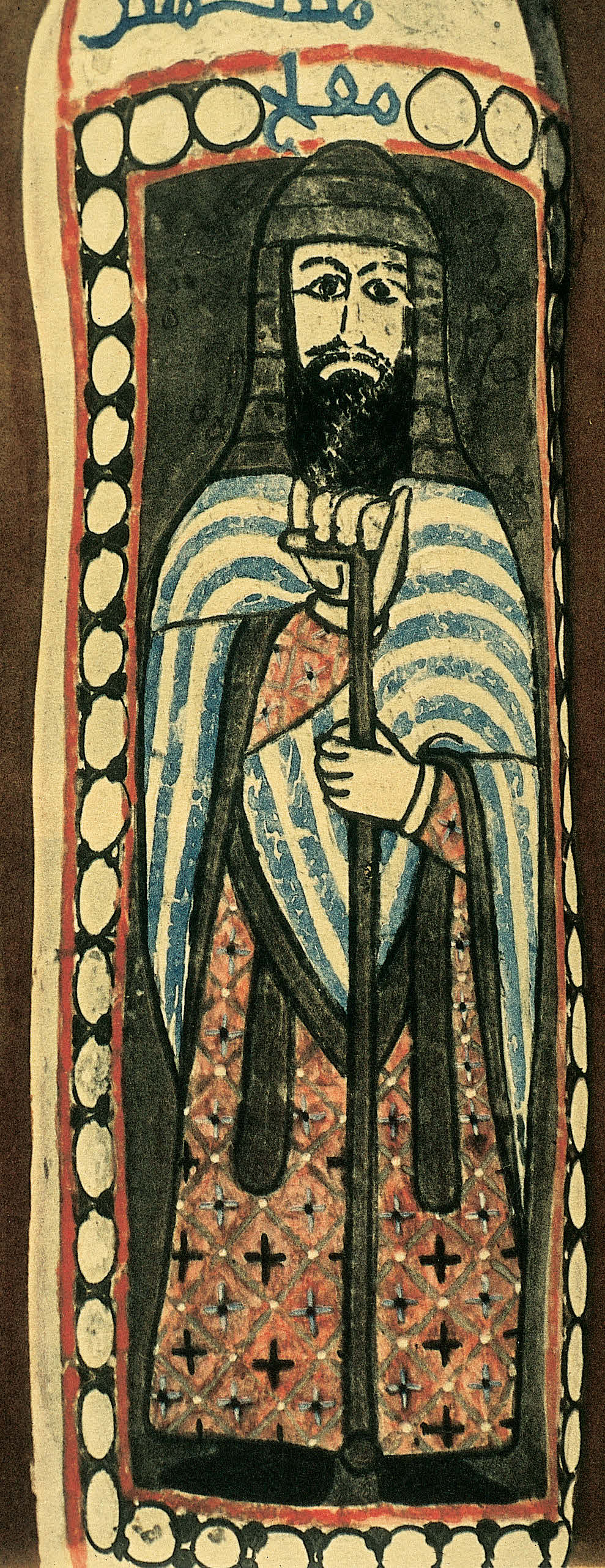
(Opposite right) Nestorian gravestone from southern China, inscribed in three languages (Syriac, Uigur and Chinese) and two scripts (Syriac and Chinese). It tells of the death of a woman named Elisabeth, wife of the government official Xindu, on 20 May 1317 and of her burial on 25 July 1317.43
(对页右侧)中国南方的景教 (Nestorian) 墓碑,以三种语言(叙利亚语、回鹘语和汉语)和两种文字(叙利亚文和汉文)刻成。碑文记载了一位名叫伊丽莎白 (Elisabeth) 的妇女于1317年5月20日去世,她是政府官员新都 (Xindu) 的妻子,并于1317年7月25日下葬。43
religious books but also pictures. At the same time, Emperor Gaozong of the Tang Dynasty (618–907) had a monastery built and ordered that his portrait be painted in the church. Later, in 742, Emperor Xuangzong had the church of Chang’an restored and the portraits of five Tang emperors painted there.145 If the Nestorians had become aniconic, they would not have agreed to this.
不仅有宗教书籍,还有图画。与此同时,唐朝(618–907)的唐高宗 (Emperor Gaozong of the Tang Dynasty) 下令修建了一座修道院,并命人将其肖像画在教堂中。后来,在742年,唐玄宗 (Emperor Xuangzong) 下令修复长安 (Chang’an) 的教堂,并在那里绘制了五位唐朝皇帝的肖像。145 如果景教徒 (Nestorians) 已经变得反对圣像,他们就不会同意这样做。
(Left) A gilded silver platter from the ninth/tenth centuries, found in the region of Perm, Russia, but most probably made in the valley of the river Talas, Kyrgyzstan. The ascension of Christ is depicted in the upper circle, to the lower left the visit of Mary and Mary Magdalene to the tomb, and to the right the crucifixion. A cross is found in the centre of the platter, in the space below Daniel in the lions’ den, to the upper left two soldiers at the tomb, and to the right, Peter and the cock.44 The platter originated in a Nestorian context. (The State Hermitage Museum,
(左)一件九/十世纪的鎏金银盘,发现于俄罗斯 (Russia) 的彼尔姆 (Perm) 地区,但最可能制作于吉尔吉斯斯坦 (Kyrgyzstan) 的塔拉斯河 (Talas) 河谷。上方圆形区域描绘的是基督 (Christ) 升天,左下方是马利亚 (Mary) 与抹大拉的马利亚 (Mary Magdalene) 探墓,右侧是钉十字架。盘中央有一个十字架,其下方空间是狮子坑中的但以理 (Daniel),左上方是坟墓旁的两名士兵,右侧是彼得 (Peter) 和公鸡。44 该盘源自聂斯脱利派 (Nestorian) 背景。(国立艾尔米塔什博物馆 (The State Hermitage Museum),
St Petersburg.)
圣彼得堡 (St Petersburg)。)
of Cora wrote around 1330, on the basis of the dubious information of Odoric of Pordenone (1265–1331), who had visited China in 1322, ‘These Nestorians are more than thirty thousand in China. They have very beautiful and orderly churches with crosses and images in honour of God and of the saints.’147
科拉的约翰 (John of Cora) 约于1330年写道,根据波代诺内的鄂多立克 (Odoric of Pordenone, 1265–1331) 的可疑信息——他曾在1322年访问中国——“这些聂斯托利派信徒 (Nestorians) 在中国超过三万人。他们拥有非常美丽而井然有序的教堂,内有十字架和圣像,以敬奉上帝和诸圣。”147
The Nestorians first abandoned the veneration of icons in southern India around the mid- fourteenth century. The Catholic missionary John of Marignolli (†1357) wrote of his stay in Kerala in 1347/1348, ‘The Jews, Muslims and some [Nestorian] Christians regard the Latins as the worst of idolaters because they use statues and images in their churches.’148 At the same time, religious pictures began to disappear from the Nestorian churches of Mesopotamia for several
聂斯托利派 (Nestorians) 大约在十四世纪中叶首先在南印度 (southern India) 放弃了圣像敬礼。天主教传教士马黎诺里 (John of Marignolli)(†1357)记述了他于1347/1348年在喀拉拉 (Kerala) 的逗留,写道:“犹太人、穆斯林以及一些[聂斯托利派]基督徒认为拉丁人 (Latins) 是最恶劣的偶像崇拜者,因为他们在自己的教堂里使用雕像和图像。”148 与此同时,宗教图画开始从美索不达米亚 (Mesopotamia) 的聂斯托利派教会中消失,持续了数……
About half a millennium later the Franciscan Rubruk, who stayed close to the Mongol capital of Karakorum in 1253/1254, reported of a Nestorian church, ‘I entered trustingly into the Christian church and saw a very lovely altar. Images of the Saviour, the Holy Virgin, John the Baptist, and two angels were stitched into a cloth woven with gold.’146 For his part, the Latin bishop John
约五百年后,方济各会士鲁布鲁克 (Rubruk) 于1253/1254年逗留在蒙古首都哈拉和林 (Karakorum) 附近,他记述了一座聂斯托利派教堂 (Nestorian church):“我放心地走进这座基督教教堂 (Christian church),看见一座非常精美的祭坛。救主 (Saviour)、圣母 (Holy Virgin)、施洗约翰 (John the Baptist) 以及两位天使的画像被绣在一块用金线织成的布上。”146 至于拉丁主教约翰 (John),
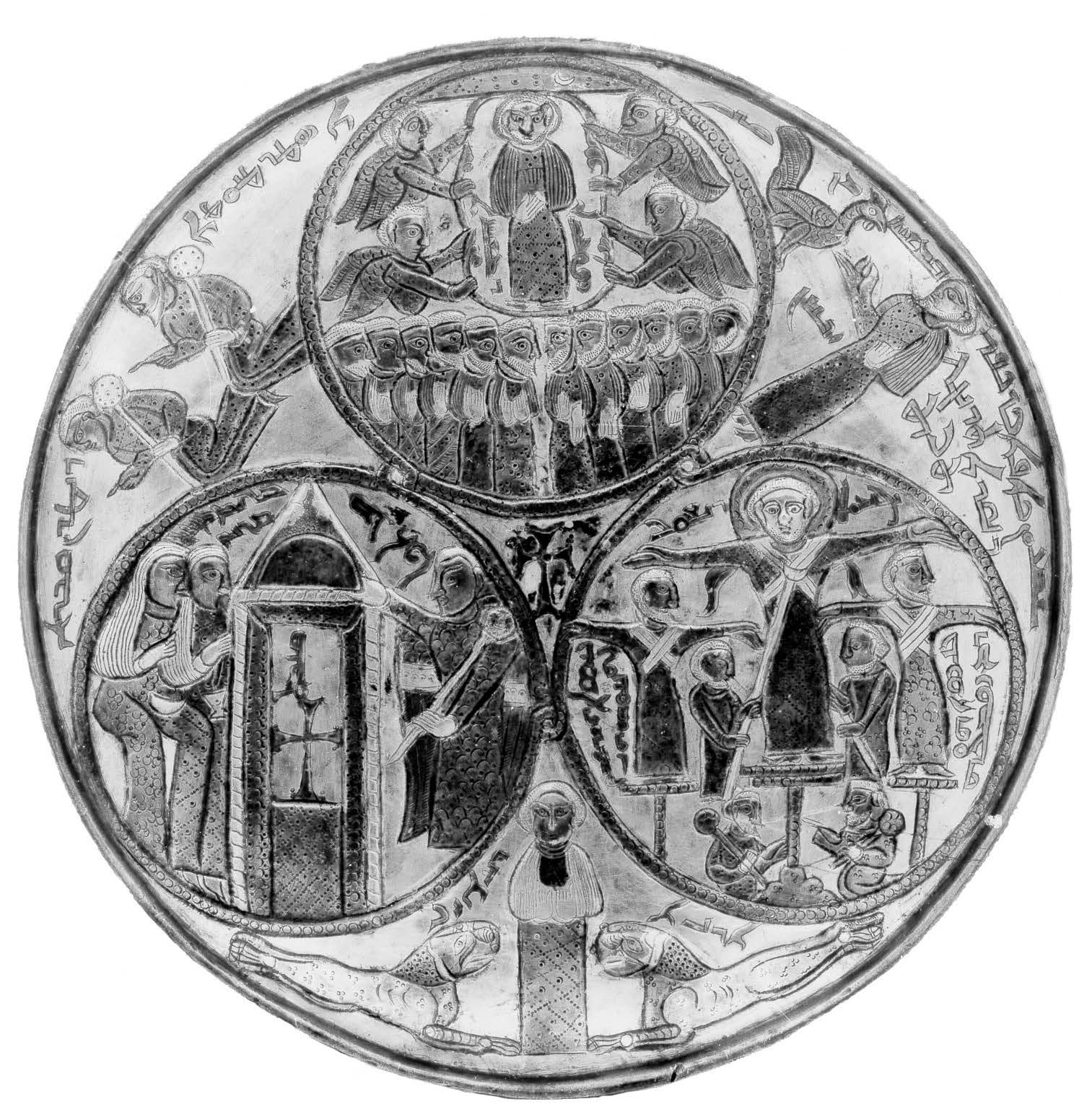
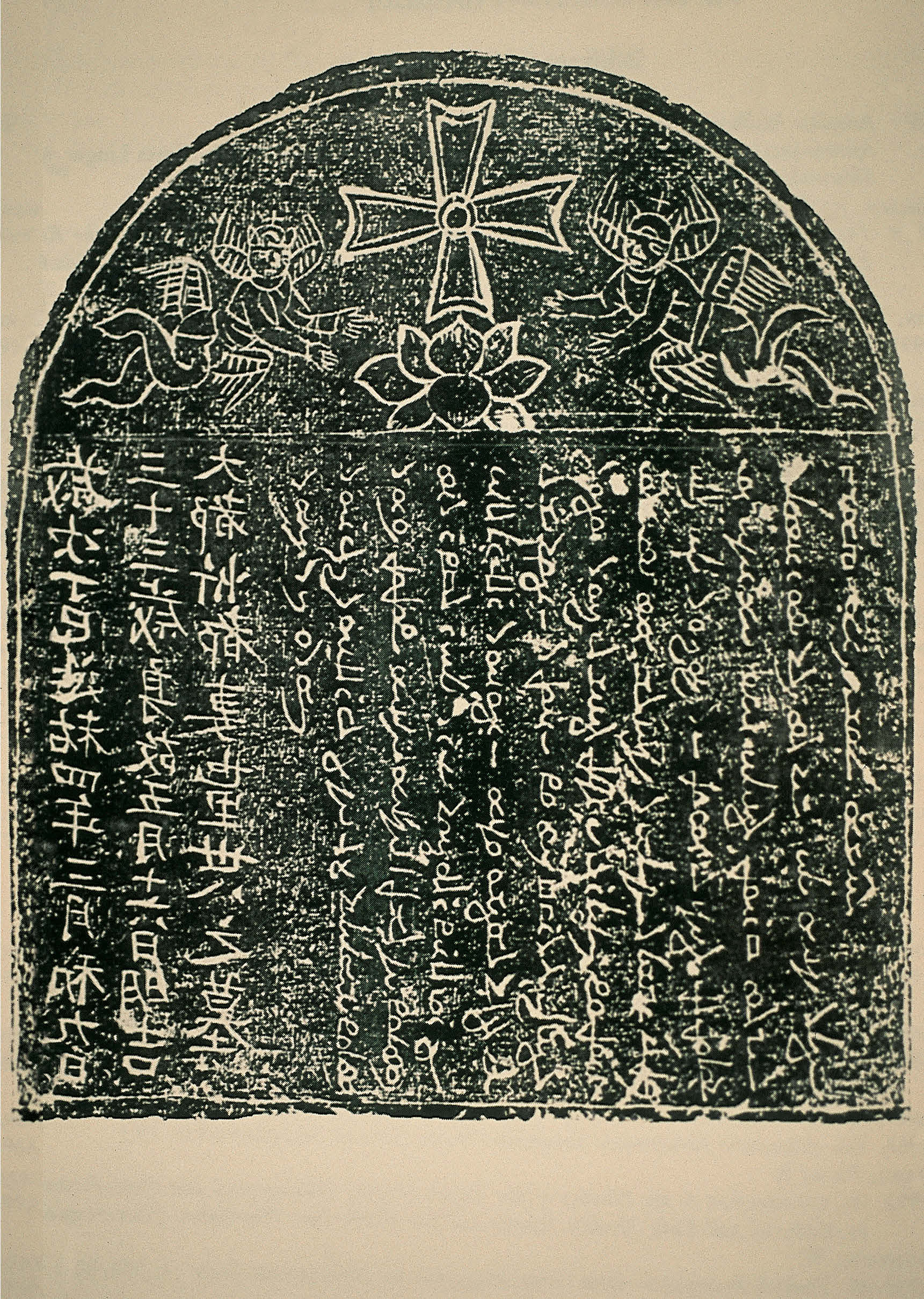
reasons that arose simultaneously. First, beginning in the early fourteenth century, the Church came under severe pressure from Islam, which had been intensified by the conversion of the Mongol Il-Khans of Mesopotamia. Then, between 1384 and 1388, Tamerlane (1336–1405) systematically destroyed all churches and persecuted the Christians of Mesopotamia, who fled from the fertile plains into the mountains of Kurdistan.
同时出现的若干原因。首先,自14世纪初起,教会受到伊斯兰教 (Islam) 的严重压力,而美索不达米亚 (Mesopotamia) 的蒙古伊儿汗 (Il-Khans) 的改宗使这种压力进一步加剧。随后,在1384年至1388年间,帖木儿 (Tamerlane, 1336–1405) 系统地摧毁了所有教堂,并迫害美索不达米亚 (Mesopotamia) 的基督徒,后者从肥沃的平原逃入库尔德斯坦 (Kurdistan) 的山区。
In order not to incite the wrath of fanatical Muslims and to avoid plunder and desecration, but also because of their poverty, the ‘mountain Nestorians’ rejected the pictorial decoration of their small chapels. Finally, in the nineteenth century, the Nestorian clergy accepted the interpretation of the Protestant missionaries and claimed that their Church had always been aniconic.
为了不激起狂热的穆斯林的愤怒,并避免劫掠与亵渎,同时也因为自身的贫困,“山地聂斯托利派” (mountain Nestorians) 拒绝在其小礼拜堂中进行图像装饰。最终,在19世纪,聂斯托利派神职人员 (Nestorian clergy) 接受了新教传教士 (Protestant missionaries) 的解释,并声称他们的教会历来不设圣像。
(Left) An angel announces the resurrection of Christ to Mary and Mary Magdalene as they arrive at the tomb with fragrant oil with which to anoint the dead Jesus. These women are the first people to hear of the resurrection, even before the disciples. From a thirteenth- century Nestorian Peshitta Gospel, written in Estrangela. (State Library of Berlin, Prussian cultural collection. Sachau 304, parchment manuscript 195 Bl., Folio 106v.)
(左)一位天使向马利亚 (Mary) 和抹大拉的马利亚 (Mary Magdalene) 宣告基督 (Christ) 复活,当时她们带着香膏来到坟墓,要用它膏抹死去的耶稣 (Jesus)。这些妇女是最先听到复活消息的人,甚至早于门徒。出自一部十三世纪的聂斯脱利派 (Nestorian)《别西大福音》(Peshitta Gospel),以埃斯特兰格拉体 (Estrangela) 书写。(柏林国家图书馆 (State Library of Berlin),普鲁士文化收藏 (Prussian cultural collection)。Sachau 304,羊皮纸抄本 195 Bl.,Folio 106v。)
(Right) The twelve apostles are gathered around Peter, depicted as an old man, at Pentecost; twelve rays of light from heaven stream down upon their heads. From a thirteenth- century Nestorian Peshitta Gospel, written in Estrangela. (State Library of Berlin, Prussian cultural collection. Sachau 304, parchment manuscript 195 Bl., Folio 123 v.)
(右)在五旬节 (Pentecost) 时,十二使徒聚集在彼得 (Peter) 周围;彼得被描绘为一位老人;十二道来自天上的光芒倾泻在他们头上。出自一部十三世纪的聂斯脱利派《别西大福音书》(Nestorian Peshitta Gospel),以埃斯特兰格拉体 (Estrangela) 书写。(柏林国家图书馆 (State Library of Berlin),普鲁士文化收藏 (Prussian cultural collection)。Sachau 304,羊皮纸抄本 195 Bl.,Folio 123 v.)